





Biotech companies today are thriving rapidly and great at innovation. But, they struggle while communicating their work to the right audiences due to strict regulations, complex research, niche audiences, etc. This is where social media for biotech companies emerges as a solution.
Social media serves as the right mode of communication. So, utilizing it with the right strategy helps you communicate with your target customers smoothly, while building trust and visibility.
71.2% of healthcare professionals leverage social media for professional tasks. On the other hand, 70% of these professionals utilize LinkedIn for networking and professional development. The stats reflect that social media is nowadays much more than just a visibility tool.
In this post, we will discuss the top social media strategies for biotech companies in detail to get the best outcomes.
What is Social Media for Biotech Companies?
Social media for biotech companies reflects the use of leading digital platforms with the right strategies for targeted purposes. Platforms such as YouTube, X, LinkedIn, and Instagram are the best choice for brand building. They help you strengthen brand credibility and communicate scientific breakthroughs with the targeted audience.
You can leverage social media to connect with the following audiences:
- Healthcare professionals
- Investors
- Venture capitalists
- Patients
- Advocacy groups
- Regulatory bodies
- Industry partners
Key Reasons Social Media Matters for Biotech Companies
The major advantage of social media for biotech companies is it lets the right people know about their actual work at the right time. Let’s explore some of the top reasons why social media is important for biotech companies:
- Increase Website Traffic
Social media has unmatched potential in driving traffic to your biotech company website. Every time you post content, be it industry insights, blog, product launch, or research update, it gives users a genuine reason to click and access your website. The more people visit your site, the more visibility your website will gain. It also takes your SEO performance to the next level.
- Increase Brand Recognition
Brand recognition is something that matters a lot for any business – biotech companies are not an exception. No matter who you target, people will incline only towards the brand that they know very well and have 100% trust in.
- Maintain Consistency
When you post consistently and regularly on social media, it keeps your biotech company in people’s reach. It also keeps your brand in front of the right audience. On the other hand, sharing content quite often lets your followers stay in the loop, which makes your brand a go-to voice in the same field.
- Content Promotion
Social media for biotech companies is the most effective channel when it comes to content promotion. Be it research reports, whitepapers, blog posts, or case studies, you can share them on the targeted social media platforms to maximize their reach among the vast audience, apart from your existing network. The major advantage of highly promoted content is that it encourages more discussions and shares.
- Become a Thought Leader
When you share honest takes, real findings, and real debates in the relevant field, people finally start realizing your brand as trustworthy. Meanwhile, building this kind of credibility can’t be overnight – it takes time. Therefore, you need to keep sharing, showing up, being useful, and expecting better outcomes.
- Show Your Brand Values
Social media lets biotech companies grab a real chance to show what they are actually meant for, whether it’s patient outcomes, scientific integrity, or pushing boundaries in research. You can post behind-the-scenes, team stories, community initiatives, etc. make your brand more human rather than corporate. It builds a great connection with your audience.
Leading Social Media Platforms Biotech Companies Target
Apart from having an impeccable social media strategy, it’s necessary to select the right social media platform to target to get the best outcomes. We will explore some of the leading platforms as follows:
LinkedIn is the platform where biotech companies grab opportunities with investors, researchers, healthcare professionals, and industry partners. Most of these companies use this platform to share research updates, milestones, expert articles, and job openings.
- X

As a perfect social media platform, X helps in sharing industry news, real-time updates, and engaging in important scientific conversations. A large number of biotech companies use this platform to participate actively in sharing quick insights, trending discussions, connecting with researchers, and more.
- YouTube

YouTube is the right platform for companies that seek to simplify even the complex scientific concepts with the help of engaging video content. This social media platform helps in building deep connections with its audience, from product demonstrations and lab walkthroughs to research explainers and expert interviews.

While talking about the leading social media platforms for biotech companies, it’s certainly not possible to forget about Facebook. It’s one of the best platforms for sharing the latest company updates, growing a community, and getting your brand noticed among the right users.

Instagram is another social media platform you can target for your biotech company. It lets you showcase activities, events, etc., organized in your company. With this platform, you can share team highlights, behind-the-scenes lab content, visual storytelling, and infographics. These make Instagram perfect for building brand personality.
Top Social Media Strategies for Biotech Companies to Drive Engagement
To get most of the social media platforms, biotech companies need to have a solid plan and proven strategies. We will discuss some of the most tried and tested strategies for social media for biotech companies, which deliver guaranteed results:
- Know your Audience
Before you start planning your social media, you can take adequate time to know who you actually communicate with. It’s necessary to make your social media strategies successful for your biotech companies.
These companies mostly deal with a variety of audience segments at the same time. Each one has different expectations, needs, and levels of scientific understanding. To improve your reach among your target audience, you need to be clear about the following questions:
- Before anything else, you need to think about who you target by writing. You need to be clear about – are you communicating with investors, researchers, doctors, patients, or the general public?
- What are the platforms where each audience spends most of their time?
- What type of content addresses the concern of each segment of the audience?
- What problems do they seek to resolve?
When you know who you actually write for, your content will be more meaningful, useful, and sharp.
Understanding your audience helps you keep the right tone – be it keeping the things relatable and plain for patients or becoming more technical, especially when you write for researchers.
- Select the Right Social Media Tools
Irrespective of the effectiveness of your strategy, managing social media for biotech companies becomes quite stringent, especially without the right tools. With the help of these tools, you will be able to do many important things:
- Scheduling posts
- Plan content in advance
- Track performance
- Monitor brand mentions
- Engagement with your audience
So, now you might be thinking about some of the top social media tools, right? Well, there are many tools you will come across while searching for the same. Let’s have a look at some of the top social media tools:
- Buffer: You can leverage this tool for a variety of purposes, such as content planning, scheduling, performance analytics, etc.
- Hootsuite: You can use this tool for post scheduling and also managing different social media platforms simultaneously.
- Canva: It’s good for crafting visually appealing images, infographics, social media graphics, etc.
- Sprout Social: This tool works effectively for engagement tracking and gathering audience insights.
- Google Analytics: It’s a reliable tool that can be used to gather information regarding website traffic through different social media channels.
Apart from the above tools for social media for biotech companies, you can also use many other tools, such as BuzzSumo, which helps you to find out relevant content ideas and trending topics within your niche. The major advantage of using these tools is that they save your effort and time while ensuring your campaign remains highly consistent and result-oriented.
- Improve Your Brand Identity on Social Media
Your biotech company’s social media profile is the first thing your potential partners or clients see. So, it’s great to ensure that your brand looks and feels the same across every platform. You also need to ensure it looks fully professional and instantly recognizable.
- How to Improve Your Brand Identity on Social Media?
You can improve your brand identity on social media in several ways. Let’s go through each step in detail:
- Logo
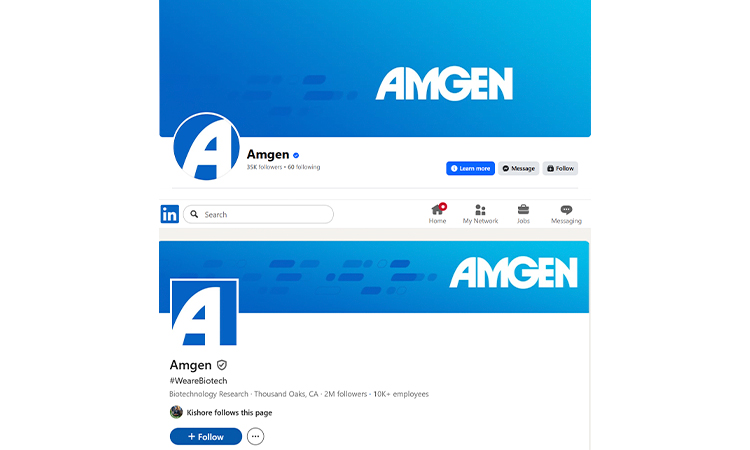
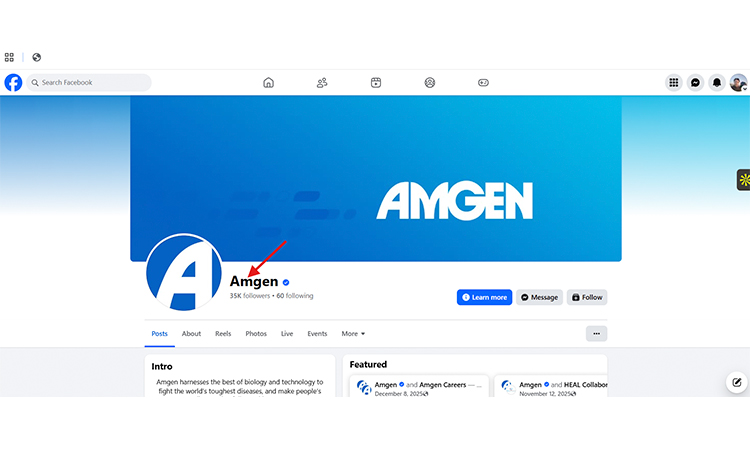
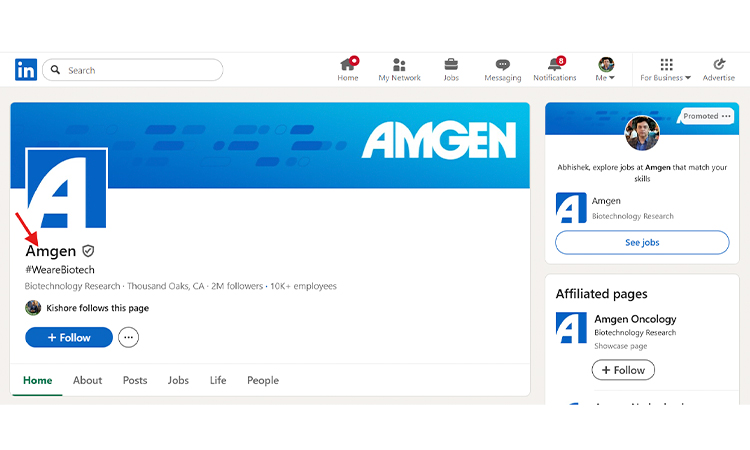
Your logo is the first thing that users see and notice when they explore your profile. So, you need to make the logo more attention-grabbing, clean, and reflective. It should offer a clear vibe of your brand. Use of the same logo across all social platforms is the most effective way to keep things visually consistent. Doing frequent changes is confusing for your target audience.
Below you can explore social media profiles of a leading company Amgenbiotech. They maintain the same brand logo on their Facebook and LinkedIn profiles.
- Compelling Bio
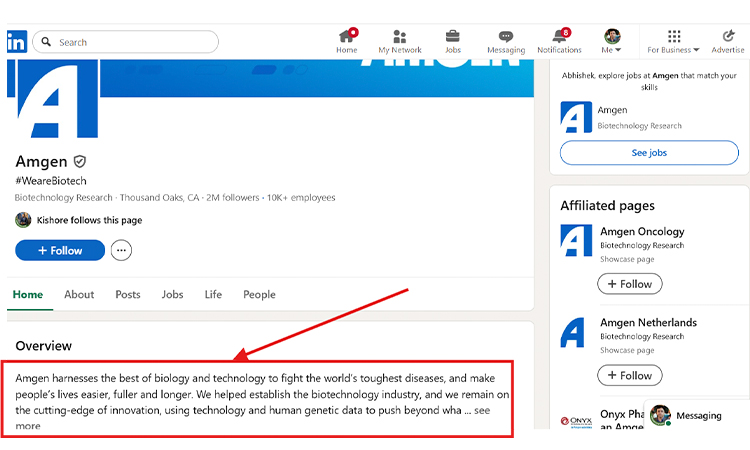
Write an attention-grabbing bio by explaining what you do, why you are unique from others, who you serve, and more. To make your bio search engine-friendly and purpose-driven, you can add a proper call-to-action (CTA), relevant keywords, link to your landing page, etc. Don’t forget to make it concise yet powerful.
- Consistent Brand Voice
Your message and tone tell much about your brand personality, be it friendly, professional, authoritative, or witty. Make sure you maintain consistency in replies, captions, posts, etc. These are useful in building familiarity and trust.
- Use Quality Images
When it comes to visual content, it plays a leading role in social media for biotech companies for shaping brand perception. So, you should always use cohesive color palettes, high-resolution images, consistent design styles, and more. Don’t use any mismatches or pixelated visuals since they negatively impact your brand credibility.

- Consistency of Username
Make sure you mention the same username of your biotech company across all platforms. This indeed makes it convenient for users to discover and thus recognize your brand. It’s advisable to never use any variations or random numbers that can be confusing for your target audience.
- Build a Smart Content Strategy Around Education Value
Content is something that keeps great relevance in social media for biotech companies. Meanwhile, you need to understand that any content will not do the same. You need to develop a smart content strategy that delivers value, education, relevance, etc., to your target audience.
- Tips to Develop a Smart Social Media Content Strategy
Now that we have already covered why social media is important, let’s delve into how to build the right content strategy. We will discuss some of the effective tips you can consider to implement:
- Research Updates and Scientific Breakthroughs
Sharing any findings or scientific research builds trust, which allows users to see the actual proof of your claim. Whether you’re in biotech, healthcare, or tech, this category of content gives you a competitive edge. All you need to do is just break down even complex data in a way that makes it easy to understand for readers.
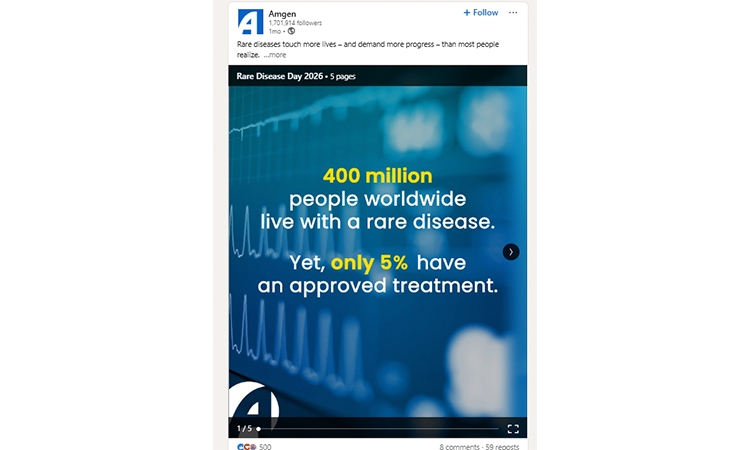
- Explainer Posts and Infographics
Be it infographics or explainers, this content is useful in simplifying even complex topics into simple and easy-to-understand formats. Users love sharing these posts as they make even complex ideas easy to understand. Be it infographics or short, it’s an effective way of maximizing engagement.
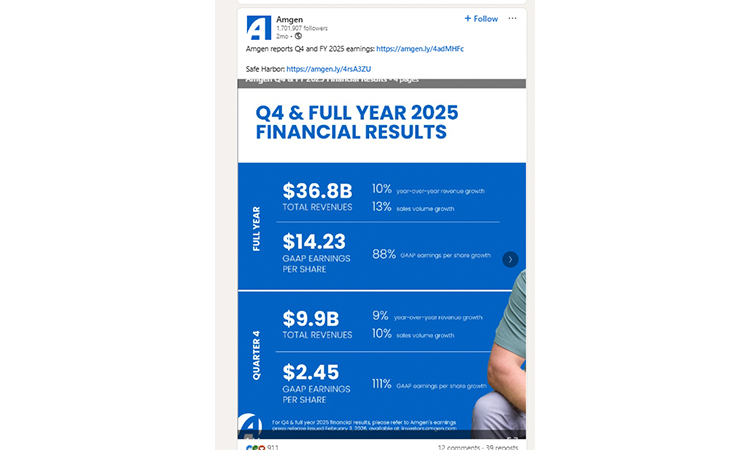
- Industry News and Trend Commentary
This is the next important type of content you can share with your audience, which helps you stay relevant in your niche. Make sure your content includes expert opinion as well. It keeps your audience well-informed and also reflects how actively involved your brand is in current conversations. An insightful and timely commentary maximizes both visibility and engagement.
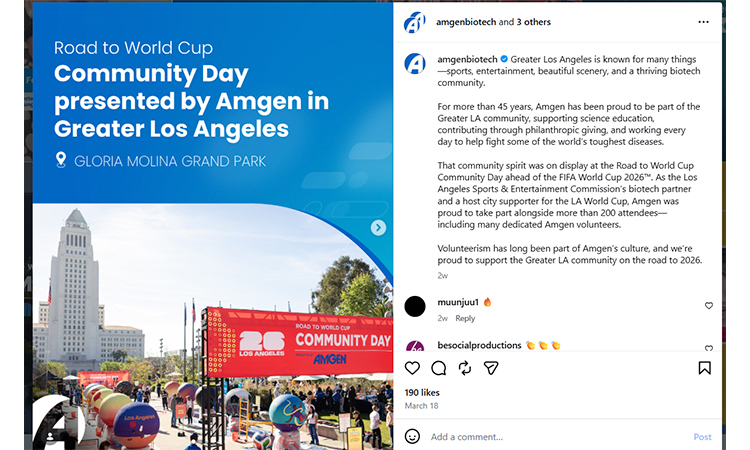
- Behind-the-Scenes Content
Sharing behind-the-scenes content helps you let your audience get a glimpse of the team, company culture, or workflow. It not only humanizes your brand but also builds trust. Whether it’s non-promotional or authentic content, it’s highly preferred by users.
- Case Studies and Success Stories
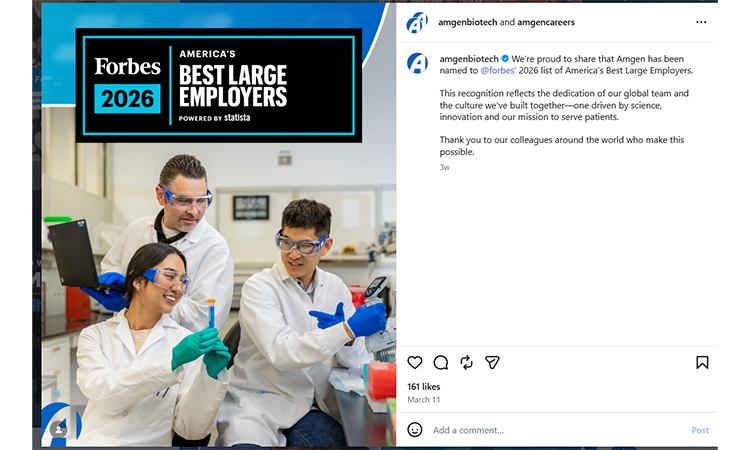
When you share case studies or success stories with your audience, it builds both social proof and trust. You need to highlight solutions, challenges, and measurable outcomes to showcase your value and expertise. This category of content works effectively in converting your prospects into customers.
- Use Video Content for Effective Storytelling
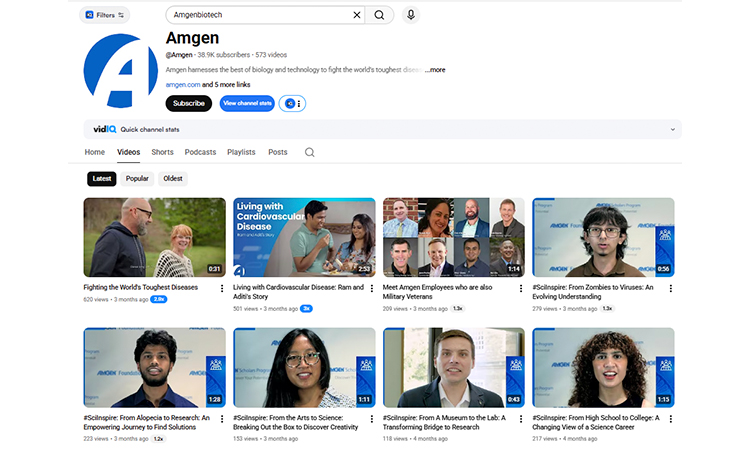
When it comes to video content, it serves as the most useful tool for social media for biotech companies. Video has an unmatched capability of simplifying even complex information, whether it’s a lab tour, a short explainer clip, a patient story, or a researcher interview. Besides, it also creates a genuine emotional connection with your target audience.
You are suggested to implement the following important types of video content in your social media strategy:
- Behind-the-scenes lab
- Research facility tours
- Short explainer videos breaking down scientific concepts.
- Expert interviews
- Panel discussions
- Patient testimonials
- Real-world impact stories
- Live Q&A sessions with industry leaders and researchers
The most important benefits of video content is it outperforms consistently other content formats in terms of engagement, retention, etc. It outperforms across different platforms such as YouTube, LinkedIn, Instagram, etc. Apart from this, video content is also helpful to make your brand more relatable and memorable compared to text-based posts alone.
- Engage Consistently with Patient and Scientific Community
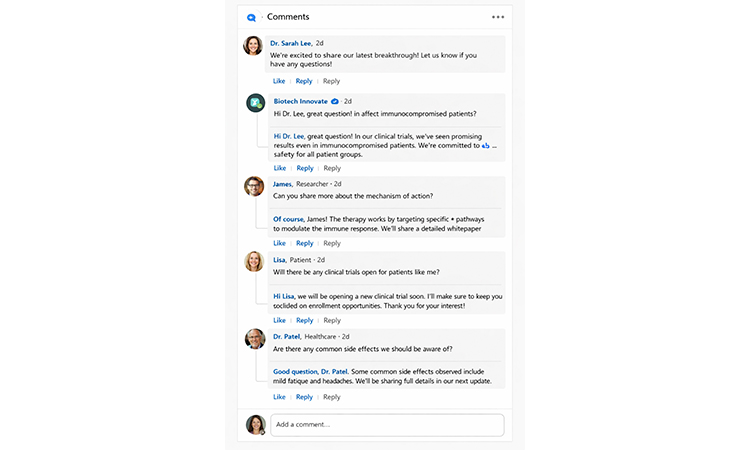
The major benefit of social media for biotech companies is that it lets them get access directly to the patient community and also the scientific world. Meanwhile, the access is indeed not enough. You need to engage with consistency and build genuine relationships. You can do it in the most effective way with the following important tips:
- Respond fast to questions, comments, and messages across a range of platforms.
- Participate actively in relevant conversations and industry hashtags.
- Share content most frequently from patient advocates, researchers, and industry peers.
- Do X chat, host live sessions, and Ask Me Anything (AMAs) to foster real-time interaction.
- You can celebrate the milestones with the patient and the scientific community.
While engaging consistently, it creates a great sense of community around your brand. Besides, it also shows your audience that your biotech company not only disseminates information but also cares about the actual people it serves.
- Building Industry Authority
One of the major objectives of using social media for biotech companies is to build an impeccable industry authority. When you do it successfully, and your brand is recognized consistently for being a knowledgeable, trusted, and credible voice in the biotech space, it works effectively to lure favor for your company. It lets you discover partnership opportunities, gain investor interest, talent acquisition, audience growth, etc.
- How to Build Industry Authority for a Biotech Company?
To build industry authority, you can do the following things:
- Publish Thought Leadership Content Consistently
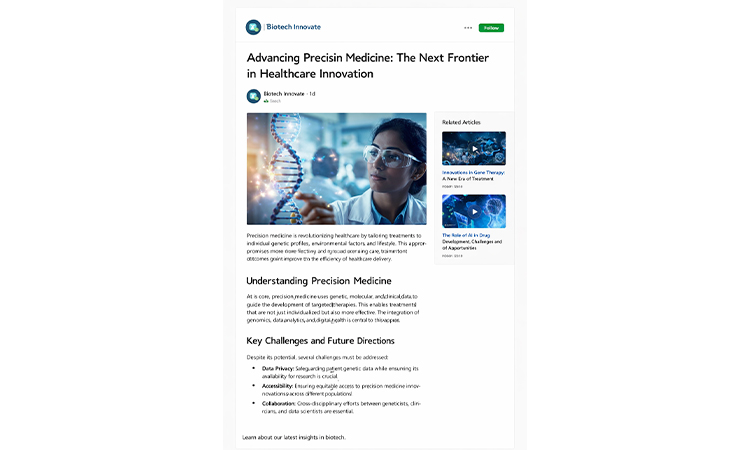
When you craft value-driven content and post it consistently on your targeted social media platform, it helps you portray yourself as an expert voice. You can create a variety of content for this purpose, including whitepapers, blogs, research-based articles, etc. You need to simplify complex scientific concepts, address industry challenges, share insights, and more.
- Collaborate Effectively with Opinion Leaders
Staying in touch with opinion leaders and industry experts improves your credibility. When they endorse and offer insights, it helps you bring authority and thus maximize your reach within the scientific community. You can collaborate with them for interviews, co-authored articles, panel discussions, etc.
- Get Featured in Industry Publications
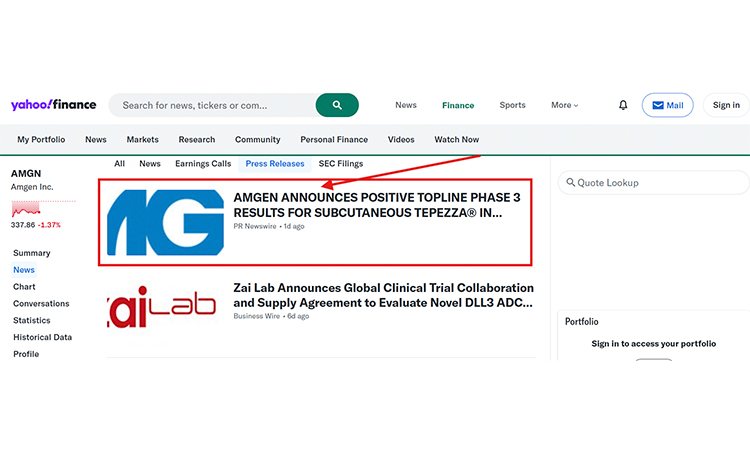
Another way to improve the reputation of your brand is by getting published or mentioned in reputed magazines, biotech journals, or media outlets. It validates your specialization better and thus exposes your organization widely. All you need to do is to focus on media outreach, PR strategies, etc., to secure these opportunities.
- Share Company Achievements
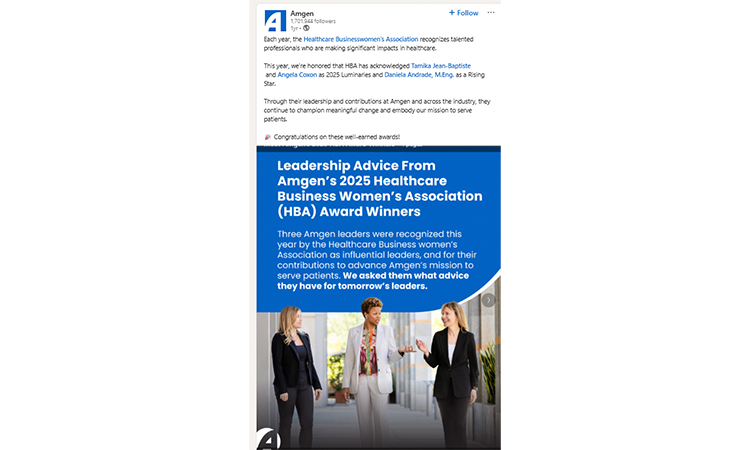
The next thing you can do is to highlight your achieved milestones, which can be partnerships, research breakthroughs, award recognitions, or certifications that reinforce your credibility. All you need to do is share your achievements on social media to help you build trust. It also keeps your audience informed about your progress as well.
- Maintain Regulatory Compliance in Your Social Media Content
Biotech companies are meant to work under defined regulatory guidelines. Therefore, you need to share every piece of your content on social media. Make sure it’s reviewed thoroughly and complies with the relevant regulatory standards.
You need to include FDA guidelines and also various other applicable regulations in your region. The following are several important factors you should always keep in mind:
- Never forget to include disclaimers where it’s compulsory.
- Avoid making any unverified clinical claims on social media.
- Make sure every shared content is reviewed thoroughly and approved by your legal and compliance teams before it gets published.
- Don’t share a patient’s sensitive data without making it authorized properly.
- Be updated on sensitive patient data even without proper authorization.
- Be familiar with platform-specific advertising policies for biotech and healthcare.
You are suggested to make an internal review and ensure a proper approval process for all social media content. It gives you an assurance that your brand is protected while maintaining the trust and reliability of your regulatory bodies and audience alike.
- Track Analytics to Check Performance
Irrespective of the effort you put into your social media for biotech companies, you will not be capable of getting the desired outcomes. All you need to do is track and analyze your performance consistently. With analytics, you get clarity to know what works, what needs to be improved, and also where your efforts or budgets are directed.
What You Need to Track and Analyze Performance?
You can go through the following important factors to analyze the overall performance of your social media campaign:
- Reach and Impressions
- Engagement Rate
- Follower Growth
- Website Traffic
- Click-Through Rate (CTR)
To analyze the above metrics, you can use various reliable tools such as LinkedIn Analytics, Google Analytics, and others. With these tools, you can track your metrics while maintaining consistency. Make sure you go through your analytics at least once a month to refine your strategy, removing underperforming content, etc.
Most Common Social Media Mistakes Biotech Companies Should Avoid
Social media for biotech companies yields outstanding results only when you do it with the right plan and strategy. Any mistakes spoil your efforts and thus deprive you of getting favorable outcomes. Let’s discuss some of these mistakes along with their solutions:
- Avoiding Audience Engagement
Many biotech companies think social media is just a one-way broadcasting channel. They often post their valuable content without bothering to respond to questions, comments, etc. This is, of course, the biggest mistake they commit. One should understand that social media delivers the best output only when there’s two-way communication.
- Solution: It’s advisable to respond to comments professionally, reply to messages, and participate in industry conversations. These help you in building a vast community across your brand.
- Making Premature Clinical Claims
Most biotech companies often share overly optimistic or unverified clinical results on social media before they are properly validated. It not only damages credibility but also lures regulatory scrutiny. It’s the biggest mistake no biotech company can afford to make.
- Solution: Make sure any scientific or clinical claims shared on social media are verified properly, comply with regulatory guidelines, and are reviewed by internal teams before publishing.
- Inconsistency in Posting
When a biotech company posts occasionally and doesn’t maintain consistency in posting, they lose interest in their audience. Any inconsistent posting is a common yet damaging mistake in social media for biotech companies. It negatively impacts both platform algorithms and audience engagement.
- Solution: You should always maintain a structured content calendar and keep your audience engaged to ensure your brand’s visibility.
- Being Technical for General Audiences
It’s true that biotech content is technical. But, if you use a large number of social media posts with heavy scientific jargon, it tends to alienate the largest portion of your audience, including patients, investors, and the general public who don’t have enough scientific background.
- Solution: Simplify your content even without compromising accuracy. You can use visuals, analogies, and straightforward language to make even complex concepts highly accessible and also engaging for a vast audience.
- Avoiding Video Content
Many biotech companies rely extensively on text-based posts and also avoid the power of video content. This is indeed a missed opportunity. Video content consistently outperforms other formats in terms of engagement, reach, and retention across every social media platform.
- Solution: You need to use video content in your social media strategy daily. Be it lab tours, short explainer videos, or expert interviews, video allows your biotech brand to communicate effectively and also connect with audiences on an in-depth level.
Case Studies of Biotech Companies Have Benefited from Social Media
Many biotech companies have already turned their social media strategy into the most promising results. We will take a look at some real case studies of social media for biotech companies:
- Novartis
Being one of the top-notch global healthcare organizations, Novartis took a complete human approach to social media. They focused on sharing patients’ stories, views, etc., on social media rather than just sharing promotional content.
The company mostly shared content related to blood cancer, polycythemia vera, and hormonal disease, acromegaly, by implementing the most effective Twitter tactics that include interviews and views to foster meaningful engagement.
With the patient-centered strategy, Novartis managed to earn huge trust with its audience, which increased its reach and follower base. It is reflected when biotech companies craft their social media strategy by focusing on real human stories – the results even become more wonderful.
- Boehringer Ingelheim
As a well-known biopharmaceutical company, Boehringer Ingelheim, wanted to increase awareness about Chronic Obstructive Pulmonary Disease (COPD), which is a condition that affects more than 250 million people across the world but often remains undiagnosed. Instead of just relying on traditional marketing, the company took a great social media approach.
They launched the #COPDChat on Twitter during the European Respiratory Society Congress, which collaborates effectively with Key Opinion Leader Professor Andrew McIvor. Participants in the #COPDChat sent a large number of tweets from different countries across four continents.
The company’s Twitter engagement caught the attention of a number of newly active users, most of whom were healthcare influencers. The chats earned first-mover media attention, including a selected case study with Twitter itself, which reflects it as a great business practice.
FAQs
Ans. LinkedIn is one of the best social media platforms for a biotech company. It’s good for investor relations, B2B, talent acquisition, and more. Apart from this, Twitter, Facebook, YouTube, and Instagram are other useful platforms for biotech companies.
Ans. Yes, advertising on social media is indeed the right decision for a biotech company to maximize its reach among the target audience. It also maximizes their brand visibility, generates leads, and delivers great outcomes.
Ans. You can post varieties of content to maximize engagement, which includes employee activities, clinical trial updates, latest research, infographics, explainer videos, etc. These easily catch the attention of users.
Ans. Yes, social media strategy is different for a biotech startup from a large company. Startups should focus on using LinkedIn engagement, founder storytelling, etc., to improve credibility. On the other hand, large companies run campaigns on different social media platforms to build brand authority and maximize their reach.
Ans. For social media for biotech companies, one should post at least 3 to 4 times a week on platforms such as X, LinkedIn, and others. Meanwhile, consistency is important to frequency. You need to maintain great, structured content that ensures a higher audience engagement and boosts brand visibility.
Ans. A biotech company can handle negative social media comments by responding to them quickly. They should handle them the same empathetically and professionally by addressing the core concerns, offering solutions, and taking sensitive concerns privately.
Conclusion
Using social media for biotech companies is not just about staying online active, but it’s also about building a brand that people trust and respect genuinely. Right from selecting platforms to creating meaningful content and avoiding some common mistakes, every effort you put in works great for a long-term industry authority.
However, achieving consistent outcomes needs perfect expertise, strategy, and dedication. Partnering with a social media marketing company lets your biotech business improve visibility, engagement, and credibility.

