





SEO for EdTech companies is a digital marketing strategy for EdTech businesses to grow online. SEO helps to get more course enrollment with organic traffic. The perfectly optimized website content can rank well on search engines. The important SEO strategies for EdTech companies are keyword research, on-page and off-page SEO optimization, local SEO, and technical SEO strategies.
Suppose someone searches for “best data science courses online”. And if you do not optimize your website with this keyword, then you do not exist for them. In this online era, 96% of people search online before buying anything. If you don’t have any online presence, then how can your brand survive? However, if you just build an EdTech website but do not optimize SEO, there is less chance to pop up on the first page of the search engine results page.
There are so many digital marketing strategies to uplift your online visibility. But why SEO strategies for edtech companies? The quick answer is that it gives you organic traffic without breaking the bank. Other marketing channels, like paid advertising, will stop when you stop paying for ads. SEO strategies give you long-term growth.
Here in this guide, you will learn all the important strategies for edtech companies, such as how to research keywords and optimize on-page, off-page, local, and technical SEO strategies:
What is SEO for EdTech Companies?
SEO for EdTech companies is the process of optimizing educational websites, course pages, and content so they appear in search engine results when students search for courses, certifications, or learning resources. The main goal of SEO is to increase organic traffic and convert visitors into course enrolments.
SEO helps EdTech companies by targeting the right keywords, creating valuable content, optimizing course pages, improving website speed, and building backlinks from trusted education websites. On-page SEO improves content and course pages, technical SEO improves website performance, off-page SEO builds authority, and local SEO helps training institutes appear in local searches.
When these SEO strategies work together, EdTech companies get more brand visibility, more website organic traffic, and more student enrollments without paying for ads. SEO also improves brand trust and long-term online growth. The main components of SEO strategies are:
- On page SEO
- Off page SEO
- Local SEO
- Technical SEO
We will discuss all strategies with practical steps and tools in the further section.
Why is SEO a must-have for an EdTech business?
According to a report , the global market for education technology was worth USD 163.49 billion in 2024 and It’s expected to be worth USD 348.41 billion by 2030 with growth at a rate of 13.30% per year from 2025 to 2030. The market is rapidly growing and an increasing number of people want personalized learning solutions. The US EdTech companies will see a huge increase so in this competitive market, if you want to create a strong foothold, then word-of-mouth promotion will not give you satisfactory results. Here comes, EdTech companies SEO strategies will help you to rank on search engine rankings.
- Long-Term Online Visibility- When you optimize your website for search engines like Google, Yahoo, and Bing, you will reach a wider audience. When people search for “best AI prompt engineering learning,” and if you provide these educational courses and put this keyword on your website, it will possibly show up on search results with this particular keyword. If your competitors do not use this technique, then it improves brand awareness and might be elected by potential clients.
- Increase trust- If you have a legitimate website with customer testimonials and ratings. It automatically increases trust factors. And always try to get feedback from your clients and showcase it on your website. It will build trust among users. However, Google loves trust signals, so Google ranks this website better.
- Bring organic traffic- The right SEO strategies for edtech companies bring organic traffic. It means you’re not paying for leads or purchasing clients. The search engine optimization (SEO) process pushes your website faster. But keep in mind that you need to follow all the Google guidelines and maintain the website with E-E-A-T factors. (We will discuss these further elaborately.) To rank first on search engine pages, you need to implement all SEO strategies correctly. Let’s go deeper into the SEO strategies with Steps and dive into the next segment:
On-Page SEO Strategy for Online Education Websites
Till now, you have learned the definition of SEO and its importance. Now we will discover the most useful strategies for on-page SEO for EdTech companies:
On-Page SEO is the practice of optimizing individual web pages, such as course listings or lesson blogs. It will help to rank higher in search results. It entails improving internal components such as URL structures, HTML tags (titles/metas), and content quality. Here are the most useful strategies with steps to implement and improve on-page SEO for edtech businesses:
- Keyword research for EdTech companies
Keywords are the search terms that your potential students or their parents use. Without relevant keyword research, your website cannot perform well. First, you can simply search on Google like this –
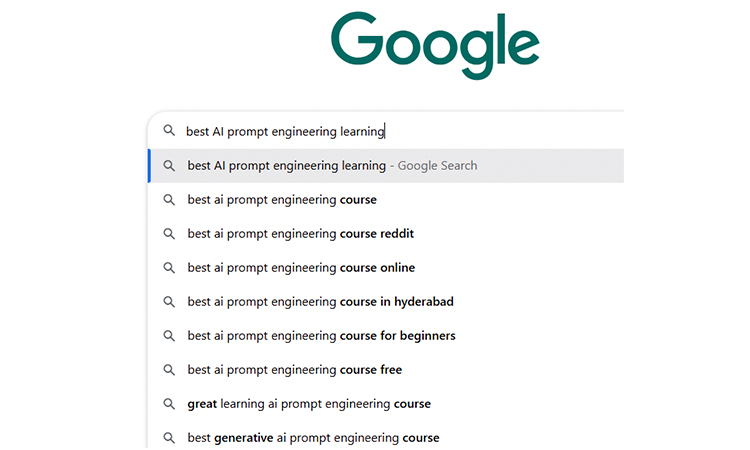
Identifying relevant keywords is key to ranking higher than your competitors. That’s how you gather ideas of what your targeted traffic searches for. Then check the People Also Ask section:
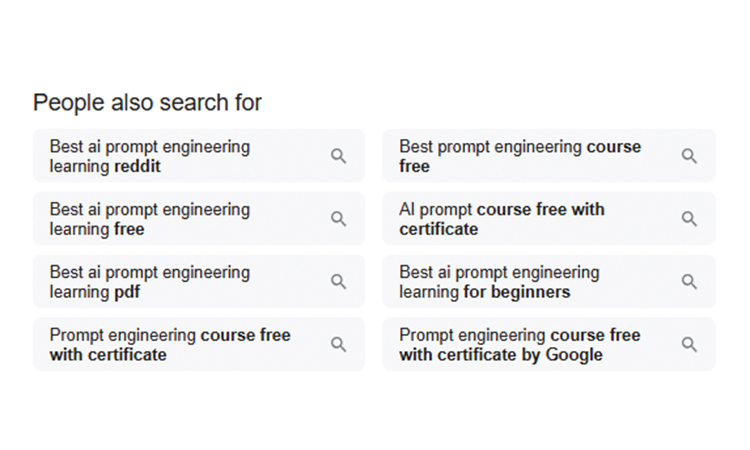
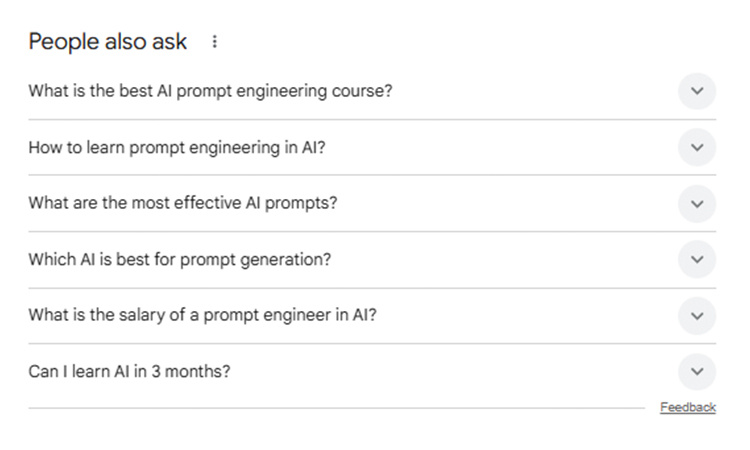
Then, to get more relevant keywords, you can get help from these keyword research tools:
- Google keyword planner
- Ubersuggest
- Ahrefs
- Semrush
- Answer The Public
- Mangools
- Step-by-Step Keyword Research in Semrush
Step 1– Sign in to the Semrush account
Step 2– Go to “Keyword Research” -> “Keyword Magic Tool“
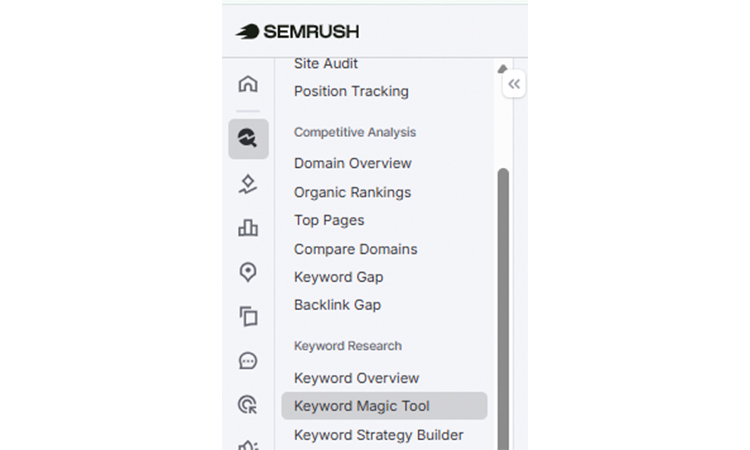
Step 3 – Write the main keyword in the search bar like this –
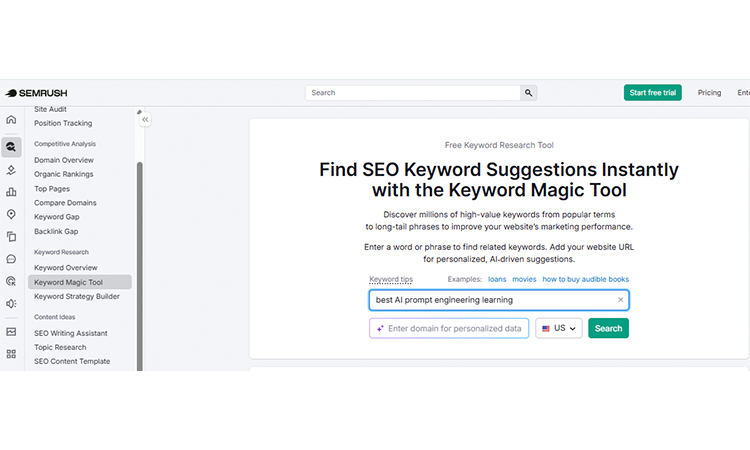
Step 4– Choose keywords from the list
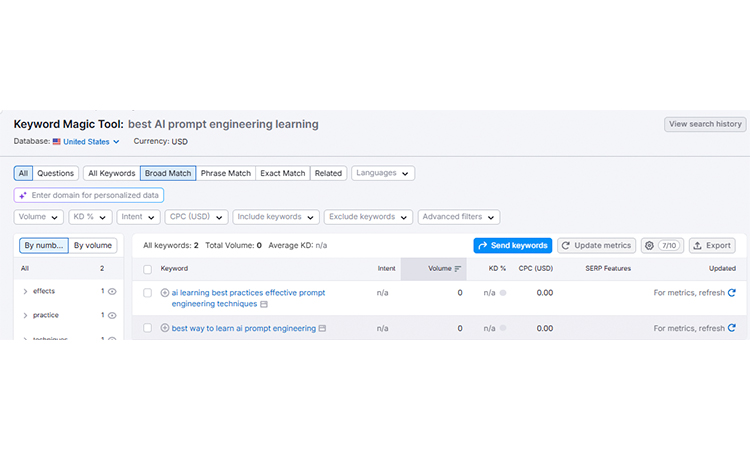
- Keyword Research Metrics for EdTech SEO
| Term | Definition | Why It Matters | Best Tips for EdTech |
| Keyword Difficulty (KD) | Measures how hard it is to rank for a keyword based on competition. | Helps you understand ranking feasibility. | Target low to medium KD (10–40) for new EdTech sites; build authority before high KD. |
| Search Intent | The reason behind a user’s search (informational, navigational, transactional, commercial). | Aligns content with what users actually want. | Focus on informational + commercial intent (e.g., “best online courses”, “how to learn coding”). |
| Search Volume | Average number of searches a keyword gets per month. | Indicates traffic potential. | Choose moderate volume (500–5K) keywords with niche relevance (e.g., “AI courses for beginners”). |
| Cost Per Click (CPC) | The average cost advertisers pay per click on a keyword in paid ads. | Shows commercial value and competition. | Target high CPC keywords (₹20+) for high ROI topics like certifications and career courses. |
| SERP Features | Special results on Google, like featured snippets, FAQs, videos, and People Also Ask. | Impacts visibility and click-through rates. | Optimize for featured snippets, FAQs, and video results (YouTube tutorials work well in EdTech). |
- Expert Tips for selecting Keywords for EdTech companies
- Prioritize low KD + high intent keywords for faster ranking
- Mix evergreen topics (e.g., “what is data science”) with trending skills (AI, cybersecurity)
- Target long-tail keywords (more specific, less competition)
- Analyze competitors’ keywords and find gaps
- Optimize for SERP features (FAQs, snippets, videos) to improve online visibility
- Content Marketing Strategies for the EdTech Industry
Content builds trust. For EdTech companies, trust converts browsers into students. A strong content strategy attracts organic traffic, improves SEO, and positions your brand as an authority in education.
- Know Your Audience First
Before writing a single word, understand who you are writing for. Are they students, parents, or working professionals? Each group has different pain points, questions, and goals. So user intent is very important.
Steps:
- Create 2–3 audience personas
- List their top 5 questions and struggles
- Align every content piece to one persona
- Build a Content Calendar
Random posting kills consistency. A content calendar keeps your team focused and your audience engaged.
Tips:
- Plan content monthly in advance
- Mix formats – blogs, videos, infographics, and social posts
- Align topics with exam seasons, admission cycles, or trending skills
- Write SEO-Optimised Blog Content
Blogs are your biggest organic traffic driver. Each post should target a specific keyword your audience is searching for.
Steps:
- Research keywords using Ubersuggest or Ahrefs
- Write user-friendly content that fulfill reader’s intent
- Add internal links to your course pages
- Update old blogs every 4-6 months
Best tip: Answer real student questions. Use “how to,” “best,” and “guide” formats — they rank well and convert better.
- Repurpose Content Across Platforms
One piece of content can live in many forms. A blog post can become a YouTube video, an Instagram carousel, a LinkedIn article, and a podcast episode. Work smarter, not harder.
Steps:
- Start with a pillar blog post
- Break it into social media snippets
- Record a short explainer video on the same topic
- Send key insights as an email newsletter
- Use Student Success Stories
Nothing sells education better than real results. Case studies and testimonials are powerful, trust-building content.
Tips:
- Interview successful students on video
- Share before-and-after learning journeys
- Post placement results and certifications achieved
- Implement Video and Free Resources
Short videos on YouTube and Instagram Reels attract a massive reach. Free resources like eBooks, checklists, and sample lessons build your email list. Also, give educational solutions in your videos.
Steps:
- Post one educational video per week
- Offer a free mini-course or study guide as a lead magnet
- Gate premium resources behind a sign-up form
Expert Tips to Improve Content Marketing
- You should stay consistent. The results may take 3 to 6 months.
- Track performance using Google Analytics and Search Console
- Always write for humans first, search engines second
- Quality always beats quantity
- Optimize Meta Tags for Educational websites
Optimize title tags by starting with your main term. Try to keep the length between 50 to 60 characters and add a special value proposition (such as “Certified” or “2026”).
- The Winning Formula:
Primary Keyword + Secondary Keyword/Benefit | Brand Name
- Best Examples:
| Course Type | Optimized Title Tag Example |
| Professional | Python Data Science Course: Get Certified in 8 Weeks |
| Academic | Online Calculus Tutoring: Master Derivatives & Integrals |
| Creative | Graphic Design for Beginners: Start Your Career Today |
These are simple examples you can follow to write meta tags for your educational website’s content.
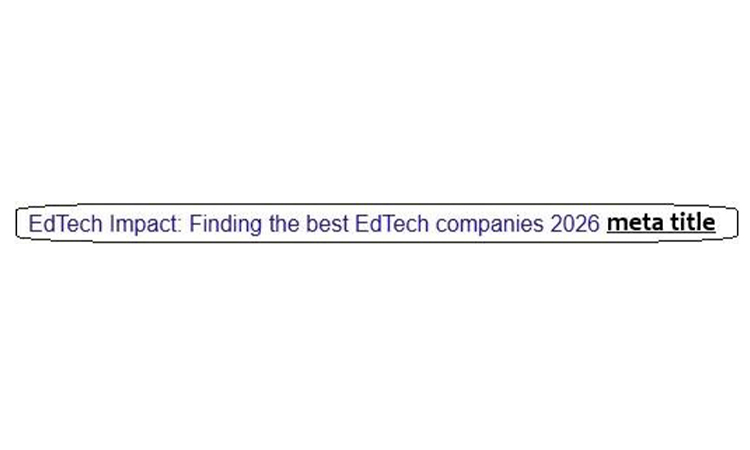
- Meta Descriptions for Educational websites
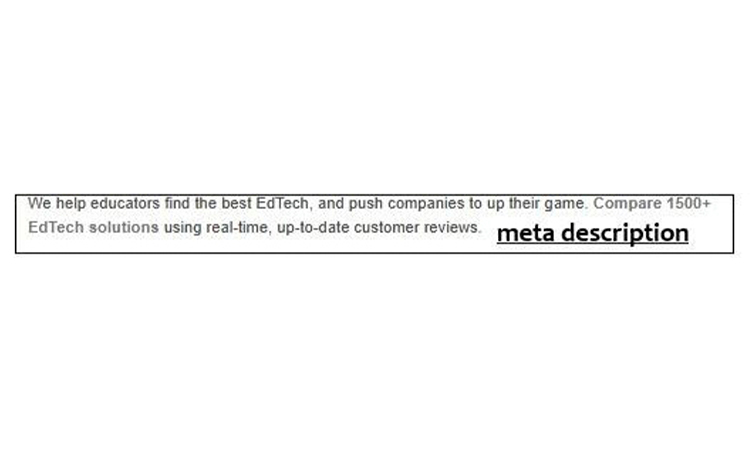
A meta description is a summary of a webpage. It appears in Google search results below the title. It helps improve click-through rate.
- Steps to Optimize Meta Descriptions
- Write within 150–160 characters.
- Add the target keyword naturally.
- Explain the page benefit clearly.
- Add action words like ‘learn’, ‘discover’, and ‘start’.
- Make every page description unique.
Meta Description Example:
Learn on-page SEO for EdTech companies with simple strategies to improve rankings, traffic, and student enrollment.
- Header Tags (H1, H2, H3)
Header tags are headings that structure webpage content. They help Google understand content hierarchy and improve readability.
- Steps to Optimize Header Tags
- Use only one H1 per page.
- Include the main keyword in H1.
- Use H2 for main sections.
- Use H3 for subtopics under H2.
- Keep headings clear and keywords relevant.
Best Example:
For a course page or educational guide, follow this logical hierarchy to help search engines and students understand your content:
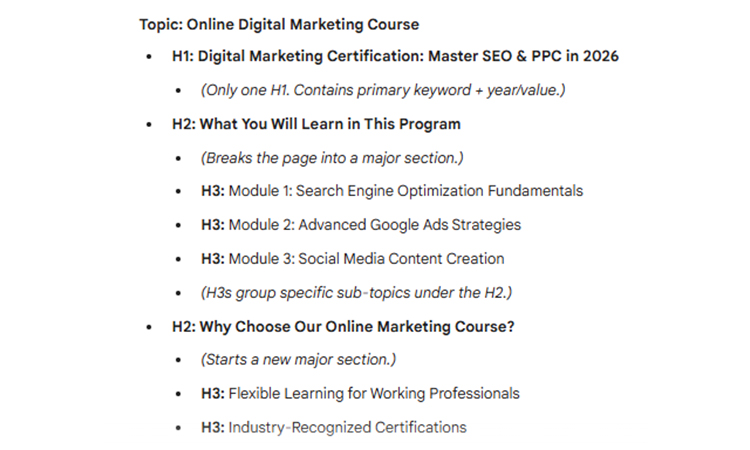
Golden Rules for Headers:
- H1 = The Book Title: Keep it unique and keyword-rich.
- H2 = The Chapters: Use these to outline your main points.
- H3 = The Sub-headings: Use these for lists, modules, or detailed features.
- Internal Linking Between Pages
Internal linking means linking one page of your website to another page on the same website. It helps SEO and improves user navigation.
- Steps to Optimize Internal Linking
- Link relevant pages together.
- Use keyword-rich anchor text.
- Link blog pages to service pages.
- Link high-traffic pages to important pages.
- Fix broken internal links regularly.
Best Example:
Suppose you have a Page: Online Certification Course. You can create internal links withcourse categories and the About page.
- Image Optimization
Image optimisation means reducing image size and adding alt text so search engines can understand the image.
- Steps to Optimize Images
- Compress image size before upload.
- Use the JPEG or WebP formats.
- Add a keyword in alt text.
- Use descriptive file names.
- Keep image size under 150 KB if possible.
Best Example:
Image file name: edtech-online-course-dashboard.jpg
Alt text: Online learning platform dashboard for students
Simple Rule for Image SEO:- Use this formula: Alt Text Formula: Keyword + Image Description + Platform/Topic.
Off-Page SEO for EdTech Companies: Proven Strategies to Build Authority and Boost Rankings
The digital learning industry is more competitive than ever. With thousands of platforms fighting for the same audience, SEO for EdTech companies goes far beyond keywords on a page. Off-page SEO is what happens outside your website. It is what separates platforms that rank on page one from those buried in obscurity.
Here are the most proven strategies to build authority and start driving organic traffic consistently:
- Strategic Link Building Through Educational Partnerships
Link building earns backlinks from authoritative websites to your website. It improves credibility with search engines. For EdTech, links from .edu domains, research portals, and learning blogs are important to attract qualified leads.
How to Do It:
- Identify universities, schools, and educational blogs in your niche using Ahrefs or SEMrush
- Reach out with a value offer with a free tool, guest resource, or research data they can cite
- Get listed in curated “Best EdTech Tools” roundups and digital learning resource directories
- Build relationships with curriculum developers who publish content and reference tools they use
- Submit your platform to verified educational software databases like G2, Capterra, and EdSurge
- Thought Leadership Guest Posting
Publishing expert articles on high-authority websites positions your brand as a credible voice in digital learning. It earns do-follow backlinks and puts your brand in front of targeted audiences already interested in education.
How to Do It:
- Research publications like e-Learning Industry, EdTech Magazine, and Forbes Education.
- Pitch original, data-backed articles to avoid generic posts and focus on unique insights.
- Include a natural contextual link back to a relevant page on your platform.
- Build a consistent publishing cadence to aim for two to four quality guest posts per month.
- Leveraging Social Media Marketing for Brand Signals
While social media platforms are not direct ranking factors, they amplify content reach, generate shares, and drive referral traffic all of which contribute to stronger off-page authority and driving organic traffic over time.
How to Do It:
- Share educational content (tutorials, infographics, short video lessons) on LinkedIn, YouTube, and Instagram
- Join and actively contribute to Facebook Groups and Reddit communities around online education
- Use Twitter/X to engage with EdTech influencers and participate in trending education conversations
- Pin your highest-performing blog posts and course pages across Pinterest boards targeting learners
- Track engagement metrics to identify which social media platforms deliver the most referral traffic
- Influencer and Educator Outreach
EdTech companies can partner with educators, coaches, and digital learning advocates. It gives your platform authentic third-party endorsements. These mentions on social media platforms and personal blogs are powerful trust signals for both users and search engines.
How to Do It:
- Find micro-influencers (10K–100K followers) in the education, career development, or skill-building niches
- Offer free platform access in exchange for an honest review or tutorial video
- Ask educators to embed your tools or link to your resources within their own course materials
- Collaborate on webinars, live sessions, or co-created content to expand reach organically
- Track brand mentions using tools like Brand24 or Google Alerts and nurture those relationships
- PR and Digital Brand Mentions
Unlinked and linked brand mentions across news outlets, podcasts, and industry publications establish domain trust. To improve your SEO for EdTech companies, getting coverage in mainstream media accelerates authority-building faster than most other off-page tactics.
How to Do It:
- Use HARO (Help a Reporter Out) to respond to journalists covering education and digital learning trends
- Issue press releases for product launches, funding rounds, or research reports through PR Newswire or Business Wire.
- Pitch your founders as podcast guests on education and entrepreneurship shows
- Monitor competitors’ press coverage and approach the same outlets with a stronger angle
- Convert unlinked brand mentions into backlinks by politely contacting the publisher and requesting attribution
Local SEO for EdTech Companies: Strategies to Rank Higher in Local Search
Local SEO helps your EdTech business appear when students and parents search nearby. When someone types “coding classes near me” or “online tuition in Pune,” local SEO decides who shows up first. For EdTech companies, this means more enrollments, more calls, and more visibility.
- Google Business Profile Setup & Updates
Your Google Business Profile (GBP) is your digital shopfront. It shows your location, hours, reviews, and courses; all on Google Maps and Search.
- Go to business.google.com
- Add your institute name, address, phone number, and category
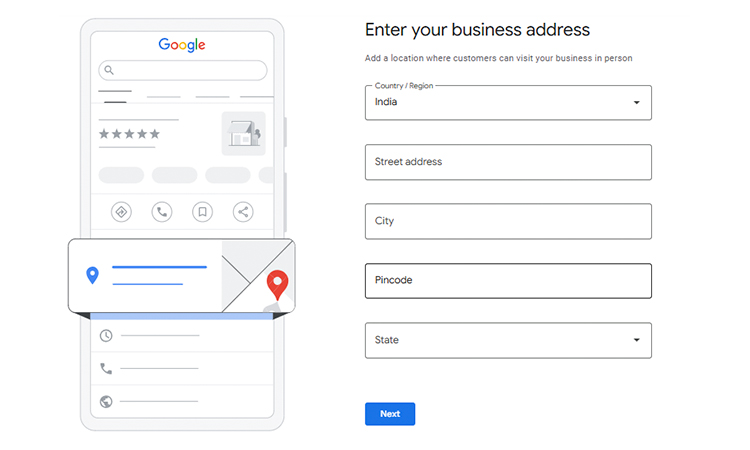
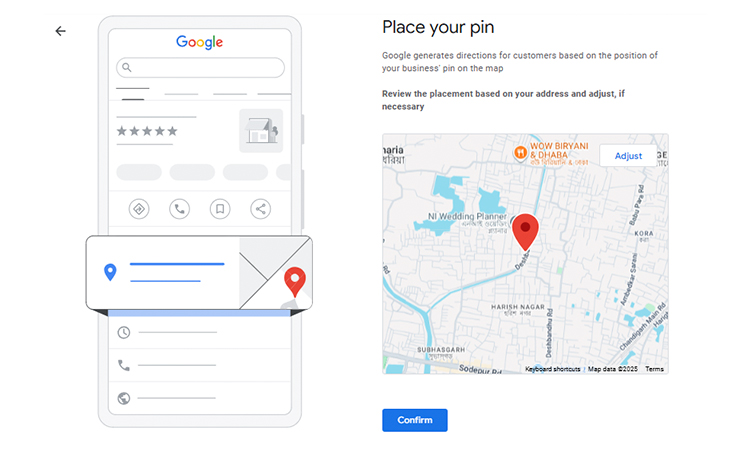
Make a point on the map. It will help your potential clients to locate your physical presences, like your offices or institutions.
- Post weekly updates about new batches or offers
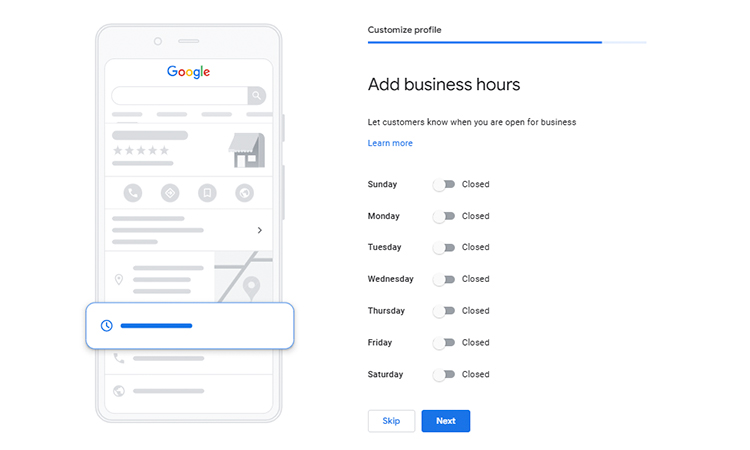
- Keep your hours updated, especially during holidays
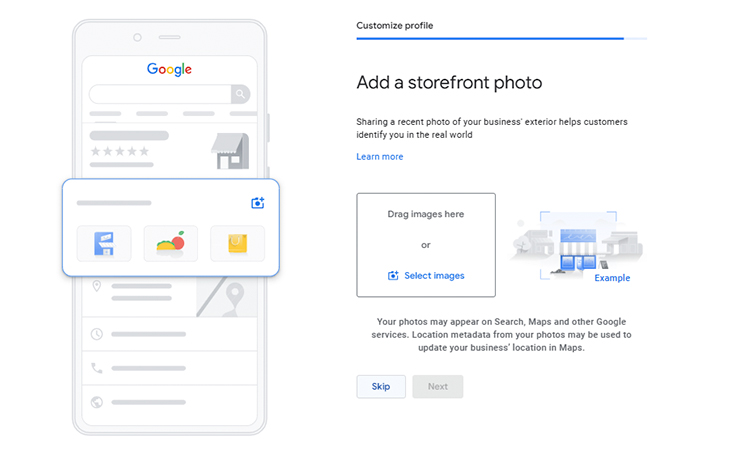
Upload real photos of your classes or team-
Google Business Profile approval usually takes 3–7 days, but sometimes up to 14 days, depending on the verification method.
- Add Location Keywords Naturally
Location keywords connect your content to real searches. Think “best IELTS coaching in New York City” or “Python classes in Houston.” These keywords should appear in your page title, meta description, headings, and body content.
Steps:
- Research keywords using Google Keyword Planner or Ubersuggest
- Add city and area names naturally in your content
- Avoid keyword stuffing. Write for humans, not just bots
- Local Citations and NAP Consistency
NAP stands for Name, Address, and Phone Number. Every directory, website, or listing must show the same NAP. Even a small difference like “St.” vs “Street” can confuse Google and hurt your ranking.
Steps:
- List your institute on Justdial, Sulekha, IndiaMart, and Shiksha
- Use the same format everywhere
- Check existing listings and correct any errors
- Collecting and Responding to Customer Reviews
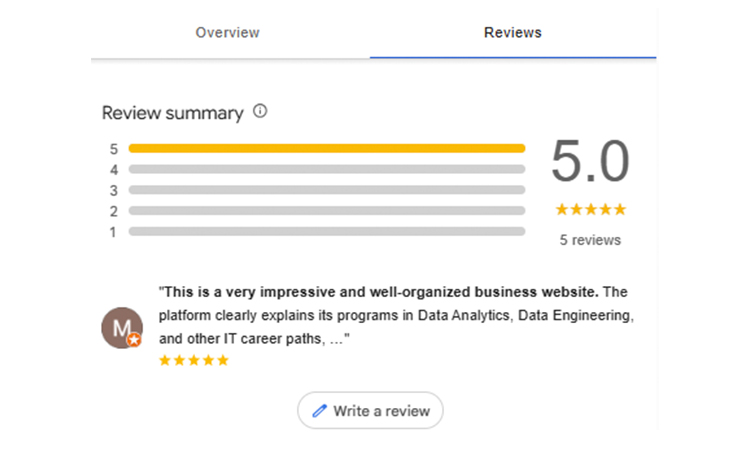
Reviews are powerful signals. Google considers review count, rating, and recency when ranking local businesses. For EdTech companies, a parent’s 5-star review is pure gold.
Steps:
- Ask students or parents via WhatsApp after a successful batch.
- Share a direct Google review link.
- Respond to every review, whether good or bad, professionally.
- Embedding Google Maps on Your Contact Page
This small step has a big impact. Embedding a Google Map on your contact page signals to Google that your physical location is real and verified. It also helps students find you easily.
Steps:
- Open Google Maps and search for your institute
- Click “Share” → “Embed a map”
- Copy the iframe code
- Paste it on your website’s contact page
- Create Location-Specific Service Pages
One page cannot rank for every city. If your EdTech company operates in multiple locations, create separate pages for each one.
For example:
- /spoken-english-classes-mumbai
- /spoken-english-classes-pune
- /spoken-english-classes-delhi
Each page should have unique content, local keywords, testimonials from that city, and a Google Map embed. Do not copy-paste the same content across pages; Google penalises duplication.
- Local Backlinks from Trusted Sources
Backlinks from local websites signal authority. Chambers of commerce, local news portals, school and college websites, and educational directories are excellent sources.
Steps:
- Get listed in your city’s chamber of commerce directory
- Collaborate with local schools for events and get a mention on their site
- Submit guest articles to local education blogs
Quality over quantity. One link from a trusted local source beats ten from spammy ones.
- Using “Near Me” and Geo Keywords
People type “spoken English classes near me” more than ever before. Your content should reflect this natural search behaviour.
Steps:
- Add FAQ sections with questions like “Where can I find coding classes near me in Hyderabad?”
- Use phrases like “serving students in [area name]” in your content
- Include neighbourhood and landmark names where possible
- Getting Listed in Local Aggregators
List your EdTech business on these platforms. Keep name, address, and details consistent. This improves brand visibility. When your EdTech brand appears there, Google sees a credible mention.
- Yelp
- Better Business Bureau
- Yellow Pages
- Foursquare
- Angi
- Chamber of Commerce
- Manta
- Hotfrog
- Crunchbase
Steps:
- Create a free listing on Justdial and Sulekha
- Add complete details — courses, timings, fees, photos
- Keep the NAP identical to your website
- Local Business Schema Markup
Schema markup is code added to your website that helps Google better understand your business. It tells search engines your name, address, phone, hours, and ratings in a structured format. It can unlock rich results in Google Search. Moreover, it shows your star ratings, address, and hours directly on the results page.
Steps:
- Go to Google’s Structured Data Markup Helper
- Select “Local Business” as the type
- Fill in your details and generate the JSON-LD code
- Add it to the <head> section of your website
- Test it using Google’s Rich Results Test tool
Technical SEO for EdTech Companies: Performance, Indexability & Crawlability
Technical SEO is the foundation of a well-optimised website. It ensures search engines can find, crawl, and index your site correctly. Without it, even great content fails to drive organic traffic. For SEO for EdTech companies, technical health is non-negotiable.
- Mobile-Friendliness
More than 64.35% of users browse on mobile devices. Google uses mobile-first indexing. If your site breaks on phones, rankings drop.
Steps:
- Use responsive design (CSS media queries)
- Avoid pop-ups that block content
- Test using Google Mobile-Friendly Test
- Use large tap targets and readable fonts
Tool: Google Search Console → Mobile Usability Report
- Site Speed Optimization (Core Web Vitals)
Core Web Vitals are Google’s speed metrics. They directly impact your SEO for edtech companies’ rankings on search engines.
Three key metrics:
- LCP (Largest Contentful Paint) — loading speed. Target: under 2.5s
- FID (First Input Delay) — interactivity. Target: under 100ms
- CLS (Cumulative Layout Shift) — visual stability. Target: under 0.1
Steps:
- Compress images using TinyPNG or Squoosh
- Minify CSS, JS, and HTML
- Enable browser caching
- Use a CDN (Cloudflare or BunnyCDN)
- Remove unused plugins or scripts
Tools: Google PageSpeed Insights, GTmetrix, Lighthouse
- SSL Certificate (HTTPS)
HTTPS means your site is secure. Google confirmed it as a ranking signal in 2014. Students and parents trust secure websites more.
Steps:
- Buy or activate a free SSL via Let’s Encrypt
- Force HTTPS through your hosting panel or .htaccess
- Check for mixed content warnings (HTTP elements on HTTPS pages)
Tool: SSL Labs (ssllabs.com/ssltest)
- XML Sitemap Submission
A sitemap is a roadmap for search engines. It lists all important pages on your site.
Steps:
- Generate sitemap using Yoast SEO, Rank Math, or Screaming Frog
- Submit it at: Search Console → Sitemaps → Add sitemap URL
- Format: yoursite.com/sitemap.xml
- Exclude thank-you pages, login pages, and duplicate URLs
Tool: Google Search Console, Rank Math SEO
- Robots.txt Optimization
Robots.txt tells crawlers which pages to visit and which to skip. A poorly written file can accidentally block your entire site.
Steps:
- Access via yoursite.com/robots.txt
- Block admin pages, login pages, and test environments
- Never block CSS or JS files — Google needs them to render pages
- Always allow your sitemap URL
Tool: Google Search Console → Robots.txt Tester
One wrong line in robots.txt can erase months of SEO efforts.
- Fixing Crawl Errors
Crawl errors stop search engines from reading your pages. They directly harm organic traffic.
Common errors:
- 404 Not Found
- Redirect loops
- Server errors (5xx)
Steps:
- Open Google Search Console → Coverage Report
- Fix or redirect broken URLs
- Monitor weekly for new errors
Tool: Google Search Console, Screaming Frog SEO Spider
- Structured Data / Schema Markup
Schema markup helps Google better understand your content. For EdTech companies, use:
- Course schema — for individual courses
- Organization schema — for brand details
- FAQ schema — for question-answer sections
- Review schema — for ratings
- Breadcrumb Schema– Shows page hierarchy (Home → Category → Page)
- Local Business Schema- This is best for schools, institutes, and offices. It includes the address, phone number, opening hours, and location (map).
- Article Schema- It is used for blog posts. It helps Google to understand the author, publish date, and the content type
- Event Schema- For workshops, seminars, and school events. It shows the date and location.
- How-To Schema – It is perfect for step-by-step guides.
Steps:
- Use Google’s Structured Data Markup Helper
- Generate JSON-LD code
- Paste into the <head> of relevant pages
Tool: Test your schema using Google Rich Results Test (best for rich result eligibility) and Schema Markup Validator (best for checking code errors).
- Canonical Tags
Duplicate URLs confuse search engines. Canonical tags tell Google which version of a page is the “official” one.
Example: yoursite.com/course and yoursite.com/course?ref=fb are technically different URLs but have the same content.
Steps:
- Add <link rel=”canonical” href=”preferred URL”> in the <head>
- Use Yoast or Rank Math to set canonicals automatically
- Check for self-referencing canonicals on all key pages
Tool: Screaming Frog, Sitebulb
- Avoiding Duplicate Content
Duplicate content splits ranking power. Search engine algorithms penalise or ignore repeated content.
Steps:
- Write unique content for every page
- Use canonical tags for similar pages
- Avoid copying course descriptions across multiple location pages
Tool: You may use Copyscape (best for checking copied content online) and Siteliner (best for finding duplicate pages within your website).
- Proper 301 Redirects and Handling 404s
A 301 redirect permanently moves a page. A 404 is a dead end. Both matter for organic traffic and user experience.
Steps:
- Use 301 redirects when deleting or renaming pages
- Set up a custom 404 page with helpful links
- Audit redirects quarterly with Screaming Frog
- Avoid redirect chains (A → B → C; fix to A → C)
Tool: Screaming Frog, Redirection Plugin (WordPress)
- Lazy Loading for Images and Videos
Lazy loading delays the loading of offscreen media. Pages load faster. Core Web Vitals improve.
Steps:
- Add loading=”lazy” attribute to all <img> tags
- Use a WordPress plugin like WP Rocket or Semrush
- Apply to embedded YouTube videos too
Tool: WP Rocket, Smush, native HTML attribute
- Clean Site Architecture & Breadcrumb Navigation
A flat, logical structure helps both crawlers and users. It distributes link authority evenly across your site. It helps users navigate through your website.
Ideal structure: Home → Category → Course Page → Module
Steps:
- Keep important pages within 3 clicks from the homepage.
- Add breadcrumb navigation on all inner pages
- Use internal links to connect related courses and blogs
- Add Breadcrumb List schema for rich results
Tool: Yoast SEO, Rank Math, Screaming Frog site audit
How to Track SEO Performance and KPIs for an EdTech Company
SEO performance tracking means measuring how your website performs in search engines.
You track rankings, traffic, leads, and conversions to understand SEO success.
For an EdTech company, the goal is not just traffic. The goal is course enrollments, leads, and student sign-ups.
Simple SEO KPI Formula for EdTech Success
SEO Success = Traffic + Rankings + Leads + Enrollments + Backlinks
- SEO for Edtech Companies: KPIs Tracking Table for EdTech
| KPI / Metric | Definition | Why It Matters for EdTech | How to Track It | Tools |
| Organic Traffic | Number of visitors coming from search engines | Shows SEO visibility and website growth | Check traffic from Organic Search | Google Analytics |
| Keyword Rankings | Position of your keywords in Google | Shows how well your pages rank for course keywords | Track target keywords ranking | Google Search Console, SEMrush |
| Click Through Rate (CTR) | Percentage of users who click your result | Shows how attractive your title and meta description are | Improve title tags and meta descriptions | Google Search Console |
| Bounce Rate | Percentage of users leaving without interaction | High bounce means the content is not useful | Improve content and page design | Google Analytics |
| Average Session Duration | The time users spend on the website | More time means users read the course content | Add videos, guides, and course details | Google Analytics |
| Pages Per Session | Number of pages the user visits | Shows website engagement | Improve internal linking | Google Analytics |
| Backlinks | Number of websites linking to your site | Improves domain authority and rankings | Build guest posts and educational links | Ahrefs, SEMrush |
| Conversion Rate | Visitors who become leads or students | Most important KPI for EdTech | Track form submissions and enrollments | Google Analytics |
| Indexed Pages | Pages indexed by Google | Shows how many pages appear in search | Submit sitemap and index pages | Google Search Console |
| Core Web Vitals | Website speed and user experience | Important Google ranking factor | Improve page speed and mobile UX | PageSpeed Insights |
SEO for EdTech Companies: Biggest Mistakes That Hurt Rankings
These are common mistakes made by most SEO for EdTech companies. So be aware and try to avoid the following issues:
- Most EdTech companies fail because they focus only on traffic.
- But SEO success comes from intent + content + conversion + tracking.
- Ignoring Search Intent
- Many EdTech sites target keywords but ignore intent.
- Users want answers, not just course pages.
- Match content with intent (learn, compare, enroll).
- Poor Keyword Research
- Targeting only broad keywords like “online course”.
- High competition, Low conversions.
- Focus on long-tail keywords like “best digital marketing course for beginners”.
- Weak Content Quality
- Short and generic content does not rank.
- No depth. No value.
- Create detailed guides, course pages, and FAQs.
- Not Optimizing Course Pages
- Course pages lack proper structure.
- Missing syllabus, reviews, FAQs, and CTAs.
- Optimize for both SEO and conversions.
- No Internal Linking Strategy
- Pages are not connected.
- Users and Google cannot navigate easily.
- Link blogs → course pages → category pages.
- Ignoring Local SEO efforts
- Many EdTech companies forget local searches.
- Important for institutes and coaching centers.
- Optimize Google Business Profile and local keywords.
- Weak Backlink Strategy
- No authority building.
- Low trust in Google’s eyes.
- Get backlinks from blogs, universities, and education sites.
- Ignoring Video SEO
- EdTech is content-heavy but ignores video SEO.
- Videos can rank on Google and YouTube.
- Optimize titles, descriptions, and thumbnails.
FAQ’s
Ans. SEO for EdTech companies is the process of optimizing educational websites, course pages, and content to rank higher in search engines and attract students, institutions, and learners through organic search traffic without paid ads.
Ans. SEO for an EdTech website usually takes 3 to 6 months to show initial results and 6 to 12 months for strong rankings, depending on competition, website authority, and content quality.
Ans. The best SEO strategies for EdTech companies include keyword research, educational content marketing, course page optimization, technical SEO, backlink building, and internal linking to improve rankings and enrollments.
Ans. EdTech companies should target course keywords, skill-based keywords, career-related searches, certification keywords, and long-tail keywords like “best data science course online” or “digital marketing certification course”.
Ans. Schema markup helps search engines understand your course content more clearly. For EdTech websites, using “Course, FAQ, Review, Breadcrumb, and Organization” schema can improve search visibility, increase click-through rates, and enhance how your pages appear in search results.
Conclusion
SEO for EdTech Companies is no longer optional. It is the foundation of sustainable growth, and it is an ongoing process. Relevant content is very important for EdTech solutions. If you want to increase course enrollments organically, you must focus on search intent, high-quality content marketing, technical performance, and consistent optimization. You can implement seo strategies on your own, but a professional SEO company can help your growth 10x better. They have real-world experience in improving brand visibility. So you can focus on learning, courses, and modules. On the other hand, digital marketing experts will take care of your organic growth in the online process.
Ready to grow your EdTech business?
Start implementing these SEO for EdTech Companies strategies today to get more organic traffic, increase trust, and turn visitors into enrolled students, without relying on paid ads.

