





SEO for industrial companies is the most significant investment for industrial businesses to get more clients online. Almost 90% of B2B buyers research online before contacting vendors, and 67% begin their shopping journey with search engines more than sales calls.
So, those industrial companies use smart SEO strategies like data-driven content marketing and personalized industrial website experiences to stay ahead of the competitors. These companies can attract and transform engineering and procurement traffic into high-value inbound leads.
Industrial buyers now want more technical information, deeper insights, and quick answers when they are deciding. AI-powered search is transforming how business-to-business buyers discover and evaluate suppliers. On the first page of search results, companies that optimize for both traditional SEO and AI signals will be in front of their opponents.
This guide will teach you everything you need to know about industrial SEO, from basic keyword research and on-page SEO to building off-page authority. Most importantly, the content should be AI optimized, and you should use inbound marketing to get qualified industrial clients to your site.
What Is SEO for Industrial Companies and Why Is It Important?
SEO for industrial companies is the process of optimizing manufacturing and engineering websites so procurement managers, plant engineers, and OEM buyers can discover products through organic and AI-driven search engines.
It focuses on:
• Technical keyword research
• Product-driven content
• CAD and specification indexing
• Compliance documentation
• Page-speed optimization
• RFQ conversion paths
• Authority building through backlinks and case studies.
B2B sites get 53–76% of their traffic from organic search. This shows how important SEO is for website visibility and industrial buyer traffic.
According to Grand View Research, the worldwide industrial services market size was determined to be USD 32.65 billion in 2023 and is projected to reach USD 50.09 billion by 2030, increasing at a CAGR of 6.5% from 2024 to 2030. This growth is because industrial automation, the Internet of Things (IoT), and AI are developing quickly, which is increasing the need for more advanced industrial services. So in this huge competitive market, if you want your brand to be visible on search engines, then SEO is the key.
If people can’t find you on the internet, you don’t exist to them. Therefore, search engine optimization helps you be found when it is needed most.
Importance Of Industrial Company SEO
- Cost-Effective: Industrial SEO is very cost-friendly, as it will provide long-term results. On the other hand, PPC (pay-per-click) ads will stop when your budget runs out.
- Increases Confidence: Nowadays, 84% of people consider online reviews as much as personal suggestions. So a well-optimized website develops trust among your target audience. If you put your satisfied client’s review on the home page, it will increase legitimacy.
- Targets Ready Buyers: People who actually need industrial help may search “Buy steel beams, Chicago.” So your website should rank for those keywords. And here SEO will help you to pop up on targeted keywords. In the further section of this blog, you will learn how to optimize your website for specific keywords to attract ready buyers.
- Mobile Shopping: Most searches occur on phones today. Customers will find you wherever they look if you optimize SEO perfectly.
How Does an Industrial Website Shape Trust and Buying Decisions?
Being an industrial business owner, if you want to climb the search engine rankings, Google prefers organic search indications that indicate technical reliability and E-E-A-T (Expertise, Experience, Authoritativeness, Trust).
Strategic Ranking Factors
- Technical Credibility: Google recognizes websites that provide extensive technical data, including ISO certifications and CAD downloads, as indicators of substantial industry expertise.
- UX for Engineers: Effective marketing strategies need easy accessibility. The website should load first, and people can easily filter it. This will decrease bounce rate and increase user participation.
- Request for Quote (RFQ) Optimization: Clearer “Request for Quote” forms with fewer fields increase conversion intent and move users quickly through the funnel.
- Compliance content: It is very important for organic search authority. You should meet Google’s high standards for search quality by showing that you follow RoHS (Restriction of Hazardous Substances) and REACH (Registration, Evaluation, Authorization, and Restriction of Chemicals). Furthermore, including these specific certifications along with safety standards like ISO sends a message of technical credibility to Google algorithms. This transparency reduces perceived risk, directly influencing B2B ranking factors and long-term buying decisions.
Why Is Keyword Research the Foundation of Effective SEO for Industrial Companies?
“Keyword research isn’t just about rankings anymore—it’s about understanding the questions your audience is asking. It gives us a direct window into customer needs.” — Geno Marinelli, Digital Strategist. Keyword research is the most important part of an industrial company SEO.
Keyword research ensures that the content has all the terms that your target audience uses to search for your business. Industrial keywords should focus on real buyer language.
- Step-by-Step Keyword Research Process for Industrial SEO
- Define Your Industrial Buyer Personas
First, you need to understand what your target audience needs. Focus on their requirements.
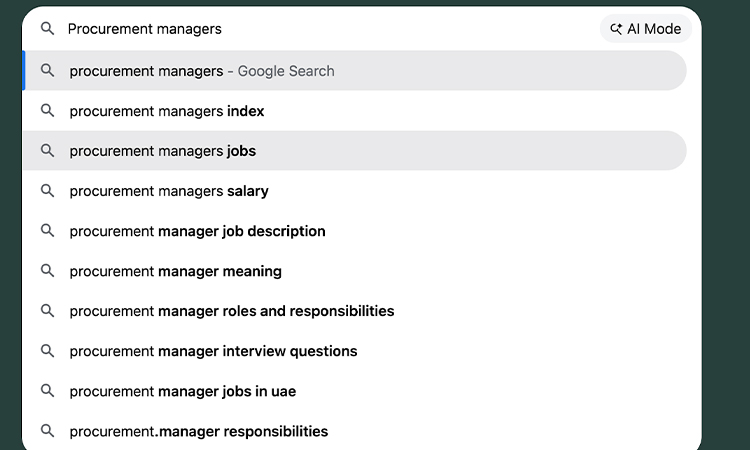
You can search for your business-related words on Google Search. Then you can see a list of related words like this:
List the roles you target:
- Procurement managers
- Plant engineers
- Maintenance heads
- OEM sourcing teams
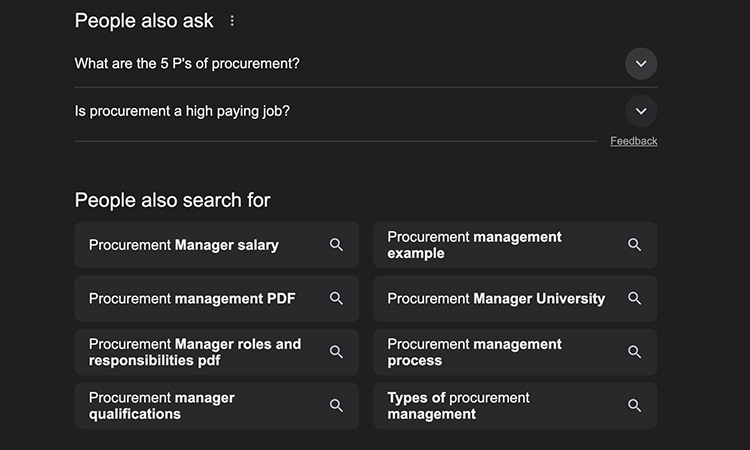
Then you can find related keywords in the People Also Ask section, like this-
- Expand Using Similar & Long-Tail Keywords
Employ SEO tools to find:
- Changes and similar words
- Specification-based phrases
- Problem-solution questions
- Location variations
In business-to-business markets, long-tail keywords can be good.
Analyze Search Intent Carefully: Name each keyword for what it is-
You should find the right page type for your intent.
- Informational (“how hydraulic pumps work”)
- Commercial (“industrial pump supplier”)
- Transactional (“request quote CNC machining”)
- Map Keywords to Pages
- Every page has one main keyword.
- The content must include secondary terms to support the main keywords.
- FAQs for AI-driven search
- Local landing pages with different GEO preferences
You can use Ahrefs to find out relevant Industrial seo based keywords-
Type your main keywords in the search bar, and the list will pop up like this-
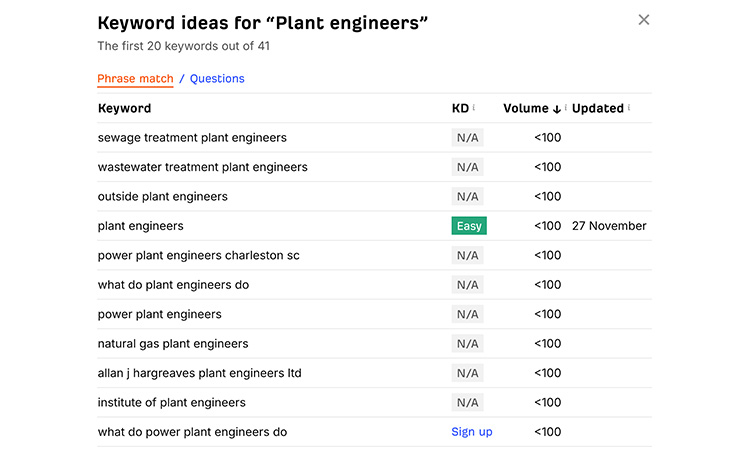
It’s important to find the “sweet spot” between how hard it is to rank for a keyword and how many people are searching for it (volume).
Here are some easy ideas to help you decide:
- Recognize Keyword Difficulty (KD)
- Scale of 0-100: The majority of tools rank KD from 0 (easy) to 100.
- For new websites, low KD (0–30) works well. It shows that fewer large corporations are competing for this term.
- High KD (70+): This high KD is good for well-established websites. If you’re just beginning, stay away from them.
- “Gap” Rule: Then you can search for keywords where the first few results on Google don’t have much authority but still have something to do with your business.
- Comprehend Search Volume
- There are a lot of people searching for this term, so it’s good. However, it’s usually very hard to rank for.
- Low Volume (50-200): These are frequently known as “long-tail keywords”. These are very particular (e.g., “stainless steel bolts for marine engines” vs. just “bolts”).
- Quality over Quantity: It is better to get 50 visitors who truly want to acquire your product than 1,000 visitors who are just looking for a definition.
- How to Pick the “Winner.”
- The Golden Ratio: You may target for low KD + medium volume. This gives you the best chance to get website traffic quickly.
- Check the Intent: Do your own research before choosing a keyword. The KD is probably too high for you if all of the results are large companies like Wikipedia or Amazon.
- Industrial Focus: High volume isn’t always king in production. A monthly volume of 20 is ideal if you offer specialist goods and those 20 customers are high-value purchasers.
- Use the “Staircase” Strategy.
- Step 1: So you may start with KD 0-20 to get some quick wins and first website traffic.
- Step 2: As your site grows stronger, shift to KD 30-50.
- Step 3: You shouldn’t go after high-KD keywords until your brand is well-known in your field.
What Are the Most Important On-Page SEO Strategies for Industrial Websites?
On-page SEO for industrial companies will elevate the website’s outside ranking. If you optimize on page seo with the following strategy, you can generate leads:
- Title Tags (With Target Keyword)
The blue text that you can click on in Google search results is called a title tag. It shows Google and people what the page is about.
- Why is it important for industrial companies’ SEO
- Strong sign for ranking
- Click-through rate (CTR) goes up.
- It helps AI understand what the main concept of your webpage is.
- The Best Tips for Industrial Websites
- Try to keep the title tag length to 55-60 characters.
- Stick to your main web page concept and main keyword.
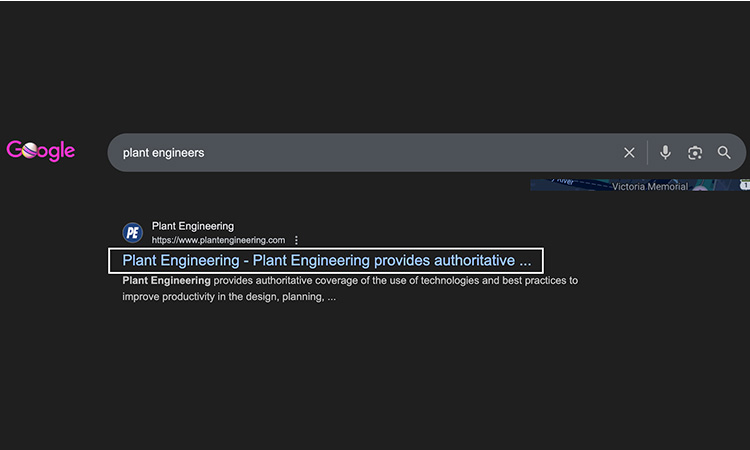
Add keywords at the very beginning like this-
- Industrial title tag example-
- Target Keyword: stainless steel heat exchanger manufacturer
- Good Title Tag: Stainless Steel Heat Exchanger Manufacturer | ISO Certified Plant
- Poor Title Tag: Heat Exchanger, Steel, Manufacturer, Supplier, Factory
- Meta Descriptions
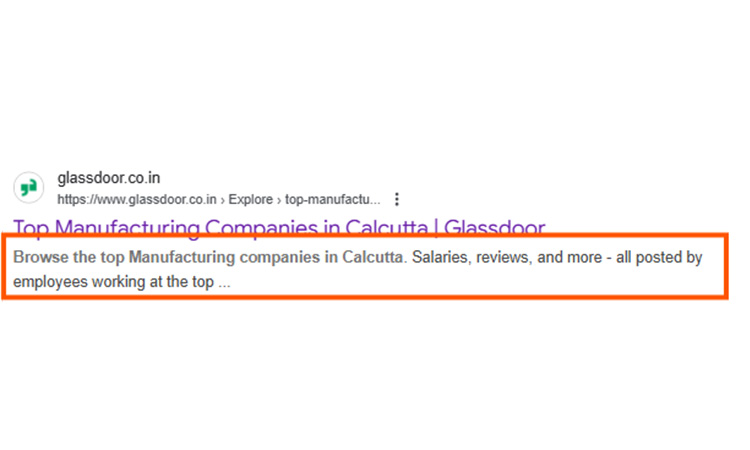
Meta descriptions are the summaries of your web page’s concept. It will not help your web page to rank, but will improve clicks.
- Best Tips to Write Meta Description
- The meta description should be within 155-160 characters.
- Keywords should be added perfectly.
- Try to focus your main services in the description. And add a call to action.
- Example of Meta Description
ISO-certified stainless steel heat exchanger manufacturer serving chemical & pharma plants. Custom designs, fast delivery & compliance docs.
- Header Tags (H1, H2, H3)
Header tags structure your page content:
- H1 = main topic
- H2 = sections
- H3 = subsections
You can strategise headers like this-
H1: Stainless Steel Heat Exchanger Manufacturer
H2: Design Standards & Certifications
H2: Industrial Applications
H2: Technical Specifications
H3: ASME Pressure Ratings
H3: Material Grades (SS304, SS316)
- Best Tips
- You should use one H1 only
- Include the primary keyword in H1
- Use variations in H2s
- The writing is simple and easy to understand with buyer-focused words.
- Add question-style H2s.
They help both readers and search engines to scan the information. Headers are important factors in search engine optimization. It helps Google to analyze the content structure and topic.
- Internal Linking Between Pages
As its name suggests, it links one page to another within one website.
- Best Tips
- Link blogs → product pages
- Link product pages → industry pages
- You should use descriptive anchor text
- Avoid generic anchors like “click here.”
Example-
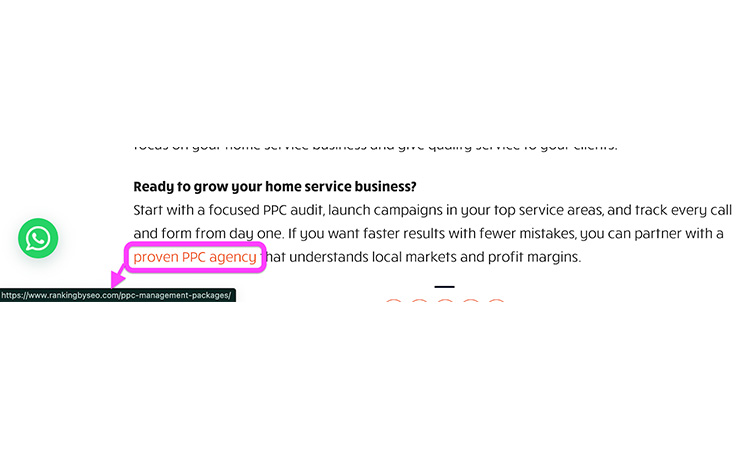
From a blog:
Learn more about our plate heat exchangers for chemical processing plants. (Links to product page)
- URL Structure (Clean, Readable, Keyword-Rich)
URL is Uniform Resource Locator. It is the address of your webpage.
Why It’s Important
- It improves crawlability.
- Increases Click Through Rate.
- It helps AI models to classify pages.
- Avoids duplication issues.
Best Tips
- A prominent URLs should be short and to the point of the website.
- Lowercase letters should be good.
- Then you may separate words with hyphens
- The main keyword should be included.
- The numbers & random IDs should be avoided.
- It should match the page hierarchy.
Example
Good URL:
/products/stainless-steel-heat-exchangers/
Bad URL:
/page?id=4827&type=sshx
- Image Optimization (Alt Text & Size)
Image optimization includes:
- Compressing files for speed
- Writing alt text to describe images
- Naming files clearly
Alt text also improves accessibility and image search rankings.
Why It Matters
- Faster pages rank better
- Improves Core Web Vitals
- Helps Google understand machinery images
- Supports visual search
Best Tip
- Use descriptive filenames
- Add model numbers
- Compress images
- Use WebP format
- Avoid keyword stuffing
Example
Image File Name:
stainless-steel-heat-exchanger-ss316.jpg
Alt Text: SS316 stainless steel heat exchanger installed in a chemical plant
How Does Off-Page SEO Build Authority for Industrial Companies?
Off-page SEO involves all optimization activities outside your website that improve domain authority, search rankings, and industry authority. Strategic off-page strategies for industrial and manufacturing companies directly affect how search engines and potential customers perceive your expertise. This helps you get leads and close contracts faster.
- What Is Off-Page SEO?
Backlinks, brand mentions, reviews, and social engagement are all examples of off-page SEO signals that show that your website is reputable and relevant. These factors are built through relationship-building, content distribution, and reputation management across the digital ecosystem, which is distinct from on-page optimization.
Here are the best off-page strategies you can follow to build your website as an expert in your niche:
- Backlink Building from Trusted Websites
Strategic link building forms the foundation of off-page authority for SEO for manufacturers.
Implementation steps:
- Target industry-specific publications (trade journals, manufacturing associations)
- Secure links from supplier directories and B2B platforms
- Partner with complementary businesses for mutual linking opportunities
- Create linkable assets: research reports, industry benchmarks, technical papers
- Monitor competitor backlinks using tools like Ahrefs to identify opportunities
Tip: One high-authority link from a publication in your field is worth many low-quality directory listings.
- Online Review Generation
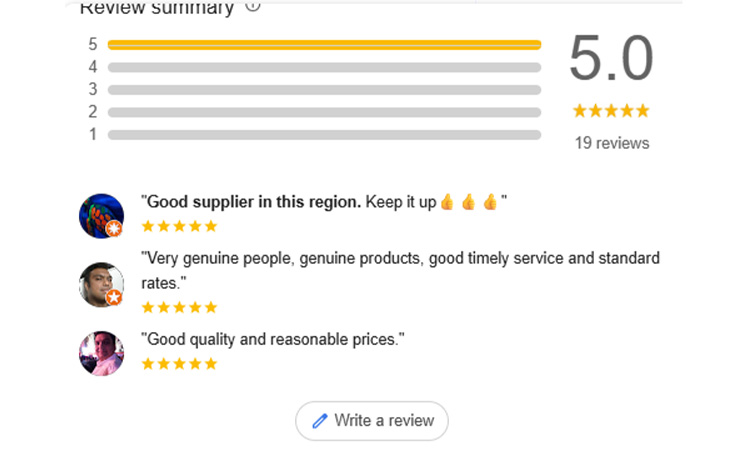
Most people rely on online reviews to decide which company’s service they will get.
Best practices:
- Ask for reviews of your Google Business Profile regularly after projects are finished.
- Create simple review request workflows for satisfied clients
- You should respond to all comments positively, even if you get a negative comment.
- Use Facebook reviews to establish trust with B2B audiences.
- Feature testimonials prominently on high-converting pages for conversion optimisation.
- Social Media Signals and Shares
As for indirect ranking factors, they get more people to your content and bring in free traffic through social signals.
Execution strategy:
- Share case studies and technical content on LinkedIn (primary B2B platform)
- Use industry-specific hashtags to reach manufacturing space audiences
- Engage with prospects and partners through thoughtful commenting
- Repurpose blog content into visual formats (infographics, short videos)
- Join LinkedIn groups where potential customers gather
- Guest Blogging
Your company will be seen as a thought leader if you post authoritative content on outside platforms.
Effective approach:
- Identify reputable manufacturing blogs, industry news sites, and association websites
- Pitch data-driven articles addressing real pain points in the manufacturing space
- Include author bios with strategic links back to relevant service pages
- Focus on educational value over promotional messaging
- Repurpose your best-performing content with fresh angles for guest posts
- Influencer Mentions
Industry expert endorsements carry significant weight in B2B decision-making during long sales cycles.
Action steps:
- Identify thought leaders through LinkedIn, industry conferences, and trade publications
- Engage authentically before requesting collaboration
- Invite experts for podcast interviews, webinars, or co-created content
- Tag and notify influencers when sharing their insights
- Build genuine relationships rather than transactional exchanges
- Press Releases
Newsworthy announcements generate backlinks and brand visibility when distributed strategically.
Distribution tactics:
- Announce major milestones: new facilities, technology adoptions, certifications
- Use industry-specific wire services (not just generic PR platforms)
- Optimize releases with target keywords naturally woven into headlines
- Include multimedia elements for better pickup rates
- Follow up with trade journalists who cover the manufacturing space
- Forum/Quora/Reddit Engagement
Ethical participation in relevant communities establishes expertise while driving targeted organic traffic.
Guidelines for success:
- Answer technical questions genuinely without overt self-promotion
- Include links only when directly helpful to the discussion
- Focus on manufacturing-specific forums and subreddits
- Build reputation through consistent, valuable contributions
- Use signature links sparingly and contextually
- Broken Link Building
This white-hat tactic replaces dead links with your relevant content, benefiting both parties.
Process outline:
- Use tools to find broken links on industry resource pages
- Create superior replacement content matching the original topic
- Reach out to webmasters with helpful notifications about broken links
- Suggest your content as an updated alternative
- Focus on high-authority sites for maximum impact
How to Create Content That Drives First Page Rankings and Generates Leads for Industrial Companies
Industrial B2B marketing calls for a significantly different approach than consumer-focused content. Your buyers search for technical expertise, not flashy promotions. With 6-18-month sales cycles and multiple stakeholders, your content must educate engineers and procurement teams and support your sales team during lengthy decision-making processes.
- How Should You Create Content That Engineers and Procurement Teams Trust?
- Technical Depth
- Provide specific measurements, tolerances, and performance data rather than vague claims
- Include formulas, calculations, and technical specifications that engineers can verify
- Address real-world operating conditions, failure modes, and troubleshooting scenarios
- Reference industry standards (ISO, ASTM, ANSI) relevant to your solutions
Best tool: However, you can use technical writing platforms like MadCap Flare or Adobe FrameMaker to maintain accuracy across documentation.
- Compliance Proof
- Document certifications (CE, UL, CSA) with verification numbers and expiration dates
- Provide third-party test results and independent verification reports
- Include regulatory compliance documentation for different markets
- Maintain downloadable compliance certificates and material safety data sheets
Best tool: Compliance management software like ComplianceQuest integrated with your content management system
- Author Expertise
- The credentials of engineers, not marketing writers, are important for byline content.
- Include professional certifications, patents, and years of hands-on experience
- Feature cross-functional input from design engineers, field service technicians, and quality managers
- Link to author profiles showing their technical background and published research
Best tool: LinkedIn for showcasing author credentials and building professional authority
- Visual Diagrams
- Create CAD-quality technical drawings showing assembly details and component relationships
- Develop interactive 3D models for complex systems
- Use annotated cutaway views explaining internal mechanisms
- Include dimensional drawings with tolerance specifications
Best tool: Autodesk AutoCAD or SolidWorks for professional-grade technical illustrations
- What Content Marketing Approaches Attract Industrial Clients?
- Application-Based Content
- Develop solution guides for specific industry challenges (chemical processing, heavy manufacturing, mining operations)
- Create application notes showing product performance in different operating environments
- Publish selection guides helping buyers choose the right specifications
- Document installation procedures and integration requirements with existing systems
Best topics: “Pump Selection for Corrosive Chemicals”, “Valve Sizing for High-Pressure Steam Systems”, and “Bearing Selection for Extreme Temperatures”.
- Case Studies
- Quantify results: “Reduced downtime by 47% over 12 months.”
- Detail the problem, solution implementation, and measurable outcomes
- Include before/after data, ROI calculations, and total cost of ownership analysis
- You can feature testimonials from plant managers and maintenance supervisors, not just purchasing agents
Best tool: Canva Business or Adobe InDesign for professional case study formatting
- Comparison Guides
- Create honest competitive analyses showing where your solution excels and where alternatives might be appropriate
- Develop material selection charts comparing performance characteristics
- Build TCO calculators comparing lifecycle costs, not just purchase price
- Include neutral technology comparisons, educating buyers on different approaches
Best topics: “Pneumatic vs. Electric Actuators: Performance Comparison” and “Stainless Steel Grades for Food Processing Equipment”.
- Technical Resources
- Publish papers on emerging technologies and industry trends
- Create engineering reference guides (conversion charts, material properties, sizing formulas)
- Develop troubleshooting flowcharts for common equipment issues
- Offer CAD models and product configurators for design integration
Best tool: HubSpot or Marketo for gating premium technical resources and tracking buyer engagement
Proven Strategies for SEO for Industrial Companies
For industrial SEO to work, you need to focus on the same keywords that buyers actually use. These are usually very specific technical terms that don’t get as many searches but have a higher conversion intent:
- Optimize for long-tail technical searches: “316 stainless steel ball valve 2 inch 1000 psi”
- Create content answering specific application questions in your niche
- Build authority through a technical blog series demonstrating deep subject matter expertise
- Implement schema markup for products, specifications, and technical documentation
- Leverage AI-driven search insights to identify emerging technical queries and industry pain points
How Can Industrial Companies Dominate SEO and Regional Markets?
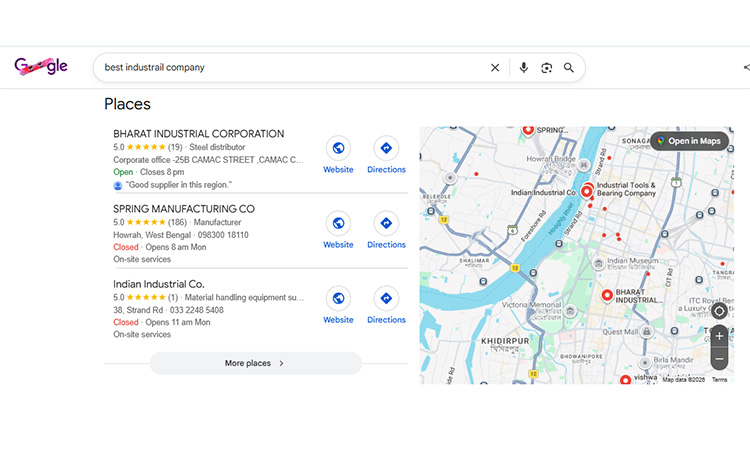
Local SEO for industrial companies helps you to attract local clients. When your target audience types “best industrial company near me”, if you optimize local seo with a Google My Business profile, your brand will show up like this:
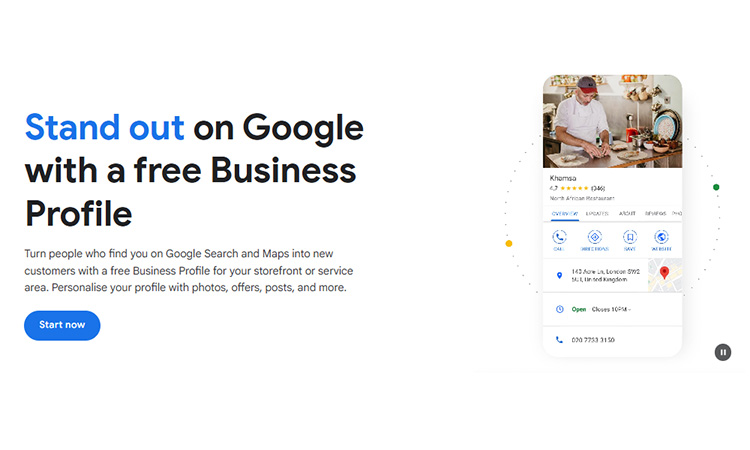
To optimize Google Business Profile, you should go to https://business.google.com/en-all/business-profile/
Then click on “Start Now.”
Then you need to select the business category from the list-
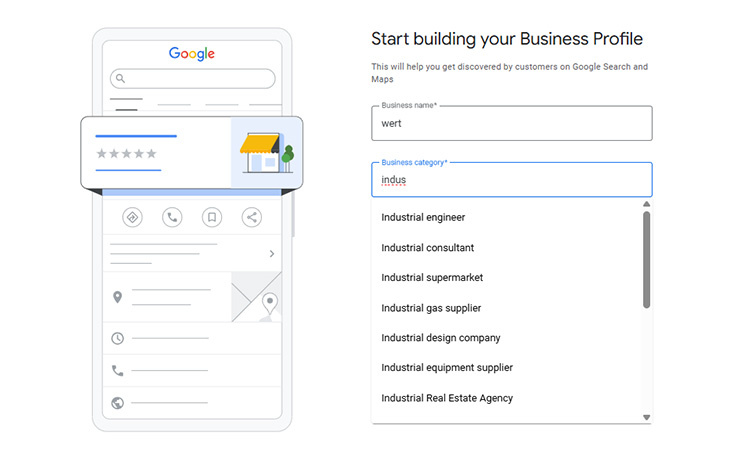
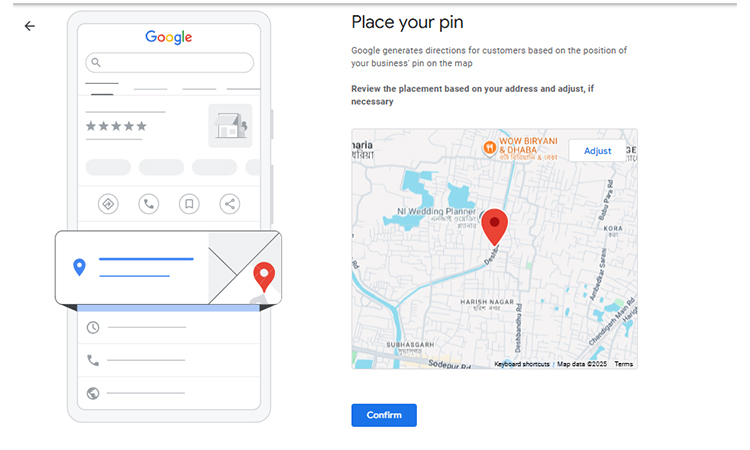
Then you put your physical address or service areas, plus phone number, website, and business hours.
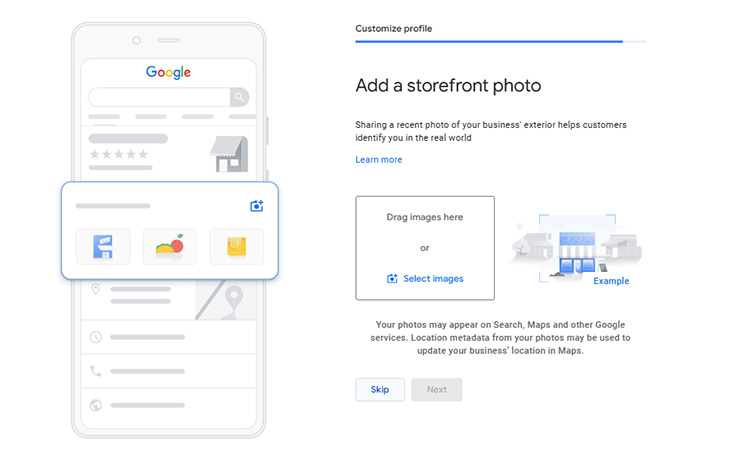
You should write a clear business description and upload high-quality photos/videos of your factory, machinery, products, and team.
Then complete verification (postcard, phone, email, or video) and start collecting reviews and posting updates.
- Local Citations & NAP Consistency
NAP (Name, Address, Phone) citations are online mentions of your business across directories, ensuring buyers’ searches find accurate information.
Steps:
- Apply Moz Local or BrightLocal to audit current citations…
- Align the NAP format with more than fifty directories, including Yelp, Google Business Profile, and platforms tailored to particular industries.
- Check every three months for irregularities that detract from first-page rankings.
- Embedding Google Maps
Display interactive maps on contact pages to boost local SEO for industrial visibility and user trust.
Implementation:
- Use the Google Maps Embed API.
- Add schema markup for location validation.
- Include multiple facility locations for manufacturers.
- Location-Specific Service Pages
Put together pages that are only about “industrial welding services [city]” and use the same keywords in the title tags, H1s, and on the pages themselves.
Best Topics for Industrial Companies:
- Custom manufacturing capabilities by region
- Equipment maintenance services + service areas
- Industry certifications showcasing technical expertise
- Case studies demonstrating proven strategies that shorten sales cycles
Pro Tip: Through local search dominance, linking location pages to the bios of your sales team will make your brand seem more human and help you get more leads.
What Technical SEO Elements Matter Most for Industrial Websites?
Industrial companies face unique challenges in digital marketing. They work with more complicated products, longer sales cycles (often 3–8 months), and buyers who do a lot of research before buying. Search engine optimization (SEO) isn’t just about rankings; it’s also about helping your sales team find new customers by using tried-and-true methods that show real outcomes.
- Mobile-Friendliness

This makes sure that your website works well on all devices, especially the smartphones and tablets that engineers and procurement teams use to do research at trade shows or while they’re on the go.
Optimization Steps:
- Test responsive design using Google’s Mobile-Friendly Test
- Ensure CAD files, spec sheets, and technical documents open properly on mobile
- Make contact forms and RFQ buttons easily tappable (minimum 48px touch targets)
- Optimize product configurators for touch interfaces
Best Tool: Google Search Console’s Mobile Usability Report
Industrial Tip: Technical buyers often compare specifications across multiple suppliers on tablets during facility tours—ensure datasheets load quickly on mobile.
- Page Speed Optimization (Core Web Vitals)
It helps assess loading performance, engagement, and visual reliability to keep prospects engaged with your technical content.
Critical Metrics:
- Largest Contentful Paint (LCP): Under 2.5 seconds
- First Input Delay (FID): Under 100 milliseconds
- Cumulative Layout Shift (CLS): Under 0.1
Optimization Steps:
- Compress high-resolution product images without losing technical detail
- Minimize JavaScript for product configurators
- Use CDN for distributing heavy technical resources globally
- Enable browser caching for spec sheets and catalogs
Best Tool: Google PageSpeed Insights, GTmetrix
Industrial Focus: Slow-loading engineering drawings or 3D product models frustrate qualified buyers. Every second delay reduces conversion by 7%.
- SSL Certificate (HTTPS)
Encrypting data transmission between users and your server—essential for protecting proprietary technical inquiries and RFQ submissions.
Why It Is Important: Google prioritizes HTTPS sites for first page rankings. Industrial buyers submitting confidential project specifications demand security.
Best Tool: Let’s Encrypt (free SSL), Cloudflare SSL
- XML Sitemap Submission
A roadmap helping search engines discover and index your entire product catalog, technical resources, and case studies.
Optimization Steps:
- Include all product category pages, application guides, and whitepapers
- Prioritize pages answering key questions buyers ask (installation guides, compatibility charts)
- Submit to Google Search Console and Bing Webmaster Tools
- Update after adding new product lines or technical documentation
Best Tool: Yoast SEO (WordPress), Screaming Frog
Industrial Strategy: Separate sitemaps for products, resources, and case studies help search engines understand your own set of expertise areas.
- Robots.txt Optimization
Search engines can’t index identical parameter URLs from product filters because you can control which pages they can crawl.
Critical Actions:
- Block staging sites and internal search result pages
- Allow access to important technical resources
- Don’t accidentally block entire product categories
Best Tool: Google Search Console’s robots.txt Tester
- Fixing Crawl Errors
It helps you to find and fix the problems that keep search engines from accessing your content.
Common Industrial Website Errors:
- Broken links to discontinued product pages
- Server errors on PDF spec sheets
- Timeout errors on database-driven product catalogs
Best Tool: Google Search Console, Screaming Frog, Ahrefs Site Audit
- Structured Data/Schema Markup
Structured data helps Google and AI systems understand your products, certifications, locations, and technical documentation.
Industrial websites should implement:
• Product schema – specifications, dimensions, pressure ratings
• FAQ schema – technical questions engineers ask
• Organization schema – ISO certifications, locations
• LocalBusiness schema – plants and service facilities
• Video schema – installation tutorials
• Breadcrumb schema – site architecture clarity
Schema improves eligibility for:
- Featured snippets
- AI Overviews
- Rich product results
- Knowledge panels
Best Tool: Google’s Structured Data Markup Helper, Schema.org
- Canonical Tags
A canonical tag (rel=”canonical”) is an HTML element used to tell search engines which version of a webpage is the “master” copy.
Industrial Application: Prevent duplicate content when products appear in multiple categories or have regional variations.
Best Tool to Optimize: Yoast SEO, Screaming Frog
- Avoiding Duplicate Content

Prevention Steps:
- Write unique descriptions for similar products
- Consolidate thin content from outdated product lines
- Use 301 redirects for discontinued items, pointing to current alternatives
- Proper 301 Redirects and 404 Handling
Directing users and search engines from old URLs to relevant current pages.
Best Practice: Create custom 404 pages suggesting alternative products or search functionality, turning dead ends into opportunities.
Best Tool: Redirect Mapper plugin, Screaming Frog
- Lazy Loading
Definition: Loading images and videos only when users scroll to them—critical for product galleries and application videos.
Best Tool: Native browser lazy loading, WP Rocket
- Clean Site Architecture & Breadcrumbs
A logical hierarchy helps buyers navigate complex products efficiently.
Structure:
- Homepage → Product Categories → Subcategories → Individual Products → Technical Specs
- Clear breadcrumb navigation showing users their location
Best Tool: Breadcrumb NavXT, custom development
How Does Inbound Marketing Support Long B2B Sales Cycles?
Industrial companies face sales pipelines that stretch 6-18 months. Inbound marketing bridges this gap through strategic, coordinated efforts.
- SEO + Automation
- Your SEO for industrial companies captures prospects early when they search terms like “corrosion-resistant valves” or “heavy-duty conveyor systems.”
- Marketing automation delivers the right content at each decision stage
- Similar keywords attract buyers across different research phases
- Consistent touchpoints are maintained by automated processes without human intervention.
- Lead Nurturing
- You provide technical resources that match where prospects are in their research
- Educational content builds trust before prospects contact your sales team
- Targeted email sequences address specific pain points and applications
- Progressive profiling reveals buyer needs over time
- CRM Alignment
- Your marketing and sales teams share visibility into prospect behaviour.
- Lead scoring identifies qualified leads based on engagement and fit
- Sales receives context about which content prospects consumed
- The CRM tracks account-level engagement across multiple stakeholders
- Multi-Touch Attribution
- You understand which channels contribute to conversions
- Attribution models reveal the customer journey from awareness to purchase
- Data shows how graphic design, whitepapers, and webinars work together
Industrial buyers need multiple interactions before they commit. Inbound marketing ensures your company stays present throughout the entire decision process.
How Is AI-Driven Search Changing Industrial SEO Strategy?
In 2026, the industrial SEO landscape has shifted from a “click-first” model to an “authority-first” paradigm. For manufacturing and industrial companies, the emergence of Google AI Overviews and Bing Copilot has transformed search engines into “answer engines,” where the goal is no longer just ranking #1, but becoming the cited source within an AI-generated summary.
- The Shift to Entity Optimization
Traditional keyword stuffing is obsolete. Modern marketing efforts now prioritize entity optimization to establish your company as a verified “entity” in Google’s Knowledge Graph. AI models now crawl your site to understand the relationship between your “ISO 9001 certification”, “CNC machining tolerances”, and “aerospace supply chain”. If the AI doesn’t recognize your brand as a topical authority, you won’t appear in the summary box.
- Impact on Website Traffic
The “Zero-Click Search” reality is here; over 60% of searches now conclude without a click. While this may seem to threaten website traffic, the quality of visitors has improved. Users who click through from an AI citation are often further down the funnel, seeking deep technical specs or CAD downloads that an AI cannot yet synthesize.
- Web Development & Strategic Adaptation
To thrive, web development must evolve beyond aesthetics:
- Structured Data: Implementing an advanced JSON-LD schema is mandatory for AI “ingestion.”
- Technical Precision: Marketing efforts must focus on long-tail, spec-driven content (e.g., “AS9100 injection molding for medical devices”) rather than broad terms.
- Performance: Speed is a non-negotiable ranking factor; a 3-second delay in load time can disqualify you from AI citations.
By treating your website as a structured database rather than a digital brochure, your industrial brand can lead the “Generative Engine Optimization” (GEO) era.
How Can You Measure Whether Your Industrial SEO Program Is Effective?
There are certain metrics you need to show that your industrial SEO is actually helping your business:
• Google Analytics reveals your traffic quality – The visitors who come to your site naturally and stay for three to five minutes on technical pages are what you want.
• Conversion rates show actual results – Your spec sheet downloads, quote requests, and CAD file downloads prove buyers find value. A good industrial site converts 2-4% of visitors.
• Keyword rankings demonstrate visibility – It’s important to rank for the same keywords that your competitors are going after, especially technical long-tail terms that people are looking for.
• Lead quality matters most – Google Analytics connects your SEO performance to actual sales enquiries and RFQs.
• Revenue attribution proves ROI – You can trace which technical content and keywords generate leads that close.
What SEO Mistakes Hold Industrial Companies Back the Most?
Industrial companies often struggle with SEO because they fail to align technical content with how buyers actually search online.
Critical SEO Mistakes:
- Generic Keywords Over Specific Terms: Companies target broad phrases instead of precise technical searches. Buyers look for “welding safety equipment OSHA compliant”, not just “welding products”.
- Spec Sheets Without Context: You upload PDFs but provide no searchable text. Search engines cannot read your technical data, which blocks the right traffic from engineers who need specifications.
- No Conversion Path After First Contact: Visitors land on your site but find no clear next steps. Forms are too complex or require excessive information before buyers are ready.
- Duplicate Content Across Product Lines: The same descriptions repeat for similar products. This confuses search engines and dilutes your authority.
- Ignore Mobile Experience: Engineers do research on tablets during site visits. Slow mobile pages lose qualified leads before they convert.
- Lack of Measurable Results Tracking: Companies cannot prove ROI without a proper analytics setup. You need conversion goals, not just traffic numbers.
FAQ Section
Ans. SEO for industrial companies is the process of optimizing manufacturing or B2B industrial websites so engineers, procurement managers, and plant operators can easily find them in search engines. It includes analyzing keywords for technical products, making product pages work better, speeding up the site, and writing authoritative content about the industry that brings in qualified leads.
Ans. Industrial SEO focuses on highly technical keywords, long sales cycles, spec-driven content, CAD downloads, and compliance documentation. It focuses on engineers and purchasing teams who search using specific product requirements and industry standards, in contrast to general B2B SEO.
Ans. The best industrial SEO keywords include product-specific terms (e.g., “hydraulic press manufacturer”), specification-based searches, certification queries, and location-based phrases. Combining technical product keywords with geo-modifiers helps attract buyers ready to request quotes.
Ans. Most industrial SEO campaigns show ranking improvements within 3–6 months, while steady RFQs typically appear in 6–12 months. Timelines depend on competition, technical site health, backlink authority, and content depth.
Ans. High-performing pages include product category pages, specification sheets, application pages, industry use cases, case studies, and local facility pages. These assets demonstrate expertise, match buyer search intent, and support higher rankings in organic and AI-driven results.
Final Key Takeaways for Industrial SEO in 2026
• Optimize for engineers, not marketers
• Target long-tail, specification-based searches
• Publish compliance and certification content
• Implement schema across products and FAQs
• Build backlinks from industry publications
• Strengthen local plant visibility
• Track RFQs and sales—not just traffic
• Prepare for zero-click search with GEO tactics
Ready to Grow Your Industrial Brand Online?
Turn technical searches into real RFQs and long-term contracts with a data-driven industrial SEO strategy built for engineers, procurement teams, and plant managers. From product-page optimization to GEO-targeted visibility and authority-building content, the right approach can transform your website into a consistent lead engine. Start strengthening your digital presence today—invest in industrial SEO strategies that deliver measurable growth tomorrow.

