






The market for personal injury lawyers and attorneys was valued at $57.3 billion, which shows a growth of 1.9%. Also, in the US, it has seen an annual growth rate (CAGR) of 1.0% from 2019 to 2024. The market is projected to continue growing slowly in the upcoming years. If you want to dominate this market, you need to maintain your online visibility and adapt to changing consumer preferences. Therefore, you need SEO for personal injury lawyers; in this way, you can uplift your law firm’s website.
Among all digital marketing strategies—such as PPC ads, paid social media, influencer promotions, or email outreach—SEO is still the strongest strategy because it generates organic traffic. PPC stops when your budget ends, social media posts may go away from feeds, and paid ads often fail to develop integrity. But SEO for personal injury puts your law firm’s website in front of people who already need legal help and actively search with intent phrases like “best personal injury lawyer near me.” Therefore, SEO is the marketing method that converts the most leads for personal injury attorneys.
So in this comprehensive guide, you are going to learn all the important search engine optimization strategies with how-to guides with the best tools, which will help you to create a successful SEO campaign for your website. You need to follow these strategies so you can improve your website’s ranking on search engines and bring more organic traffic to your site.
What Is SEO for Personal Injury Lawyers?
SEO, or search engine optimization, helps personal injury attorneys to improve their search engine rankings so that their potential clients can find them online. Search engines prioritize optimized websites when people are searching for attorneys for a personal injury or accident. Personal injury attorneys rely on a variety of SEO tactics, including off-page, on-page, local, and technical SEO, to boost website traffic from individuals looking for legal aid. Personal injury firms use SEO to connect with their ideal clients and make themselves different from other firms in the same field.
Why Should Law Firms Build An SEO Strategy For Personal Injury Lawyers?
Personal injury law firms need a strong digital presence to survive in today’s competitive market. Search engine optimization provides the foundation for sustainable growth and client acquisition. According to data, 96% of people seeking legal advice use a search engine during their research process.
- SEO Delivers Sustainable Growth Over Paid Ads
SEO for personal injury, however, builds permanent assets. When your law firm’s website ranks organically on search engine results pages, you don’t pay for each click. According to research, organic search drives 53% of all website traffic, while paid search accounts for only 15%. For personal injury attorneys, this means more prospective clients find you without draining your marketing budget. Your SEO efforts create compounding returns—each optimized page, each piece of quality content, and each backlink continues to work for months and years ahead.
- Improves Authenticity And Legitimacy
Search engines reward quality, and users trust organic results more than advertisements. When potential personal injury clients search for legal help, they view top-ranked organic results as more credible and trustworthy.
Personal injury lawyer SEO establishes your firm as an authority. When your website appears on the first page of search engine results pages for relevant keywords, it signals expertise and reliability. According to a study, websites that rank in the top three positions get almost 54.4% of clicks. This ranking factor is very important when someone needs representation for their personal injury claim—they want established, reputable personal injury law firms.
- Cost-Effective Long-Term Investment
Moreover, you can think like this -if a personal injury lawyer might spend $50,000 annually on Google Ads to maintain visibility. That same investment in SEO for personal injury lawyers—including keyword research, content creation, technical optimization, and local SEO—builds permanent value. After 12-18 months, your law firm’s website can rank for hundreds of relevant keywords without ongoing per-click costs. Your Google Business Profile optimization and local search rankings continue to attract personal injury clients without additional spending. The initial personal injury lawyer SEO efforts create a marketing asset that appreciates rather than depletes.
- You Can Reach Your Clients When They Need You Most
Personal injury attorneys need to appear exactly when someone searches for legal help. Almost 74% of potential clients visit a law firm’s website before making contact. When you conduct effective keyword research, you can find what personal injury clients actually search for—keywords like “best personal injury lawyer near me,” “car accident attorney,” or “slip and fall lawyer.” When your website ranks for these relevant keywords, you capture high-intent website visitors ready to hire representation. Moreover, your content appears on search engine results pages precisely when someone suffers an injury and needs legal guidance. This strategic SEO planning gives you optimal results because you meet potential clients exactly when they need you most, not when an algorithm decides to show them an ad.
How To Conduct Keyword Research to Improve SEO for Personal Injury Lawyer?
You can start with keyword research. So you need to understand what kind of words the target audience uses to search for any legal assistance.
Most people often search keywords like “best lawyer for personal injury in my area” or “slip and fall attorney [location]. Each page of your website should focus on a different topic, like locations, injuries, or practice areas. And then put keywords accordingly. This is known as a keyword map.
You can use keyword research tools like Google Keyword Planner, Ahrefs, Semrush, and UberSuggest to identify relevant keywords and check for keyword rankings.
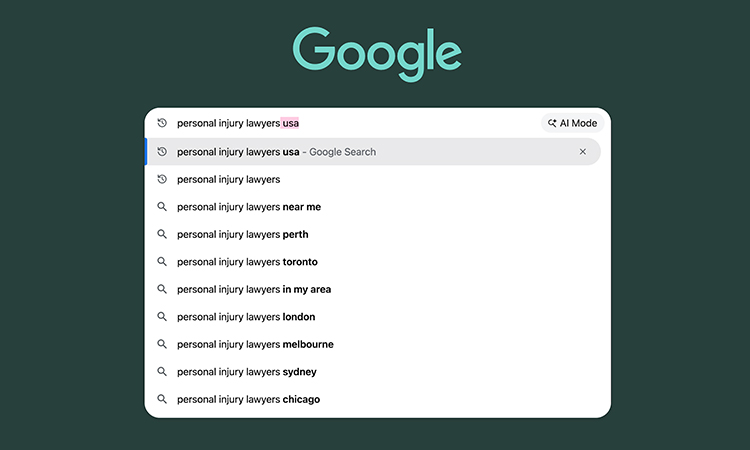
First, you can type your main keyword on Google and let Google autocomplete guide you to various words related to your terms, like this-
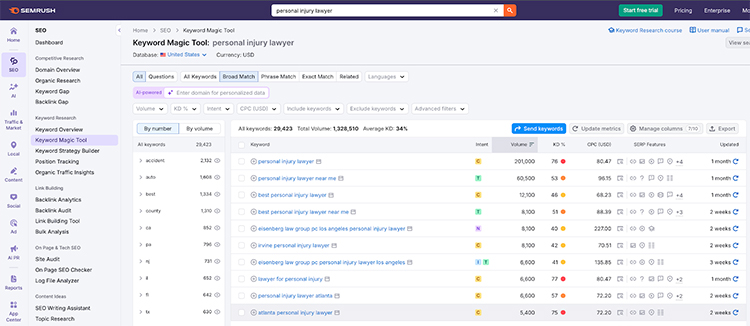
Then you can take help from Semrush -Magic Keyword Tool.
You need to put your main keywords in the serach bar, and then a list will appear like this-
| Metric | Definition | Best Tips to Choose the Right Option |
| Keyword Difficulty (KD) | A score (0–100) showing how hard it is to rank on Google for a keyword based on competition, backlinks, and authority. | – For personal injury law topics, aim for KD 20–40 for easier early wins.- Target mid-difficulty terms (40–60) as your authority grows.- Avoid only high-competition keywords like “personal injury lawyer”—rank later with strong authority. |
| Search Volume | The average number of times users search for a keyword monthly. | – Choose a mix of high-volume keywords (1,000–10,000+) for visibility.- Also target lower-volume long-tail keywords (10–500 searches) that convert better.- Example: “car accident lawyer near me” has lower volume but high client intent. |
| CPC (Cost Per Click) | The average cost advertisers pay per click in Google Ads for that keyword. Higher CPC = higher commercial intent. | – In legal niches, CPC is often $50–$400+, showing strong business value. – Use high-CPC keywords to identify topics that generate cases. – Even if you don’t run ads, CPC reveals which keywords are most profitable. |
| Search Intent | The purpose behind the user’s search—what they want to find, know, or do. Categories: Informational, Navigational, Commercial, Transactional. | – Prioritize transactional & commercial intent terms (e.g., “hire car accident lawyer”).- Use informational content (“What to do after a car crash”) to build authority and internal links. – You need to make sure that every keyword matches a clear page purpose. |
| SERP Features | Special elements on Google search pages, such as Local Pack, Featured Snippets, People Also Ask, Reviews, Map results, and more. | – Target keywords that trigger Local Pack for better visibility in local searches. – Create structured content to capture Featured Snippets. – Include FAQs to win People Also Ask features. – Use schema to improve chances in rich results. |
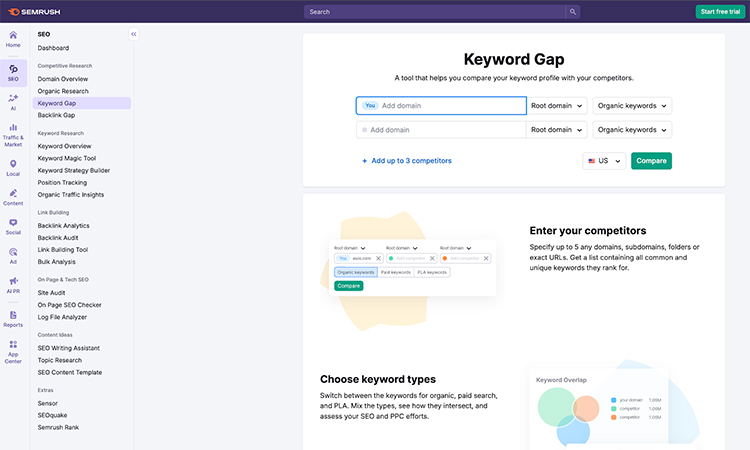
You can put your domain and your rival’s domain to identify what keywords your rivals rank, but you don’t. So you need to put those keywords on your website content to rank higher on search results.
How Can Content Marketing Attract High-Quality Personal Injury Clients?
Content is the most important part of a successful SEO strategy for a personal injury lawyer. Without proper content, how will you attract clients, so you need to write well SEO optimized content for your personal injury lawyer’s website. Here you can get the best content ideas to improve your local firm’s SEO for personal injury.
Best Content Types for Personal Injury Attorneys
Here, you can find some of the best content ideas to improve your personal injury lawyer SEO.
- Produce Content That Matches Your Target Audience’s Requirements
First, you need to understand what your target audience needs, like what their findings are related to, a personal injury lawyers and law firms. Not every visitor wants to hire a personal injury lawyer, but they need to gather information on insurance processes, timelines, or compensation. The best-performing content targets each stage of the decision journey:
| Stage | Content Type | Example |
| Awareness | Educational blog posts, FAQs | “What to Do After a Car Accident” |
| Consideration | Case study, explainer article | “How Liability Works in Slip-and-Fall Claims” |
| Decision | Service pages, success stories, testimonials | “Why Hire a Car Accident Lawyer in [City]” |
You should create content that addresses the fear, confusion, and urgency of real victims and helps you connect directly with those actively seeking legal assistance.
- Create Powerful Web Pages for Your Personal Injury Firms
Moreover, you can develop specific pages for different services. It will improve search engine rankings and prominence for high-intent local searches. Examples include:
- Truck accident lawyer
- Medical malpractice
- Wrongful death
- Slip and fall injury
- Dog bite injury
These pages should clearly explain legal rights, possible compensation, the step-by-step legal process, and why hiring a personal injury attorney is important.
- Use Localized and Hyper-Relevant Content
You need to focus on area-specific content marketing to improve local seo tactics for personal injury law firms. High-value localized formats include:
- City-specific landing pages
- “Top dangerous intersections in [City]”
- “[City] statute of limitations explained.”
- Court procedures and insurance company breakdowns are unique to your region
This makes your content more relevant and increases the chances of ranking for high-value legal terms.
- Case Study Articles
You can show a track record and exhibit real results. For example, you can show in detail how you secured a $500,000 settlement for a car accident victim or won a complex slip-and-fall case. These stories resonate with prospects who face similar situations. Moreover, to make it more authentic, you can add details about challenges, legal strategies, and outcomes without violating client confidentiality.
- Frequently Asked Questions Segment
This kind of segment addresses common questions. When your potential clients search for “How much is my personal injury claim worth?” or “What should I do after a car accident?” and so on. You need to answer that kind of question.
To get an idea of what kind of questions your target audience asks, you can check Google’s People Also Ask section like this-
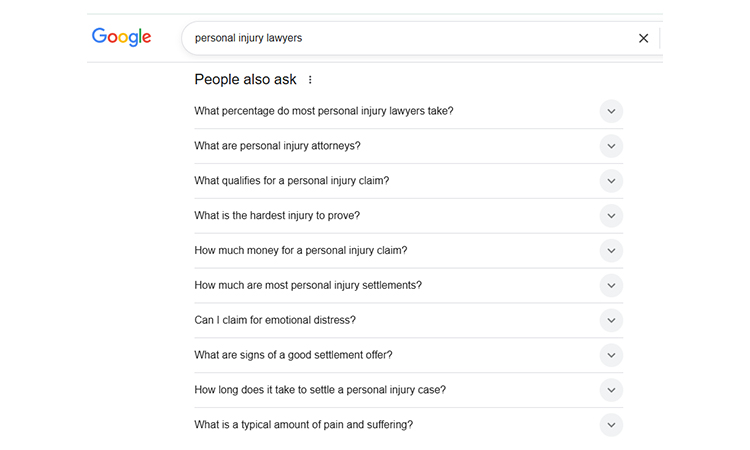
You need to target long-tail keywords and capture people in the research phase. Therefore, you should structure your responses and provide brief answers that show your level of expertise.
- Local Legal Guides
Furthermore, you can create local law guides that work exceptionally well for personal injury SEO campaigns. The guides can be like “Guide to Filing a Personal Injury Claim in [Your City]” or “Understanding [State] Car Accident Laws.” Local SEO ensures these guides rank for location-specific searches and attract clients in your service area.
- Comparison Articles For Law Firms
When you write a comparison article, it will help clients make decisions. So you can write content like “Settling vs. Going to Trial: What’s Best for Your Case?” or “How to Choose the Right Personal Injury Lawyer.” These articles capture high-intent searchers ready to hire a personal injury law firm.
Where Can You Publish Your Content for Maximum Impact?
- Your Website Blog should be the primary hub for all content. So you can publish 2-4 comprehensive articles monthly, each targeting specific keywords.
- Guest Posts on Reputable Websites develop authority and generate valuable backlinks. Contribute articles to legal publications, local news sites, and industry platforms like JD Supra, Law360, or your state bar association website. These reputable websites pass credibility to your site and improve search engine rankings.
- Local News and Community Sites connect you with nearby prospects. Then you can offer expert commentary on local accidents, safety issues, or legal changes. Local lawyers are requested to contribute to various community websites, and these listings bring in targeted traffic.
- Social Media Platforms extend your content’s reach. So you can share blog posts on LinkedIn, Facebook, and Twitter with innovative captions. LinkedIn works particularly well for attorney seo and professional networking, while Facebook helps you reach accident victims and their families.
- Legal Directories like Avvo, FindLaw, and Justia allow profile content and articles. You need to complete your profiles thoroughly and contribute to their content sections when possible. These platforms already rank well for legal searches.
Best Content Optimization Tools and How to Use Them
There are various tools that you can use to optimize your content for search engines. Here, you get some useful content optimization tools to improve your personal injury SEO.
- Surfer SEO
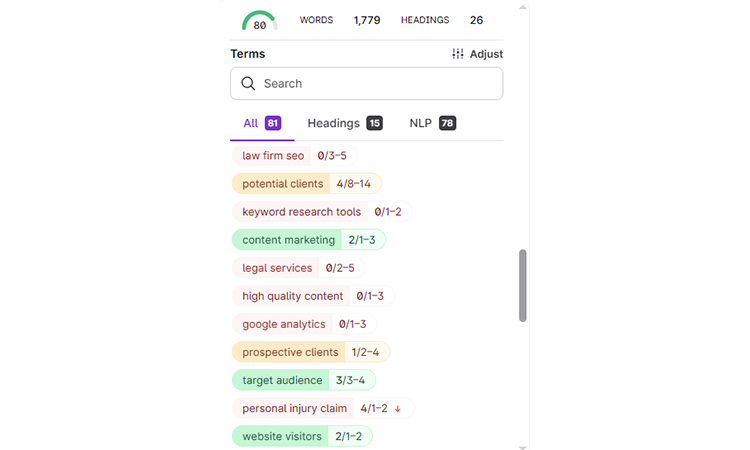
It helps you to analyze top-ranking pages and provides specific optimization recommendations. It shows ideal word count, keyword density, header structure, and related terms to include.
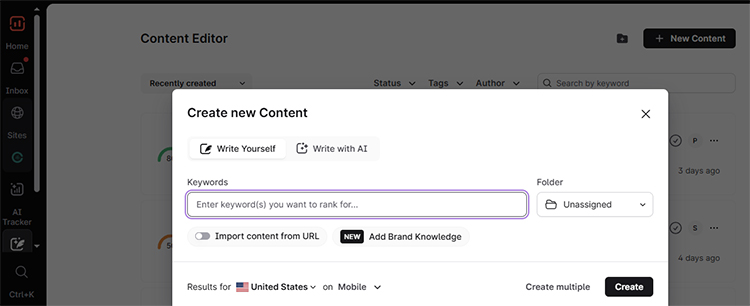
How to use it: Before writing, create a content brief in Surfer for your target keyword. Then you should follow the recommendations while writing naturally. After drafting, run your content through Surfer’s editor to identify gaps and optimize further.
- Semrush Writing Assistant
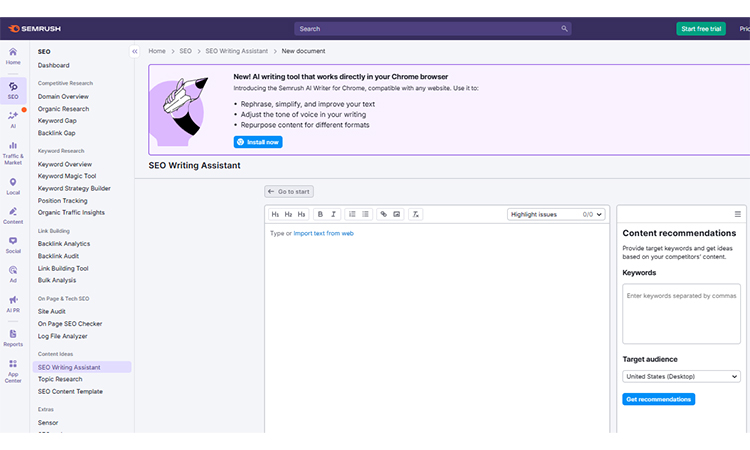
This tool helps you to evaluate readability, tone, and SEO performance in real-time as you write. It suggests improvements for keyword usage and checks for originality.
How to use it:
- Install the Google Docs or WordPress plugin. Set your target keywords and location.
- Compose your content while tracking the SEO score; target a minimum of 8.5 out of 10.
- Address any warnings about readability to guarantee that the content stays usable.
- Grammarly
This tool helps you to ensure professional, error-free content that develops authenticity. Legal content should be authentic and grammatical errors.
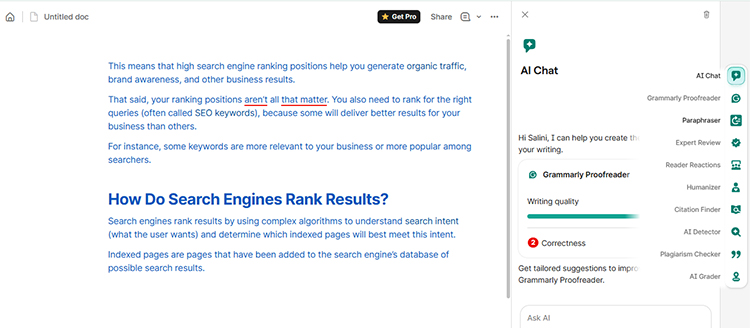
How to use it: Run all content through Grammarly Premium before publication. Set the tone to “formal” or “professional” for legal content. Then you need to fix all critical issues and review suggestions for clarity improvements.
How Do You Optimize On-Page Elements For Personal Injury Law Pages?
On-page SEO for personal injury lawyers decides whether your personal injury law firm appears on the first page of search results or gets buried on page ten. Search engines receive signals about the quality and relevance of your content from each aspect. You can master how these elements(Title tags, Meta description & meta title, headings, internal linking, and URLs) work, and you can improve your seo for personal injury lawyers.
- Title Tags (With Target Keywords)
Title tags are the clickable headlines that appear in search results. They inform users and search engines of what your page covers. The browser tab displays this text when a visitor arrives at your page.
Title tags serve as the first impression for potential clients. According to Google, these factors are very important when deciding how to rank pages.
Optimization Steps:
- Put your main keyword near the start of the title.
- Keep titles between 50 and 60 characters to prevent truncation.
- Include your location for local searches (e.g., “Miami Car Accident Lawyer”).
- Add your firm name at the end, separated by a pipe or dash.
- Make each page title unique across your entire website.
Example: “Car Accident Lawyer Dallas | Free Consultation | Smith Law Firm”
Best Tools: You can take help from the following tools to optimize your title tag-
- Yoast SEO (WordPress)
- RankMath
- Screaming Frog SEO Spider
2. Meta Descriptions & Meta Tags
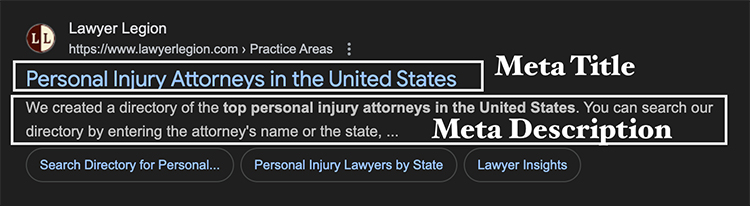
The 150–160 character summaries that show up under title tags in search results are known as meta descriptions. They show what the page is about and influence people to click through. Though not a direct ranking factor for SEO, a well-written meta description can improve click-through rates.
Meta tags are the title tag, which is shown above the meta description. This should be within 55-60 characters. And it has to be very precise and topic-oriented.
A compelling description and title tag can be the difference between a potential client who chooses your firm versus a competitor. These are your sales pitches because Google often shows them in search results.
Optimization Steps:
- Write compelling copy that addresses user intent and pain points.
- Include your target keyword naturally within the description.
- Add a clear call to action (e.g., “Call now for a free case review”).
- The meta descriptions should be between 150 and 160 characters.
- Highlight what makes your firm unique (free consultation, 24/7 availability, proven results).
- Create unique meta descriptions for every page.
Example: “Hurt in an accident? Our Dallas car accident lawyers fight for maximum compensation. Free consultation. No fees unless we win. Call 24/7: (555) 123-4567.”
Best Tools: Yoast SEO and All in One SEO provide character counters and preview displays. Semrush Site Audit identifies missing or duplicate meta descriptions.
- Header Tags (H1, H2, H3)
Header tags structure your content hierarchy. H1 is the main page headline, while H2 and H3 tags organize subheadings and create scannable sections. They function like an outline for your content.
Headers help search engines understand content structure and topic relevance. They also improve user experience by breaking text into digestible sections. Headers help visually impaired visitors navigate content and help users find information quickly.
Optimization Steps:
- Use only one H1 tag per page with your primary keyword.
- Structure H2 tags as main section headers with related keywords.
- Use H3 tags for subsections under each H2.
- Maintain logical hierarchy (don’t skip from H1 to H3).
- Keep headers concise and descriptive.
- Include secondary keywords naturally in H2 and H3 tags.
Example Structure:
- H1: “Dallas Car Accident Lawyer—Free Consultation”
- H2: “Common Types of Car Accident Cases We Handle”
- H3: “Rear-End Collisions”
- H3: “T-Bone Accidents”
- H2: “How Much Is Your Car Accident Claim Worth?”
Best Tools: The HeadingsMap browser extension visualizes your header structure. The SEO Minion Chrome extension shows header hierarchy on any page.
- Internal Links Between Pages
Internal links connect one page on your website to another page on the same domain. They create pathways for users and search engines to navigate your site and discover related content.
Internal links share page authority and create content relationships. They keep visitors on your site longer and reduce bounce rates. Strategic internal links navigate potential clients from informational pages to contact forms and consultation requests.
Optimization Steps:
- Link from high-authority pages (like your homepage) to important service pages.
- Use descriptive anchor text with relevant keywords (avoid “click here”).
- Add 3-5 contextual internal links per page.
- Link related practice areas together (car accidents to truck accidents).
- Create topic clusters with a pillar page that links to related content.
- Ensure every page has at least one internal link to it.
Example: Within a blog post about car accident statistics, link to your “Car Accident Lawyer” service page with anchor text like “experienced car accident attorney.”
Best Tools: Screaming Frog identifies orphan pages (pages with no internal links). Link Whisper (WordPress plugin) suggests relevant internal link opportunities automatically.
- URL Structure (Clean, Readable, Keyword-Rich)
URLs are the web addresses for each page on your site. Clean URLs are short, descriptive, and easy to read. They avoid random numbers, special characters, or unnecessary parameters.
URLs appear in search results, browser address bars, and when people share your content. Descriptive URLs tell users and search engines exactly what they’ll find on the page. Clean URLs also build trust—people hesitate to click suspicious or confusing links.
Optimization Steps:
- Include your target keyword in the URL.
- Use hyphens to separate words (not underscores).
- The perfect URLs should be short and precise (3-5 words maximum).
- You need to use lowercase letters only.
- Remove stop words (a, an, the, for, and) when possible.
- Structure URLs logically (yourfirm.com/practice-areas/car-accidents/).
- Avoid dates or unnecessary parameters.
Good Example: yourfirm.com/car-accident-lawyer-dallas/
Bad Example: yourfirm.com/page?id=12345&cat=services
Best Tools:
- WordPress automatically creates clean URLs with proper settings.
- Yoast SEO suggests URL improvements. When optimizing older pages, redirect plugins change URLs without breaking links.
If you master these five on-page factors, you will form a strong foundation for your personal injury law firm. The components convey pertinent information, develop credibility, and convert searchers into clients.
How Does Local SEO Convert Potential Clients For Personal Injury Law?
Local SEO connects personal injury attorneys with clients at the exact moment they need help. When someone suffers an accident, they search for nearby legal services immediately. Google prioritizes local search results for these urgent queries. Your firm must appear in Google Maps and the local pack to capture these high-intent prospects.
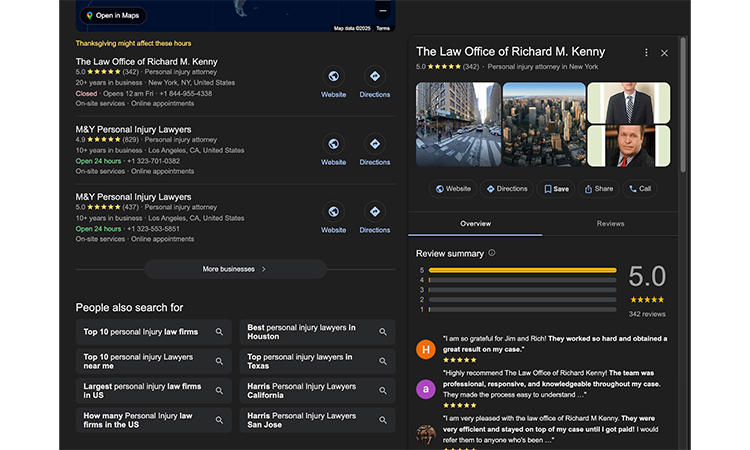
To improve your local seo strategies for a personal injury lawyer, you need to create a profile on Google Business and other online platforms. So, in this segment, you will learn how to improve local visibility and improve personal injury lawyer seo.
You can add local keywords such as “personal injury lawyer near me” or “car accident attorney in [city]” and check keyword difficulty before targeting them. You already know the keyword research process, so choosing local keywords helps you to improve your local seo techniques.
Moreover, you can add location-focused service pages and target relevant keywords that match user needs and search intent.
- Google Business Profile Setup & Updates
Google’s local search results show your Google Business Profile as an online showroom. It appears in Google Maps and local pack listings. A complete, well-optimized profile increases the number of requests for consultations.
Let’s explore how you can set your Google Business Profile to uplift your Local seo for personal injury law firms.
First, you need to sign in with your law firm’s official Google account.
Then you can click on “Start Now” to create your Google business profile.
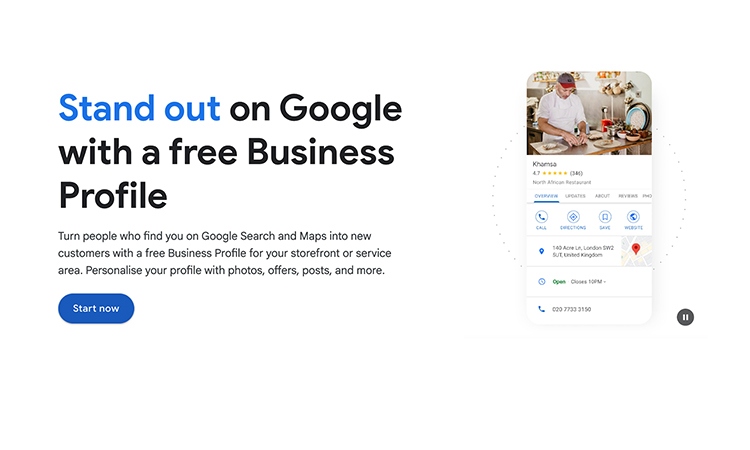
Then carefully submit your law firm’s name and select the category. Make sure that you put the right spelling of your business name.
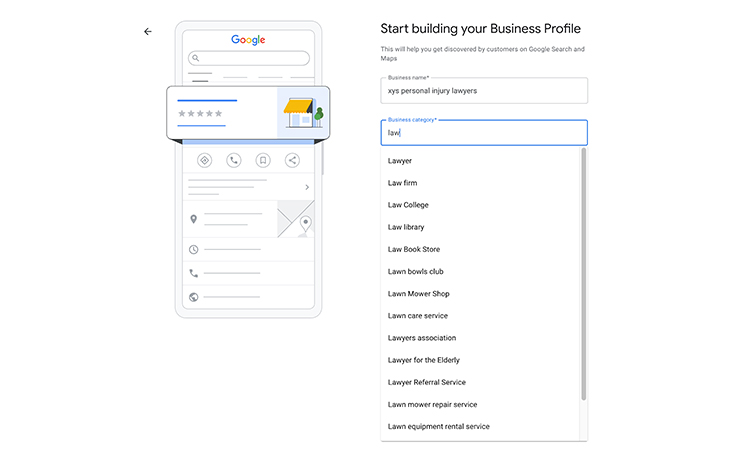
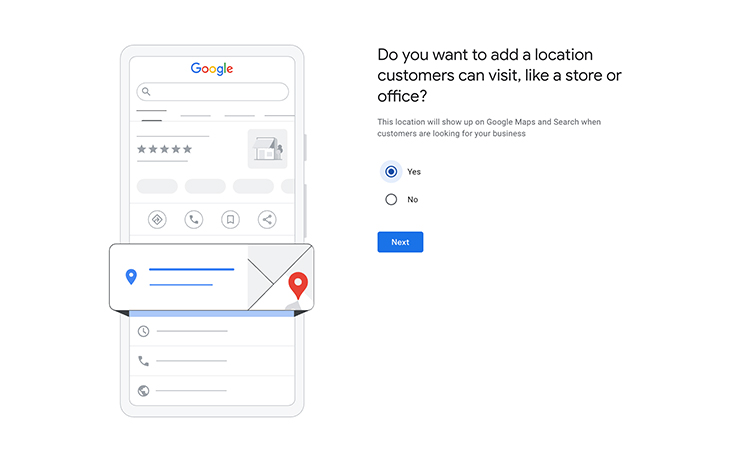
If you want to add a Google Maps location, you need to click “YES” to add your law firm’s location.
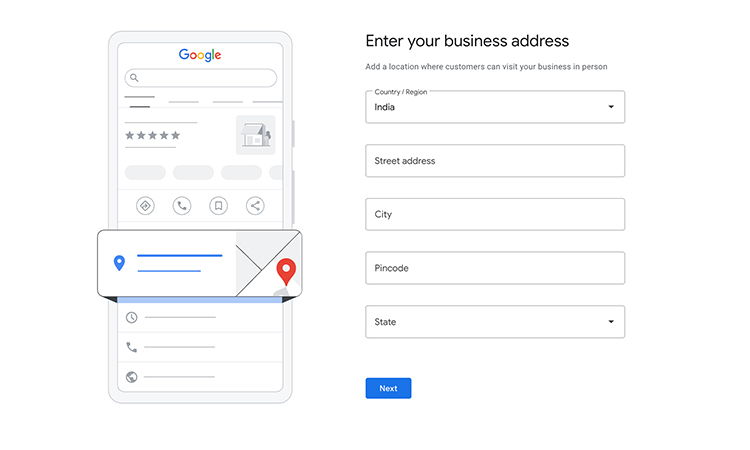
Then enter your law firm’s address in detail.
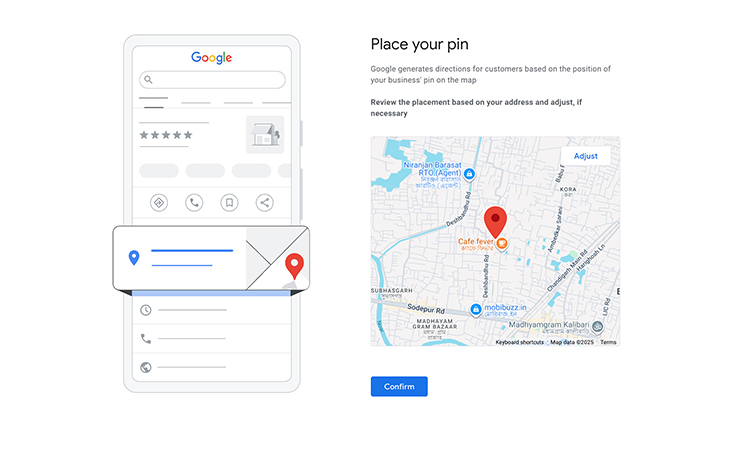
After that, put the arrow in your specific business location and help your target clients find your physical office. It will increase your authenticity that, yes, you have an office and an online presence.
Add your Phone Number and Law firm’s website URL(if you have one).
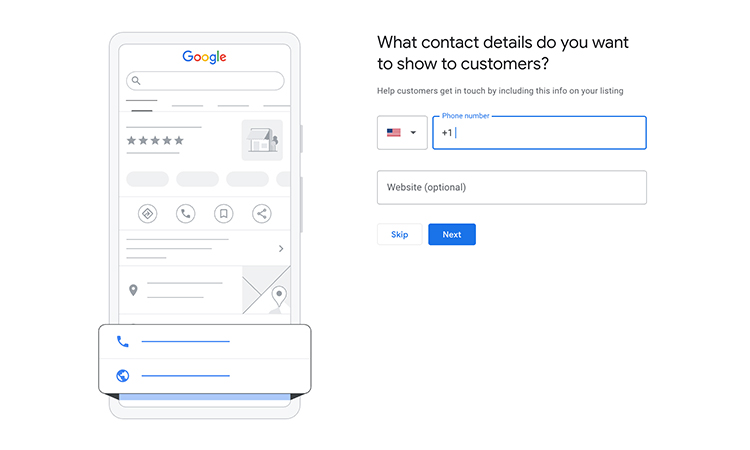
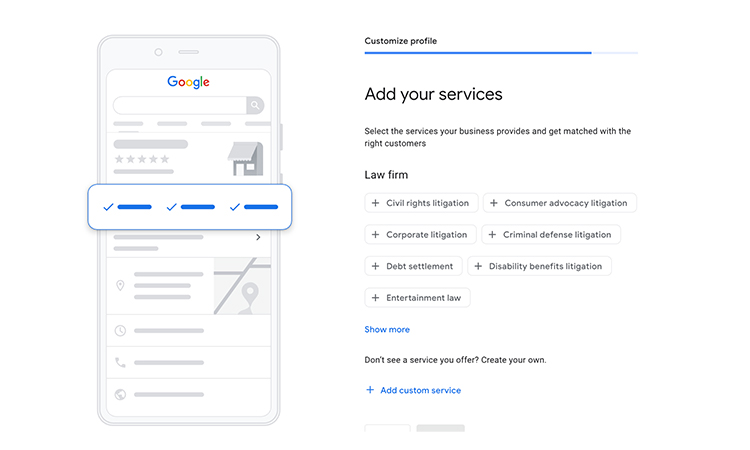
Then add your more service-related content to personal injury law.
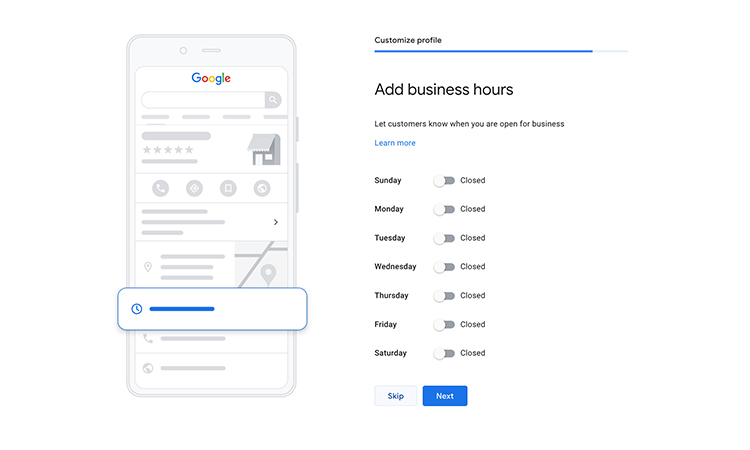
After that, add when you give your services, like how many days, and what time is your meeting , and all.
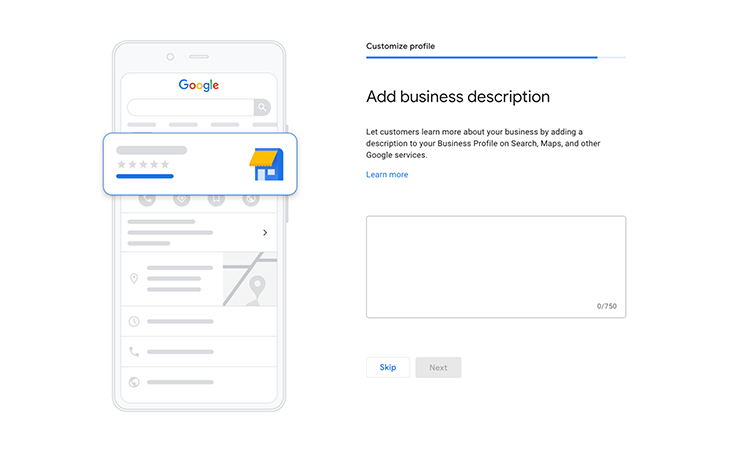
You must add your law firm’s description. It will give your clients a brief about your services.
You can add your office’s photos and video testimonials of happy clients here.

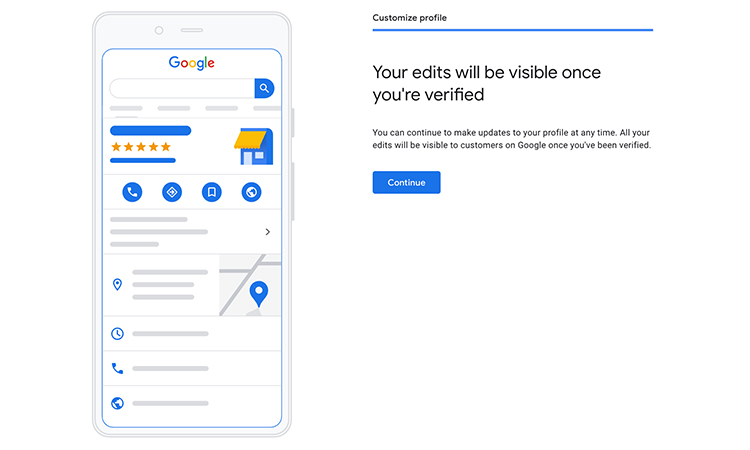
After that, click on “Continue” to start your online verification process.
- Local citations and NAP Consistency
Citations are online mentions of your firm’s Name, Address, and Phone number. They appear on legal directories, business listings, and local websites. Consistent NAP data across all platforms indicates that your law firm is appropriate for people who search for specific law services.
Google cross-references your NAP information across hundreds of sources. If you are Inconsistent about your information, then search engines may confuse and hurt your local rankings. So personal injury law firms need accurate citations to dominate local search results.
Optimization Steps:
- Create a master NAP document with exact formatting.
- Use the same business name everywhere (avoid variations).
- Write your address identically across all platforms.
- Use one phone number consistently (track with call analytics).
- Submit to major legal directories (Avvo, FindLaw, Justia, Lawyers.com).
- List on general business directories (Yelp, Yellow Pages, Better Business Bureau).
- Add your firm to local chamber of commerce directories.
- Get listed on your state bar association website.
- Submit to industry-specific aggregators (Martindale-Hubbell, Super Lawyers).
- Claim profiles on review sites (Google, Facebook, Birdeye).
- Audit existing citations for errors or duplicates.
- Fix inconsistent information immediately.
- Remove duplicate listings that confuse search engines.
- Monitor citations quarterly to ensure accuracy.
- Build 50-100 quality citations over six months.
Location-Focused Service Page Tips for Personal Injury Lawyers
- First, you need to develop separate pages for each city or area you serve to improve local SEO and expand local SEO rankings.
- Then you should use relevant personal injury keywords like “car accident lawyer in [city]” or “slip and fall attorney in [location]” to improve local search rankings.
- After that, you should include clear headings, local landmarks, nearby hospitals, or courts to show strong local relevance.
- Add unique content for every page—avoid copy-pasting—to support better local SEO strategies.
- Highlight city-specific case results or testimonials to improve authenticity with local clients.
- Optimize each page’s title tag, meta description, and URL with location-based personal injury keywords.
- Embed a Google Map and add your NAP (name, address, phone) to make the page more visible in local results.
- Add internal links between all location pages to improve site structure and boost overall local SEO rankings.
How Should Law Firms Optimize Off-Page SEO for Personal Injury Lawyers?
Off-page SEO for personal injury lawyers is maintaining your website’s outside performance. You need to gain high-quality links and use social media to share your content, and also do guest posting. Moreover press release is also one important strategy of off-page law firm seo. So in this section, you will learn in-depth about off-page SEO strategies.
- Backlink Building From Reputable Websites
Backlinks are links from other websites that point to your site. They act as votes of confidence. When reputable legal sites, news publications, or professional organizations link to you, search engines view your firm as legitimate and authoritative.
Link building remains one of Google’s top three ranking factors. Quality matters far more than quantity. One link from a respected legal publication outweighs dozens from low-quality directories. Personal injury lawyer SEO depends heavily on strong backlink profiles. Firms with authoritative links consistently outrank competitors with weak link profiles.
Optimization Steps:
- Create valuable content worth mentioning (research, statistics, comprehensive guides).
- Identify websites in your niche that accept contributions.
- Reach out to local news sites for expert commentary.
- Get listed on your state bar association website.
- Join professional legal organizations with member directories.
- Build relationships with legal bloggers and journalists.
- Never buy links or participate in link schemes.
- Monitor competitor backlinks for opportunities.
- Disavow toxic links that could harm your profile.
- Track new backlinks monthly with Ahrefs or Semrush.
Best Tools: Ahrefs tracks backlinks and finds link opportunities. Moz Link Explorer analyzes link quality. BuzzStream manages outreach campaigns. HARO connects you with journalists who need expert sources.
Pro Tips for Personal Injury Lawyers:
- Offer free legal guides to websites that serve accident victims
- Write expert articles for legal publications like Law360 or JD Supra
- Sponsor local charity events for the community website links
- Create scholarship programs (many schools will link to sponsors)
- Never violate search engine guidelines with manipulative link schemes
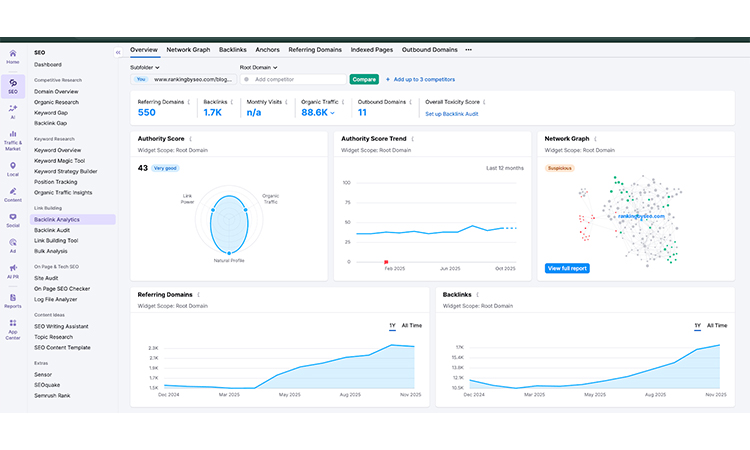
You can use the Semrush Backlink Analytics tool to optimize backlinks like this-
- Online Review Generation (Google, Facebook) For Personal Injury Law Firms
Online reviews are feedback from clients about their experience with your firm. They appear on Google Business Profile, Facebook, Avvo, and other platforms. Reviews provide social proof and influence both search rankings and potential client decisions.
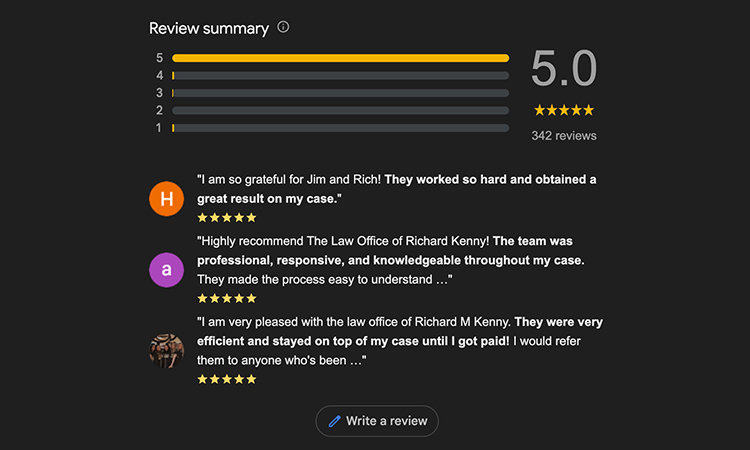
Google considers review quantity, quality, and recency as local ranking factors. Reviews also affect click-through rates from search results. Personal injury law firms with 50+ positive reviews attract more clients than firms with few or negative reviews. Reviews build trust before prospects ever contact you.
Optimization Steps:
- Create a system to request reviews after successful case resolution
- Ask satisfied clients via email with direct review links
- Make the review process simple (one-click access)
- Request reviews on Google Business Profile first
- Respond professionally to every review, positive or negative
- Never offer incentives or payments for reviews
- Address negative reviews with empathy and solutions
- Display reviews prominently on your website
- Set a goal for 5-10 new reviews monthly
- Monitor review sites weekly for new feedback
Best Tools:
- Birdeye automates review requests across platforms.
- Grade.us manages multi-location review campaigns.
- The Google Business Profile app lets you respond to reviews quickly.
Pro Tips for Personal Injury Lawyers:
- Time review requests 2-3 weeks after case settlement.
- Personalize each request with specific case details.
- Provide step-by-step instructions with screenshots.
- Moreover, you can show your gratitude towards clients who leave reviews with personal messages.
- Most importantly, you can feature your best reviews on your homepage.
- Social Media Signals and Shares
Interactions with your content on social media sites like Facebook, LinkedIn, Instagram, and Twitter are known as social media signals. The shares, likes, comments, and mentions show that your content resonates with audiences.
Social networking increases web traffic to your website. More people can view shared content and possibly relate to it. Active social accounts improve brand exposure. Personal injury law firms that maintain a strong social presence appear more reputable and trustworthy.
Optimization Steps:
- Maintain active profiles on Facebook, LinkedIn, and Instagram.
- Share blog posts immediately after publication.
- Create platform-specific content (videos, infographics, quick tips).
- Post 3-5 times weekly across your profiles.
- Respond to comments and messages within 24 hours.
- Share client success stories (with permission).
- Provide valuable safety tips and legal advice.
- Use local hashtags to reach your target audience.
- Run occasional paid campaigns to boost reach.
- You need to observe which kind of content generates the most shares.
Best Tools:
- Hootsuite schedules posts across multiple platforms.
- Buffer analyzes performance metrics.
- Canva creates professional graphics quickly.
Pro Tips for Personal Injury Lawyers:
- Try to share local news about accident prevention and safety.
- Then you may post behind-the-scenes content about your law firm’s culture.
- Create short video FAQs that answer common questions.
- Engage with local community groups and events.
- Never share graphic accident photos or violate client privacy.
- Guest Blogging
Guest posts are articles you write for other websites in exchange for author credit and links back to your site. This strategy helps you get backlinks and show that you are an expert in your field.
Optimization Steps:
- Identify 20 websites that accept guest contributions.
- Focus on legal blogs, local news sites, and industry publications.
- Study each site’s content style and audience.
- Pitch unique, valuable topic ideas (not self-promotional).
- Write comprehensive, well-researched articles (1,500+ words).
- Include natural links to relevant pages on your site.
- Provide author bio with firm description and link.
- Promote published guest posts on your social media.
- Respond to comments on your guest posts.
- Build relationships with editors for future opportunities.
Best Tools:
- BuzzSumo finds popular topics in your niche.
- Hunter.io locates editor contact information.
- Grammarly ensures error-free submissions.
- Press Releases To Make More People Aware of Your Law Firms
Press releases are official announcements distributed to media outlets and news websites. They announce newsworthy events like major case victories, firm expansions, new hires, or community involvement. They make your personal injury law firm an authentic news source. When major publications pick up your release, you gain authoritative links that boost search engine rankings.
Optimization Steps:
- Identify truly newsworthy events (avoid promotional fluff).
- Write releases in journalistic style with an inverted pyramid structure.
- Lead with the most important information in the first paragraph.
- Include quotes from attorneys or clients (with permission).
- Add relevant statistics or data to support your story.
- Optimize with 2-3 target keywords naturally incorporated.
- Include your firm’s boilerplate description at the end.
- Add contact information for media inquiries.
- Distribute through reputable services (PR Newswire, Business Wire).
- To gain more online visibility, you can share the release on your website and social media.
Pro Tips for Personal Injury Lawyers:
- Announce significant case victories (when legally permissible).
- Share firm milestones (20th anniversary, new office location).
- Comment on relevant legal changes or landmark court decisions.
- Highlight community service and pro bono work.
- Never use press releases purely for link building (violates search engine guidelines).
- Time releases for maximum media attention (Tuesday-Thursday mornings).
- You need to do a follow-up with journalists who might find your story relevant.
What Technical SEO Fixes Will Improve Your Firm’s Search Performance?
Technical seo for personal injury lawyers is one of the important parts of a successful seo strategy. Here you will learn the important technical seo aspects, like how you can improve your site architecture and Performance, Indexability, Crawlability, and Page Speed. Moreover, you also get to know how you maintain mobile friendliness and how search engine knows which pages to crawl or not and which are duplicate content with the help of robots.txt file and canonical tags. And most importantly, you learn the local business schema implementation technique to improve personal injury seo. So let’s dig deeper and find out the simple steps to optimize technical SEO for personal injury lawyers.
- Site Performance, Indexability, and Crawlability
Crawlability refers to how easily search engine bots access and navigate your website. Indexability means Google can add your pages to its search index. Performance is a way to measure how quickly and well your site works. These three factors work together to assess your site’s technical health.
Google can’t rank pages that it can’t search for or crawl. If search bots detect errors or slow load times, they may abandon your site. Poor crawlability wastes your crawl budget—the number of pages Google will scan during each visit. So your personal injury website should maintain its technical seo with the site’s Performance, Indexability, and Crawlability in the following steps.
Optimization Steps:
- Check your site’s index status in Google Search Console.
- Review the coverage report to identify indexation errors.
- Examine which pages Google can and cannot crawl.
- Fix any “Discovered—currently not indexed” warnings.
- Remove blocks that prevent important pages from being indexed.
- Then you need to ensure your most significant pages (service pages, location pages) appear in Google’s index.
- Furthermore, you should monitor search metrics weekly to catch problems early.
Best Tools: Google Search Console provides free crawl and index data.
Screaming Frog SEO Spider crawls your site as Google does. It identifies broken links, redirect chains, and indexation issues.
Ahrefs Site Audit offers comprehensive technical health scores with actionable recommendations.
- Clean Site Architecture and Breadcrumb Navigation
Site architecture is how you organize and link pages on your website. Clean architecture means logical hierarchies where related content groups together. Breadcrumb navigation shows users their location within the site structure. It appears as a path: Home > Practice Areas > Car Accidents.
Good architecture helps search engines understand your site‘s organization. It distributes link equity efficiently to important pages. Users find information faster with clear navigation. Breadcrumbs reduce bounce rates by making navigation obvious. They also create additional internal links and can appear in search results as rich snippets.
Ideal Law Firm Architecture:
- Homepage (top level)
- Main category pages (practice areas, about, blog)
- Subcategory pages (specific case types, attorney bios)
- Individual content pages (blog posts, case results)
Optimization Steps for Architecture:
- Map out your ideal site structure on paper
- Group related practice areas together
- Limit clicks from the homepage to any page (3 clicks maximum)
- Create clear parent-child relationships between pages
- Link related practice areas to each other
- Avoid orphan pages with no internal links
- Build topic clusters around main practice areas
- Ensure every page links back to relevant parent categories
Optimization Steps for Breadcrumbs:
- Add breadcrumb navigation to all pages except the homepage
- Place breadcrumbs near the top of the page
- Use BreadcrumbList schema markup
- Make each breadcrumb level clickable
- Reflect the actual site hierarchy in breadcrumbs
- Include keywords naturally in breadcrumb labels
- Test breadcrumbs on mobile devices
- Validate schema with Rich Results Test
Best Tools: Yoast SEO generates breadcrumb schema automatically. Breadcrumb NavXT (WordPress) creates flexible breadcrumb navigation. MindMeister helps plan site architecture visually.
- Mobile Friendly Personal Injury Website
Your website should be responsive for desktop as well as mobile, and tablets. As of now, most people are using their smartphones to search for personal injury law firms near them. So most of the website traffic depends on mobile friendliness. The website content should be readable without zoom and horizontal scrolling. Buttons are large enough to tap easily. Navigation works smoothly with touch controls.
Optimization Steps:
- Test your site with Google’s Mobile-Friendly Test tool.
- Review all pages, not just your homepage.
- Use a responsive design that adapts to any screen size.
- Set viewport meta tags correctly in your site code.
- Avoid Flash, pop-ups, or interstitials that block mobile content,
- Make phone numbers clickable for easy dialing.
- Ensure forms work perfectly on small screens.
- Test on actual devices (iPhone, Android phones, tablets).
- Check that tap targets are at least 48×48 pixels.
Best Tools:
- Google Mobile-Friendly Test gives instant results.
- Chrome DevTools lets you test various device sizes.
- BrowserStack allows testing on real devices without owning them.
- Page Speed Optimization (Core Web Vitals)
Page speed measures how fast your content loads and becomes interactive. Core Web Vitals are Google’s specific metrics: Largest Contentful Paint (LCP), First Input Delay (FID), and Cumulative Layout Shift (CLS). LCP measures load speed. FID tracks interactivity. CLS monitors visual stability.
Google confirmed page speed as a direct ranking factor. You can decrease your web traffic if your site doesn’t load within 3seconds. A one-second delay can reduce conversions by 7% according to Portent research. Most of your Personal injury clients need help urgently. So they will not wait for slow pages to load.
Target Benchmarks:
- LCP: Under 2.5 seconds (good)
- FID: Under 100 milliseconds (good)
- CLS: Under 0.1 (good)
How can you optimize Site Speed?
- Run your site through Google PageSpeed Insights.
- Then you need to compress all images to the WebP format when possible.
- Enable browser caching to store files locally.
- Minimize CSS, JavaScript, and HTML files.
- Remove unnecessary plugins that slow your site.
- Use a content delivery network (CDN) to serve files faster.
- Defer offscreen images with lazy load.
- Eliminate render-block resources.
- Reduce server response time to under 200ms.
- Optimize your database if you use WordPress.
- Choose fast, reliable hosting providers.
- Monitor Core Web Vitals monthly in Search Console.
Best Tools: Google PageSpeed Insights provides detailed reports with specific fixes. GTmetrix shows waterfall charts of load sequences. WP Rocket (WordPress) automates many speed optimizations. Cloudflare offers free CDN services.
- SSL Certificate (HTTPS)
SSL (Secure Sockets Layer) certificates encrypt data between your website and visitors. HTTPS indicates your site has this security. The browser shows a padlock icon next to secure URLs. Without SSL, browsers display “Not Secure” warnings.
Google considers HTTPS a ranking signal. Browsers warn users before they visit non-HTTPS sites. This scares away potential clients. Law firms handle sensitive information. Your web traffic expects security and privacy. An SSL certificate develops trust and protects client data.
Optimization Steps:
- Purchase an SSL certificate from your hosting provider.
- Many hosts offer free SSL through Let’s Encrypt.
- Install the certificate on your server.
- Update all internal links to HTTPS versions.
- Set up 301 redirects from HTTP to HTTPS.
- Update your Google Search Console property to HTTPS.
- Change external links where possible.
- Fix mixed content warnings (HTTP resources on HTTPS pages).
- Test all forms and interactive elements.
- Monitor for certificate expiration dates
Best Tools: Let’s Encrypt provides free SSL certificates. Really Simple SSL (WordPress plugin) handles the technical migration automatically. SSL Labs tests your SSL configuration strength.
- XML Sitemap Submission
An XML sitemap is a file that lists all important pages on your personal injury website. It tells search engines which pages exist, when they were updated, and how they relate to each other. The sitemap guides Google’s crawlers to your most valuable content.
Sitemaps help search engines discover pages faster. New pages often get indexed quickly. However, Large sites benefit especially from sitemaps. So Personal injury firms with dozens of practice areas and location pages need sitemaps to ensure complete indexation.
Optimization Steps:
- Generate an XML sitemap for your entire site.
- Include only important, indexable pages.
- Exclude admin pages, thank you pages, and duplicate content.
- Keep individual sitemaps under 50MB and 50,000 URLs.
- Create separate sitemaps for different content types if needed.
- Submit your sitemap to Google Search Console.
- Add your sitemap URL to the robots.txt file.
- Update the sitemap whenever you add major new content.
- Check Search Console for sitemap errors monthly.
- Remove any URLs that return 404 errors.
Best Tools:
Yoast SEO automatically creates and updates XML sitemaps. The Google XML Sitemaps plugin works for non-Yoast users. Screaming Frog can generate sitemaps for any site.
- Robots.txt Optimization
The robots.txt file helps search engines determine which pages they can and cannot crawl. It sits in your site’s root directory. Crawlers check this file before they scan your site. Proper robots.txt configuration directs crawl budget to important pages.
You want Google to spend time on pages that matter—service pages, blog posts, attorney bios. Admin areas, search results, and duplicate content waste crawl budget. Robots.txt prevents bots from accessing these low-value areas. However, mistakes in robots.txt can block your entire site from search engines.
Optimization Steps:
- Access your robots.txt file at yoursite.com/robots.txt.
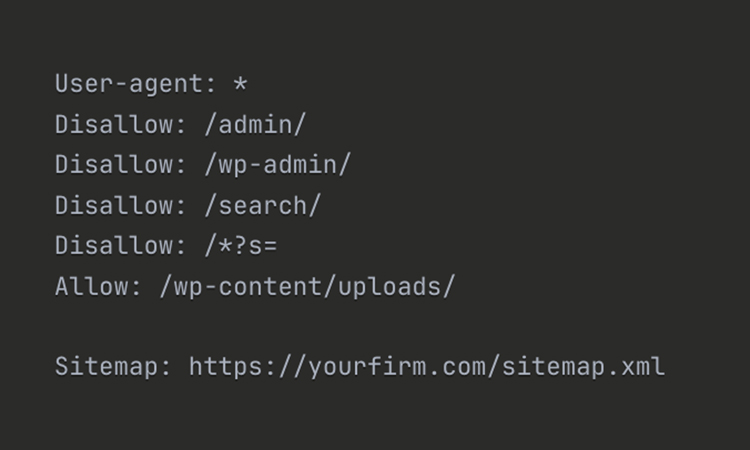
- Block admin areas, login pages, and search result pages.
- Moreover, you can block duplicate content versions (print pages, filtered views).
- Allow access to CSS and JavaScript files (Google needs these).
- Add your XML sitemap location at the bottom.
- Never block important content by accident.
- Test changes with Google’s robots.txt Tester tool.
- Use “Disallow” for paths you want blocked.
- Review and update quarterly as your site evolves.
Example robots.txt for law firms:
Best Tools: Google Search Console includes a robots.txt tester. Any text editor works to create or modify the file. WordPress hosting typically provides file access through cPanel or FTP.
- Fix Crawl Errors
Crawl errors occur when search engines cannot access pages on your site. Common errors include 404 (page not found), 500 (server error), and timeout errors. These problems prevent Google from indexing important content.
Crawl errors create poor user experiences and waste crawl budget. Broken links frustrate visitors and damage your professional image. Google may lower your rankings if too many errors exist. Personal injury clients expect reliable, functional websites from attorneys they might hire.
Optimization Steps:
- Open Google Search Console and check the Coverage report.
- Review the “Error” section for problematic URLs.
- Identify 404 errors from deleted or moved pages.
- Set up 301 redirects for moved content.
- Fix broken internal links that point to dead pages.
- Remove external links to non-existent pages.
- Address server errors by contacting your host.
- Fix timeout issues by improving server performance.
- Validate fixes and request reindexing in Search Console.
- Monitor crawl errors weekly to catch new issues.
Best Tools: Google Search Console provides comprehensive error reports. Screaming Frog identifies all broken links during site crawls. Ahrefs Site Audit automatically detects and categorizes errors.
- Structured Data/Schema Markup
Schema markup is code that helps search engines understand your content better. It provides context about your law firm, services, reviews, and contact information. Structured data can trigger rich results in search—enhanced listings with ratings, hours, and quick facts.
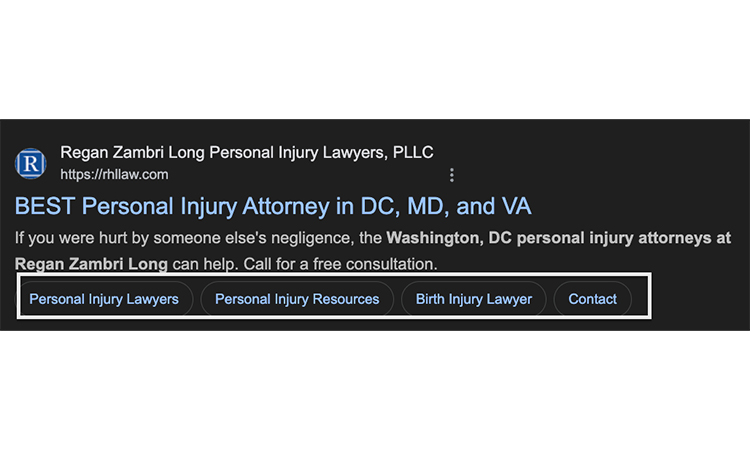
Rich results attract more clicks than standard listings. Schema markup helps Google display your information prominently. Law firm schema can show ratings, address, phone number, and practice areas directly in search results. This improves law firm SEO and expands online visibility, and converts more searchers into clients.
Important Schema Types for Law Firms:
- LocalBusiness schema (address, phone, hours)
- LegalService schema (practice areas)
- Attorney schema (individual lawyer information)
- Review schema (client ratings and testimonials)
- FAQPage schema (frequently asked questions)
Optimization Steps:
- Choose relevant schema types for each page
- Add the LocalBusiness schema to your homepage and contact page
- Include the Attorney schema on the lawyer bio pages
- Implement the Review schema where you display testimonials
- Add FAQPage schema to question-and-answer content
- Use JSON-LD format (Google’s preferred method)
- Test your markup with Google’s Rich Results Test
- Validate schema with Schema.org validator
- Monitor rich results performance in Search Console
- Update the schema when business information changes
Best Tools: Schema.org provides documentation and examples. Google’s Rich Results Test validates your markup. Schema Pro (WordPress) adds schema without coding. Merkle’s Schema Markup Generator creates code snippets.
- Canonical Tags
Canonical tags help search engines determine which version of a page is the “master” copy. They solve duplicate content issues when similar pages exist. The canonical tag points to the preferred URL that should rank in search results.
Personal injury law firms often have similar content across pages. Multiple attorney bios might share text. So without canonical tags, Google might index the wrong version or split ranking signals between duplicates. This dilutes your SEO power.
Common Situations Requiring Canonicals:
- HTTP and HTTPS versions of the same page
- WWW and non-WWW versions
- Pages with tracking parameters
- Print versions of articles
- Mobile and desktop URL variations
- Syndicated content published on multiple sites
Optimization Steps:
- Identify pages with duplicate or very similar content
- Choose the best version to rank (usually the most complete)
- Add canonical tags to the HTML head section
- Point duplicate pages to the canonical version
- Use absolute URLs (full URL), not relative paths
- Ensure canonical tags point to indexable pages
- Check that canonicals don’t create loops or chains
- Self-reference canonical tags on master pages
- Audit canonical tags quarterly with crawl tools
Example canonical tag:
html
<link rel=”canonical” href=”https://yourfirm.com/car-accident-lawyer/” />
Best Tools: Yoast SEO automatically adds canonical tags. Screaming Frog identifies pages missing canonicals. Google Search Console shows which URLs Google considers canonical.
- Avoid Duplicate Content
Duplicate content means identical or very similar content appears on multiple URLs. This confuses search engines about which page to rank. Duplicates can exist within your site (internal) or across different websites (external).
Common Duplicate Content Causes:
- Printer-friendly page versions.
- Session IDs in URLs.
- Comment pagination.
- Category and tag archives with identical posts.
- Location pages with only the city name changed.
- Scraped or copied content from other sites.
Optimization Steps:
- Audit your site for duplicate content with Copyscape.
- Rewrite similar pages to make them unique.
- Use 301 redirects to consolidate duplicate pages.
- Implement canonical tags when content must exist on multiple URLs.
- Block duplicate versions with robots.txt.
- Use “noindex” tags on low-value duplicates.
- Add unique value to each location page beyond just changing the city name.
- Create distinct content for each practice area.
- Avoid boilerplate text repeated across multiple pages.
- Monitor for external content theft with plagiarism tools.
Best Tools:
- Copyscape detects duplicate content across the web.
- Siteliner finds internal duplicates on your site.
Let’s Quickly Wrap Up
SEO for personal injury lawyers is one of the most emerging topics. Being a lawyer, you do not only rely on word-of-mouth promotions, but you also need a strong online presence; therefore, this comprehensive personal injury lawyers’ seo guide will help to create your own strategy.
But if you take any professional SEO services, they will guide you more professionally. You can concentrate on your cases while your advertising continues, saving you time.
So what are you waiting for? Go and implement the best SEO strategy to increase your online visibility and expand your client leads.

