





Travel agencies nowadays face vast competition due to several reasons, such as constant challenges to generate consistent bookings and fluctuating seasonal demand. Most travelers do online searches to start their journey and click on paid ads to book. It necessitates online visibility for these agencies at the right time when users search. And this is where PPC for travel agencies works.
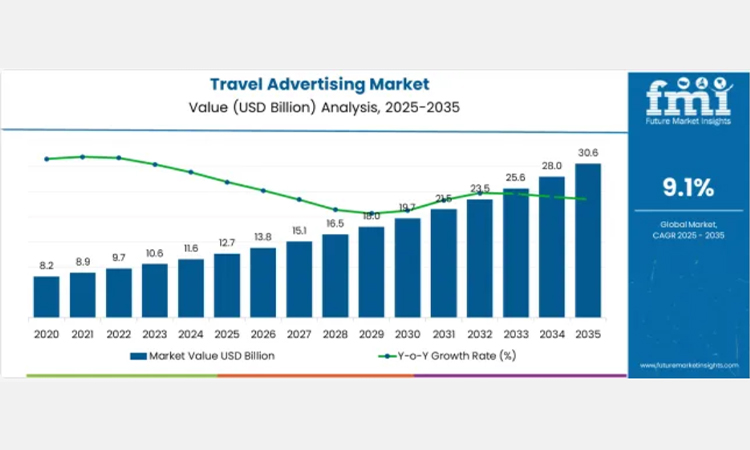
Future Market Insights reveals that the travel advertising market is likely to reach up to $30.6 billion by 2035. It reflects the growing importance and acceptance of paid advertising among travel businesses.
With PPC, travel agencies gain fast visibility in search engines and thus connect easily to high-intent travellers seeking to book trips. As an effective advertising campaign, it’s the fastest method to boost qualified traffic and boost conversion, with flexible budgeting, precise targeting, and measurable outcomes.
Meanwhile, running a conversion-oriented and customized PPC campaign requires a proven digital strategy and holistic approach. In this post, we will help you understand how to run your campaign successfully and gain the most promising results.
What is PPC for Travel Agencies?
As one of the types of digital marketing, PPC for travel agencies basically reflects a perfect online marketing strategy. According to this, agencies need to pay when users land on and click their ads on various platforms, including Google Ads.
Pay per click advertising lets travel companies promote their tour packages, seasonal deals, etc. by reaching the target audience who actively search for the right travel options. The fact can’t be denied that PPC is completely different when compared to traditional marketing.
Pay-Per-Click (PPC) yields instant results in terms of visibility on search engine results pages (SERPs). That’s why it easily lures high-intent travelers. It ensures travel agencies can reach the audience at the right time with precise targeting according to interests, location, and search behavior. It provides increased website traffic, generates more valuable leads, and maximizes the chance of converting clicks into bookings.
Why PPC Matters for a Travel Agency?
Well, PPC matters for a travel agency to gain fast results even without spending too much time. It thus gives them more opportunities to lure potential customers and maximize bookings. Let’s explore some other reasons why PPC for travel agencies is pivotal:
- Gain Instant Visibility
When you do it with the right approach and strategy, PPC helps your travel agencies be visible at the top of SERPs quickly. We can take an example here.
When someone searches with the keywords, “Washington DC Tour Packages”, you can ensure the appearance of your Google or social media advertising with the right PPC strategy. It indeed gives you an immediate exposure in terms of brand visibility.
- Highly Targeted Reach
With PPC, you can easily target the best-matching audience according to demographics, location, travel behavior, interest, etc. It reflects that your targeted ads appear only to users who are likely to be keen on your offerings, which indeed minimizes unnecessary ad spend.
- Target High-Intent Travellers
The major advantage of PPC for travel agencies is that it helps your tourism business reach users with a higher purchasing intent. It keeps your business among people who search for similar keywords to your target.
For instance, if you target “Switzerland travel package”, you will be able to appear among the right audience through a robust PPC strategy. Doing this lets you convert into high-paying customers as well.
- Get Total Control of the Budget
With PPC, you will get full control over your ad budget compared to traditional advertising. It also helps you decide the total amount you wish to spend regularly, adjust bids, or even pause ad campaigns anytime. This kind of flexibility enables travel agencies to optimize spending according to seasonality and performance.
- Increase Brand Awareness
Another advantage of paid advertising for a travel agency is that it plays a vital role in increasing brand awareness as well. Even if users don’t click on your ad quickly, they can easily remember your brand through repeated visibility. With time, this kind of familiarity tends to influence their decision when they become ready to book a final trip.
- Generate Quality Leads and Maximize Conversions
With a proven PPC for travel agencies strategy, you can capture leads in several ways, such as inquiry forms, landing pages, direct sales, etc. Since these leads are captured through target searches, they are indeed quite relevant and important for tourism business.
Another greatest advantage of pay-per-click is that it turns clicks into actual bookings with a perfect combination of attractive ad copy, smart bidding strategies, and optimized landing pages.
Top PPC Platforms for Travel Agencies
Travel agencies have many PPC platforms to choose from. Here are the top options:
- Google Ads
Google Ads is one of the most popular and effective platforms with its potential to capture those of high-intent users. Travelers who search on Google with keywords such as “cheap hotels” or any similar ones are often ready to book the best option. It makes your campaign successful by increasing conversion.
Features:
- Keyword Bidding
- Location Targeting
- Remarketing
- Keyword-based Advertising
- Meta Ads
Meta ads, such as Instagram and Facebook, are the best options to create travel inspiration. On these platforms, you get various options to display your ads, including reels, carousel ads, stories, etc. You can use these formats to show destinations.
It also facilitates advanced audience targeting based on factors like behaviors, interests, and demographics. These make it simple to cajole potential customers and also retarget those who interacted with your brand previously.
Features:
- Advanced Audience Targeting
- Multiple Ad Formats
- Retargeting
- Budget Flexibility
- YouTube Ads
When it comes to YouTube Ads, it’s appropriate for destination highlighting and storytelling. You can use video content to reflect your experience, itineraries, and accommodations. It lets you run your ad in both skippable and non-skippable formats, which helps you create an effective brand recall and also create an emotional connection with users.
Features:
- Flexible Budgeting
- Cross-device Reach
- Remarketing Capabilities
- Detailed Analytics and Insights
- LinkedIn Ads
LinkedIn ads are another best PPC platform you can opt for to run your campaign. It helps you target corporate, B2B businesses, and professionals. With this platform, you can make precise targeting according to industries, job titles, company size, etc. LinkedIn helps you maximize your reach among high-paying clients.
Features:
- Multiple Ad Formats
- Lead Generation Forms
- Retargeting Capabilities
- Budget Control
- Pinterest Ads
Pinterest ads yield great outcomes, especially during the travel planning stage. It’s another top-rated PPC platform that lets you run inspirational campaigns. It attracts users looking for better travel itineraries or the best honeymoon destination. The promoted pin works effectively to maximize both traffic and conversion by getting the attention of users early during decision-making.
Features:
- Advanced Audience Targeting
- Visual Search Capability
- Promoted Pin
- Conversion Tracking and Analytics
Here, we will explain our PPC campaigns based on our Google Ads strategy for your better understanding:
Top PPC Strategies That Really Work for Travel Agencies
As we mentioned above, an impeccable strategy is necessary to run your PPC campaign successfully. We will discuss here some of the proven pay per click strategies you need to implement better to get the desired outcomes:
- Keyword Research for Travel Company
While talking about the top PPC strategies, it’s wise to start with keyword research for the travel industry. Keywords are considered to be the backbone of this campaign.
Therefore, you should not leave any stone unturned in selecting the top keywords. You need to select keywords to target your audience at an important moment in their entire search journey. To perform the keyword research, you need to go through the following steps:
- Use Keyword Research Tools
For keyword research, you can leverage many tools. Some of the popular ones are as follows:
- Google Keyword Planner
- SEMrush
- Ahrefs
- Ubersuggest
These tools help you in finding the right keyword based on factors like search volumes, competition, intent, cost per click (CPC) etc.
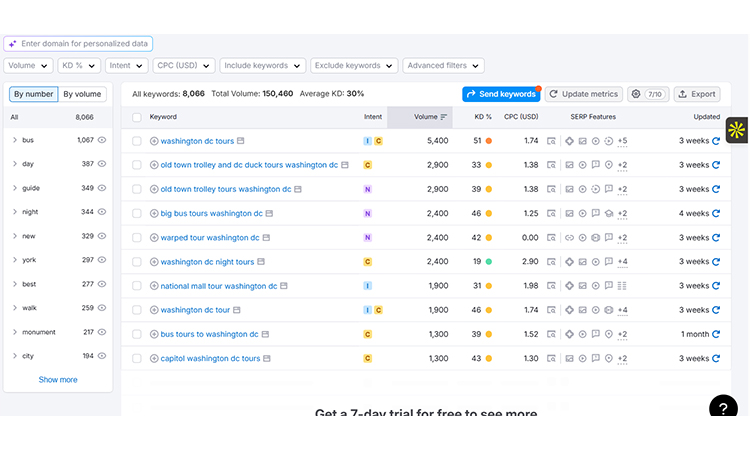
For instance, we will use the “SEMrush Keyword Magic Tool” to find keywords. In this tool, we insert the seed keyword ,”India travel package” and the result appears as follows:
- Focus on Long-tail Keywords
The next thing you can do is to target long-tail keywords, which are indeed more specific phrases that usually bring less competition and increased conversion rates. The major advantage of targeting long-tail keywords is that they are capable of attracting more qualified leads who are likely to convert to avail your services or buy products.
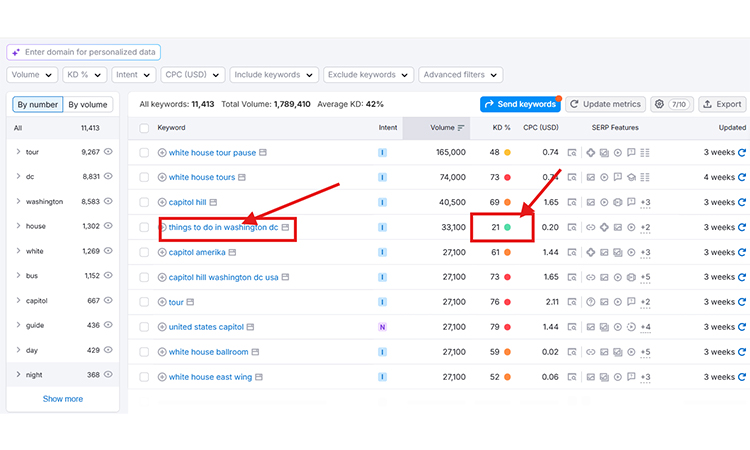
In the above image, you can see the long-tail keyword “South India Tours and Travel Packages”. It indeed has a lower keyword difficulty (KD) percentage, which is 22. It’s reflected as green, which means it’s easy to target. Meanwhile, this keyword has a good search volume, which is 210.
- Analyze Competitor Keywords
Your keyword research will be incomplete without researching your competitors’ keywords. Doing this allows you to find those keywords that actually work for your competitors in terms of bringing organic traffic and increasing leads with maximized conversions.
To do it conveniently, you can leverage various advanced tools, which are as follows:
- Google Keyword Planner
- Moz Pro
- SpyFu
- SimilarWeb
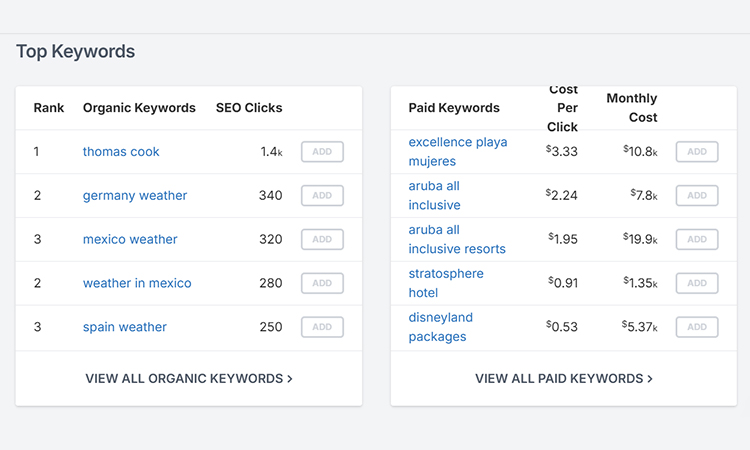
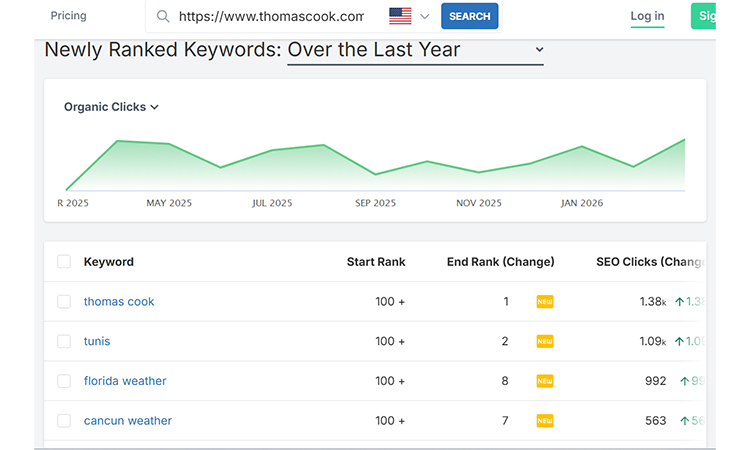
We use SpyFu here for competitor keyword analysis by putting the competitor, and the result becomes visible as below:
- Update Your Keyword List Consistently
You need to understand that keywords can change based on trends. Therefore, it’s advisable to keep an eye on your keyword list consistently to refresh the entire list. It’s advisable to track your performance metrics thoroughly and delete those that have a poor performance. Instead of those keywords, you can add several new and meaningful keywords to the list.
- Craft a Compelling Ad Copy
Once you find the right keywords for your PPC for travel agencies campaigns, your next job is to craft a compelling and distinguished ad copy. It goes without saying that using the right keywords triggers your ads. But users will not click your PPC advertising unless they find them attractive and meaningful.
Before you proceed to create an ad copy, you need to know about your target audience. For this purpose, you can do the following important things:
- Research in-depth about your target audience.
- Understand what they actually mean.
- Know the language they use
Once you are familiar with your audience, you need to proceed with creating your ad copy.
How to create a Conversion-Oriented Ad Copy?
Well, to create a conversion-oriented ad copy, you need to consider the following important factors:
- Headlines
Headline is one of the most important things that PPC visitors interact with quickly. So, you should do everything to make it compelling. Apart from making it eye-catching, you also need to ensure that it’s aligned better with your target keywords. Make sure it repeats those action words that convey a great sense of urgency for prompt clicks.
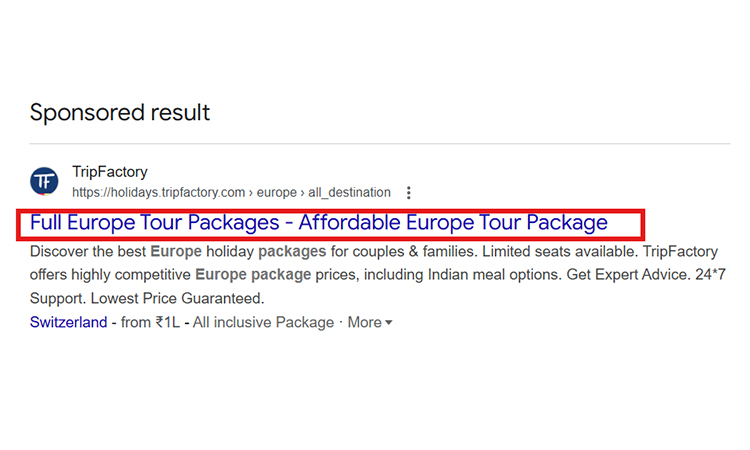
In the above image, we can see the headline that can easily grab the attention of visitors with affordable packages.
- Highlighting Unique Selling Propositions
You need to make your ad different from others by including something unique. You need to show the main USP in your ad copy that gives a genuine reason to users to look at your ad. To catch customers’ attention, your ad should include the following important things:
- Special discounts
- Free shipping
- Excellent customer service
Is it offering free shipping, special discounts, or perhaps excellent customer service? Your customers must know about all these.
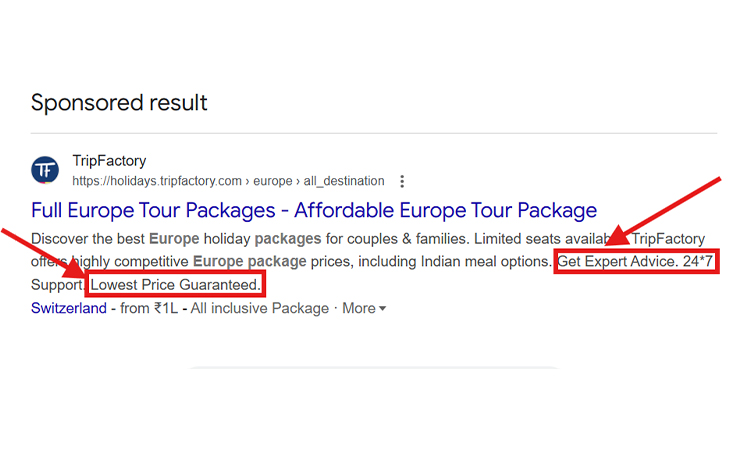
- Use Numbers and Statistics
The next thing you can do is to include stats or numbers in your ad copy to make it more attention-seeking. It also helps in increasing both trust and credibility. For example, you can include stats like being trusted by 2k customers or even save 25%. These are indeed the most compelling statements that offer important value and also maximize clicks.
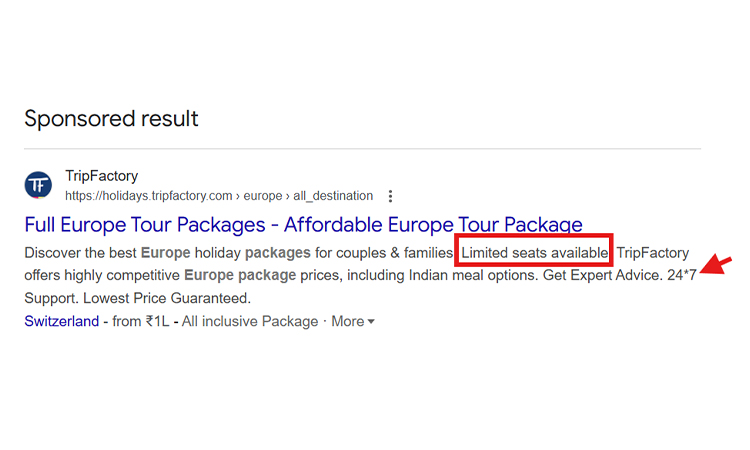
- Include a Strong Call-to-Action (CTA)
Make sure your ad copy tells users clearly the action they should take next. Your CTA should be strong and bold, which should encourage users to take immediate action and thus boost your conversion rate.
- A/B Test Your Ad Copy
This test lets you recognize those wordings that resonate better with your audience. It’s advisable to run A/B testing on multiple headlines, descriptions, CTAs, etc., to find a great combination that performs outstandingly.
- Create a Conversion-Optimized Landing Page
Creating a landing page is another important task you need to perform. You need to create landing pages specifically for conversion. It should be accompanied by eye-catchy long headlines, optimized descriptions, and a bold CTA. Apart from this, the page should not include any distractions such as navigation menus and sidebars.
- How to Create an Attractive Landing Page for your Ad?
- Create Your Landing Page based on Your Ad
Consistency is something that you should always maintain between your landing page and ad. To help you understand better, we take an example like if your ad provides 25% discount, your landing page should explain the same clearly. If you fail to maintain consistency, it tends to confuse your customers, which also maximizes your bounce rates. It indeed negatively impacts your ROI.
- Keep Away from Clutter and Noise
You need to ensure that the landing page you create is clutter-free, as it will put off your potential customers. The design of your landing page should be eye-catching, along with minimal distractions, headlines, easy-to-navigate forms, etc. You need to make your value proposition quite apparent to users when they access the landing page.
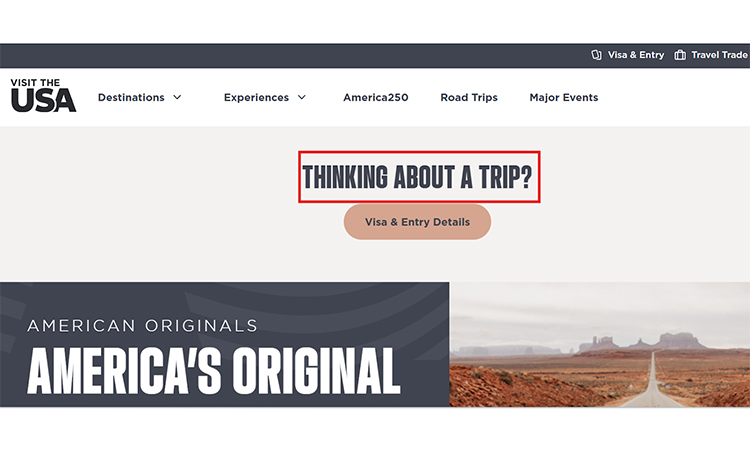
- Use Strong CTAs on Your Landing Page
Another important thing is that your landing page should have a clear CTA, just as your advertisements. Therefore, it’s important to have straightforward, easy-to-see, and action-driven CTA buttons.
- Run A/B Tests on Your Landing Pages
With the help of advertisements, you get a chance to test various things on your landing page. It helps you maximize your conversion rate. It’s crucial to check various components of the headline, see where you placed your CTA, and know those buttons that work for you.
- Set a Clear Budget
No matter what, setting up a clear budget is essential to run your campaign successfully. It prevents you from spending your money unnecessarily and only on those justified expenditures. Besides, it also prevents you from facing a funding shortage amid your campaign.
However, it’s true that you need to do a test run for every campaign to determine your overall budget. Therefore, you should be highly prepared to spend even a hundred dollars, even before getting the exact details in terms of the amount you wish to spend.
So, how to determine your budget to run your campaign successfully?
Well, you need to first decide the total amount of money you wish to invest per click. This depends on several metrics, such as the average cost per click in your niche, conversion rate, etc., for your campaign. Let’s understand some other vital tips and tricks you can consider to set a clear budget for your campaign:
- Know your campaign goal: You need to understand your goals first, be it increasing sales, leads, brand awareness, or website traffic.
- Be familiar with your cost metrics: It’s advisable to do proper research on the average cost-per-click (CPC) in the travel niche. You will be able to know by using tools like Google Keyword Planner, SEMrush, and many others.
- Work backward from your actual goal: If your goal is to spend $100,000, you can estimate an average CPC of approximately $20 with an estimated conversion rate of 5%.
- Set daily and monthly budget: It’s advisable to break your entire budget into daily spend limits to avoid any overspending.
- Check competitor spending: It’s better to get an idea in terms of how much amount your competitors spend. You will be able to know the same through tools like SpyFu, Ahrefs, etc.
- Audience Segmentation and Targeting
Your PPC for travel agencies campaign can be successful only when you target the right audience. Doing audience segmentation properly lets you reach the right audience with your PPC ad and thus maximize your conversion. To do it properly, you can follow various crucial steps, which are as follows:
- Utilize Demographic Targeting
Be it Meta Ads or Google Ads, it lets you tag demographic groups according to factors like gender, age, income, location, and interests. You can use this feature to focus your budget on users with your customer profile.
- Create Custom Audiences
The next thing you can do is to target those who have already visited your travel and tourism website or engaged with your tourism business by using numerous tools like Meta Custom Audiences, Google Ads Remarketing lists, etc. It increases the probability for users to convert since they have already expressed interest in your offerings.
- Use Lookalike Audiences
After acquiring a proper customer base for your PPC for travel agencies campaign, you can now build a lookalike audience and target people who already have the same kind of characteristics. These audiences enable you to expand your overall range as you can highlight your ads to users who are likely to be keen on your business compared to others, based on profiles of your current customers.
- Target Specific Segments for Hyper-personalization
With proper audience segmentation, you will be able to run more targeted PPC advertising to a specific group of users. You can run segment ads for your targeted users who are completely at a different stage of the setup ads or buying process, which tends to vary based on different geographical locations. When it comes to personalization, it indeed boosts your click-through and conversion rates.
- Check Campaign Performance
No matter how much effort you put in, you will not be able to get the desired outcomes unless you track the actual performance of your campaign. It helps you make the necessary adjustments to increase the conversion leads and get the best outcomes. Let’s focus on different activities you can focus on analyze the overall performance of your campaign:
- Track Key Metrics
You need to keep an eye on various important factors such as click-through rate, cost per acquisition, and conversion rate. You can do the same repeatedly. It’s advisable to track important metrics that can help you realize where things are going wrong or right. It definitely helps you redefine your strategy to boost your PPC campaign.
- Use Google Analytics for Deeper Insights
You can explore vital details such as what visitors do on your website through Google Analytics 4. To access this information, you need to first connect Google Analytics 4(GA4) and Google Tag Manager (GTM) to Google Ads. It lets you analyze what users actually do once they click on your ad. It definitely helps you explore potential issues on your landing pages that may adversely impact your conversions.
- Show a watchful eye on Search Term Reports
The major advantage of filtering search terms is that it ensures an improved conversion with a specific budget. Once you have a Search Terms report, you will be able to access the exact search queries that users utilize while searching for your targeted keywords. You can analyze this report thoroughly to help you recognize irrelevant keywords and be refined further. Therefore, you can target the most appropriate searches exclusively.
Types of Campaigns to Run to Increase Booking
When you run the best combination of PPC campaigns, you can definitely increase your bookings through targeting users at multiple stages of their entire decision-making journey. Every campaign type caters to a unique purpose, right from capturing high-intent searches to increasing brand awareness.
- Search Campaigns
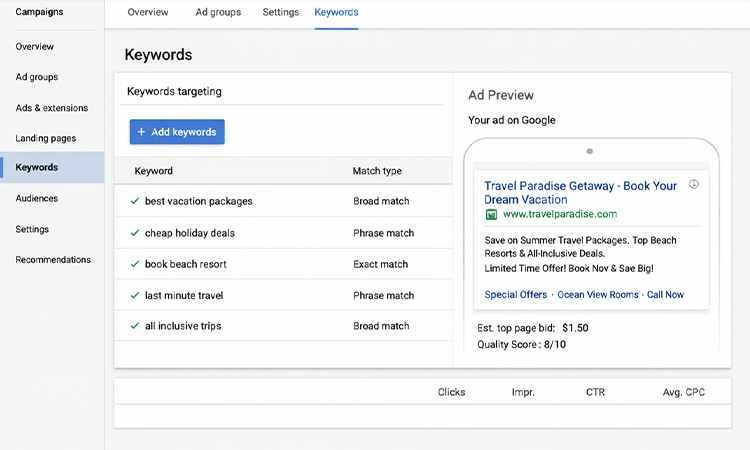
Search ad campaigns are highly common, yet the most result-driven when it comes to capturing intent-driven users actively seeking travel agencies. These ads are visible on SERPs when users type important queries such as “hotel booking near me”, “top holiday packages”, etc.
You can target various transactional keywords to connect with users who are all set to book. To maximize outcomes, you need to emphasize using alluring, compelling ad copy, keyword intent, optimizing landing pages for fast conversions, and more. Don’t forget to add extensions such as location, call, sitelinks, etc. These indeed boost visibility and also click-through rates.
- Display Campaigns
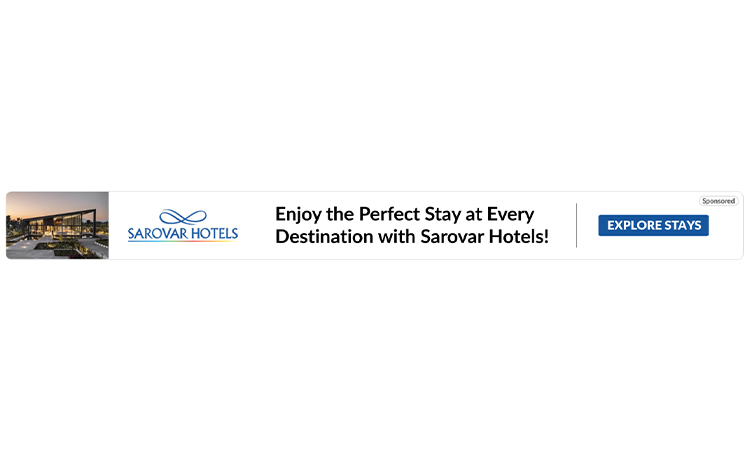
It’s another popular form of campaign that helps you reach a wider audience with the use of attractive banner ads across several places, such as apps, websites, and blogs. These campaigns are good for increasing brand awareness. Besides, it also helps you re-engage users who visited your website previously.
They work better for displaying seasonal offers, travel deals, and destination visuals. These encourage users to explore more about your ads. You can maximize your reach among users who are keen on travel with user targeting options such as in-market audiences.
- Video Campaigns
Video campaigns are the most appropriate option when it comes to storytelling and prompt people to make travel decisions smartly. By using platforms such as YouTube, you will be able to showcase your customer experiences, destinations, travel packages, etc. with the help of attractive visuals.
The fact can’t be denied that these campaigns are indeed quite useful in the awareness and also consideration stages. A perfectly created video lets you connect emotionally with viewers and can thus encourage them to book.
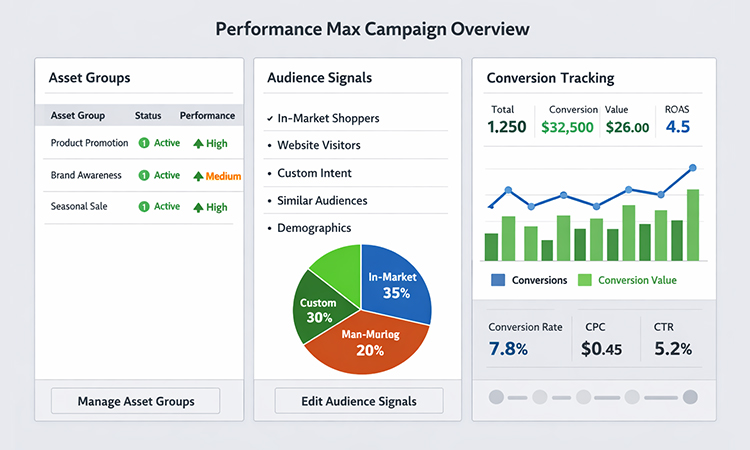
- Performance Max Campaigns
Performance Max Campaigns leverage the potential of Artificial Intelligence (AI) and automation to run campaigns across various Google channels. These mainly include YouTube, Search, Display, Discover, and Gmail. The performance marketing campaign type is appropriate for increasing conversions and bookings with less manual effort.
Common PPC Mistakes For Travel Agencies to Avoid
It goes without saying that a thorough PPC for travel agencies campaign delivers results, but only when you do it in the right way. Meanwhile, any mistakes deprive you of getting the outcomes. Let’s discuss some of the common mistakes you need to avoid:
- Avoid Mobile Users
The majority of travel searches take place on mobile devices, especially for last-minute bookings. Hotelagio reveals that 83% people research their trip online through mobile devices and 45% complete the entire booking process. So, when you ignore mobile optimization, it causes a poor user experience and also a loss of conversion.
Solution: It’s advisable to ensure your ads are mobile-friendly and that your landing pages load fast on mobile devices. For this purpose, you can use click-to-call buttons, mobile-specific ad copies, and simple booking forms.
- Ignoring Re-marketing
You can’t force every user to opt for your packages or book a trip, especially during their first visit. So, if you don’t have a plan to retarget those visitors, you definitely miss out on opportunities to generate high-potential leads.
Solution: You are suggested to set up your remarketing campaigns to target users who have already accessed your website or viewed your packages. You can show them your special offers, discounts, personalized ads, etc.
- Targeting Broad Keywords
Using generic keywords lets you attract only irrelevant traffic, which causes a higher cost and low conversion rates.
Solution: You need to always target intent-driven and long-tail keywords. For instance, you can target keywords like “Dubai Tour Packages and Travels”. Besides, don’t forget to update your negative keyword list to filter out irrelevant searches and thus optimize your ad spend.
- Poor Landing Page Experience
Despite the great performance of your ads, you can be disappointed with the conversion rate due to inappropriate landing pages. Be it unclear information, slow loading speed, or lack of trust signals, these boost deviate users.
Solution: It’s a good idea to craft a dedicated landing page for every campaign with clear pricing, package details, quality visuals, and itinerary. Besides, you need to add trust badges, customer reviews, and booking forms.
- Avoiding Performance Tracking
The next mistake you should avoid is not tracking your performance analytics. If you don’t track your campaign, you will not be able to understand how your campaign works, and also which parts are wasting your budget.
Solution: You need to set up your conversion tracking tools, such as Google Analytics, which helps you keep an eye on important metrics. These include conversion rate, CTR, cost per lead, etc.
Partner with a Professional PPC Agency to Gain Guaranteed Outcomes
As we already mentioned, managing PPC for travel agencies campaigns requires a solid strategy, with domain expertise, an in-depth understanding of customer behavior, and constant optimization. So, it can be handled only by a professional PPC company.
They have a group of experts who possess enormous experience to handle campaigns. These professionals know the way to turn clicks into bookings while increasing your ROI.
The best PPC agency promises structured execution and does everything to make your campaign successful and result-driven. Their PPC services include the following important things:
- Strategic Keyword Research
- Audience Advanced Targeting
- Remarketing Setup
- High-converting Ad Copy
- Landing Page Optimization
- Campaign Optimization
- Continuous Performance Tracking
- Budget Management
FAQs
Ans. PPC is good for a travel agency for getting instant results in terms of quick visibility and lead generation. On the other hand, search engine optimization takes a lot of time, which ranges from 3 months to 6 months to deliver results.
Ans. Well, the 7 P’s of the tourism market are Price, Product, Place, Promotion, Process, People, and Physical Evidence. They help travel businesses in designing attractive offerings, quality experiences, and marketing services to lure and retain customers.
Ans. Well, creating a highly effective PPC for travel agencies requires the use of attention-grabbing headlines, lucrative travel offers, and powerful CTAs. You can use ad extensions and then align ads with highly optimized landing pages to increase conversions.
Ans. There is indeed no fixed cost for running a PPC campaign for a travel agency. It varies based on several factors such as keywords, competition, and targeting. Moreover, the average cost can go up to $100,000 on a monthly basis.
Ans. Google Ads is the best platform for travel agencies since it captures high-intent users searching for travel packages. Apart from this, many social platforms, such as Instagram and Facebook, are also highly effective for visual promotions and various remarketing campaigns.
Ans. Well, PPC for travel agencies delivers instant results fast, as soon as you launch your campaigns. Meanwhile, gaining consistency in leads and optimized conversion generally takes 2 to 4 weeks with continuous testing, monitoring, and performance improvements.
Conclusion
The most important thing you need to take into account is that a PPC campaign is not just a set-and-forget process. It’s indeed a continuous process with a thorough analysis, monitoring, and making necessary adjustments.You need to take into account that adequate keyword research and objectives are combined better with proper ad copy optimization for getting more conversions, optimization for landing pages, and also adjustments to the bidding strategy. Combining these together indeed optimizes PPC for travel agencies campaigns and generates a higher ROI.

