





PPC- pay per click, as its name suggests, you pay when your target audience clicks on your ads. Sound interesting, right? Being an industrial company owner, if you’re struggling with new leads or getting a shortage of new clients, then you need to change your marketing process with PPC for industrial companies. It will help you to generate qualified leads and get high-intent clients within a short span of time. With the help of industrial PPC, you can get an end number of trusted clients, and you can see a huge boom in your industrial businesses.
Do you know that the average return on investment is 200%, with companies getting $2 for every dollar spent on Google Ads? Then, most of the mobile devices account for 52% of all PPC clicks, and 93% of marketers believe PPC is successful or extremely profitable for their business growth. PPC advertising is different from a traditional marketing strategy.
Though ppc for industrial companies is a long concept to understand, in this comprehensive guide, you will learn the basics of industrial company ppc campaigns, including all the required steps, like what lead generation vs brand awareness goals are, how PPC improves lead quality, and the best ideas for developing a PPC Marketing Strategy. Moreover, you will discover the steps of keyword research for ppc ads, and how Google Search Ads, LinkedIn Ads, Display and Remarketing Ads, and Landing Pages will improve lead quality from PPC and so on. Let’s dig deeper into the world of ppc for industrial companies.

What Is PPC for Industrial Companies and Why Is It Important?
PPC for industrial companies is one of the best digital marketing strategies. It helps your target audience, or those who are actually looking for your services, to find you easily. The most useful PPC ads are Google Search Ads, Google Display Ads, Google Shopping Ads, YouTube Ads, LinkedIn Ads, Facebook Ads, Microsoft (Bing) Ads, and remarketing ads.
These PPC ads are like you will bid for particular keywords associated with your industrial business, and then your ads will appear on search engines for those specific keywords. This advertising process will help you to reach a wider audience.
Importance Of PPC for Industrial Companies
- The global industrial services market is expected to be worth USD 32.65 billion in 2023 and USD 50.09 billion by 2030, with a CAGR of 6.5% between 2024 and 2030. So in this competitive industrial market, if you want to get high-quality leads, you need to run successful ppc campaigns. It will generate qualified leads.
- While trade shows, cold calling, and direct mail are still useful for some industries, they’re not enough on their own anymore. Nowadays, most people do an online search before making a purchase. This is where PPC advertising becomes essential for industrial businesses.
- PPC campaigns are essential for industrial companies because they capture this stage of digital research and improve their current marketing strategy. If procurement teams look for “industrial automation solutions” or “custom metal fabrication services,” your ads may show up at the top of the search results. It will position your business as a dependable provider of solutions from the initial stages of the customer’s marketing process.
Traditional Marketing, SEO, or PPC: What Should Industrial Companies Choose?
| Factor | Traditional Marketing Process | SEO for Industrial Companies | PPC for Industrial Companies |
| How do you reach customers | You reach people through print ads, trade shows, or cold calls | You can reach people when they search on Google | You reach people when they click your paid ads |
| Speed of results | You wait months to see a response | You wait several months for rankings | You see results within days |
| Target audience control | You have very little control over who sees your message | You target users by search intent | You control who sees ads by keyword, role, and location |
| Cost control | You spend money upfront with no guarantee | You invest time and budget steadily | You pay only when someone clicks |
| Lead quality | You often get low-quality or cold leads | You attract informed and warm leads | You attract high-intent and ready buyers |
| Measurability | You cannot track exact results | You track traffic and conversions | You track clicks, leads, and ROI clearly |
| Best use case | You focus on brand awareness | You build long-term authority | You generate fast and qualified leads |
| Fit for industrial companies | It works poorly for niche buyers | It works well for long-term growth | It works best for immediate lead demand |
How PPC Works for Manufacturing Companies
- First, you need to start your PPC advertising by finding the relevant keywords. You need to find specific, high-intent keywords that indicate serious buyer interest, such as “industrial valve manufacturer” or “CNC machining services quote.”
- After finding the high-value keywords, you can create targeted ad campaigns to reach potential customers who are actively searching for your products or services. Then these ads will complete an auction system on platforms like Google Ads, where you bid against competitors for ad placement. Most importantly, Google likes the most accurate, authentic, and trustworthy information. So be careful about that; what you put in your ad copy will maintain your brand value.
- After that, when your audience clicks on your running paid search ads, they go to your personalized landing pages. Where you include all your information. These landing pages can convert your potential clients into loyal customers.
- The most important platforms where you should run your ads are Google Ads campaigns for search engines, LinkedIn Ads for precise B2B targeting by job title and industry, and Bing Ads for additional reach among enterprise buyers. So you need to organize different PPC ad strategies for separate platforms
Where to Run PPC Campaigns for Industrial Companies?
- You need to carefully choose the online platform where you will run your PPC campaigns. This is the base of your industrial company PPC. So you need to figure out where your target audience spends their time online and which platforms give you the best qualified leads for your specific industrial business.
- Google Ads for Industrial Marketing is the most powerful ppc campaigns running platform to reach a wide range of clients and get the highest ROI. You need to prioritize high-intent keywords like “industrial compressor supplier” or “custom metal fabrication.
- Moreover, your brand awareness will increase with the help of the Google Display Network, which places visual ads across millions of websites where engineers and procurement teams browse industry news. Google Shopping campaigns can showcase your products with images, specs, and pricing.
- However, YouTube ads can showcase your complex machinery or industrial processes. It will improve your company’s authenticity and legitimacy. The video content goes over very well with people. So you can focus on YouTube ads as well.
- Then you have the option of LinkedIn Ads for B2B industrial targeting. It will help you to target by job title (“Purchasing Manager,” “Plant Engineer”), company size, and industry precision.
- Your options include organic sponsored content and LinkedIn message ads that land in prospects’ inboxes. As they auto-fill with user data, LinkedIn’s lead gen forms increase landing page conversion rates and grab qualified leads.
- Furthermore, you shouldn’t overlook Microsoft Advertising (Bing Ads), which serves desktop searches with often lower ad spend requirements.
- Then the industrial company owners might also explore industry-specific directories like ThomasNet or engineering platforms where your competitors may not advertise.
How to Create a Winning PPC Strategy for Industrial Companies?
Till now, you have acquired the basics of PPC for industrial companies. And now in this segment, you will discover all the required information to run a successful ppc campaigns for industrial companies.
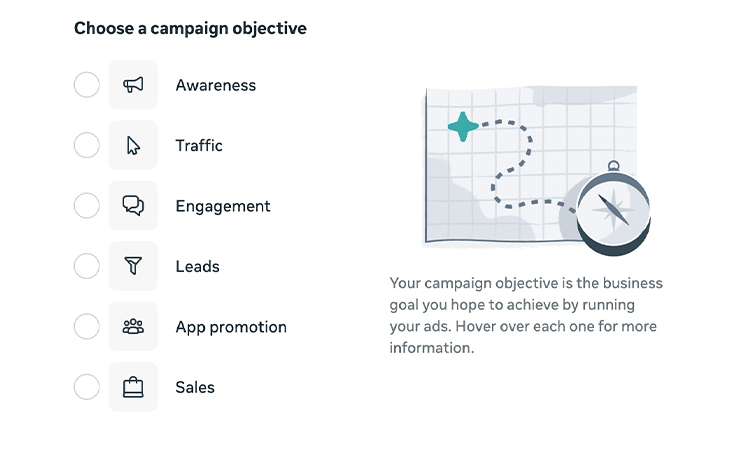
Step 1: Define Your Business Goals and KPIs
The first step is to identify your goals and how to measure them.
- Set Realistic Lead Generation Targets
Your lead generation goals should be based on the realities of industrial sales cycles. Then you might aim to generate 15-30 qualified leads per month initially. Your targets need to take into account how much work your sales team can handle. There’s no point in giving them too many leads that they can’t follow up on.
Moreover, you should consider your current conversion rates from the sales funnel. If your team usually closes 20% of qualified opportunities, and you need 5 new clients this quarter, you’ll need approximately 25 sales-qualified leads. The number of leads your PPC campaigns need to produce can be calculated by working backward from your revenue targets.
- Cost Per Lead (CPL) Benchmarks for Industrial Companies
Your goals for CPL in industrial sectors are very different from those in consumer marketing. Your budget should be between $150 and $500 per qualified lead, depending on how competitive your industry is and how complicated your products are. As a general rule, companies in the manufacturing industry that advertise for broad industrial keywords pay more than companies that compete for narrower niche search keywords.
These numbers might seem high, but you need to remember that your customer lifetime value in industrial businesses typically ranges from $50,000 to millions. A $400 cost per lead becomes minor when that lead evolves into a $300,000 binding agreement.
- Lead Quality Metrics to Track
Your focus on lead quality will maximize ROI more than raw lead volume ever could. So you need to track the percentage of marketing-qualified leads (MQLs) that your sales team accepts as sales-qualified leads (SQLs). This acceptance rate shows you if your search terms and ad copy are targeting the right people.
You need to carefully record metrics like company size, industry match, project budget, and decision-maker engagement. You need to figure out how many leads request prices, schedule demos, or download technical specifications—these are the important factors you need to take care of.
- Revenue Attribution Modeling
Your attribution model connects PPC spending directly to revenue generation. You should start tracking which shows which campaigns, ad groups, and search terms contribute to closed deals. Multi-touch models show the whole journey of your marketing efforts, while first-touch attribution shows what first brought leads to your site.
It’s important that your CRM is integrated because it helps you see that a lead who clicked on your Google ad in January became a customer in June. This shows that your bidding strategy worked.
Step 2: Conduct Industrial Keyword Research
Keywords are those search terms your potential customers are using. So you need to find out those high-intent keywords to make your industrial ppc strategy more worthwhile.
Knowing your audience’s Search intent is very important in the industrial market. If you don’t know what kind of searches happened, then how do you target your audience with their pain points? So you can use it by matching keywords to intent stages:
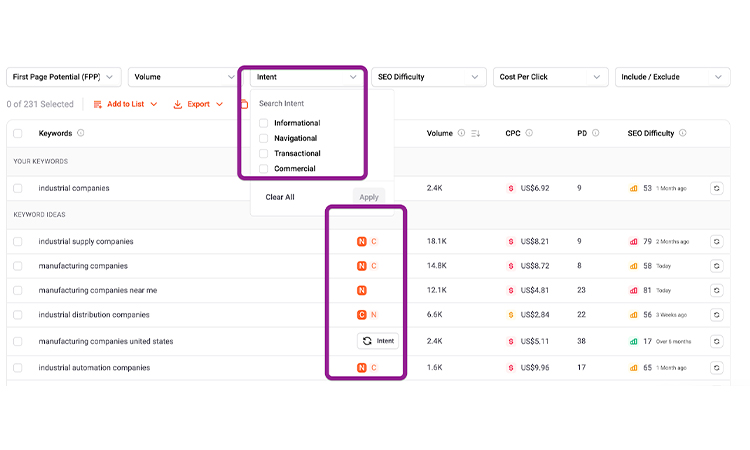
- informational (“how hydraulic pumps work”)
- navigational (“Parker hydraulic pumps”)
- commercial (“best industrial valve suppliers”)
- transactional (“request hydraulic pump quote”)
Your ad copy and landing pages must align with each intent type.
You can use keyword research tools like Google Keyword Planner, Semrush, Ubersuggest, Answer The Public, and so on.
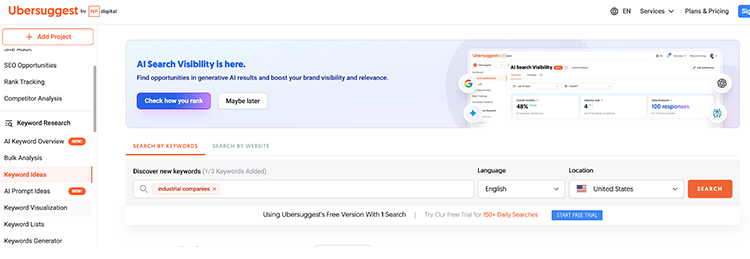
Here, I will show you how to find relevant keywords on Ubersuggest. Go to the Ubersuggest -> Keyword Ideas, then type your main keywords in the search bar.
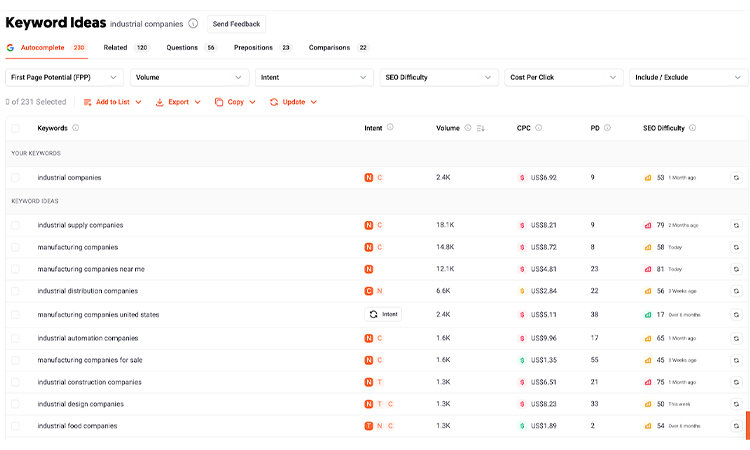
And now you have the list of keywords-
Best Tips for Selecting Keywords for Industrial PPC
Your keyword selection determines your campaign success and ROI. You need keywords that attract decision makers who are actively searching for your solutions, not researchers or students.
Keyword Selection Strategy
- You need to focus on buyer intent keywords that signal purchase readiness. Terms like “manufacturer,” “supplier,” “custom,” “quote,” and “buy” indicate serious prospects. You should avoid educational terms like “what is” or “how to” unless you want top-funnel traffic.
- Then you may use long-tail keywords with 3-5 words. “Stainless steel ball valve manufacturer” attracts better quality leads than just “valves.” These specific terms cost less and convert better because they match exact needs.
- Most importantly, you can include technical specifications in your keywords. Terms like “ISO 9001 CNC machining” or “ASME certified pressure vessels” filter out unqualified clicks and attract industrial buyers who know what they need.
- If you want to target any specific region, then you need to add location modifiers when relevant. “Industrial compressor supplier Chicago” captures local searches with high purchase intent.
Keyword Metrics Reference Table
| Metric | Ideal Range for Industrial PPC | Selection Tips |
| Search Volume | 10-500/month | Higher isn’t better focus on relevance over volume; industrial keywords naturally have lower searches |
| CPC (Cost Per Click) | $15-$75 | Expect high costs; customer value justifies it; avoid keywords over $100 unless ROI proven |
| KD (Keyword Difficulty) | 20-60 | Medium difficulty balances competition and opportunity; very high KD drains budget quickly |
| SEO Difficulty | Any | Less relevant for PPC; use this for content strategy, not ad decisions |
Step 3: How Do You Analyze Your Competitors’ Marketing Strategy?

You must know who already runs ppc for industrial companies in your market. This step helps you avoid waste and improve lead quality.
- First, you check who shows ads when buyers search your targeted keywords. This shows which manufacturing companies compete for the same industrial sectors.
- Next, you use tools like SpyFu, iSpyCompete, or other free tools. These tools show competitor ad spend, paid search efforts, search terms, and platforms such as Google Ads and Bing Ads.
- After that, you review the competitor’s dedicated landing page structure. You see how they talk to industrial buyers and decision makers. This shows what works and what fails.
- Then, you find gaps. Many competitors miss clear pricing, technical proof, or strong ad messaging. This creates space for compelling ad copy.
- This step supports data-driven PPC strategies and helps you create a successful PPC campaign with better lead generation and stronger brand visibility.
Step 4: Structure Your Campaign Architecture
Your campaign structure determines how efficiently you manage your PPC for industrial companies. This organization impacts your ability to track performance, control budgets, and optimize results.
- Campaign Organization by Product Line/Service
You should create separate campaigns for each major product category your manufacturing business offers. This structure helps you to allocate budgets based on profitability and strategic priorities. Your hydraulic systems campaign operates independently from your electrical components campaign, each with dedicated spending limits. This separation helps you identify which products generate the best returns. You can pause underperforming campaigns without affecting successful ones, and you can scale winners without budget constraints.
- Ad Group Segmentation Best Practices
Your ad groups within campaigns should contain tightly related keywords. Each group needs a specific ad copy that matches the searcher’s intent. For example, in your “Industrial Pumps” campaign, you create separate groups for centrifugal pumps, diaphragm pumps, and gear pumps. This precision improves your Quality Score and reduces costs. Your ads remain highly relevant to what potential customers search for.
- SKAG vs. Themed Groups
You can use Single Keyword Ad Groups (one keyword per group) for maximum control, or themed groups (5-15 related keywords) for easier management. For most industrial advertising efforts, themed groups work better initially. This approach balances relevance with practical management needs.
- Naming Conventions for Tracking
Your naming system must be consistent and clear. Use formats like “[Product][Location][Type]” for campaigns. Example: “Valves_Northeast_Exact” tells you instantly what that campaign targets. This clarity becomes essential when you manage multiple paid advertising initiatives.
- Geographic Campaign Structure
Your geographic organization depends on service areas and market differences. You might separate campaigns by region if competition or demand varies. This structure lets you adjust bids based on each area’s performance and focus budget where your manufacturing business sees the best results.
Step 5: Develop the High-Converting Ad Copy to Improve PPC Strategy
Your ad copy determines whether industrial buyers click your ads or choose competitors. You need precise messaging that speaks directly to decision makers and multiple stakeholders in the buying process.
- You can develop content for Technical Audiences
You should use industry-specific terminology that resonates with engineers and procurement teams. Words like “tolerances,” “certifications,” and “specifications” signal that you understand their requirements. Your headlines must address their exact needs at the exact moment they search for specific solutions.
So you can avoid generic marketing language. Instead of “Quality Products,” write “±0.001″ Precision CNC Machining” or “ASME B31.3 Compliant Pipe Fabrication.” This precision targeting attracts quality leads who need your exact capabilities.
- Highlight Unique Value Propositions
Your ads must communicate what separates you from competitors immediately. So you may focus on concrete differentiators like “48-Hour Prototyping,” “AS9100 Aerospace Certified,” or “Custom Solutions No Minimum Orders.” These specific claims help your manufacturing business stand out in competitive industrial advertising.
- Include Specifications and Certifications
Your technical details qualify leads before they click. When you mention “316L Stainless Steel” or “ISO 9001:2015 Certified,” you attract buyers searching for those exact requirements. This improves lead quality while reducing wasted ad spend on unqualified clicks.
- Utilize Ad Extensions Flawlessly
- Sitelinks direct prospects to specific product pages, quote forms, or technical resources. You provide multiple conversion paths, which increases your ad’s real estate and click-through rates.
- Callouts highlight benefits like “24/7 Technical Support” or “Same-Day Shipping Available” that address common concerns.
- Structured snippets showcase your product range or certifications in list format, giving insights gained at a glance.
- Call extensions let prospects phone you directly from search results, which accelerates contact for high-intent buyers.
- Location extensions build trust by showing your physical presence near industrial buyers.
- A/B Testing Frameworks
Your continuous testing drives optimal performance. Test one element at a time: headlines, value propositions, or calls-to-action. So you can run tests for 100+ clicks to gather meaningful data. This data-driven strategy for PPC for industrial companies ensures your paid advertising improves through performance monitoring.
Step 6: Build Optimized Landing Pages
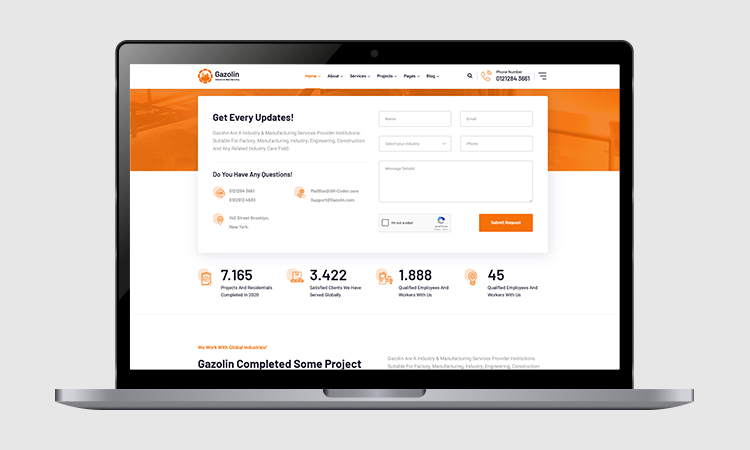
Your landing pages determine whether your paid advertising investment generates quality leads or wastes money. This critical element separates successful PPC for industrial companies from failed campaigns.
- Landing Page Is Important for Industrial Companies
- Clear Value Proposition: Your headline must immediately confirm that visitors found their solution. If your Google Ads promoted “Custom CNC Machining,” your page should state “Precision CNC Machining Services, Tight Tolerances Guaranteed” within seconds of arrival.
- Technical Specifications and Datasheets: Your industrial buyers need detailed specifications to evaluate solutions. You should display material options, tolerance ranges, capacity limits, and downloadable PDFs. This technical depth proves your expertise and helps decision makers justify choices to their teams.
- Trust Signals: Your certifications, client logos, and case studies build instant credibility. Display ISO certifications, industry awards, and recognizable brands you serve. These elements reassure prospects that your manufacturing business delivers proven results.
- Simple Lead Capture Forms: Your forms should request only essential information—name, email, company, and phone number. Each additional field reduces conversions, so you collect only what your sales team needs initially.
- Mobile Optimization: Your pages must work flawlessly on smartphones and tablets. Decision makers research industrial solutions during commutes and off-hours, so mobile-friendly design is non-negotiable.
- Message Should Be Match Between Ads and Pages-Your landing page content must align perfectly with your ad messaging. This consistency improves trust and confirms that visitors reached the right destination. When your paid ads promise specific benefits, your page should immediately reinforce those exact points.
- Conversion Optimization Techniques-This landing page needs one clear call-to-action that dominates the design. So you may remove navigation menus and distractions that lead visitors away. This focused approach maximizes conversions from your targeted traffic.
- Page Speed Importance- This dedicated landing page must load in under three seconds. If the page loads slowly then it can destroy conversions and increase costs in search engines. Speed optimization represents one of the biggest benefits of PPC: fast pages convert more visitors at lower costs through better Quality Scores and user experience.
Step 7: Implement Bid Strategies to Maximize ROI
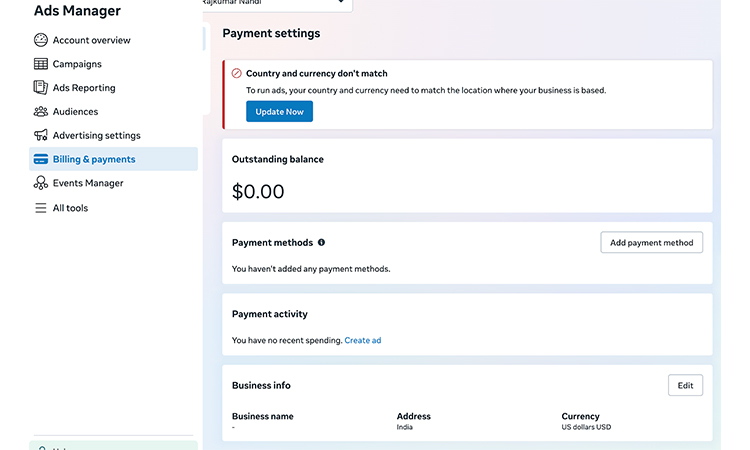
- Manual vs. Automated Bidding
- Manual bidding gives you complete control over what you pay for each click. You set specific bids for keywords and ad groups based on their value. This approach works best when you start your industrial advertising campaigns and need to understand costs.
- Automated bidding uses Google’s algorithms to adjust bids automatically. The system analyzes thousands of signals and optimizes for your goals. You should switch to automation once you have 30+ conversions monthly.
- Target CPA (Cost Per Acquisition) Strategy
Your Target CPA tells Google the average cost you want to pay per lead. The system adjusts bids to get maximum conversions at your target cost. This strategy helps you maintain consistent lead costs while you drive targeted traffic to your site. Set your target 20% higher than current costs initially, then lower it gradually.
- Target ROAS (Return on Ad Spend)
Your Target ROAS focuses on revenue instead of lead volume. You tell Google the return you need—like 400% ROAS means $4 revenue per $1 spent. This paid advertising strategy works when you track deal values and prioritize revenue over lead quantity.
- Maximize Conversions Approach
This aggressive strategy spends your entire budget to get maximum conversions regardless of cost. Use it carefully, it drives volume but may attract lower-quality leads if you don’t refine your niche audiences with negative keywords.
- When to Use Each Strategy
Your choice depends on campaign maturity. Start with manual bidding for new campaigns. Move to Target CPA when you have conversion data and clear cost goals. Then, you can utilize Target ROAS when tracking revenue. These benefits of PPC appear only when your bidding strategy aligns with your business stage and precise targeting needs.
Step 8: Create Remarketing Ads Campaigns

Your remarketing ads bring back visitors who didn’t convert initially. This strategy is essential for PPC for industrial companies because your sales cycles span months, not minutes. You cannot expect immediate conversions from cold traffic.
- Why Remarketing is Crucial for Long Sales Cycles
Your industrial buyers need time to evaluate options, consult stakeholders, and secure budgets. Remarketing keeps your brand visible during this extended decision process. It helps you drive targeted traffic back to your site and generate more qualified leads from people already familiar with your solutions.
Your remarketing campaigns cost less than new customer acquisition while delivering higher conversion rates. These ads provide immediate visibility to warm prospects rather than competing for attention from cold audiences.
- Audience Segmentation Strategies
- Website visitors by page: You create separate audiences based on which pages people viewed. Product page visitors see different ads than homepage visitors because they showed deeper interest.
- Video viewers: Your prospects who watched demonstration videos deserve targeted follow-up. They invested time to learn about your solutions.
- Lead magnet downloaders: Most of the People who downloaded your technical guides are actively researching. You should offer them consultations or quotes.
- Cart abandoners: For e-commerce manufacturers, you recover lost sales by addressing concerns about shipping, pricing, or payment terms.
- Remarketing Ad Messaging Tactics
Your ad copy should acknowledge that prospects know your brand. Then you can use messages like “Ready to Request Your Custom Quote?” or “Compare Our Certifications to Competitors.” This approach moves them toward conversion rather than repeating introductory information.
- Frequency Capping to Avoid Ad Fatigue
You limit ad impressions to 3-5 per person daily. This prevents annoyance while maintaining presence throughout their research phase.
- Cross-Platform Remarketing
Your PPC strategy should combine Google and LinkedIn remarketing. This cross-platform approach in industrial advertising creates multiple touchpoints, keeps you visible across professional networks, and reinforces your message without overwhelming prospects on one channel. This coordinated paid advertising delivers direct traffic from the most engaged prospects.
Step 9: Launch and Monitor Your Campaigns

Your launch day marks the start of your PPC for industrial companies journey. You need careful monitoring to ensure your paid advertising delivers immediate visibility and drives targeted traffic effectively.
- Pre-Launch Checklist
You must verify that conversion tracking works correctly before spending money. Test your forms, check that phone numbers connect properly, and confirm your landing pages load fast on mobile devices. Your negative keywords list should block irrelevant search terms like “free,” “DIY,” and “jobs.” You need to set daily budget limits to prevent overspending during the learning phase.
- Day 1 Monitoring Priorities
You should watch your campaigns hourly on launch day. Check that ads receive impressions and clicks, which confirms your ppc strategy is working correctly. Your search terms report shows what queries trigger your ads and adds irrelevant ones as negative keywords immediately. You need to verify that tracking pixels fire when potential customers submit forms or call. This immediate visibility into performance prevents wasted ad spend.
- Week 1 Adjustments
You can identify winning and losing keywords after gathering initial data. Pause search terms with high costs but zero conversions. Your ad copy variations show performance differences; keep the winners and test new alternatives. You should adjust bids on keywords that generate leads at acceptable costs. This proven track record of quick optimization separates successful industrial advertising from wasteful campaigns.
- What Metrics to Watch Daily vs. Weekly
- Daily monitoring: You track total spend, conversion count, obvious technical issues, and new search terms. This prevents budget overruns and catches problems fast.
- Weekly reviews: You analyze conversion rates, cost per lead trends, device performance, geographic patterns, and Quality Scores. These deeper insights guide strategic adjustments to drive more qualified leads.
- Red Flags and How to Respond
You face serious issues if you see zero impressions after 24 hours, check targeting settings and bid amounts immediately. High clicks with no conversions after one week signal landing page problems or poor traffic quality. Your cost per lead exceeding targets by 50%+ requires bid reductions or a campaign pause. Quick responses to these warnings protect your revenue growth and generate leads efficiently through direct traffic optimization.
How Do PPC and Other Marketing Efforts Work Together?
Your PPC for industrial companies works best when you can integrate with other marketing channels. This coordinated approach gives you better results than isolated campaigns ever could.
PPC + SEO for Long-Term Visibility
- Your paid advertising and organic search strategies should support each other, not compete. You use PPC to test which search terms convert best, then you create SEO content around those winning keywords.
- Your PPC campaigns provide immediate visibility while your SEO builds momentum. You dominate search results when your paid ads appear at the top, and your organic listings show below them. This dual presence increases credibility and captures more potential customers than either channel alone.
- Your high-performing PPC keywords reveal content gaps on your website. When certain search terms drive qualified leads through paid ads, but you lack organic rankings, you know exactly what content to create.
PPC Supporting Account-Based Marketing (ABM)
- Your industrial advertising becomes incredibly powerful when you combine it with ABM tactics. You upload lists of target companies to LinkedIn and create custom campaigns that reach decision makers at those specific organizations. This precision targeting complements your broader PPC strategy.
- Your remarketing ads work exceptionally well for ABM. After your sales team identifies key accounts, you can serve tailored display ads to employees at those companies. This coordinated approach keeps your brand visible throughout the sales process and supports your team’s outreach efforts.
Aligning PPC with Email, Content, CRM, Video Marketing, and Sales Teams
- Your email marketing benefits when you remarket to PPC visitors who didn’t convert. So you may capture their contact information through lead magnets, then nurture them with targeted email sequences. This multi-touch approach generates more qualified leads than single-channel efforts.
- The content team should create resources that support your PPC landing pages case studies, technical guides, and spec sheets that build trust and drive targeted traffic toward conversion. Your sales team provides feedback on lead quality, which helps you refine targeting and improve your overall digital marketing results.
- Your proven track record grows when all teams align around shared goals. PPC provides quick wins and data, SEO builds sustainable direct traffic, content establishes authority, and sales converts relationships into revenue growth. This integration maximizes your return on every marketing dollar.
- Then the CRM integration can track every lead from click to closed deal. You import offline conversions back into Google Ads, which shows true ROI. Your sales team marks lead quality in CRM, and you adjust campaigns based on their feedback for better targeting.
- Moreover, the video ads on YouTube demonstrate complex industrial equipment in action. You create remarketing audiences from video viewers, then target them with search ads. Your landing pages embed product videos that increase conversion rates by showing solutions clearly to potential buyers.
How AI Will Enhance PPC for Industrial Companies
Your AI-powered tools transform paid advertising from manual guesswork into precise, data-driven campaigns that generate leads more efficiently than ever before.
Best AI Tips to Improve Your PPC for Industrial Companies
- Smart Bidding Optimization: You use Google’s AI bidding to automatically adjust bids in real-time. This system analyzes thousands of signals—device, location, time, user behavior—to maximize conversions while you sleep. Nowadays, optimization in PPC advertising has shifted toward AI handling bidding mechanics, while human strategy focuses on technical precision.
- Predictive Analytics: AI tools like Adzooma and Optmyzr predict which search terms will drive targeted traffic and more qualified leads. You spot trends before competitors and allocate budgets to high-performing opportunities that support revenue growth.
- Automated Ad Copy Generation: Tools like Copy.ai and Jasper create multiple ad variations tailored to different industrial advertising audiences. You test dozens of messages quickly to find what resonates with potential customers and decision makers.
- Audience Targeting Precision: AI identifies patterns in your best converters. You reach niche audiences that match your proven track record of clients, not waste budget on poor fits.
- Chatbot Qualification: AI chatbots on landing pages qualify leads instantly, answer technical questions 24/7, and route serious prospects to sales. This immediate response captures direct traffic that might otherwise leave.
Recommended AI Tools:
- Google Smart Campaigns: Built-in automation
- Seventh Sense: Email timing optimization
- Acquisio: Cross-platform bid management
- WordStream: Automated optimization alerts
- Marketo AI: Lead scoring automation
Your competitive advantage comes from embracing these tools early, while others manually manage their digital marketing efforts.
What Common Mistakes Should Industrial Companies Avoid in PPC Advertising?
Your PPC success depends on avoiding critical errors that waste budgets and generate poor-quality leads. You need to recognize these mistakes before they damage your campaigns.
- Do not always Target Too Broad-You cannot afford generic keywords like “manufacturing” or “industrial equipment” that attract students, job seekers, and unqualified researchers. Your focus must stay on specific, high-intent search terms that decision makers use when they’re ready to buy.
- Neglecting Negative Keywords-You lose thousands in ad spend when you ignore negative keywords. Terms like “free,” “DIY,” “tutorial,” “jobs,” and “cheap” drain budgets without generating qualified leads. Your negative keyword list should grow weekly as you review search terms reports.
- Sending Traffic to Your Homepage-Ads on your homepage that promise particular solutions confuses visitors. So you need dedicated landing pages that match your ad messaging exactly—if your ad promotes custom CNC services, visitors must land on a CNC-specific page, not generic company information.
- Ignoring Mobile Experience-The industrial buyers research on tablets and phones during commutes and off-hours. You lose conversions when landing pages don’t load quickly, or forms are difficult to complete on mobile devices.
- Focusing Only on Lead Volume-You waste sales team time when you optimize for lead quantity over lead quality. The goal should be qualified prospects who match your ideal customer profile, not maximizing form submissions from anyone willing to click.
- No Remarketing Strategy-If you ignore remarketing ads, you risk losing several potential clients. Remarketing keeps your brand visible throughout the entire evaluation process, even though your industrial sales cycles extend to months.
- Setting Unrealistic Expectations-Furthermore, you cannot expect immediate ROI in industrial sectors. Your patience for 3-6 months allows campaigns to optimize and deals to close, while premature cancellation wastes your initial investment completely.
FAQ’s
Ans. Industrial companies typically spend $3,000 to $15,000+ per month on PPC advertising. Cost per click ranges from $15 to $75 due to high customer lifetime values. Expect to invest $150-$500 per qualified lead. So you can start with smaller budgets to test, then scale based on proven ROI. The budget should align with your sales capacity and revenue goals.
Ans. Google Ads is best for capturing high-intent searches when buyers actively look for solutions. LinkedIn Ads excels at targeting decision makers by job title and industry. Therefore, you can use Google for bottom-funnel conversions (60-70% of budget) and LinkedIn for top-funnel awareness (30-40% of budget). Combine both platforms for maximum results.
Ans. You can expect first qualified leads within 30 days, but allow 3-6 months for campaign optimization and meaningful ROI measurement. Industrial sales cycles typically take 6-12 months to close, so full revenue attribution requires patience. You should see improving metrics, lower costs, and better Quality Scores within 60-90 days if campaigns are managed properly.
Ans. You should target long-tail keywords with buyer intent like “[product] manufacturer,” “[service] supplier,” or “custom [solution] quote.” Then you can include technical specifications (ISO 9001, ASME certified) and location modifiers. So it is better to focus on 10-500 monthly search volume keywords most of the industrial keywords have lower searches.
Ans. To get optimal results in ppc you can add pre-qualifying questions to landing page forms asking about budget, timeline, and project scope. Then you can use negative keywords extensively to exclude students, job seekers, and DIY researchers. And you can target specific job titles on LinkedIn, like “Procurement Manager” or “Plant Engineer.”
Conclusion
So we are at the end of our discussion of PPC for industrial companies, and I can imagine that you have all your enquiries addressed. Though you can run your industrial company’s PPC ads, it’s better to take help from a professional PPC agency to achieve the best results and ensure accurate targeting. If you want to dominate the industrial sector, then SEO alone is not sufficient nowadays; you need to incorporate PPC advertising strategies as well.
So don’t waste your time thinking about what to do or not; just implement PPC in your industrial company and be the witness of getting high-value lead generation and increased revenue.

