





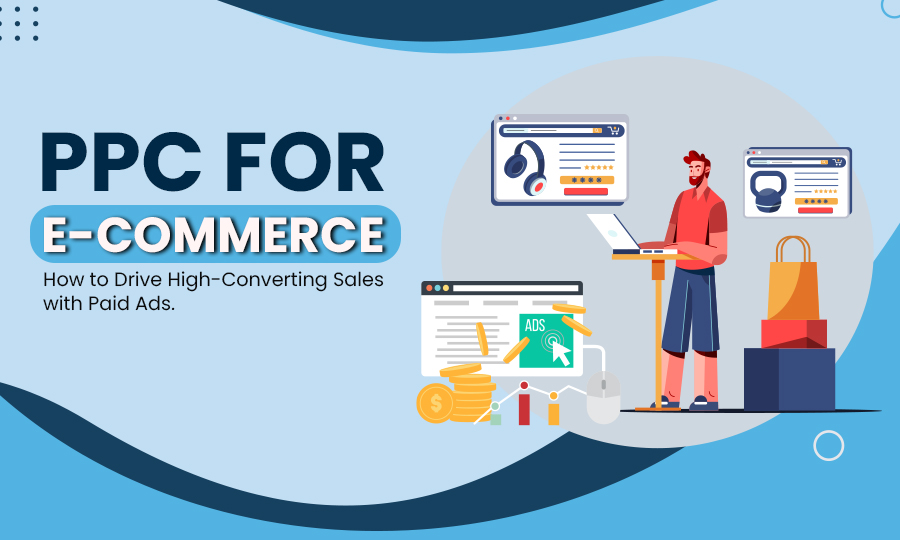
So, you have already launched your online store and selected paid ads to promote your products to increase sales, right? But, you suddenly notice that the cost is rising unprecedentedly, and you are still deprived of gaining the desired outcomes. Well, this is one of the common scenarios that a large number of e-commerce businesses come across. AndPPC for eCommerce emerges as the right solution.
It’s a fact that PPC ads bring vast and quick traffic, but there is indeed no guarantee for conversions. According to the recent stats, an average eCommerce conversion rate through PPC ads is only 2.85%, which reflects that most of the clicks are wasted without delivering the right outcomes.
According to Google’s Economic Impact Report, businesses can earn $8 for every $1 they spend on Google Ads. But this is possible only when you optimize your campaign better. Be it unclear messaging, poor targeting, or weak landing pages, they often cause higher frustration with low ROI.
In this blog, we will discuss the right PPC strategies that you can implement well to get the desired outcomes. Let’s explore the entire details.
What is PPC for E-commerce?
PPC is one of the types of digital advertising methods that helps businesses gain quick results as soon as they launch their campaign. As the name suggests, PPC for eCommerceis a process that involves promoting online stores. In this model, you need to pay only when users click your Google Shopping ads.
These Google shopping ads appear on social media platforms, search engines, display networks, marketplaces, etc. The main aim is to help businesses to maximize their reach to high-intent shoppers. When compared to organic traffic, it’s completely different and provides quick visibility to seasonal offers, product pages, new launches, etc.
Be it Meta Ads, Google Ads, or Amazon Ads, they ensure precise targeting according to shopping behavior, keywords, past interactions, and demographics. PPC delivers fast results, whether you retarget cart abandoners, increase sales, or stay competitive in crowded online marketplaces.
Top Benefits of PPC for E-commerce
Whether you wish to increase your product sales or brand recognition, PPC advertising caters to your multiple needs by promising to deliver fast results. Let’s understand some other advantages of PPC for e-commerce.
- Precise Audience Targeting
The major advantage of PPC is that it comes with the ability to target the right audience with precision. E-commerce brands have the flexibility to segment users according to location, keywords, gender, age, purchase behavior, interests, past interactions, etc.
With the use of advanced targeting options such as remarketing, you grab the opportunity to re-engage those who abandon their carts. It maximizes your reach among users who are likely to convert.
- Increase Immediate Visibility and Traffic
Once you start PPC for e-commerce, you can expect quick visibility for your brand and product. When you make your campaign live, your ads appear at the top of search engine results pages (SERPs), marketplaces, and social media feeds.
This is indeed quite beneficial for product launches, eCommerce stores, seasonal promotions, flash sales, and more, where fast exposure is important. As a result, you can witness an increased qualified traffic to your category and product pages.
- Gain Measurable ROI and Outcomes
Pay-per-click advertising not only provides measurable outcomes but also offers complete transparency. It allows you to keep your eyes on everything, be it impressions, clicks, conversions, or sales.
eCommerce businesses know keywords, campaigns, and ads that contribute directly to increasing revenue. The data-driven approach works effectively to optimize PPC ad campaigns continuously, which boosts return on ad spend.
- Reach Your Target Market Quickly
No other advertising method is indeed as effective as PPC when it comes to letting businesses reach their target market quickly. Whether you wish to target a broader audience or niche buyers, PPC platforms allow you to connect with high-intent shoppers quickly.
These platforms mainly include Meta Ads, Google Ads, Amazon Ads, and more. This makes PPC the best choice for a competitive market where timing is highly important in winning customers.
- Get Control Over Budget
Another advantage of PPC for e-commerce is that it gives you full control in terms of the overall amount you wish to spend. You get full liberty to set your daily or monthly budget, adjust spending, bid limits, spending, etc, according to campaign performance.
This kind of flexibility prevents you from overspending and thus allows you to scale your campaigns as per demand, sales objectives, seasonality, and more. It gives you the liberty to start with a smaller budget and then increase gradually.
What are the Different Types of PPC Campaigns for E-commerce
There are many important types of PPC campaigns available for eCommerce and their primary aim is to increase traffic, conversion, and sales. The following are some of the most popular types:
- Search Ads
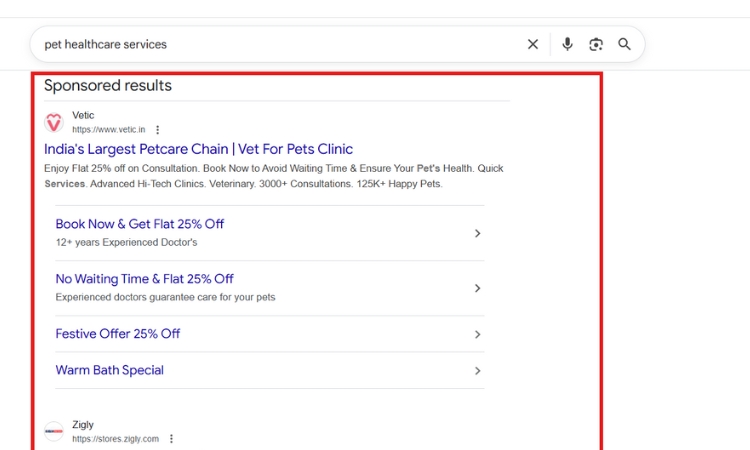
As the name suggests, search ads are basically text-based ads. They appear when users search for something with specific keywords or queries. It allows you to present your brand or message at the right moment in front of your target audience. It’s the best method to find genuine buyers for your products.
- Shopping Ads
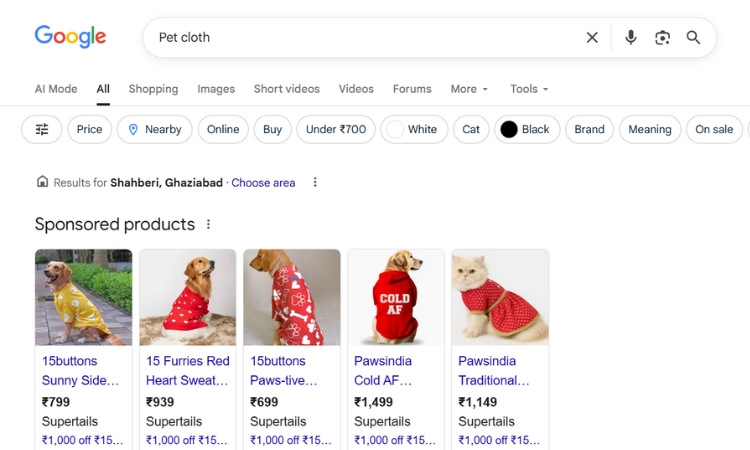
Also known as Product Listing Ads, shopping ads highlight product title, image, brand, price, etc. These improve their overall visibility and thus make them conversion-oriented. They are indeed perfect for highlighting a catalog and thus help you capture traffic from search engines.
- Display Ads
These ads are generally across the Google Display Network and many other websites. Google Display ads are indeed perfect options for brand recall and awareness. Consumers interact more with display ads than with any other form of ad. It’s also a fact that display campaigns are 4x higher in CPC than search.
Types of Display Ads
- Banner ads
- Skyscraper ads
- Square and rectangular ads
- Native display ads
- Interstitial ads
- Lightbox ads
- Responsive display ads
- Social PPC ads
Social PPC is highly important in audience engagement, product discovery, and increasing e-commerce conversions through hyper-targeted ad delivery and visual storytelling. These platforms provide a rich combination of ad formats, which include video carousel, story ads, collection, video, and more. They match user behavior and also intent across multiple funnel stages. Let’s explore various important types of social PPC campaigns:
- TikTok
- X
- Remarketing
With remarketing, you get a wonderful chance to reconnect with users who have visited your website previously but didn’t purchase. The customized messaging and dynamic product feeds make the campaign more effective to improve conversions. Many studies already reveal that remarketing maximizes purchases. They appear in different formats.
10 Tips to Set Up an Effective PPC Campaign for eCommerce
A strong PPC for e-commerce strategy is a combination of technology expertise, data-based optimization, and creativity. The following are some of the top strategies you need to take into account while performing your campaign:
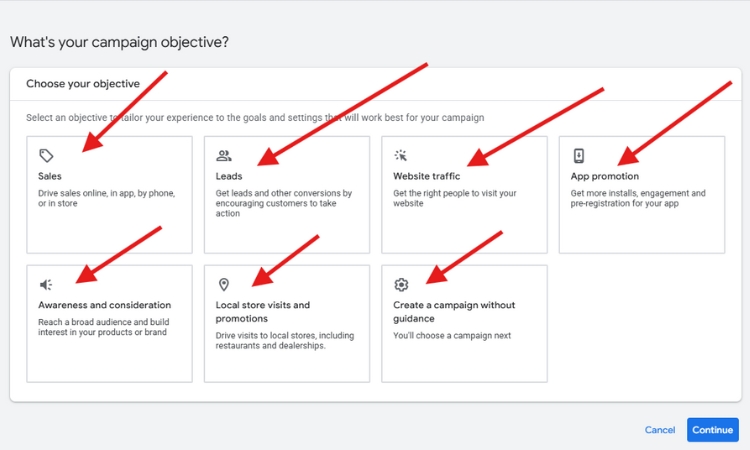
- Be Clear with Your Objective
No matter what, you should have a clear objective to run your PPC ecommerce campaign. You need to be aware of the success you expect from your campaign. Many advertisers have multiple goals while running pay-per-click advertising, including increasing traffic, sales, awareness, customer retention, etc.
So, you are suggested to never commit any such mistake and select a clear goal for your campaign. Some of the common goals companies opt for are as follows:
- Increasing product sales
- Increasing average order value (AOV)
- Promoting new product launches
- Re-engaging cart abandoners
- Increasing clearance or seasonal sales
Factors That Influence Your Campaign Goal
The following are some of the factors that have a direct influence on your campaign objective. Let’s go through each of them:
- Bidding strategy
- Campaign type
- Ad messaging and creatives
- Landing page design
- KPIs to track
Once you have a clear vision, you will be able to make a better decision, be it keyword selection or bidding. It’s indeed highly focused and measurable.
- Keyword Research
Your PPC for e-commerce strategy is incomplete unless you select the right keywords for your campaign. And this is something that requires in-depth keyword research, which is considered to be the spinal cord of a solid and successful PPC campaign.
For this advertisement, you need to stay away from using informational searches in terms of keywords. Instead, you should focus on and include commercial-intent and transactional keywords for shoppers who are interested in buying your products. Let’s explore certain examples of high-intent keywords:
- Buy iPhone 15 Pro
- Buy Running Shoes Online
- Purchase Wireless Earbuds
- Order Protein Powder Online
- Nike Air Max Shoes Price
- Apple MacBook Air M2 Buy
- Best Smartwatch Under $200
- Running Shoes Discount
- Buy Shoes Online US
- Best Laptop for Gaming
You should never opt for those keywords that are broad or vague. Rather than these keywords, you need to always focus on keywords that reflect the purchase intent of users and then align better with your product offerings. Besides, you need to do the following important things:
- Always use long-tail keywords to minimize CPC and competition.
- Observe competitor keywords to spot gaps.
- Refine your list with the use of search term reports.
How to Do Keyword Research?
Well, this is an important question that may come to your mind. You will find numerous tools to do it – Google Keyword Planner is one of those. You can use this tool to find high-intent keywords with necessary details like search volume, CPC data, competition, etc.
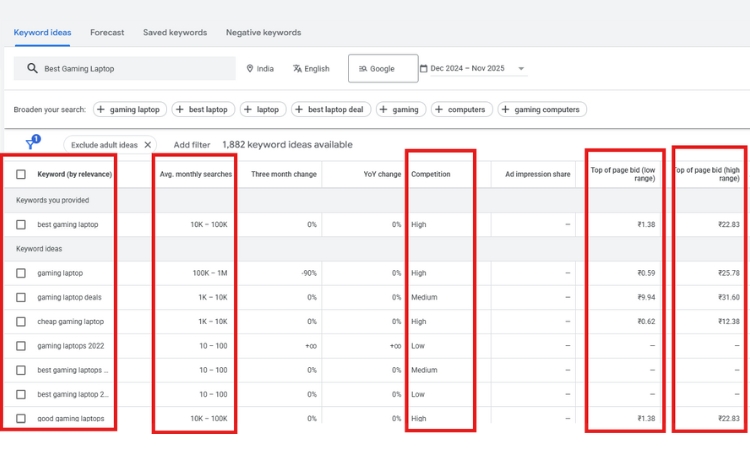
We put the “Best Gaming Laptop” in the Keyword Planner tool. It delivers the above result with “search volume”, “competition”, etc.
- Choosing the Right Platform
You need to take into account that every PPC platform works in an equal way for every important eCommerce business. The right platform relies on multiple factors like target audience, products, buying behavior, and more.
So, you may be thinking about the right platforms to run your PPC campaign, right? Of course, you may know about some of them. Let’s explore the top platforms:
| Platforms | Purpose |
| Google Ads | It’s perfect for getting attention from high-intent search traffic and thus running your Shopping Ads. |
| Meta Ads | It’s good for impulse buys, visual products, remarketing, etc. |
| Amazon Ads | It’s the right option for brands that sell directly to Amazon. |
| Microsoft Ads | It’s popular for powerful desktop user base and cheaper CPCs |
| Pinterest Ads | It’s good for fashion, lifestyle, DIY products, and home decor. |
It’s always a good idea to go with either one or two platforms that match perfectly with your audience and expand slowly based on performance.
- Write Powerful and Conversion-Oriented Ads Copy
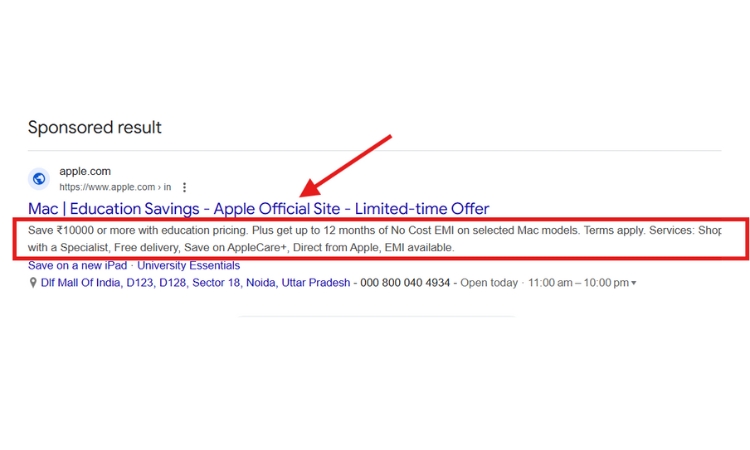
You need to take into account that an ad copy builds a first impression among users who interact with it. So, you need to ensure it’s eye-catching and seeks the attention of the target audience even during the first glimpse. Make sure your ad copy stands out and thus encourages users towards action.
How to Write an Eye-Catching Ad Copy?
To make your ad copy attention-grabbing and compelling, you need to consider the following important things. Let’s explore them:
- Focus on buyer intent, not only keywords. You need to use words such as “shop”, “buy”, “discount”, “order”, etc.
- You need to focus on a clear proposition to reflect why users will buy your products. You can use phrases like “Premium Quality”, “Up to 40% Off”, etc.
- You need to use numbers and offers in your ad copy to make it more compelling. It’s important to use phrases like “Under 999”, “Flat 30% Off Today”, etc.
- A compelling ad copy should include a sense of urgency, as it encourages users to act fast. You need to include important phrases such as “Offer End Today”, “Limited Stock”, and more.
- Your message should interact directly with customers. It’s a good idea to include “You” and “Your” in your message to address it directly to your customers.
- Don’t forget to use a clear, powerful, and bold call to action (CTA), as without it, your ad copy will be incomplete. You can use CTAs like “Buy Now”, “Shop Now”, etc.
- Landing Page Optimization for E-commerce PPC
Of course, a successful PPC campaign helps drive traffic to the landing page. But it’s your landing page that converts the traffic into potential customers. If your landing page is not capable of converting traffic into potential customers, your investment will be wasted or futile.
So, you need to optimize the landing page to ensure the success of your campaign. Your landing page experience should be relevant, fast, and also friction-free.
Vital Tips for Landing Page Optimization
You can consider and implement the following important tips to optimize the landing page before you launch your campaign:
- Always use top-quality videos and images of the products you sell
- Make sure your ad message and page content match.
- You need to display offers, pricing, etc.
- Don’t forget to mention several trust elements like ratings, reviews, security badges, etc.
- Optimize your landing page speed, especially for smartphone users.
- Include bold, clear, and action-driven CTAs.
- Do Smart Bidding
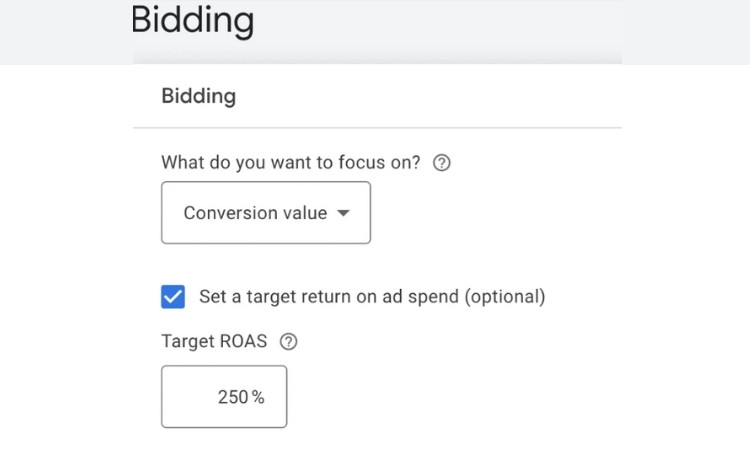
When it comes to manual bidding, it indeed works at the beginning. But it may not be so effective, especially when your campaign scales. In this case, you need to go with smart bidding strategies that work better. They optimize the overall performance with the use of machine learning and real-time data.
Top Smart Bidding Strategies for eCommerce
- Maximize conversions: It’s a good option when conversion tracking is accurate.
- Target ROAS: It’s the best option for revenue-based campaigns.
- Improved CPC: It combines mainly manual control with automated optimization.
You can perform bidding with the use of important signals like time, location, device, user behavior, etc. It lets you adjust your bid better. Meanwhile, it works perfectly, especially when your account has adequate historical data. You need to analyze performance closely during your learning phase and then make the gradual adjustments accordingly.
- Remarketing Strategies for E-commerce PPC
As one of the robust tools in e-commerce pay-per-click advertising, remarketing helps you target those who don’t buy your products during their first visit. A proven remarketing strategy helps you encourage them to come back when they are likely to convert.
What are Some Effective E-commerce Remarketing Strategies?
The following are some of the top e-commerce strategies you can implement to make your remarketing successful:
- Product View Remarketing
- Cart Abandonment Campaigns
- Upselling or Cross-selling to Past Customers
- Dynamic Remarketing that Reflects the Exact Products Viewed.
Make sure you use limited-time offers, personalized messaging, incentives, etc., to ensure re-engagement of your audience.

- Set Up Conversion Tracking
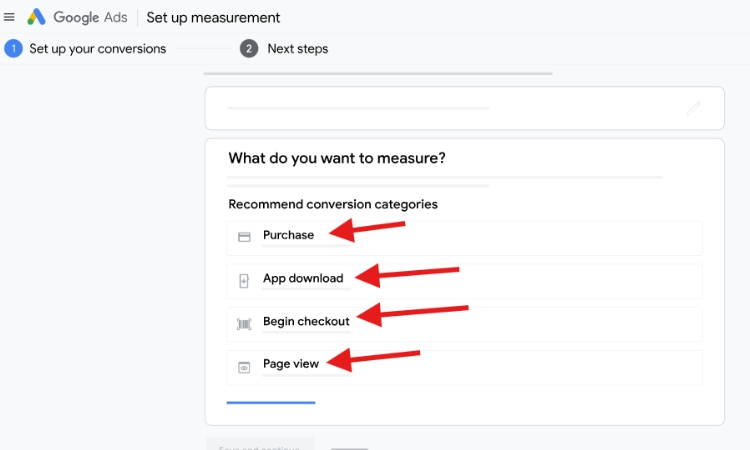
It’s essential to set up the conversion tracking of your PPC campaign to keep it in the right direction. Conversion tracking enables you to understand what works well and also where to optimize.
Important Metrics to Track
You need to keep eyes on the following important factors to make the necessary adjustments in your online advertising strategy to maximize the chance of success for your campaign:
- Add-to-cart actions
- Product purchases
- Checkout initiation
- Newsletter sign-ups
You need to set up your tracking successfully with the use of Google Analytics, Google Tag Manager, Platform-Specific Pixels, etc. You need to always take into account that data accuracy is something that has great importance for many reasons, such as ROAS calculator, smart bidding, scaling profitable campaigns, and more.
- Track Results
Once you launch your campaign, you have just won half of the battle. It’s important to analyze and optimize when it comes to maintaining profitability. All you need to do is check various important metrics to know the actual performance of your campaign:
- Cost Per Click (CPC)
- Click-through Rate (CTR)
- Cost Per Acquisition (CPA)
- Conversion Rate
- Return on Ad Spend (ROAS)
Strategies to Improve Performance
After checking various metrics, you may have definitely come across a certain scope of improvements, right? Well, you need to take the following important measures to boost performance:
- Scale those campaigns that are going in the right direction.
- Pause those ads that are underperforming.
- Redefine audience targeting
- Improve landing pages and ad copy.
When you perform a regular optimization, it ensures your eCommerce PPC campaign is highly competitive and also cost-efficient.
- Get Professional Help
Creating, launching, and managing a successful PPC campaign requires vast expertise and years of experience. And that’s the reason why a professional does it better. If your internal team doesn’t have enough bandwidth or experience, you need to opt for a leading PPC for e-commerce consultant or agency. It indeed boosts outcomes.
Expectations From a Professional PPC Expert
A professional PPC company will cater to you in multiple ways. Let’s explore each of them better:
- Minimize wasted ad spend.
- Discover high-performing opportunities quickly.
- Offer clear reporting and ROI details.
- Identify high-performing opportunities faster.
- They help in scaling a campaign with a higher profit margin.
Vital PPC Tools for E-commerce
To gain the most effective results for pay-per-click advertising, you need to leverage the top-rated tools. The following are some of the most popular tools you can consider using:
- Meta Ads Manager
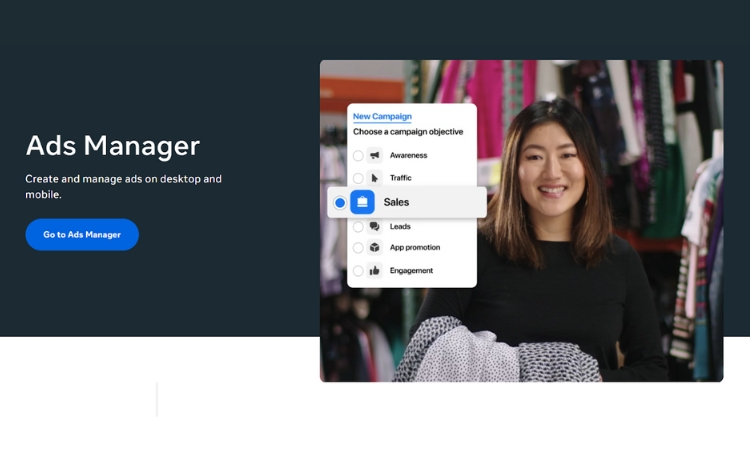
Meta Ads Manager facilitates you to craft and manage campaigns across platforms like Instagram and Facebook. It provides detailed customer targeting, creative testing, lookalike audience creation, budget control, and more.
It also allows you to analyze performance through ad placement, set, audience type, and more. For instance, you will be able to launch a retargeting ad campaign on Instagram featuring video ads for individuals, especially those who visit your product page.
- Google Ads and Merchant Center
Google Ads is the top-rated platform that allows you to run a variety of ads, be it display, search, performance max campaigns, or shopping. When it comes to Google Merchant Center, it works in collaboration with Google Ads to host your product data feed for Shopping Ads.
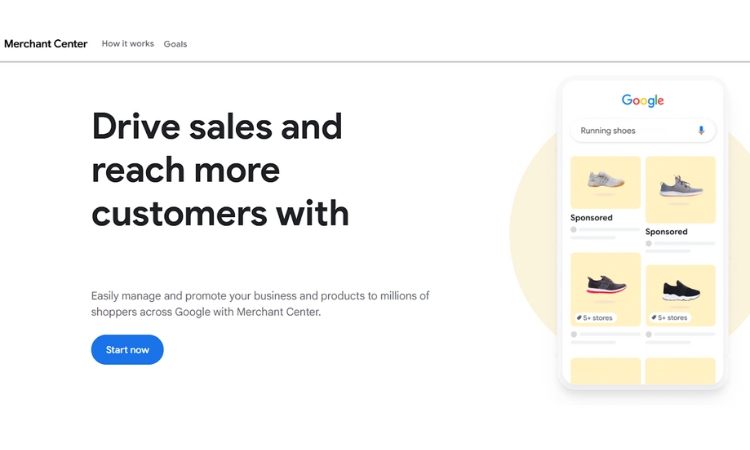
They let you monitor conversions, promote products, and adjust bids across a range of Google surfaces. For instance, you need to upload your entire product catalog to the Merchant Center and then link the same to a Performance Max campaign in Google Ads. It automates promotions of your products across various platforms like Gmail, YouTube, Display, and Search.
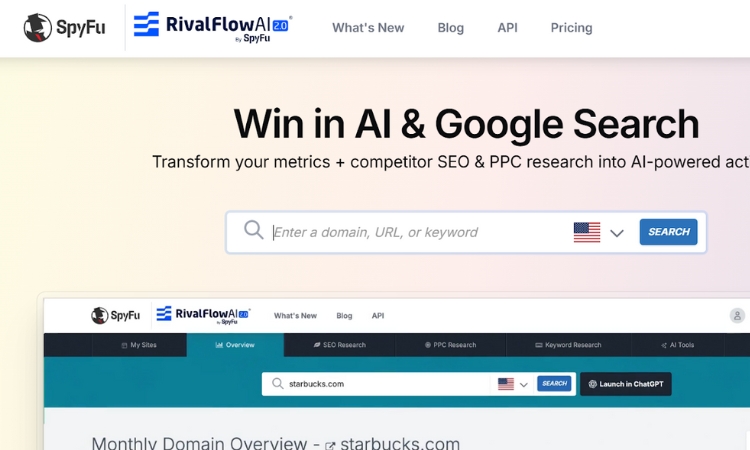
- SpyFu
Doesn’t need any specific introduction; SpyFu is already the most sought-after brand. It facilitates you to perform competitive PPC research. This helps you discover the right keywords your competitors bid on, estimate their ad spend, and see their ad copy. It allows you to find out new keyword opportunities and thus redefine your ad copy to align with industry benchmarks.
- Hotjar
Hotjar is another popular tool that helps you analyze the behavior of your targeted users in terms of how they interact with your websites once they click on ads. These tools let you recognize various user experience issues that tend to hinder conversions, with crucial features like session recordings, heatmaps, and funnel tracking.
- DataFeedWatch
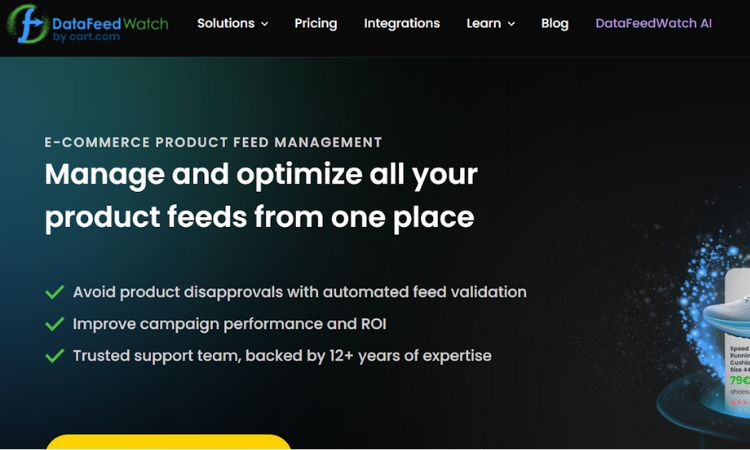
DataFeedWatch brings the possibility of managing and optimizing your products’ data feeds for many platforms, such as Facebook Catalog, Google Shopping, and more. It’s advisable to edit map fields correctly, product titles, and ensure your feed stays compliant with ad platform requirements.
Mistakes to Avoid for PPC for eCommerce
While running PPC for e-commerce, you need to know that a large number of these campaigns often fail due to several mistakes. We will discuss each of these mistakes that you should avoid:
- Avoiding Negative Keywords
Do you ignore negative keywords while running your paid ad campaign? Well, if yes, you are definitely committing a big mistake. Making any such mistake indicates your ads appear on low-intent or irrelevant searches, which leads to poor conversion rates or wasted clicks. When you put phrases like “cheap”, “free”, or any unrelated product queries, these indeed eat your budget fast.
- Mismatch Between Page and Ad
If users go to any landing page that is different from your ad message, it impacts adversely on your conversion. When you use a generic page for promotion of any specific product, category, or discount coupon, it causes a higher bounce rate. This mismatch also affects Quality Score, which maximizes cost per click. Therefore, it’s advisable to align keywords, ad copy, and landing pages better, which delivers a smooth user experience.
- Avoiding Mobile Experience
A large number of PPC ads for e-commerce campaigns don’t perform well since advertisements don’t focus much on mobile users. Don’t forget, mobile users are growing by leaps and bounds. According to Statista, the smartphone market size was $485.3bn in 2025. Today, shoppers frequently use their smartphones to buy their favorite items.
So, if your website is not optimized properly for mobile, it increases bounce rate and thus reduces sales. Therefore, you need to ensure your landing page loads quickly and displays perfectly on different screen sizes, and provides a seamless navigation and checkout for smartphone users.
- Overuse of Automation Suggestion
Automation is something that is indeed quite useful. But, when you use it to a wider extent, it could be risky for you. It maximizes your cost unnecessarily while minimizing your overall control. To make your PPC campaign successful, it requires a perfect balance with the use of automation strategically while reviewing performance on a daily basis. You need to make adjustments manually according to real data.
- Ignoring Re-marketing Funnels
A large number of e-commerce brands have a common aim of gaining new customers. But they often avoid re-marketing funnels. This is indeed an expensive mistake, which you should avoid committing. One thing you need to understand is that every customer can convert during the first visit. So, you need to re-market ads by targeting product reviewers, cart abandoners, and past customers. It not only helps you recover your lost sales but also increases ROI.
FAQs
Ans- Google Ads is the best option for e-commerce. It helps you capture buyers with high-intent through shopping and search ads. Meta Ads is another important platform you can target for your online store.
Ans- Yes, PPC is indeed quite profitable for an e-commerce business. All you need to do is optimize your campaign with strong product pages, precise targeting, smart bidding, and more. These deliver fast traffic, higher sales growth, and ROI.
Ans- Well, there are many PPC software that can be integrated better with the top eCommerce platforms. These include Google Ads, Meta Ads, Microsoft Advertising, and Amazon Ads.
Ans- Well, you can track the performance and ROI of your PPC campaign with tools like Google Ads and Analytics.
Ans- The cost of running a PPC campaign for e-commerce ranges from $250 to $15000+ every month. It also depends on factors like competition, ad platforms, target keywords, campaign goals, product margins, and more
Conclusion
So, you have already understood the importance of PPC for eCommerce and also how to run it successfully to get proven results. You need to always go for a perfectly-designed setup, clear KPIs, vigilant optimization, and more. These will improve your traffic, conversion, and revenue.
If you are a fresher, you should have a small budget to spend on it. You need to perform AB testing of your ads. If you seek to grow quickly, you need to opt for a professional PPC management company. They will serve you with proper guidance and results.

