






Over the past few years, the entire medical industry has dramatically changed. Those who previously relied on in-person visits are now able to consult their provider virtually, receive digital prescriptions, participate in online counseling, and remotely manage their ongoing conditions. Because of this, telehealth services have rapidly expanded across the globe, increasing the importance of telehealth SEO for providers looking to improve their online visibility and connect with more patients.
The international telehealth market is anticipated to flourish, going from USD 87.7 billion in 2026 to USD 187.5 billion by 2033 due to the increased need for global virtual healthcare services.
We aim to explain SEO for telehealth services in this guide, providing information and practices that will support healthcare services in creating a robust and effective organic search system for the purposes of acquiring virtual patients for the long term.
What Is Telehealth SEO?
It is the practice of optimizing telehealth websites, telehealth platforms, and telehealth-related medical content to gain more visibility on search engines. The main drive of it is to make virtual healthcare providers more visible to patients who conduct online searches for medical consultations, healthcare-related queries, treatment options, and virtual care.
As telehealth has become more mainstream, patients are increasingly using search engines to look for healthcare options that are convenient, accessible and reliable. Because of this phenomenon, online search behavior has made telehealth SEO an important digital growth strategy.
Simply put, SEO is a strategy that informs search engines about the nature of business websites so that search engines are able to give your website adequate exposure by ranking it against relevant queries.
Google’s mission is to bring its users the most accurate and trustworthy results. In doing so, Google uses complicated algorithms to evaluate websites to discern the most relevant results to a particular query before displaying the ranked results.
Why Telehealth SEO is Essential for Modern Healthcare Providers?
Telehealth is necessary for the growth of almost every type of healthcare specialty from mental health and dermatological to primary and chronic disease management and remote consults. In India, the shift to virtual healthcare is undeniable.
Based on projections, the Indian telemedicine market is likely to expand by over 20.42% from 2026-2034, as internet connectivity and smartphone usage increase alongside the need for healthcare services.
Unlike healthcare SEO, telehealth SEO focuses on the digital healthcare query intent, virtual consults, the mobile patient experience, and patient acquisition regardless of geography.
As Google places more emphasis on search relevance, page experience, E-E-A-T, and the credibility of healthcare content, telehealth providers need to leverage SEO to determine telehealth care services. It enables healthcare providers to rank in the competitive market and reduce the cost associated with customer acquisition.
- Supports Long-Term Patient Acquisition
Telehealth SEO enables providers to capture patients searching for healthcare services through improved organic search results. Telehealth providers can enjoy recurrent organic traffic without the financial constraint of a marketing budget by ranking for the online psychiatrist, virtual diabetes, or telehealth pediatric services.
The use of SEO for landing pages is more effective than paid searches and attracts patients for the duration of the condition, symptom, or virtual care service.
- Enhances Local and Regional Reach
Even though telehealth functions digitally, search engines focus on location relevance for healthcare-related queries. It uses geo-optimized landing pages, Google Business Profile optimization, local healthcare citations, and localized schema to improve visibility in targeted cities, states, or licensed practice regions.
This allows telehealth providers to be discovered for queries like “online doctor in Texas” or “virtual therapist near me,” thereby increasing the telehealth patient reach in the authorized service areas.
- Boosts Website Traffic and Appointment Bookings
Technical SEO optimization on telehealth improves user engagement and conversion rates. Site architecture, page load speeds, mobile site usability, and fixation on structured and simplified booking workflows improve search engine rankings and the patient experience.
SEO strategies focus on transactional intent keywords to improve appointment booking conversions from organic site traffic.
- Helps Promote Specialized Telehealth Services
With Telehealth SEO, virtual healthcare providers gain dedicated search visibility for their specialized services. Specialty-focused SEO strategies tap into niche medical searches, including telepsychiatry, online fertility counseling, virtual dermatology, and chronic care monitoring.
Telehealth service providers can improve rankings on these niche healthcare queries and thereby attract target patient populations through service-specific content, telehealth treatment pages, medical schema, and education content.
- Reduces Dependence on Paid Advertising
Paid advertisements for healthcare have increasing prices because of competitive bids for medical keywords. Telehealth SEO shortens dependency on pay-per-click campaigns by increasing rankings for searches containing the keywords “consultations” and “appointments.”
When healthcare service web pages are optimized, both their authority and rankings become stable, and the service provider can continue to acquire patients organically via searches without an increasing budget for paid advertisements.
- Builds Stronger Digital Presence in a Competitive Market
SEO places telehealth providers in a better position to dominate the virtual healthcare marketplace because of the optimization of healthcare service pages, acquisition of backlinks from healthcare-related publications, and the implementation of structured data.
SEO also meets Google’s healthcare quality standards. SEO provides telehealth providers with an opportunity to establish an online competitive advantage in the healthcare marketplace by increasing the visibility of their pages during healthcare-related queries.
Strategies to Attract More Virtual Patients Through Organic Search
Successfully overcoming telehealth SEO challenges requires a combination of technical optimization, patient-focused content, trust-building, and long-term SEO strategy.
Since healthcare search is highly competitive and sensitive, telehealth providers must focus on creating reliable online experiences while aligning their websites with how patients search for virtual healthcare services.
Below are some of the most effective strategies to solve common telehealth SEO problems and improve long-term organic visibility:
- Target Niche and Specialty-Based Keywords

Successful telehealth SEO should account for patient-search intent and use specialized, niche keywords. Competing for general target terms such as “online doctor” will be inefficient. Instead, focus on specific search terms, for example, “virtual therapist for anxiety” or “acne teledermatology,” which will attract a stronger, more likely patient audience.
Telehealth searches are usually subdivided into four main search categories: informational, research and comparison, appointment ready, and local search. Understanding and addressing these search categories should help increase traffic, improve online presence and enhance patient bookings.
- How to Implement:
- Identify searches concerning specializations, symptoms, treatments, and patient worries by doing keyword research.
- Sort keywords into categories. These could include searches related to specialties (i.e. “virtual dermatologist”), searches related to conditions (i.e. “online treatment for eczema”), or searches related to services (i.e. “same-day online doctor consultation”).
- For opportunities that have less search volume, but more attainable competition, look at your competitors’ rankings to identify keywords that are not fully utilized.
- Each specialty, treatment area, and type of consultation should have its own landing page. Avoid making one page for all services.
- When you add a page to your site, optimize it for a specific service by adding relevant keywords to your page’s title, headings, and URL. Other keywords that are related to your central topic should be added in a way that is organic to your content.
This approach helps telehealth providers attract highly qualified visitors who are actively searching for the exact services they offer, resulting in better rankings and higher conversion rates.
- Develop a Content Ecosystem Around Patient Questions

Creating content that is easy to read and well-based in healthcare can elevate search rankings and grow the trust of patients by elaborating on the services offered in a way that is clear to the provider.
- How to Implement:
- Check consultation records to find common patient questions. Use search suggestions, forums and keyword research tools to get more ideas.
- Create content around different specialties and treatment.
- Create blogs, guides for symptoms, treatments, FAQs, medication and preventive care.
- Have all content reviewed and edited by healthcare professionals. This adds to the credibility of the content.
- Create internal links to articles, service and booking pages to help patients find the information and answer the questions they are looking for.
- Always update medical content with new treatment and healthcare information.
Telehealth providers can build trust and strengthen topical authority with this content. For patients, this content will help answer questions even if they have not booked an appointment yet.
- Prioritize Local SEO

Many telehealth services are delivered online, yet, local SEO allows telehealth providers to capture a market for patients that are searching for healthcare offered in a specific location.
- How to Implement:
- Optimize your Google Business Profile. Ensure as much contact information as possible. Include descriptions of your services and the associated categories. Include your operating hours and a link to your website.
- Ensure the consistency of your Name, Address, and Phone Number (NAP) in all of the healthcare directories and local listings.
- Create landing pages for each specific location, especially those for the cities, states, or regions in which you provide services.
- Ask any of your patients that you believe are happy and satisfied to leave helpful reviews on both Google and the healthcare review sites.
- Focus on creating fresh and interesting locally relevant healthcare content that factors in both seasonally changing health concerns and healthcare regulations that vary by location.
- Help search engines better understand your areas of service by using local schema markup.
Your target market will be those that are searching for healthcare providers in a specific geographic area. Examples: patients searching for “telehealth doctor in Dallas” or an “online therapist in California”.
- Boost Technical SEO
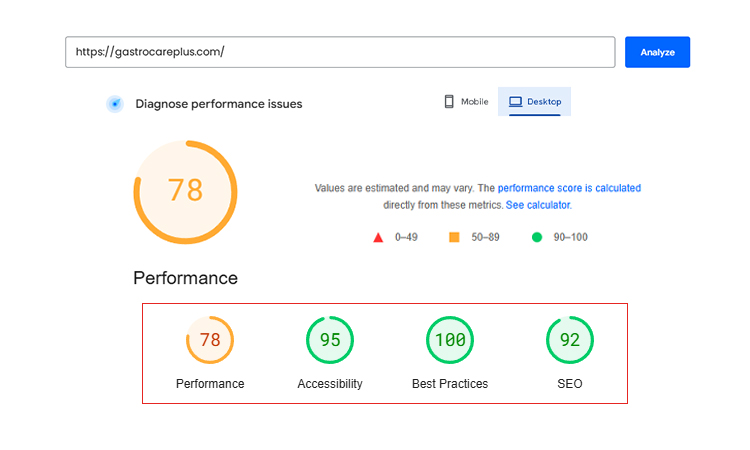
The foundation of an effective telehealth site is based on the principles of technical SEO. Search engines reward secure, speedy, and mobile-friendly sites that are easy to crawl and index. Patients expect a well-optimized and seamless telehealth experience.
- How to Implement:
- A technical SEO evaluation will reveal issues related to web crawling, broken links, duplicate content, and indexing.
- Images can be optimized for speed. Scripts can be minimized. And browser caching can be leveraged to make telehealth sites faster.
- Sites should be completely converted to HTTPS. Patient data is protected and patient trust is maintained.
- Telehealth searches are predominantly done on mobile devices, making mobile optimization a must.
- Search visibility can be positively impacted by the implementation of telehealth specific schemas like Physician, Medical Clinic, FAQ, and Review schema.
- A well-organized telehealth site will allow users and search engine crawlers to access telehealth specialties, providers, services, and educational content with ease.
- The user experience is impacted negatively when the site doesn’t meet the target for Core Web Vitals.
Search engines will find your site more accessible with the increased focus on technical SEO. The patient experience will be greatly enhanced, and the rankings will grow.
- Simplifying Appointment Booking

A streamlined and effective appointment booking system on your website means that visitors become patients much more easily. With a telehealth system, scheduling should be simple, the forms should be responsive and the booking should be done in real time to stop patients from leaving your site.
- How to Implement:
- The current friction points and unnecessary steps in the booking process must be identified by conducting a process audit.
- Service pages, provider profiles, and blog articles must include appointment booking buttons. Mobile screens must include appointment booking buttons.
- The initial stage of appointment booking must have form fields reduced to only capture the necessary information of the patient.
- Booking integrations that incorporate an up-to-date availability system of appointment slots should be included.
- Booking options should include a range of appointments, such as a consultation via video, phone, and a follow-up.
- Booking should include a fully integrated system that allows the user to pay via a secure online payment system and process their insurance.
- Appointment bookings should include automated appointment reminders via an email and SMS system.
- Analytics should be used to track the appointment booking system to gain insight on user drop-off points.
Engaged users spend more time on the site, resulting in better engagement metrics and improved site SEO. Simplifying the booking process aids in improving conversion rates.
Common Problems in Telehealth SEO
Telehealth SEO has the potential to help healthcare providers gain new patients searching for virtual healthcare services through organic traffic. However, there are particular challenges. Unlike most other types of SEO, it must compete with a wider scope of accuracy, trust, patient experience, compliance, and search presence.
When patients are looking for online medical options, they may be making critical decisions regarding their health, which is why Google increases its scrutiny on healthcare SEO. Even the best telehealth lead generation system will not help to gain telehealth patients and appointments without a proper SEO plan. It is important to understand the issues around telehealth SEO so that you can build an effective plan.
- Search Visibility
The telehealth market is highly competitive. Various hospitals, healthcare networks, insurance systems, telehealth providers, and other organizations must have a commanding presence on several competitive healthcare search key terms.
The number of telehealth providers entering the market means that the phrases “online doctor visit,” or “online therapy,” are extremely difficult to rank for, especially for smaller or new market telehealth providers.
- Google’s Stringent Healthcare SEO Rules
Telehealth SEO must comply with many of Google’s stringent healthcare SEO rules because telehealth programs qualify for the Google “Your Money or Your Life” (YMYL) program. It must comply with many of Google’s stringent quality and trust rules. Telehealth sites that lack a licensed physician, medical expert or anything else that does not represent an authority in the particular area of healthcare, may see poor rankings.
Google favors sites that align with their philosophy of E-E-A-T (experience, expertise, authoritativeness, and trust) because the medical industry, and particularly the patient, can be negatively impacted from medical misinformation.
- Telehealth Keywords
Telehealth keywords are in high demand, but the market is extremely saturated. Many telehealth keywords are not only limited to “telehealth” or “telehealthcare,” but also “telemedicine,” “virtual care,” and “virtual clinician.” It is often the case that the highly dominated market players are those large telehealth companies that possess a large market share and will ultimately be very well-funded.
Smaller telehealth companies will often invest their time, expertise, and labor in the ranking of long-tail keywords and specialty searches.
- Telehealth Content Accuracy
Healthcare content must not only be detailed & thorough, but also engage in best practices while being truthful. As a result of content that is poorly written and may be misleading, there are negative SEO and trust outcomes for telehealth companies.
Telehealth companies also have to be mindful that while writing SEO content, they must comply with healthcare content standards , advertising regulatory standards, and State and Regional Laws.
- Poor Mobile Pages
It is a known fact that a significant number of healthcare searches are performed on mobile devices, and yet many telehealth websites have poor mobile experiences. High bounce rates are caused by slow page load speeds, highly unresponsive/ poorly designed webpages, and unnecessarily complicated booking systems.
Telehealth companies must prioritize an optimized mobile experience if they wish to improve their Google rankings, as Google itself prioritizes sites with mobile pages. Search algorithms are fluid, especially with telehealth related searches.
Constant improvement of their content, technical SEO, and general search algorithm strategies will be required by telehealth companies if they wish to sustain an optimum ranking in an environment that is highly dynamic.
Future of Telehealth SEO and Organic Patient Acquisition
The future of telehealth SEO includes AI searches, personalized health recommendations, and changing patient behavior. With more virtual healthcare services and a greater emphasis on organic competition, the race for telehealth SEO will only continue to grow.
Healthcare providers who develop an effective SEO strategy will gain a long-term advantage and will be able to attract patients regularly without having to spend more money on marketing. SEO will continue to be one of the most cost-efficient and effective strategies for telehealth brands and providers.
Conclusion
Virtual healthcare has changed the way that patients access medical services. Telehealth has gone even further to change the way patients receive their care. Telehealth providers who work hard to get their digital marketing right will be able to attract more patients. Telehealth SEO draws patients to healthcare providers who show up in an organic search. SEO is made up of many components; from keyword research and content marketing to technical optimization, this ultimately helps with patient retention and growth of the practice.
Expand your telehealth reach with smarter SEO solutions that improve visibility and attract patients searching for virtual healthcare services.
FAQs
Ans. SEO shows telehealth providers to patients looking for virtual healthcare. An effective SEO leads towards new ways among patients to build trust, schedule appointments, and find services online without spending money on online ads.
Ans. Patients search for telehealth services by entering keywords like symptoms or simply requests for services that include “online doctor consultation,” “virtual therapist near me” and “online dermatologist appointment.”
Ans. High-quality healthcare content, mobile friendly websites, fast loading pages, relevant keywords, good user experience, good technical SEO, doctor’s credentials, patient reviews, and a secure site all are trust signals that are important in Telehealth SEO.
Ans. SEO is a long-term effort and how long it takes for results to show is highly dependent on how competitive the industry is, what your website looks like, and how much SEO work you do on it. Rankings will improve but the best patient traffic your site gets will come from good optimization.
Ans. The cost varies depending on competition, target markets, content requirements, technical optimization needs, and the scope of the SEO campaign.

