





Over the last ten years, the music industry has experienced a major shift in structure. Access to fan bases and the ability to distribute music is entirely in the hands of the artist and the general public through smart phones. Social media is now the dominant platform for discovering new music as well as for cultivating a fan base and growing an artist’s career.
The changing landscape has made things more difficult for aspiring musicians in addition to opening new opportunities. Just having talent is not enough to make it in the industry. Artists need to rely on their own skills in marketing as well as in creating and managing content and community.
The IMI shows that among Indian Internet users music lovers and music fanatics (approx. 80%) are in the top rankings, whereas the global average is 54%. Thus, the potential for the growth of an artist’s fanbase through social media marketing for musicians could be of great importance in India.
Why Is Social Media Marketing Necessary for Musicians?
Musicians have shifted how they market their music and interact with fans, and social media marketing for musicians has become a first-order channel. TikTok, Instagram, YouTube, and X have become the first points of connection for musicians and fans, taking the place of the radio and A&R. Each element and aspect of social media marketing carries specific utility. Musicians who understand the utility sub differently and the value of each channel and feature could avoid unnecessary posting.
- Social Media Helps Connect With Fans Worldwide
Social media as a first-order method for musicians has a huge advantage of connecting with potential fans across the world. Radio play, print press, and tours are constricted to a certain location, and in many cases, social media marketing is a full replacement, or more cost effective.
For the price of a post, musicians can reach fans in a different country. With the way that social media marketing is structured, one of the biggest advantages for new musicians is that big musicians aren’t the only ones who can be found on the app. An artist can even begin selling to a completely new audience that they have never targeted before.
- Creates a Dedicated Fanbase
Creating a fanbase with social media is different from a fanbase created with passive radio listening. Because social media marketing is a two-way communication tool, it gives the opportunity to create Active Community Members with Comments, Replies, Direct Messages, and Live Streams. There is a positive commercial effect as well: studies show a small but highly involved fanbase actually leads to a large increase in Concert Ticket Sales, Merchandise Sales, and Streaming Activity in comparison to a large group of passive fans. Community is what makes a Music Career sustainable.
- Market New Songs Without Breaking the Bank
According to DataReportal, 60.9% of users in India are social media users. As a result, online marketing networks are more important. Before, the only way to successfully launch a new single was to get a record label and pay for the song to be radio promoted. That system could cost tens of thousands of dollars before a song was even able to be heard by the masses.
Social Media has changed this process greatly. Because of the way that advertising and organic audience response are drastically different in cost, Social media marketing for musicians has created a way to promote a song through audience reaction.
- Builds Personal Brand
Artists are no longer only selling music. Investing in the artist brand has become crucial. Fans now use social media as a tool to see what they resonate with at a personal level. Your social media presence displays your personality, your values, and your story. All this information guarantees audience engagement throughout your career. The brands also look for a developed personal brand. This lets them make the move to know more about your music and your audience because they are also certain of your identity.
- Promotes Music Sales and Streaming
Social media marketing for musicians correlates with an artist’s music streaming and sales. The popularity of a song on TikTok is usually seen on Spotify. Social media presence supports a song, and more importantly, your past songs as well.
- Builds Collaboration
The relevance that comes with a developed social media presence is noted by artists and producers. This can spark collaboration. Many collaborations are initiated by a song cover someone saw on social media. Social media marketing is your professional reach tool.
How to Build a Loyal Fan Base Across Social Media Platforms
Growth without loyalty results in fragile fandom, which means that artists can gain followers who will never be paying fans, never join them in concert, and never stream their music. Real loyalty is based on the actual understanding of the audience deeply and the correct use of different applications, which means that understanding the audience is better than posting the same things in the same way for different audiences.
- Establish your Identity as an Artist
Content is a reflection of the artist’s identity, and before an artist makes content, they need to determine how they will answer to the public, how they will define their sound, their visual elements, their voice, and what feelings they will create for their audience. Establishing an artist brand means that artists will communicate their identity to their audience, making it simple for the audience to have an artist to recommend and strengthen the aspect of social media marketing for musicians.
- Define your Audience
The first step in content creation is actual audience definition, and that is based on whom the content is meant for, and that includes age and music of that target audience as well as where that target audience can be found. Each application has built in tools that provide audience demographics. Artists who determine their audience to the level of detail stated above can achieve that level of detail in their content.
- Select the Appropriate Platforms
There are numerous social platforms, and not all are best suited to an artist or their genre. A singer/songwriter that plays the guitar may have a better chance at getting noticed on YouTube or Instagram, since these platforms support longer, more visual types of content. A hip-hop artist, on the other hand, may have greater success on TikTok. An artist that puts the same amount of promotional effort across all platforms is likely to yield the same mediocre results across all platforms. In social media marketing for musicians, it’s generally better to only focus on a couple of platforms where your art or music has the best chance of being noticed.
- Use Trends but Stay True to Yourself
Using a trending sound or meme can increase an artist’s visibility and engagement because platform algorithms favor this type of content. Trends should be adapted to your existing identity, and not just used to gain views, because that type of content will not promote fan engagement. When trends are used to support an artist’s brand, and not otherwise, the artist will strengthen their brand while also staying on the trending topic.
- Partner with Other Artists & Content Creators
Promotion with other artists, influencers, and content creators can be a great way to gain visibility to large audiences that have not yet been engaged. Collaboration works because it borrows trust: an audience that already trusts one creator is more receptive to that creator’s endorsement of another artist than they would be to a cold, unfamiliar recommendation.
Effective Social Media Marketing Strategies for Musicians
The way that a musician markets themselves on social media through day-to-day activities determines how effective the brand building and platform choosing. In social media marketing for musicians, the strategies provided below form general principles that independent musicians and label backed musicians alike use and understand due to their roots in the understanding of audience psychology and the algorithms of various platforms. For musicians, Social media packages are a way to connect with fans, not just a tool to advertise. Artists can boost careers and build a following through audience engagement and visibility with social media strategies.
- Cater Specific Content to the Platform
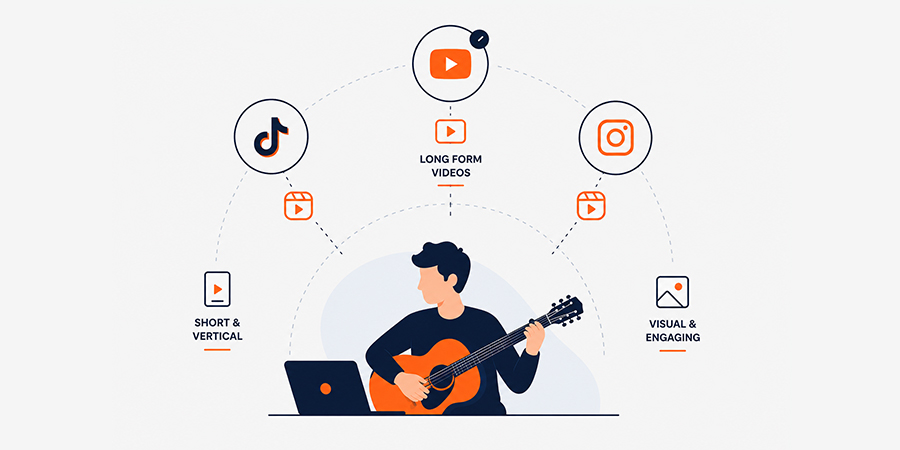
Content repurposing across various platforms, typically, is a lost cause since the algorithms, as well as audience expectation, are not the same across all platforms. TikTok and Instagram Reels favor videos (as in seconds) that are very energetic and focused on the hook. Conversely, video content for YouTube is much longer and is expected to be high in production quality and uploaded consistently. Engagement across platforms is a ratio of the content’s tone, length, and format to that of the platform (NOT a copy of a single video).
- Utilize the 80/20 Content Rule
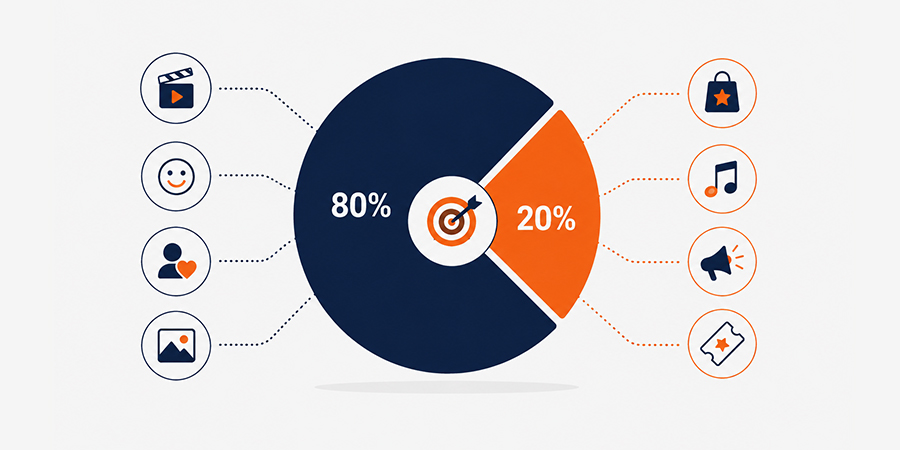
The 80/20 principle involves the maintenance of a ratio of 80% of the content being non-promotional including behind-the-scenes footage, personality-driven content, humor, personal stories, covers, or interaction with fans and the remaining 20% being merchandising and music promotional content. By maintaining this ratio, the feed does not fall victim to the continuous advertising that drives organic interest away. Promoting content builds relationships and that is what audiences are interested in supporting.
- Build Anticipation Before Every Release
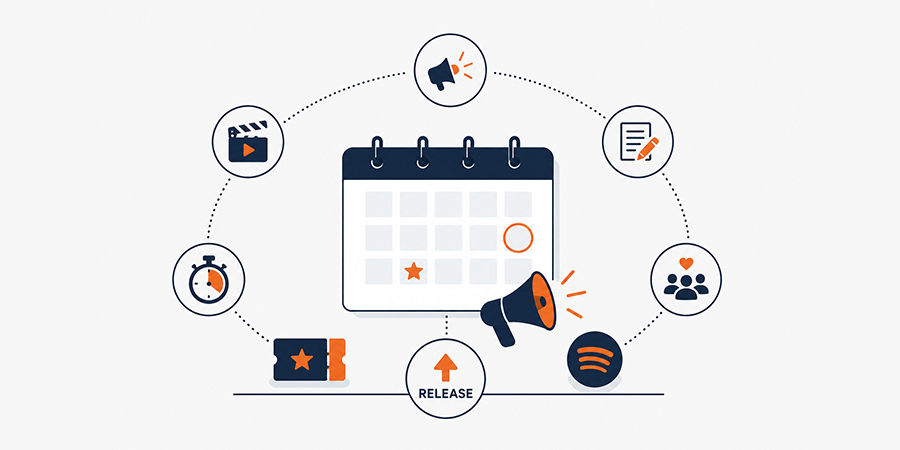
Release announcements tend to do better when they are part of a staged process, examples of which are teaser clips, countdowns, writing process snippets, and studio process snippets. There are also pre savers and pre-order campaigns. Content that builds anticipation provides fans with a sense of inclusion that reinforces first-day streams. This is particularly useful because first-day streams are a main factor in the decision process for editorial playlists on Spotify.
- Encourage User-Generated Content
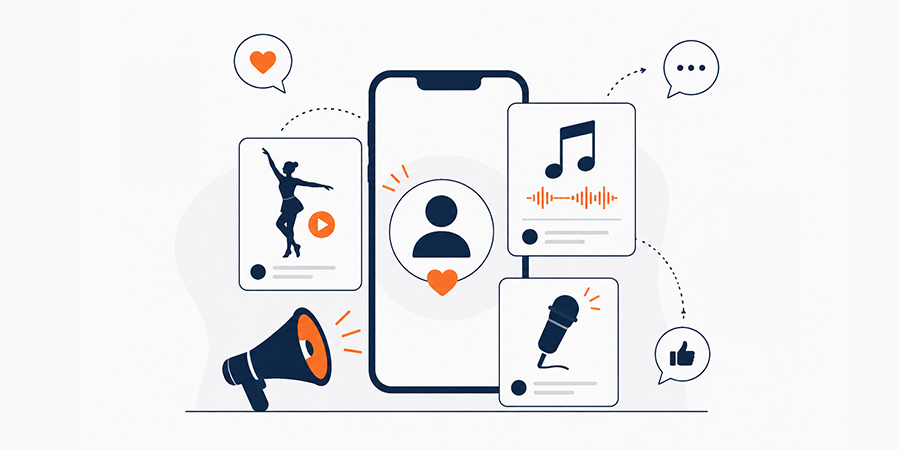
When fans post their own content based on the artist’s music, such as dances, covers, lip-syncs, and edits, they are offering free and very honest promotion. This is because artist-focused content tends to be more authentic than actual content created. To encourage this, musicians can make a part of their music that is easily replicated. For example, they can make a catchy hook, a rhythm that fits a dance, or a quote that easily lends itself to a challenge. Then, they can invite fans to participate by posting a new single with a hashtag challenge.
- Repurpose Content Across Multiple Platforms
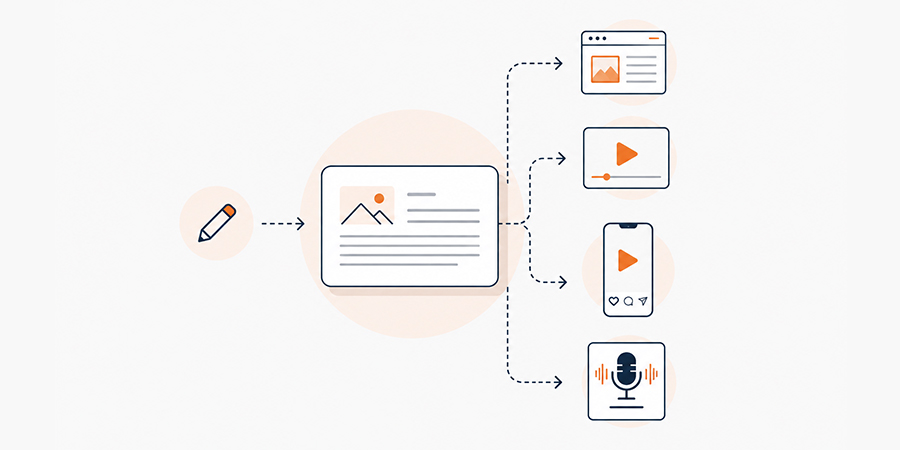
Content can and should be tailored to the specific platform they are posted on, but that doesn’t mean that they need to be created from scratch for each specific platform. There are many ways to share the same content, ranging from TikTok live sessions to YouTube with short cuts done as Instagram stories, accompanied by text posts that summarize the session on X. This makes it easier to share content with little engagement across multiple platforms.
- Evaluating Your Social Media Marketing Success
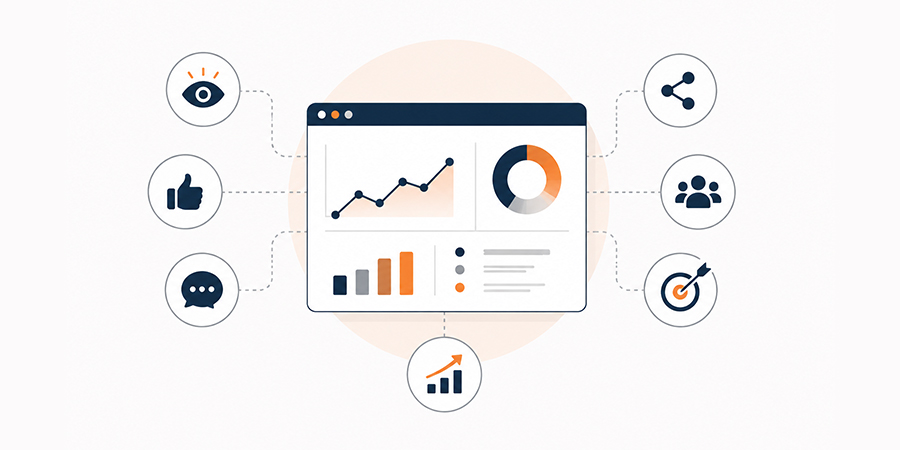
Measuring performance is the backbone of any social media marketing for musicians strategy. The Instagram, TikTok, and YouTube platforms plus Spotify for Artists have built-in analytics which give data for reach, engagement, follower growth, and even time watched and streams converted. If you look at the analytics as an artist, you can see trends and conditioning of your audience, which can be swayed more by your posts and timing. You can be more strategic and focused with your social media efforts, rather than unconsciously guessing.
Social Media Marketing Mistakes Musicians Should Avoid
Many fans assume musicians become unsuccessful because their music is poor or declining in quality. In most cases, their music is still of high quality; they just do not know how to manage their social presence. Knowing how to avoid these errors is an advantage that decreases unnecessary efforts while maintaining the audience’s trust over time and strengthens social media marketing for musicians.
- Posting only Promotional Content
Audiences receive a feed composed exclusively of new songs out and ticket sale posts as an unnecessary, robotic, and transaction-based social presence. Without engaging posts between promotions, fans have little reason to follow or support them beyond the release cycle.
- Ignoring Comments and Messages
The core of social media marketing for musicians is the interaction and engagement of fans. Comments and messages left unattended result in a broadcast only social presence, which most platform algorithms and fans counteract. Even a message reply of likes and heart reactions improve SMM for musicians and lead to fan engagement.
- Being Inconsistent with Posting
Posting activity that consists of multiple posts followed by a long period, minimal to no posting activity, is negative to both social media algorithms and audience engagement. Inconsistent posting leads to poorly formed audience engagement. Modest posting that is consistent, is preferred over regular and intense inconsistent posting in social media marketing.
- Copying trends without authenticity
Copy and participate in popular trends simply because they are popular without self-genuine involvement to the music or sound is without substance and will be forgotten along with their social presence, if relied on as an artist promotion tool. Over use of a trend can cause a loss of direction in an artist’s social media presence.
- Disregarding Analytics
To not collect and analyze performance data, is to establish a habit of repeating what does not work and avoiding what does. Many artists rely on their intuition when they believe the content that performs well. Analytics have shown that many artists have had posting types that have caused growth that were completely unrelated to their content.
- Purchasing Fake Followers & Engagement
In social media marketing for musicians, purchasing fake followers and engagement may result in a temporary and superficial increase to vanity metrics, but that means no streaming, no ticket, and no merch sales. In fact, the opposite happens when the potential followers see that the engagement, in comparison to the followers, is very low – it causes a detrimental effect to organic reach. Monetizing systems that are based on purchasing followers will result in no revenue. The majority of the industry is looking at genuine metrics of followers and engagement. The mismatched metrics will cause a detrimental effect to your credibility.
FAQs
Ans. It is a common perception that the more talented a musician, the more successful they are likely to be (a belief that is shared by many musicians themselves). However, the most successful musicians understand that the creation of music and performances is a small part of the overall process. They put just as much time, effort, and commitment into the content creation and engagement that they build around their music.
Ans. The most successful musicians understand the importance of selling more than just their music. They sell themselves. Merely knowing and loving a musician’s music is not enough for fans who want to support them. Fans want to perceive musicians as real, personable, and relatable. The content that makes a musician most successful is content that adds a personal touch and something that allows them to be the up close and personal entertainer that they love to be for a few lucky fans.
Ans. There is no set standard, as the best posting patterns for an artist or group are audience and platform-specific. These are best assessed by the platform’s native analytics. As a general rule of thumb, active artists tend to post more frequently to TikTok and Instagram (3 or more times a week), and less frequently to YouTube (1 or more times a week). The frequency of posts to less active platforms can be more substantial, but consistency is key in social media marketing for musicians
Ans. The difference in function between social media platforms can be broken down as follows: TikTok and Instagram Reels are used for discovery and push algorithm-based short form video content; YouTube caters to long form content and music videos and establishes further connection between artist and fan; Instagram is the visual platform for an artist’s aesthetic and brand; and X (Twitter) is used for real time thoughts, announcements and replies to fans. Leverage the differentiating functions of each platform in your strategy for social media marketing for musicians, and don’t use them as substitutes for one another.
Ans. The best way to keep your audience engaged while your music is on pause is by posting behind the scenes content, personal posts, cover videos, livestreams and Q&As, and interacting with the content generated by fans. This will avoid audience drop-off in between the music cycles and ultimately the audience will be ready and waiting to listen to the new music when it is released.
Conclusion
The multiple dimensions of social media (discovery, community engagement, and opportunity) have made social media marketing integral to every musician’s career. Being able to harness social media’s power is something that every musician must work to learn and develop. This involves considerable time and effort dedicated to a social media strategy that grows and keeps a musician’s fan base.
Successful musicians understand that social media marketing for musicians contains the potential to build a fan base that supports their career long after the last big chart hit. Designed to amplify engagement and broaden the reach of your music career across all platforms, our tailored social media marketing solutions will help you create lifelong fans – rather than just listeners.

