





Now, expertise is not enough. It is as important to be visible as it is to have expertise. Many professionals have vast knowledge, experience, and insight, but without an online presence that shows their value, they have limited impact. Because of this, many opportunities to be recognized, to network, and to grow as a professional are wasted.
This blog focuses on how social media for professionals can be used to address these issues, so one can improve credibility and reputation and be seen as a constructive, reliable, and reasonable professional.
What is social media for professionals?
In a professional context, social media is about cultivating an online reputation through experience. While personal social media is about you, work social media is about the audience. It’s a professional identity and a network. India had about 491 million active social media users in January 2025. This accounts for 33.7% of the population, and shows the scale of a digital audience. Professional visibility means more than just people seeing what you post.
A good online reputation is becoming increasingly important because more professional interactions are conducted online. This is especially true for people in consulting, executive roles, those who are self-employed, and experts in a given field.
Key reasons social media for professionals matters
Once used primarily for communication purposes, social media channels now offer a wide array of professional opportunities for digital users.
Research showed that 54% of decision-makers spend more than an hour every week consuming thought leadership content, reinforcing that professionals actively seek expertise and industry insights online.
Social media for professionals provide a virtual space for digital users to host and build a professional network, cultivate and create professional opportunities, and establish a robust and professional reputation. Traditional avenues of communication, like telephones or printed correspondence, are not able to offer the same value.
- Visibility
The more robust a digital users’ social media channels are, the more likely digital users will be able to find and contact them. The professional networks that digital users create over social media will include colleagues, peers, and industry professionals and may even include a future employer.
- Credibility
Professional reputation is built over social media channels. Social media users who build and share professional content establish credibility and authority. Digital users who display professional knowledge and skills will build a presence faster than any printed resume.
- Networking
Social media for professionals is a borderless form of communication. The professional networks that digital users cultivate may include individuals from any profession or industry.
- Opportunities
Because of the professional opportunities that are available as a byproduct of social media presence, users may be contacted for paid speaking, consulting, or professional opportunities.
- Competitive Edge
Digital users who are visible on various social media channels and offer professional insights are believed to be more knowledgeable. Maintaining social media will allow users to stand out from their peers.
Top social media strategies to turn expertise into online influence
Having an online presence involves more than just consistently showing up on social media. It takes calculated use of social media and activity purposefully. Profound strategies focused on social media for professionals use their experience and knowledge to build their credibility and personal brand. Some techniques like strengthening the bonds you have built to continue growing the valuable content help solidify your digital presence.
Social media packages help businesses develop social media plans and achieve goals related to improved social media presence and updated audience engagement and growth.
- Utilize a Content Pyramid Approach
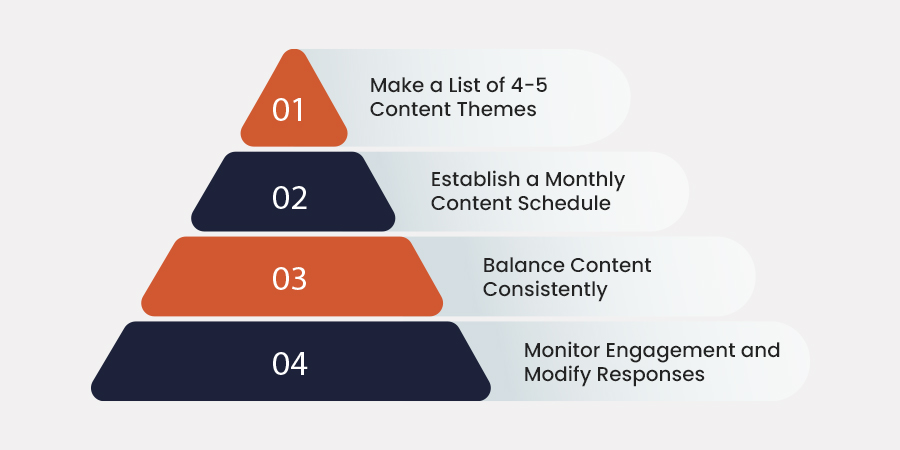
Building a Content Pyramid balances the different types of content that help you to meet the expectations of your audience. This allows you to create a consistent framework for your business that helps support and build your audience’s trust and engagement. Posting content out of order makes your audience see you as untrustworthy and leads to your business’s ideas being ignored. Content pyramids are helpful to build a consistent relationship with your audience so they see the value of the content you create and post.
- How to implement:
- Make a List of 4-5 Content Themes
The first step in a social media strategy is to identify and formalize 4 to 5 of your content themes or areas of your expertise. Post themes help build your identity and give you a framework around which to post more regularly. After putting your content themes in the post, you will be able to share your experiences, insights and opinions based on themes you built.
- Establish a Monthly Content Schedule
Develop a monthly content plan that outlines which themes will be posted and on which days. This will avoid the imbalanced spontaneity of content that neglects educational value, personal engagement, and promotional content.
- Balance Content Consistently
While doing social media for professionals, aim to focus primarily on instructional content; this establishes authority. Use personal experiences to make a connection and include promotional content to drive awareness of offerings.
- Monitor Engagement and Modify Responses
Develop the habit of reviewing audience responses by covering the metrics that count such as content they prefer, comments, shares, saves, and profile hits. Adjust your content strategy accordingly.
- Use Storytelling to Humanize Expertise
Your knowledge and experience are valuable, and your audience will connect to them more easily if you share a related personal or professional experience. Your audience will create a more meaningful emotional connection to your professional journey.
Your audience will more readily accept and connect with your experience and journey. The more you relate the information you are providing to your audience, the more trustworthy and reliable you will appear to them.
- How to implement:
- Real Challenge or Experience
Present a situation, problem, or a particular experience that was professional and is relatable to most audiences. It contextualizes the scenario and helps the readers engage with the experience.
- State Your Process & Actions
Use descriptive language to express not only the outcome but also the decisions & the thought-process you had with the challenges, plus the strategies which you deemed appropriate.
- Share the Results
What happened after the actions you proposed were put in place? State any improvements, learnings, and results. If possible, quantify the results.
- State an Actionable Conclusion
When you wrap up, provide a recommendation that the audience can & should apply in other similar situations.
- Repurpose Content for Greater Impact
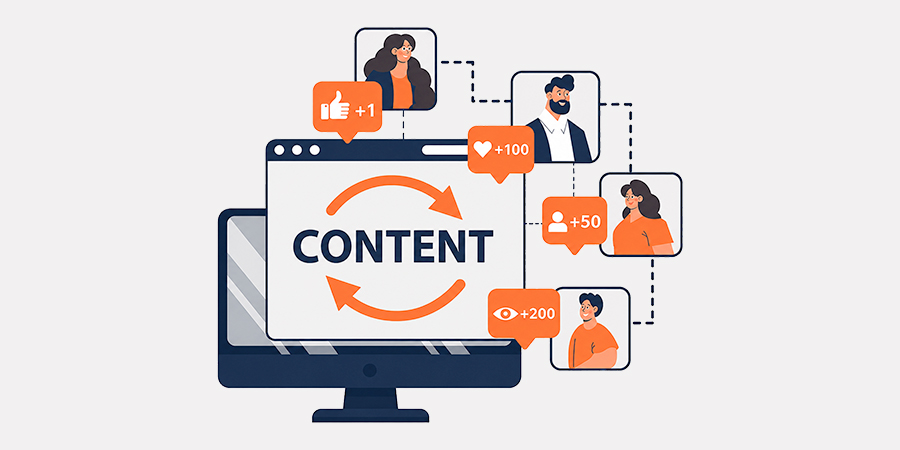
The main benefit of repurposing content while running social media for professionals is that it is a time-saver. Instead of creating new content to present the same message or idea in multiple places, one existing piece of content can be used.
Audience engagement can be maximized with less effort when one message is communicated to multiple places.
- How to implement:
- Pick one main idea or topic per week.
Select one key message that is fully developed. It should contain enough supporting points to break down into smaller components.
- Divide the topic into smaller content pieces.
The smaller components of the main topic can be lessons, stats, or examples, etc. These can be communicated to various formats individually.
- Optimize content based on platform behaviors.
Each platform has different audience expectations and engagement. This should be considered when deciding the tone and style of the message and how lengthy it will be.
- Use workflows and advanced scheduling to ensure content is posted consistently.
Content can be scheduled and workflows established to continue posting without overwhelming yourself.
- Choose Consistency instead of Quantity

A consistent posting schedule while doing social media for professionals is more effective and builds a stronger audience engagement than posting a large volume of content. Posting a large volume doesn’t guarantee positive engagement. The best engagement and growth comes from sustainable and consistent posting.
- How to implement:
- Be realistic when selecting posting frequency
Post only as often as you reasonably can, as this will allow the engaged audience and quality results to continue.
- Optimize time by batching
Integrate content production into one continuous session. Select specific time and create multiple daily content pieces. This saves time and effort in the long run.
- Prepare content in advance
Consistency in content during busy seasons is easy when the content is prepared in advance.
- Quality content is key
Content that is high quality and relevant is preferred over high quantity content. Frequent posts that have little value are less desirable than fewer posts that have value.
- Strategic Commenting to Grow

Publishing original content for social media for professionals is not the only way to engage with the target audience. Strategic commenting is a good way to be seen and develop relationships.
Visibility does not come from content publishing alone. Engaging on posts helps your content reach more people.
- How to implement:
- Follow the pertinent professionals and communities
Find relevant professionals and organizations that are members of your target audience.
- Make commenting part of your routine
Schedule time to engage with posted content and comment.
- Be an active participant
The earlier you engage with a post the more people will see and have the chance to interact with your comment.
- Comment with purpose
Avoid generic comments and instead provide thoughts and experiences that expand the topic.
- Collaborations and Partnerships

Clearing a path to new audiences is a benefit of your expertise, plus new collaborations while doing social media for professionals help new audience members to gain familiarity with your niche. Find new audiences by collaborating with other professionals in your field.
- How to implement:
- Seek appealing and aligned professionals
Find potential collaborators that have audiences aligned with your target profession.
- Promote value creation
When deciding on topics for discussion and partnership activities, opt for those that are beneficial for all parties involved to develop positive outcomes.
- Embrace different modes of collaboration
Different formats such as webinars, interviews, podcasts, guest articles, and live sessions can be employed to showcase expertise.
- Amplify collaborative content
Engagement and visibility can be enhanced by leveraging collaborative content in multiple formats and across different media.
Social Media Platforms for Professionals
Not every social media for professionals platform serves the same purpose. Different platforms attract different audiences, support different content behaviors, and create different opportunities for building influence. Selecting the right platform should depend on where your target audience spends more time and how your expertise can be communicated most effectively. Rather than trying to establish a presence everywhere, professionals should focus on platforms that align with their goals, content style, and industry.
LinkedIn has evolved beyond a networking platform into a space for professional visibility and thought leadership. It is particularly effective for consultants, executives, B2B professionals, and individuals looking to build industry credibility. The platform rewards valuable insights, practical experiences, and conversations around professional topics.
- X (Twitter)
X functions as a real-time platform where conversations evolve quickly and visibility often depends on relevance and speed. It works well for professionals in technology, finance, startups, journalism, and industries where trends and discussions change rapidly.
Instagram has become a strong platform for building personal brands through visual communication and storytelling. It allows professionals to combine educational content with a more personal and relatable approach.
- YouTube and Podcasts
Long-form platforms provide opportunities to explain ideas in greater depth and demonstrate expertise beyond short-form content. They help establish stronger authority by allowing audiences to spend more time engaging with your knowledge and perspectives.
- Substack and Newsletters
Newsletters help professionals to build direct relationships with audiences without depending heavily on social media algorithms. They allow expertise to be shared in a more detailed and focused way.
- Pro Tip: Choosing the right social media platform should be based on your professional goals, target audience, and the type of content you can create consistently. Instead of trying to maintain a presence everywhere, professionals should focus on platforms that align closely with their expertise, communication style, and long-term objectives to build stronger and more meaningful influence.
The most effective strategy is usually not choosing every platform, but choosing the right combination based on audience behavior and professional objectives
Most Common Social Media Mistakes Professionals Should Avoid
While building an online presence can create significant opportunities, certain mistakes can limit growth and reduce impact. Many professionals focus only on posting content while overlooking the importance of strategy, consistency, and audience engagement.
Recognizing these common mistakes early while doing social media for professionals can help create a more effective and sustainable approach to building online influence:
- Treating social media like a CV dump
Many professionals use social platforms simply to list job titles, achievements, or credentials. While experience matters, audiences connect more with practical insights, perspectives, and valuable knowledge than with static professional information.
- Inconsistency: posting in bursts, then disappearing
Posting actively for a few days and then disappearing for weeks can make it difficult to build audience trust and maintain visibility. Consistent activity helps create stronger recognition and long-term engagement.
- Over-promoting without providing value
Constantly promoting products, services, or achievements can make content feel overly transactional. Audiences are more likely to engage with content that educates, informs, or solves problems before introducing promotions.
- Chasing follower count instead of audience quality
Large follower numbers do not always translate into meaningful influence. A smaller audience made up of relevant professionals, clients, or industry peers can create stronger engagement and better opportunities.
- Ignoring engagement and interaction
Social media is designed for conversations rather than one-way communication. Publishing content without responding to comments or engaging with others limits relationship building and audience growth.
- Being present on every platform at once
Trying to manage every social platform can divide time and reduce content quality. Focusing on one or two platforms initially often produces stronger results and allows professionals to build a more consistent presence.
- Copying others instead of building an authentic voice
Following trends can be useful, but completely replicating another person’s style can weaken personal identity. Authentic perspectives and original experiences often create stronger trust and recognition.
Frequently Asked Questions (FAQs)
Ans. Most professionals can use their existing profile to build their personal brand, particularly on professional platforms. A separate account is generally needed only when personal and professional content serve very different purposes.
Ans. Professionals do not always need highly unique ideas to create value. Sharing project learnings, industry observations, common challenges, or practical experiences can often be useful and relatable for audiences.
Ans. There is rarely a perfect time to start building an online presence. Many professionals delay because they feel they need more experience or expertise, but influence develops gradually through consistency. Starting early helps build visibility over time and creates opportunities that may not come from waiting.
Ans. Influence is not determined only by audience size. A smaller community of relevant and engaged followers often creates more meaningful impact than large numbers alone.
Ans. Video is only one content format and not a requirement for building influence. Educational posts, articles, newsletters, and thought leadership content can also establish authority effectively.
Ans. Online influence should be evaluated through engagement quality and outcomes rather than follower growth alone. Metrics such as content interactions, profile visits, and opportunities generated provide stronger indicators.
Conclusion
Professional expertise has immense value, but without visibility, even the strongest knowledge can remain unnoticed. Many professionals delay building an online presence because they feel they need more experience, better content ideas, or the perfect strategy before starting. In order to begin with social media for professionals, start with one simple step today: choose a platform, share one useful insight this week, and begin creating visibility around your expertise. Influence is built one post at a time, not overnight.
Take your professional brand to the next level with tailored social media marketing solutions designed to increase visibility, engagement, and impact.

