





SEO for hospitality industry is what separates a hotel with empty rooms and sluggish direct bookings. Travelers emigrate to search on Google every day. And if your hotel is not at the top, you are non-existent to them. That is the real risk.
More than 68% of online experience begins with a search engine, and organic search is responsible for directing over 53% of the website traffic to your site. Experts have researched that with SEO, hotels see a direct high-growth in booking only within six to twelve months.
In this guide, we will show you how to rank for search terms and attract more potential guests with the right SEO strategies.
What is SEO for the hospitality industry?
Hospitality SEO is the process of optimizing a hotel, resort/vacation rental or travel-related website in order to have it appear higher up for various terms and phrases that are searched by potential clients on Google. Simply put, it ensures your property reaches the most relevant travelers at the right time — not just for a single click.
It doesn’t just involve sprinkling keywords throughout a webpage. This includes everything from local search optimization to mobile performance, content strategy, and online reviews, and everything in between with respect to the health of your website. When done well, it boosts direct bookings and lowers OTA dependency by placing your brand in front of guests actively searching for what you offer.
Importance of SEO for Hospitality Industry to Increase Direct Bookings
- OTAs like Expedia or Booking.com are the guests—but they charge heavy prices. This is where SEO for the hospitality industry comes to change all.
- Guests find your hotel first when you are at the top of Google. No middleman. No commission. You retain 100% of the revenues, and more importantly, you own the guest relationship—their data and loyalty.
- Consider local search queries such as “boutique hotels Paris.” If your business does not make it into Google’s Map Pack, you’re nonexistent for almost all potential guests.
- OTAs have billion-dollar budgets. You can’t outspend them. But when it comes to hyper-local content and some smart keyword targeting, you can very much beat those high-traffic giants with the right SEO strategies.
How Travelers Search Before Booking (Search Intent Breakdown)
Most of them do their research; they compare it with other options and revisit them multiple times before making a decision. That journey is a digital one of days—sometimes weeks.
This is precisely why SEO for hospitality industry works to be of better value than just ranking a word. It’s about being present through every part of that cycle from the first Google query to clicking “confirm booking” for a second time.
Your content needs to address 4 specific intent stages because the US market is very competitive:
- Transactional: “Book hotel in Miami South Beach” – Users are ready to convert; your booking engine must be seamless.
- Commercial: “Best luxury resorts in Aspen” – Travelers are comparing options; high-quality imagery and reviews are key.
- Navigational: “Hotel near me with EV charging” – Critical for road-trippers and last-minute city bookings.
- Informational: “Best time to visit Yellowstone” – Top-of-funnel content that builds brand trust.
How to Research Keywords to Improve SEO for Hospitality Industry Strategies?
In the context of SEO for hospitality industry, keyword research involves identifying and analyzing search terms— from broad “head terms” (e.g., hotels in New York) through long-tail queries that can be as specific as “boutique hotel with infinity pool & vegan breakfast” to align your hotel’s website content to guest intent. Target high-intent traffic that is right into the booking engine.
The best keyword research tools are-
- Google Keyword Planner
- Semrush
- Ubersuggest
- Ahrefs
- Mangools
5 Steps to Conduct Keyword Research for SEO for hospitality industry
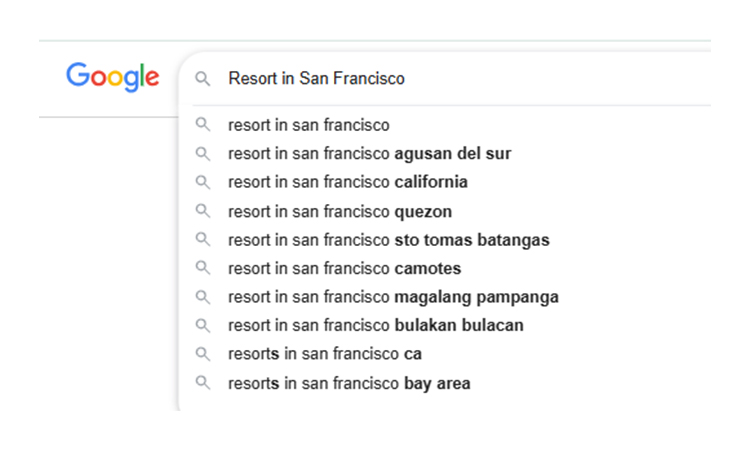
Step 1 — Identify Your “Seed” Keywords: Begin with the essentials – your location, desired property, and most important features (eg, San Francisco Resort, Business hotel near airport [City], pet friendly hotel)
For example, you can conduct a search on Google to discover keywords and determine what types of questions users are asking.
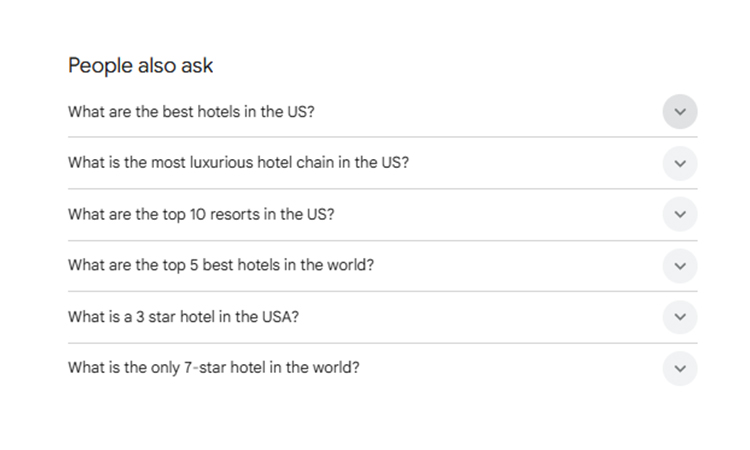
Then scroll down on Google’s first page and see the “People Also Ask” section
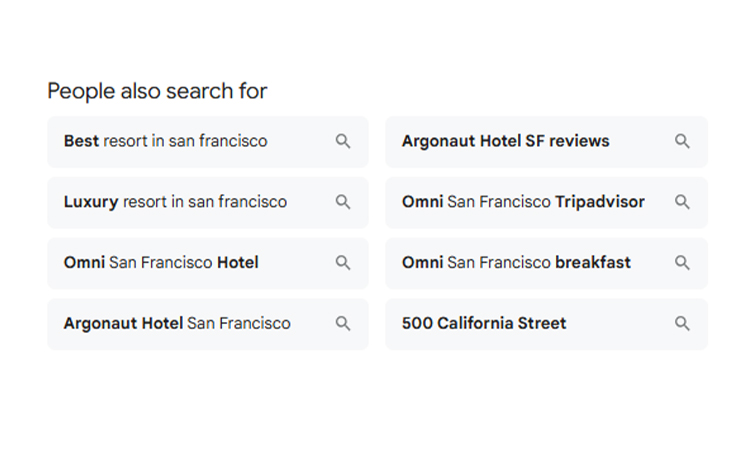
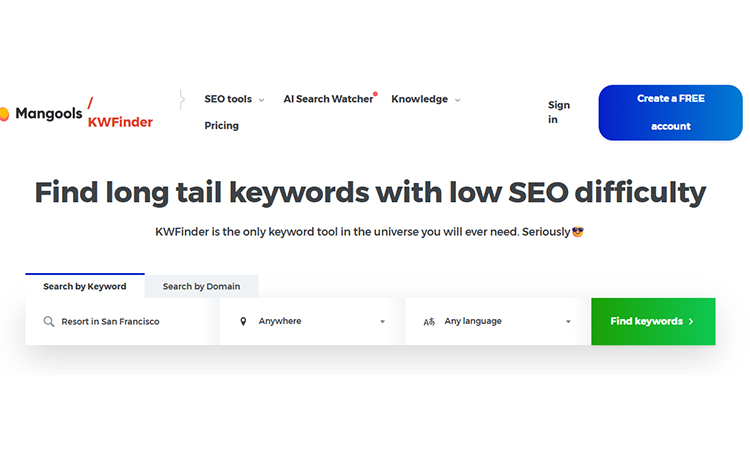
Here we are using Mangools to show you how you can find relevant keywords for your hotel’s website. First, go to Mangools’s official website and write your main keywords in the search bar like this—
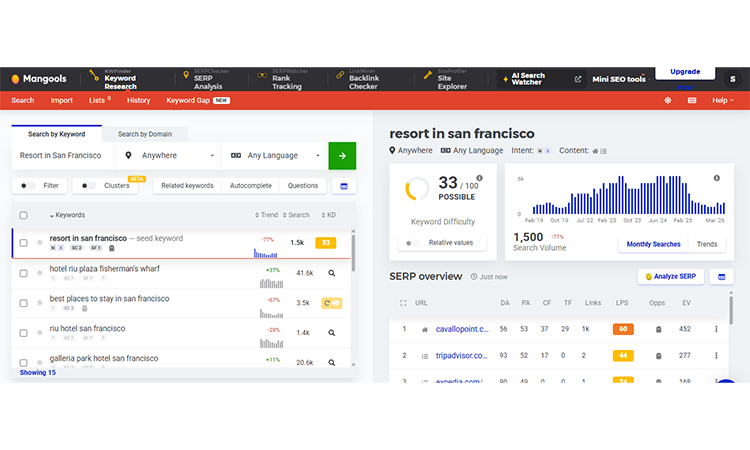
Keyword Research Metrics Explained (SEO for hospitality industry Guide)
| Metric | Definition (Simple & Clear) | Why It Matters for Hotel SEO | Which to Choose (Practical Tip) |
| Keyword Difficulty (KD) | A score (0–100) showing how hard it is to rank on Google for a keyword. | High KD = strong competition (OTAs, big brands). Low KD = easier to rank. | Choose low to medium KD (10–40) for faster ranking, especially for new hotel websites. |
| Search Volume | The number of times a keyword is searched per month. | Shows the demand and popularity of a keyword. | Target a mix: medium volume + high intent (e.g., 500–5,000 searches). |
| CPC (Cost Per Click) | The amount advertisers pay per click on Google Ads for a keyword. | Indicates commercial value and booking intent. | Choose high CPC keywords → these users are more likely to book. |
| SERP (Search Engine Results Page) | The actual Google results page showing rankings, ads, maps, and snippets. | Helps you understand competition and ranking opportunities. | Analyze SERP before targeting: if dominated by OTAs, go for long-tail or niche keywords. |
Step 2 — Analyze Search Intent: Categorize keywords by the guest’s journey.
- Informational: “Best time to visit Grand Canyon.”
- Transactional: “Book 5-star hotel in Los Angeles.”
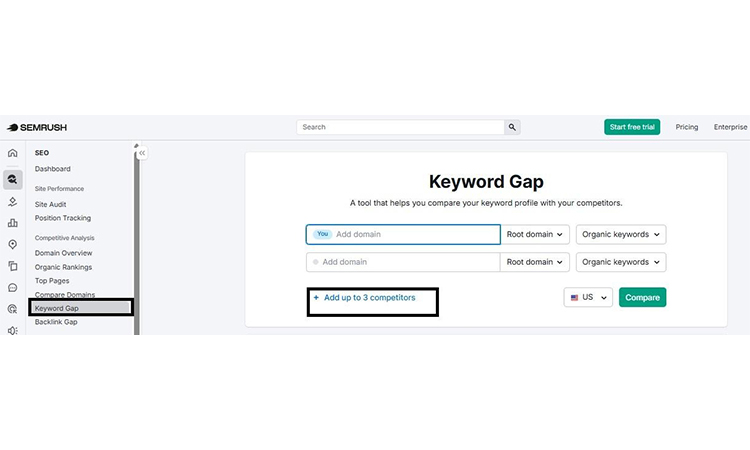
Step 3 — Leverage Competitor Gaps: You can use tools like Semrush or Ahrefs to see which keywords your direct competitors rank for that you are missing. Go to “Keyword Gap” and put your domain and your competitor’s domain like that—
Step 4 — Focus on Long-Tail Phrases (3+ word phrases): While they might not have a whole lot of search volume, as long-tail keywords go, they’re much more specific, which gives them an exceptional conversion rate.
Step 5 — Validate with Search Console: Once you get to the keywords and take action, validate by using Search Console as Google will tell you how many clicks vs number of impressions are coming from each term, so iterate.
Content Marketing Strategy for Hotels That Drives Direct Bookings
Online search behavior of potential clients has changed in 2026. The SEO for hospitality industry has moved far beyond shallow keywords. Today, it is all focused on entity search, structured data, and Answer Engine Optimization (AEO). In simple terms, your content must appeal to the algorithm as well as to a real person reading it.
What makes a smart content strategy realistic? Here is a blueprint that actually fuels booking-ready traffic:
- The Strategy: From Searcher to Guest
Including relevant keywords organically in your content and the headings of each section, as well as using multimedia such as photos or videos, is an essential best practice to improve SEO for Hospitality Industry. If you want traffic ready for booking, your content should map to the booking funnel:
- Awareness (Organic Traffic): Educational pieces around ” Best family-friendly hotels in [City] for a relaxing vacation.
- Consideration (Content that engages): High-trust pieces such as ” Why you will have a superior stay experience in our hotel compared to any standard city hotels”
- Decision (Direct Booking): Transactional Landing Pages Clear CTAs such as ‘Book your stay with direct booking discounts at [City] hotel.
- Comparison Content; e.g. Alternative To [Competitor], or [Service A] vs [Service B]) Those users are already in the scan.
- Pricing & Package Transparency: How Much Does [Service] Cost? This one, “Why Our Premium Tier Is Worth It,” is likely to catch the eye of someone who is already planning on spending money.
- High-Conversion Booking Architecture
Frequent articles and blog posts answering traveler questions can make your hotel a go-to expert, rather than just another site to visit.
| Feature | The “Booking-Ready” Approach |
| Hero Section | Clear value proposition and a “Check Availability” button above the fold. |
| Social Proof | Place testimonials or “Real Results” badges directly next to the primary CTA, not just on a separate page. |
| Sticky Navigation | A persistent “Book Now” button in the header that remains visible as the user scrolls. |
| Micro-CTAs | Classify CTAs as text links, not a huge button at the very end of your content (ex: “Ready to leave on queue?) A perfect balance of humor, relatable experience, and inspiration for everyone.. |
- The Recapture Strategy
A typical hotel booking in multiple sessions (users examine, exit to compare, and return).
- A price drop alert pop-up message appears to customers just as they are about to leave. It says, “Not Ready To Book? Join our “Price Watch” list for [Season/Month] to be notified when prices drop below or reach [Amount].
- Retargeting based on Social Proof: Let’s say someone visits your suites page and browses through the various options of booking that suite, but does not book. Distribute ads or emails showing a video testimonial by a guest who stayed in this same room—why it was their favorite.
- Visual Verification
Google’s AI now “scans” images. Don’t use stock photos. Upload high-quality lobby and bed photos, original welcome kit photo. Alt-text should be descriptive.
- Best Tools for Content Optimization & Content Research: SEO for Hotels Guide
| Tool | Best For | Key Features | How Hotels Can Use It | Pricing |
| Semrush | All-in-one SEO + content research | 26B+ keywords, competitor analysis, content assistant. | Find keywords like “hotels in Miami near the beach” + analyze competitors. | Paid |
| Ahrefs | Keyword research + content gap | Content Explorer (15B+ pages), backlink data. | Discover trending travel topics + competitor keyword gaps. | Paid |
| Surfer SEO | On-page content optimization | Real-time content score, NLP keywords, SERP analysis. | Optimize hotel blogs & landing pages to rank higher. | Paid |
| Clearscope | Content grading & keyword coverage | A–F grading system, keyword suggestions. | Improve blog quality for “best hotels in [city]” pages. | Expensive |
| Frase | Content briefs + question research | SERP-based briefs, question targeting. | Create FAQ-rich hotel blogs for featured snippets. | Affordable |
| MarketMuse | Topic authority & content planning | AI topic modeling, content gap analysis. | Build full travel content clusters (city guides, itineraries). | Enterprise |
| Google Search Console | Free keyword data | Real queries, CTR, impressions. | Find hidden long-tail keywords bringing hotel traffic. | Free |
| Google Trends | Trending topics | Seasonal trends, location insights. | Discover seasonal travel demand (e.g., “summer hotels Florida”). | Free |
Local SEO for Hospitality Industry: Google Maps Domination Strategy for Hotels
Local SEO simply means the act of optimizing a hotel’s presence online to ensure that searches for physical locations rank higher on Google Maps specifically. If a traveler types “hotels near me” or something like “best hotel in [city]”, well-optimized businesses will be among the first 3 results pulled by Google from nearby.
The majority of clicks, calls, and bookings are received by hotels that appear in the Google Maps “3-Pack” (the top-three local results). Even the most stunning property goes completely unnoticed by potential guests without good hospitality local SEO. Local SEO for hospitality industry is the best way to get foot traffic, direct bookings, and revenue.
Step-by-Step Local SEO Strategy for Hotels
- Google Business Profile Setup and Updates
Your Google Business Profile (GBP) is the core of your local visibility. It is ideal to claim and optimize your Google My Business listing for your hotel, as the process will help you work on local SEO and attract potential local travelers.
- How to claim a Google Business Profile?
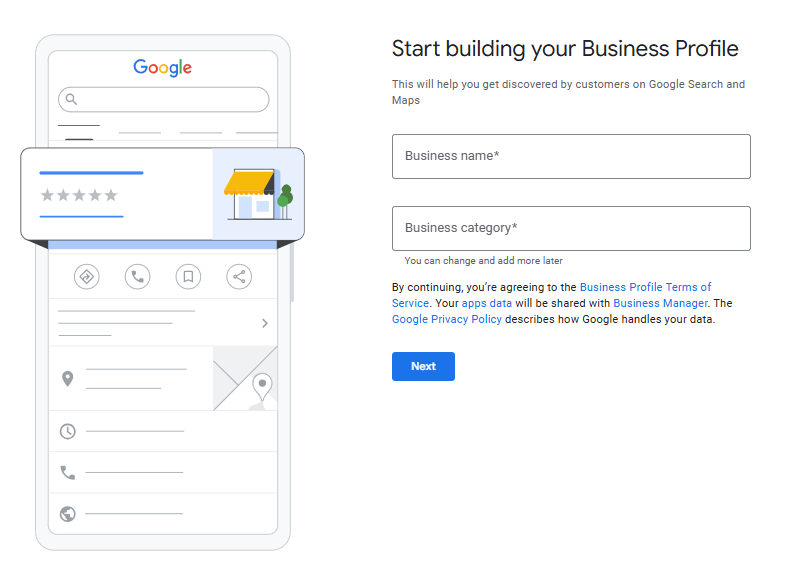
Go to Google Business Profile- google.com/business and click “Start Now.”
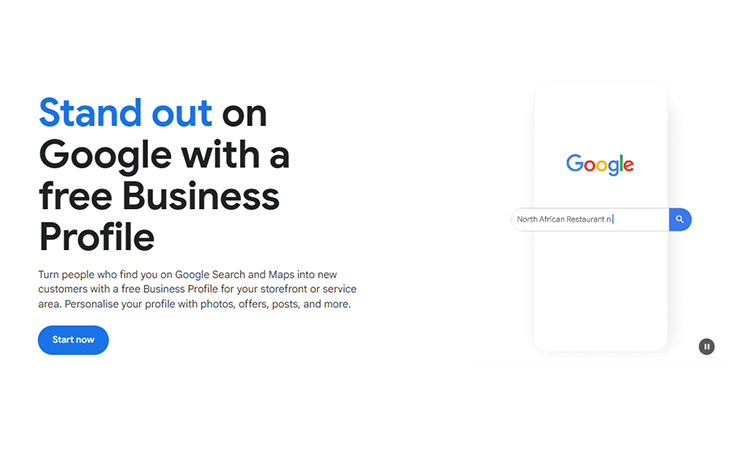
Write your hotel name and select the business category.
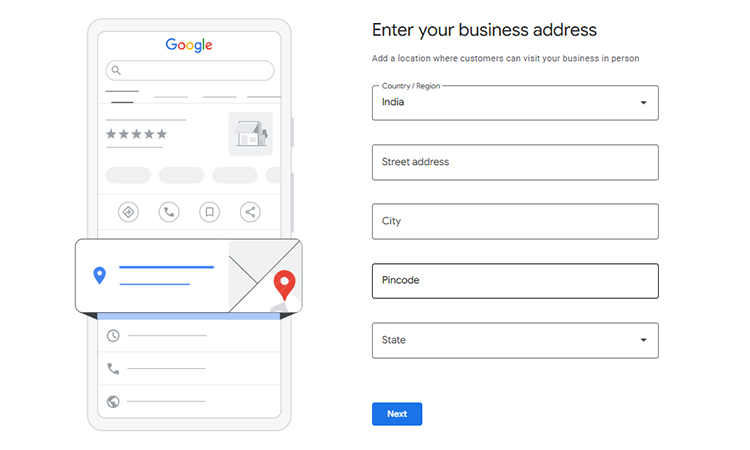
Input the address correctly.
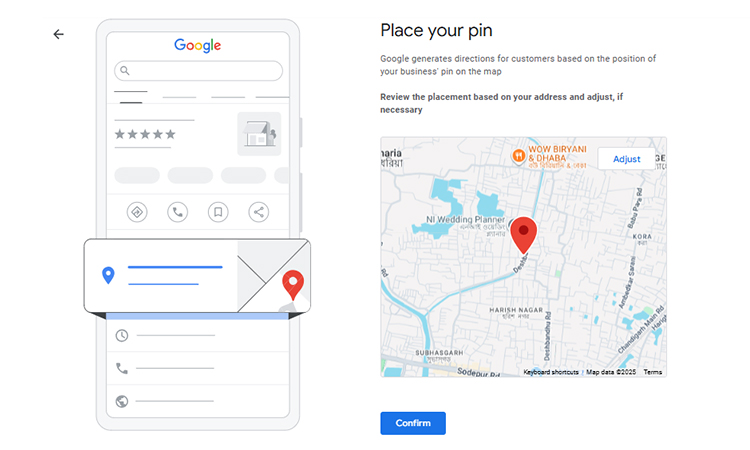
Pinpoint your hotel’s address on the map. It will give your potential guests a clear map of your hotel.
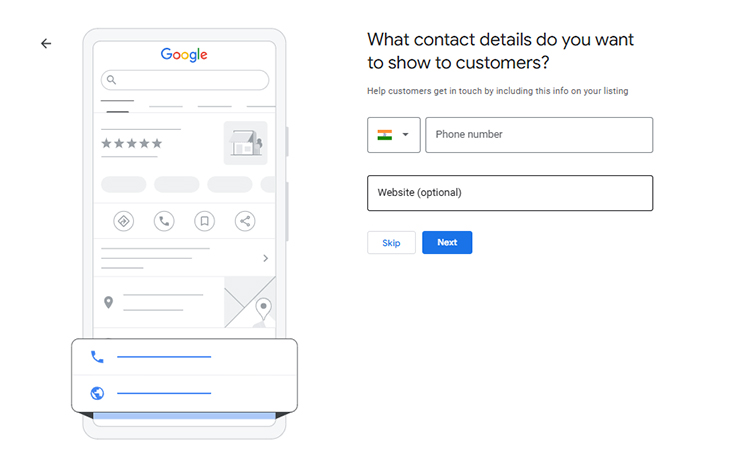
Add your official hotel’s phone number.
Then clearly add your business hours so that your potential guests can contact you.
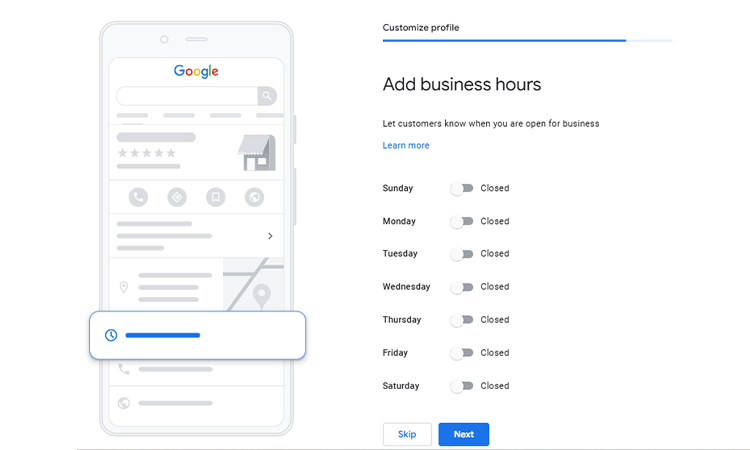
Make weekly posts, seasonal offers, or event announcements via Google My Business Posts directly on GBP (guide) to indicate activity to Google. Select your primary categories of service, for example, “Boutique Hotel,” or even Resort Hotel.
- Tool: Google Business Profile Manager
- Location Keywords in Content
Geo-targeted keywords that are relevant to how travelers search for website content. Scattered things like “luxury hotel in downtown Austin” or “family hotel near Times Square,” which you should add around your homepage and meta titles, as well as on the service pages.
Include location keywords in your H1 tags, the alt text for your images, and URL slugs. Don’t keyword stuff—write for a human first, then optimize.
- Tools: Google Keyword Planner, Semrush, Ahrefs
- NAP Consistency and Local Citations
NAP = Name Address Phone Number. With your NAP, Google cross-checks it online. Even small discrepancies, such as St./Street lower your trust signals and impair rankings.
Add your hotel to the top directories: Yelp, TripAdvisor, Booking. com, Expedia, and Foursquare. Keep NAP identical everywhere.
- Tools: BrightLocal, Yext, Whitespark
- Customer Online Reviews — Collection and Responses
For local SEO for hospitality industry, reviews are a primary ranking signal. Four- and five-star reviews drive hotel rankings, which directly translate to higher conversion rates. Follow up via email/SMS after each guest checkout with a hyperlink to Google Reviews.
To write back to all reviews, both negative and positive. An appropriate way to respond shows future guests that your hotel cares about their experience.
- Tools: Podium, GuestRevu, TripAdvisor Review Hub
- Embed Google Maps on the Contact Page
When you have an embedded Google Maps widget in your contact or location page, it signals to Google that yours is a website linked with a trusted physical address. It also helps guests who need directions, which improves the user experience.
Open up Google Maps, find your hotel, click “Share,” then “Embed a map,” and paste the frame into your contact page.
- Tools: Elementor Google Maps Widget, Google Maps Embed API, MapPress Maps for WordPress
- Location-Specific Service Pages
Each location or service your hotel offers deserves its own dedicated page. Create separate pages for your spa, event hall, restaurant, and nearby attractions, each with location keywords.
For hotel chains, build a unique page per property. A page titled “Rooftop Pool at Our Miami Beach Hotel” ranks better than a generic amenities page.
- Local Backlinks from Trusted Sources
Backlinks from local websites signal authority to Google. Reach out to your city’s Chamber of Commerce, local tourism boards, wedding directories, and event venues for a listing or partnership mention.Sponsor local events or collaborate with food bloggers and travel writers for organic backlinks.
- Tools: Ahrefs (backlink analysis), Moz Link Explorer
- “Near Me” and Geo Keywords
Travelers use conversational, geo-intent searches like “pet-friendly hotel near Central Park” or “affordable hotels near LAX.” Include these phrases naturally in blog posts, FAQs, and landing pages. Create a blog section with content like “Top Attractions Near Our Hotel in Nashville” to capture long-tail local searches.
Tools- Google Keyword Planner, Semrush
- LocalBusiness Schema Markup
Schema markup is the structured data code that you add to your website to tell Google about different details of your hotel (location, star count rating, price range, and so on).
Use Hotel schema type (which is also a LocalBusiness subtype) and the following properties: name, address, telephone, check-in Time value/textual description, or a string specifying when to leave the room by definition according to CheckOut Time. Just add these JSON-LD codes to your homepage and location pages.
On-Page SEO for Hotels That Converts Visitors into Guests
On-page SEO for hotels covers every optimization you apply directly on your website pages to raise search engine rankings. This process targets potential guests who search on Google and other search engines before they book a stay. Strong SEO performance means your hotel page appears above competitors in Google search results, which brings more direct bookings without extra ad spend.
The SEO for hospitality industry demands a hotel marketing strategy that aligns technical precision with guest-focused content. Each element — from meta tags to URL structure — tells search engines exactly what your page offers. Hotels that master these elements consistently attract more potential guests and reduce reliance on third-party booking platforms.
Pro Tip: A well-structured on-page SEO plan is the foundation of every successful hotel SEO strategy. It works across Google and other search engines like Bing, Yahoo, and DuckDuckGo.
- Meta Title Tags — Your First Impression in Search Results
As meta titles, it is the blue headline that appears when a user performs a Google search for each of your pages.
- Best Practices for Meta Title Tags
- Normalize each title to between 50-60 characters
- Keep the primary keyword, for example, your hotel and location, close to the beginning.
- Include something like “Book Direct & Save” which will intrigue prospective guests to book directly through your site.
- Do not repeat meta titles on different pages of your hotel website.
- Meta Descriptions — Persuade Potential Guests to Click
A meta description is the small paragraph right below a meta title in Google search results. This text that you read will be displayed on the search engine results: a small surrounding description of your page content to give potential guests an overview before clicking. Even when this ranking is unchanged, a catchy description will lead to an increased click-through rate.
- How to Improve Meta Descriptions
- The ideal Meta Description is between 150 to 160 characters. Ensure to keep them within this limit for maximum visibility.
- Make sure to have your main keyword in the good spot i.e. right into the first sentence in a natural context.
- Include a clear call to action: “Book your room today.”
- You can get the edge by focusing on a singular aspect—pool, complimentary breakfast, or downtown location.
- Header Tags (H1, H2, H3) — Structure Content for Guests and Search Engines
Header tags structure the content of your web page according to a defined order that matches what readers and search engines want.
- H1 for your page titles,
- H2s introduce the larger sections in content
- H3 tags divide those into specific subtopics
- Optimization Steps
Step 1: Use a tool like Screaming Frog to crawl your hotel website.
Step 2: Rewrite H1 tags with each page’s primary keyword.
Step 3: Check header order to ensure pages read well from H1-H3
- Internal Linking — Guide Guests Deeper into Your Website
An internal link connects one page of your hotel website to other pages within the site that are relevant. These links enable search engines to find all of your content and also help them know which pages are the most important. Instead of that, for your potential guests, internal links give them a seamless path—from an attraction article → to the rooms page in seconds after reading → and finally to the booking form.
- Optimization Steps
Step 1: Identify low-traffic pages that need internal links.
Step 2: Provide contextual links from high-performing pages to low-performing service pages.
Step 3: Perform monthly broken link checks and repair dead internal links as soon as you find them.
- Image Optimization — Speed and Visibility for Hotel Photos
Image optimization addresses two aspects: first, the alt text, which summarizes what each image is about for search engines, and second, that it weighs enough to slow down how fast your pages load.
- How to Improve Image Optimization
- Add descriptive alt text for each image—mention the type of room, name of hotel, and location.
- Compress all images below 150 KB, with no visible quality difference, by using TinyPNG.
- Optimize with modern formats like WebP, so it loads faster on all devices.
- Before uploading, name each image file with keywords—give it a proper name starting with the most relevant keyword, e.g., “luxury-suite-miami-hotel.jpg.”
- URL Structure — Clean, Readable, and Keyword-Rich
The URL is the address that directs you to each page on your hotel site. Search engines and potential guests look right away at clean URLs because, like the page title tags, it immediately indicates what will be on that particular URL before they click.
- How to Improve URL Structure
- Put hyphens separately between words, then use them in any URL without a conditional underscore and spaces.
- Have your main keyword for each page in the URL.
- Omitting all stop words (and, the, of) to create a short but readable URL
- No Parameters and Session IDs in Google Search URLs
- FAQ Sections — Win Voice Search and Featured Snippets
In this Frequently Asked Questions (FAQs) section, you answer some of the common questions that prospective guests would ask about a hotel before making their booking.
- How to Improve FAQ Sections
- Topics that potential guests search for in their queries on the internet and review websites such as TripAdvisor, Google Search, or hotel review sites.
- Keep your specific answers between 40 to 60 words—direct enough to deliver for voice search.
- Use FAQ schema markup so that search engines show your answers as rich results.
- Build out FAQ content on a quarterly basis to ensure questions that come up seasonally or as new hotels open are reflected.
- Best Tools to Find Most Relevant FAQs –
- Google Search “People Also Ask”
- AlsoAsked Chrome Extension
- Google Search Console
- Quora
- AnswerThePublic
- Outbound Links — Build Authority and Trust with Search Engines
Third-party websites that are trustworthy, like local tourism boards, tourist and travel guides, or well-known hospitality publications, can link to your hotel website. These are links that search engines trust, which means that you really do have something useful to offer people who visit your site. And a well-researched outbound link strategy will support your SEO for Hospitality industry and not get visitors to leave you permanently.
- How to Improve Outbound Links
- Include links to authoritative sites—local government tourism pages, Google Maps, or TripAdvisor.
- Open outbound links in a new tab to keep guests on your hotel website.
- Do not link to competitor hotel websites and low-quality directories
- Monitor all outbound links every 6 months to update any broken or outdated references.
- Best Tools to Optimize Outbound Links—
- Ahrefs
- Semrush
- Screaming Frog SEO Spider
- Google Search Console
- Link Whisper
How Does Off-Page SEO Help Hotels Increase Direct Bookings and Online Authority?
Off-page search engine optimization (SEO) for hotels is everything you do off your website to get authority. These efforts show Google and other search engines that you are trustworthy. Effectively, strong off-page work raises your SEO for the hospitality industry over the nearby competition. This not only enhances your online standing but also adds direct bookings over a longer time frame.
- Backlink Building from Trusted Websites
Backlinks are links on other sites that connect to your hotel site. Search engines consider that every quality backlink is a positive signal. Increased quality backlinks strengthen hotel SEO results.
- Where to Build Backlinks
- Tourist boards and city travel pages
- Hospitality Net, and Hotel News Resource (hotel-related directories)
- High domain authority score travel blogs
- Websites of local business associations and chambers of commerce
- How to Do It — Steps
- Write down 20 high-authority websites in the travel and hospitality domain for your target market.
- Research each site, looking for content gaps you can fill with your hotel’s expertise.
- Contact the site with a tailored pitch providing their readers with high value.
- Ask for a contextual backlink in the related content — no footer backlinks.
- Monthly check on your new backlinks, either via Ahrefs or Google Search Console.
- Broken Link Building
In broken link building, you identify dead links on authority sites and suggest your content as a replacement. This tactic provides backlinks very fast because website owners want to resolve broken pages immediately.
- Where to Find Broken Links
- Travel and tourism resource pages on authoritative websites
- Pages for hotel industry associations with outdated external links
- Local destination guides that point to closed hotels or expired offers
- How to Do It — Steps
- Scan through travel websites for broken URLs using Ahrefs or Check My Links.
- Find these dead links that were pointing to hotel & hospitality content.
- Either create or edit your page (to be about what the broken link was originally about)
- Contact the site owner with an email detailing your broken link and a replaced URL.
- If you get no answer from them, follow up once after a week through the same channel.
- Forum, Quora, and Reddit Engagement
Forums and Q&A platforms let your hotel brand answer real traveler questions. These SEO efforts build online reputation and drive referral traffic to your site. Consistent engagement on social media platforms and forums signals authority to search engines.
- How to Do It — Steps
- Create professional brand profiles on Quora and relevant Reddit communities.
- Search for questions where your hotel location or expertise adds clear value.
- Write helpful, detailed answers without direct promotional language in them.
- Include a natural reference to your hotel website only when context supports it.
- Engage consistently — post three to five quality answers every week.
- Social Media Signals and Shares
Social media signals of shares, likes, and mentions of your hotel content on social networks. Such signals support your SEO for hospitality industry and promote the content reach to potential guests. Having a strong social presence will also help facilitate your online reputation management across different channels.
- How to Do It — Steps
- Publish shoppable content — local guides, room tours, seasonal offers, and guest stories
- Implement social share buttons in every blog post and essential page on your hotel site.
- For all social accounts, respond to every comment and mention within 24 hours.
- Launch monthly share campaigns with a location-based branded hashtag related to your hotel.
- Identify which content formats get the most shares and then reuse these formats over and over again.
- Guest Blogging
Guest blogging is supporting other travel and hospitality websites by writing articles. Every blog post you publish garners a backlink as well as more online visibility for your hotel brand. This tactic advances hotels’ search engine optimization while developing long-lasting authority.
- Where to Publish Guest Posts
- Lifestyle blogs for travel with an audience that matches your target guest profile.
- Hospitality publications—mainly Skift, eHotelier, and Hotel Management.
- Local city blogs, covering restaurants/events/accommodations.
- How to Do It — Steps
- Do research on 15 travel or hospitality blogs that accept guest contributor submissions.
- Review their best posts for their writing style, the topics, and the ways you would write.
- Propose three unique topic suggestions that are tailored for their audience and demonstrate your authority.
- Avoid promotional language and write a 600 to 900-word article that brings real value
- Use one natural backlink, which is a hyperlink to your hotel website that links it all the way back to your web catalog.
- Influencer Mentions
When influencers mention your hotel, they’re linking it to well-known voices that travelers already pay attention to. The right mention from the correct influencer could lead to more bookings than Google advertising ever could.
- How to Do It — Steps
- Choose five to ten influencers who have an audience that aligns with your perfect guest profile.
- We try to connect with their content without reaching out for a span of two or four weeks.
- Provide a free stay in return for authentic, organic coverage of the content.
- Decide which posts, stories, or steps you will request to be published together with a blog mention.
- Then, after that, use the content from influencers on your social media sites.
- Press Releases
PR tools send information about your hotel to journalists, travel editors, and publications online. An effectively timed press release gets high-authority backlinks naturally and greatly increases your online reputation, almost instantly. This method also establishes your property as an industry leader in the hospitality industry.
- Where to Distribute Press Releases
- Digital Distributors: PR Newswire, Business Wire & PRWeb.
- Travel trade publications (including brands such as Travel Weekly and Travel Agent Central)
- Local news covering hospitality, tourism, and business development.
- How to Do It — Steps
- Locate newsworthy events—openings of new features, awards won, renovations made, and partnerships formed.
- A capital-based, full-length, 400-500-word press release with a captivating headline.
- Include a quote from your hotel manager or owner to lend credibility and personality.
- Disseminated via a paid media wire service for optimal exposure.
- Contact three to five travel journalists who cover your hotel market directly.
Technical SEO for Hospitality Industry
Technical SEO involves every possible behind-the-scenes improvement you can make to ensure that search engines crawl, index, and rank your hotel website. It directly follows that this technical foundation influences the functioning of SEO performance over time in relation to booking revenue for hospitality companies:
- Mobile-Friendliness
Mobile-friendliness defines the context in which your hotel website works smoothly on smartphones and tablets. The responsive design will adjust your layout automatically to any screen size without additional effort.
- Steps:
- Test your hotel website in the Google Mobile-Friendly Tool without delay!
- The force elements fit on the screen, so they don’t go beyond it or overlap. On small screens, you may need to scroll horizontally to see them all.
- To make sure your layouts work on all devices and screen sizes, use responsive CSS frameworks.
- Test each booking form and call-to-action button on a real mobile device before going live.
- Best Tools: Google Mobile-Friendly Test, BrowserStack, Responsinator
- Page Speed Optimization (Core Web Vitals)
Page speed refers to the time it takes for your hotel website to load for every user on any device. A slow site speed is the fastest way to lose potential guests and fall in the Google Hotels rankings. Google has three real-page speed deadlines that every hotel must meet: Core Web Vitals include LCP (Largest Contentful Paint), INP (Interaction to Next Paint), and CLS (Cumulative Layout Shift).
- Steps:
- Check current page speed scores with Google PageSpeed Insights for both desktop and mobile.
- Immediately compress graphics to lower than 150 KB and convert them into the WebP format.
- Use browser caching and minify CSS, JavaScript, and HTML files on your server.
- Implement a content delivery network (CDN) to ensure your international guests see pages faster.
- Best Tools: Google PageSpeed Insights, GTmetrix, Cloudflare CDN, TinyPNG
- SSL Certificate (HTTPS)
An SSL certificate encrypts data between your hotel website and anyone who visits it. Most importantly, Google identifies non-HTTPS websites as ‘Not Secure,’ which is an instant trust destroyer for users.
- Steps:
- Acquire an SSL certificate either through your hosting provider or Cloudflare and install it.
- Redirect any HTTP URL to its HTTPS counterpart automatically via server rules.
- Change all relevant URLs in your XML sitemap as well as internal links to only include HTTPS-based addresses.
- Best Tools: Cloudflare, Let’s Encrypt, SSL Checker, Google Search Console
- XML Sitemap Submission
An xml Sitemap is a list of all the important pages on your hotel website for search engines.
- Steps:
- Automatically create your XML sitemap using Yoast SEO, Rank Math, or your CMS.
- Applies only to low-value pages.
- Enter your sitemap URL within Google Search Console directly under the “Index” tab.
- Submit your sitemap whenever you add/delete/update essential pages.
- Robots.txt Optimization
A robots txt file recommends to search engine crawlers where they should go (and what pages to ignore). It is at those times that your data can break; for example, a .txt file could accidentally block Google from crawling the important local landing pages on an Internet site. Each hotel must carefully audit this file before making any modifications.
- Steps:
- Access your robots. txt file at yourdomain. com/robots. txt and review every directive.
- Exclude low-value pages such as admin panels, duplicate filters and internal search results.
- Make sure there is no “disallow” tag in very important pages — rooms, offers, local landing.
- Test your updated robots. Use Google Search Console to let them know that they can track those pages and reports of your site in the robots.txt tester tool.
- Best Tools: Google Search Console, Robots Tester, Screaming Frog, SEMrush
- Fixing Crawl Errors
When a search engine can’t get to a page on your hotel website, this is called a crawl error.
- Steps:
- Visit your Google Search console and check the Coverage >> Index section once a day.
- Find every URL marked in the report, such as Error, Excluded or Valid with Warning
- Repair broken internal links, undelete pages that have been mistakenly killed, and refresh outdated redirects.
- Using Search Console, validate the fixes and request re-indexing of all pages that were corrected.
- Best Tools: Google Search Console, Screaming Frog, Ahrefs Site Audit, SEMrush
- Structured Data / Schema Markup
Schema markup is essentially a code that tells search engines precisely what your content means on the hotel pages. When hotels implement schema markup, they feature in Google Hotels rich results, complete with star ratings (based on a poll), price ranges, and amenities information.
- Steps:
- Implement Hotel schema markup in the home page and all of its major property pages without delay.
- Implement LocalBusiness, FAQPage and Review schema throughout your site (as applicable).
- Always test any schema markup using Google’s Rich Results Test before publishing.
- Canonical Tags
The canonical tag is how we tell search engines the master or original version of a page. Content duplication is common among hotels with more than one room category page or any filtered search result.
- Steps:
- Check for duplicate content on your hotel website. Find pages where you have similar or identical content with different URLs.
- Add a canonical tag to the HTML head of every page that has two or more pages that are the same or very similar.
- You should point all of your canonicalization tags to the most complete and powerful version of each space.
- After publication, check the canonical implementation through Screaming Frog’s canonical report
- Best Tools: Screaming Frog, Ahrefs, Google Search Console, Yoast SEO
- What Is Duplicate Content (And Why Should You Avoid It)?
Duplicate content refers to when the same or a highly similar text is found across two of your URLs, and other websites are also showing up in Google search results. Content that is duplicated confuses search engines and diverts ranking authority between pages that are competing for rankings. Every local landing page, room page and offer should have unique content in your SEO for hospitality industry success.
- Steps:
- On a monthly basis, crawl your hotel website and flag every single page that has duplicate title tags as well as the same body text.
- Consolidate duplicate page versions with canonical tags or 301 redirects where unavoidable.
- Customize meta tags for every local landing page, seasonal offer, and room category page.
- Best Tools: Siteliner, Copyscape, Screaming Frog, SEMrush Site Audit
- Collecting proper 301 Redirects and Handling all the 404
A 301 redirect is a permanent move—it tells visitors and search engines the old URL has moved to a new one. This means that every broken 404 page is a source of crawl budget loss and annoyance for any potential guests who land on dead links.
- Steps:
- You can find every 404 error page using Google Search Console and your server error logs.
- Implement 301 redirects from each dead URL to the most relevant existing page on your website.
- But do not ever redirect all 404 pages to your homepage – map old URLs to some correlating destination page.
- As your hotel website structure changes over time, it is a good practice to review and update this map at least every quarter.
- Best Tools: Screaming Frog, Redirect Path Chrome Extension, Ahrefs, Google Search Console
- Lazy Loading for Images and Videos
Lazy-loading is when an image or video does not load until a visitor scrolls to that specific portion of content. A lot of high-quality room photos and video tours have been added to hotel websites, which makes pages load much more slowly. When you use lazy loading, your page speed scores go up and you meet Core Web Vitals benchmarks on all devices.
- Steps:
- Inject loading=”lazy” in all the image tags across your hotel website pages.
- Lazy load video embeds; do not autoplay heavy YouTube iFrames by default.
- Verify that actual improvements can be tracked by testing for page speed scores before and after introducing lazy loading.
- Best Tools: Google PageSpeed Insights, WP Rocket, Cloudflare, GTmetrix
- Good Layout of Your Site and Breadcrumb Structure
Site Architecture is the organized, overarching way in which all the pages on your hotel website are structured. Good design ensures that search engines can easily crawl and index every landing page and type of room offered and each offer. You are also eligible for rich Google Hotel search listing results with breadcrumb navigation on your hotel site.
- Steps:
- Create a full hierarchy of your website that can only have three clicks from the homepage to any key page.
- This means no overlap, organize pages into clear silos — Rooms: Dining: Offers: Location and Blog
- Apply BreadcrumbList schema markup to every page that lies below your highest-level navigation.
- Best Tools: Screaming Frog, Lucidchart (for mapping), Rank Math, Google Rich Results Test
What Are the Common Mistakes in SEO for Hospitality Industry That You Should Avoid?
The hotel industry continues to lose direct bookings as a result of common search engine optimization SEO pitfalls. The biggest blunders of SEO for Hospitality industry are following:
- Neglecting Local SEO & UNAP
Hotels with inconsistent UNAP (URL, Name, Address, Phone) data If the information on your Google Business Profile, TripAdvisor and Yelp is not aligned during a test run, search engines will get confused, dropping you out of the Local Pack.
- Poor Mobile Experience
Poorly functioning websites that don’t respond quickly lose potential customers. If your site doesn’t work right on mobile devices, you’ll fall in the rankings because Google uses mobile-first indexing.
- Content Issues
- Skimpy Content: Generic descriptions of rooms or a location
- Seasonal Prune: Deleting holiday pages and not having evergreen hubs.
- The missing Schema Hotel/Review schema is not implemented, which means star ratings and other information won’t show up in the search results as rich snippets.
FAQs
Ans. It depends on your local competition and technical health; SEO for hospitality industry typically takes 3 to 6 months. It improves organic bookings.
Ans. They’re both essential, but SEO takes longer to see results. Paid ads cease the second your budget runs out. SEO keeps working. Hotels aiming to reduce their dependency on OTAs and increase direct bookings find that an organic presence is much more sustainable.
Ans. Yes, they can. A prominent SEO strategy pushes your content (your website, blog posts, and other relevant mentions on Google as well as the press) higher in search results. If you also respond to reviews on sites like Google and TripAdvisor, you’ll be taking care of your reputation and improving your SEO at the same time.
Ans. Not directly. Social media actually has no direct impact on Google rankings. However, it indirectly boosts your SEO. This helps your Google ranking because when people click through to visit our site from the link in your Instagram or Facebook post, that traffic counts as engagement.
Ans. Google favors fresh, relevant content. An SEO best practice in hospitality is to create a minimum of 2–4 new articles per month and revisit core pages once every quarter.
Conclusion
Want to know why you need a boost in SEO for hospitality industry? Because more than anything it’s just your smartest engine of booking now. Each day you remain stuck on page two, competitors and OTAs are stealing guests that should be yours. It amounts to lost revenue, pure and simple.
Stop leaving occupancy to chance. Own your rankings, optimize them now, and say goodbye to OTA commissions for good!
Ready to take control? Reserve your top-quality SEO services now before peak.

