





PR for musicians is simply raising publicity for your music through a blog, media coverage in newspapers or magazines (traditional and online), and interviews & features.
Let’s imagine a practical scenario that most independent musicians can face: You share your new music on online platforms. But you don’t promote these songs, unlike other competitors. This is where music PR comes in. This marketing strategy includes a blog article, artist brand storytelling, a music press release strategy, email marketing for musicians, and guidance on where to upload music.
Sounds like so much? Don’t worry; in this guide, you will learn all about digital PR for musicians step by step. Let’s dig deeper and discover how to get featured in new music blogs and media.
What is PR for Musicians?
Musicians PR (Public Relations) is the organized approach of managing musicians’ online visibility and brand reputation through earned media outlets. Unlike online advertising, which sells by asking for values in exchange, PR uses third-party sources of validation. This includes reviews and interviews to authentically tell a story.
You will also see that journalists & news outlets depend heavily on PR. Research shows that PR influence ranges from 25% to 80% of media coverage. In real life, that means blogs, interviews, and features don’t just happen randomly, there’s usually a pitch behind it.
Why Music PR Matters for Independent Artists
According to the International Federation of the Phonographic Industry (IFPI), global recorded music revenue reached $31.7 billion in 2025, marking the 11th straight year of growth. That’s a big change, especially when you realize the industry was nearly half that size just a decade ago.
The music industry is evolving. A major reason is streaming. With platforms like Spotify and Apple Music, music is everywhere. There are more paid subscribers globally than ever: over 800 million today. So, in this giant industry, if you create a strong foothold, you need to strategize PR for musicians correctly.
- Top Reasons Why You Need Musician PR
- Grab the organic visitors and followers: PR helps you reach your potential listeners for your song. However, you can find some relevant blog posts at the top of Google rankings. This allows new listeners to discover you organically, without the need for paying ads. Though its growth is slow, it can give independent musicians meaningful, sustainable results.
- Increases streaming numbers: Because more online exposure generally translates to additional streams. It’s simple. One blog/feature can have hundreds of listeners streaming your work.
- Attracts industry opportunities: The right PR for musicians strategies will help you to get more industry exposure. It includes music labels, streaming platforms, concert & event companies, radio stations, and so on.
How Music Blogs and Media Features Work
You should know how these blogs and media work to give you online exposure so that you can utilize it for your benefit:
- You need to find niche websites that you will find music bloggers usually writing for. They discover artists and showcase tracks to their followers.
- Journalists are employed by multinational media houses or magazines.
- On the other hand, curators deal with playlists and discovery platforms. They just care more about the sound and vibe.
In reality, all three of them are more like filters. They dictate what is seen and where it is not. Many artists go for all of them, but best to do the right thing if you aim and stick with it.
- What Do They Look For (Story + Uniqueness)
Your music should have a soul, which your listener can connect with. So work on your lyrics, and the other PR will do to get you featured on blogs and media.
You should answer this: Why did you make this track? What’s different about you?
Let’s understand this with a practical scenario: The songs of two artists might be the same. Note: The one with the strongest identity and storyline usually wins a feature. You have observed that the blog provides background information, discusses struggles, and describes the creative process.
Also, the timing of your music release is very important. Your odds increase if your release hits the trends or current culture. However, it helps significantly.
- Blogs, Magazines and Playlists – The Difference
All these features don’t go well for all music requirements. You should choose wisely:
- Music blogs are more accessible. Many accept submissions. They mainly give benefits to the initial stages of growth. It will help you to create an online presence.
- Online magazines are more selective. Some will demand some sort of stronger profile or a prior link. If your music gets featured here, it can do wonders for your credibility.
- Playlists are for listening and not for reading. Original sound and consistency are more important than a story, but curators are not always interested in your narrative.
- Best Music Blogs, Magazines, and Playlists for Artist Promotion
| Type | Trusted Platforms | Best For |
| Music Blogs | Earmilk, Indie Shuffle, Stereofox, Atwood Magazine | New & indie artists |
| Music Magazines | Rolling Stone, Billboard, Pitchfork, NME | Credibility & authority |
| Playlists | Spotify Editorial Playlists, Apple Music Playlists, Daily Playlists | Streams & audience growth |
To sum up, blogs are your base, magazines give you authority, and playlists do the listening.
- Get the Right Resources to Increase Your Chances
There are many resources like SubmitHub, Groover, Spotify for Artists, and Playlist Push, but not all should be chosen. Certain platforms can help you reach bloggers and curators directly. Here, “curators” are people or platforms that select and promote music to audiences.
Focus on quality over quantity. A single great feature > ten pitches that are ignored.
Step-by-Step Music PR Strategy (2026 Guide)
Getting media coverage for your music is not always easy. It’s about understanding how to position yourself in front of the right person at the right time, with the right message. Another common mistake is treating music PR as a transactional process, something you do and then forget about. The following are the ultimate step-by-step processes to develop your music PR strategy:
Step 1- Define Your Brand and Story

You must know who you are as an artist before sending one email. That is the basis of everything. Simply put, your brand is everything a journalist or blogger sees before they even hit play on your song.
You should think about what makes you special. From the Midwest, a bedroom pop artist with small-town lyrics to boot. Hip-hop producer repurposing jazz samples over trap beats based in Atlanta? Then whatever your position is, that’s your angle. And that one angle is what makes a pitch get opened or killed.
If your music doesn’t portray a relevant story, it could be skipped. Journalists cover people and moments, like how they feel about your song. You should provide them with a meaningful thought to write on.
What to do:
- 2–3 Sentence Pitch Describing Sound, Background About You + Why This Release Matters
- Find that one thing in yourself, which will make your story worth a press.
- Your media (photos, artwork, and social) needs to align with your concept.
Step 2- Prepare a Professional Press Kit (EPK)
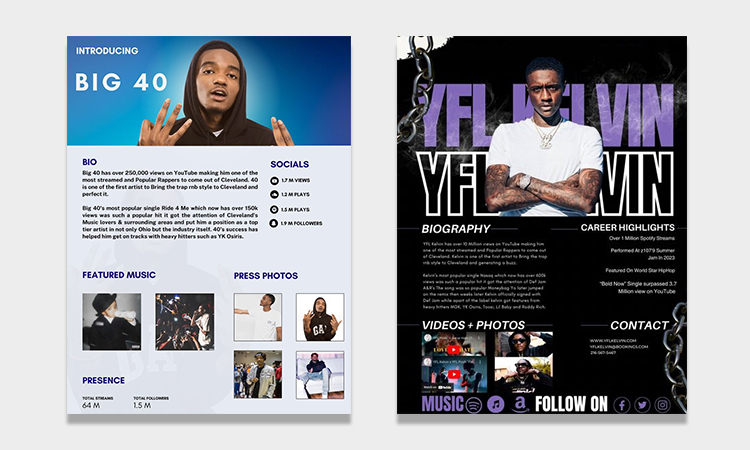
Consider an electronic press kit for musicians to be your artist resume. Here’s everything a music blog editor or journalist needs to write you up in one handy place.
However, various independent musicians skip this step. But an unorganized or incomplete EPK can portray that you’re not relevant to them.
The electronic press kit should be simple and clean. The Google Drive (if organized well) or a dedicated page on your site works well.
What to include:
- Artist biography (100–200 words, in third person)
- A link to our top 3 tracks on Spotify, Soundcloud, or a private stream.
- Any prior press or playlist placements
- Social media links and a direct email contact
Expert Tip: You should always update your EPK before every release. The old pictures and past data do not add value to your scenario.
Step 3- Find the Right Music Blogs
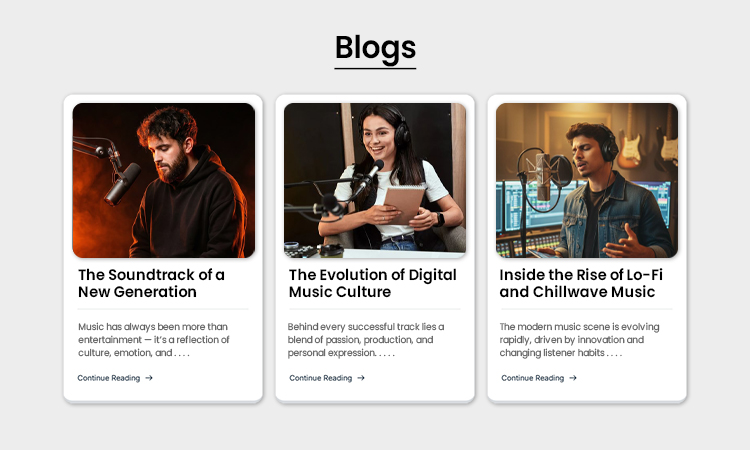
This strategy of PR for musicians doesn’t work well if you send the same email to all. It can be flagged as spam.
In terms of music PR, you should personalize all content with different perspectives. Even platforms such as SubmitHub, which are quite likely to score you some decent attention, typically return extremely low average acceptance rates. It means that generic pitches rarely work. In real life, artists go for the blogs that fit and write a personal, relevant pitch anyway.
What articles are studied will always be qualitative rather than quantitative. A little blog with 8,000 loyal readers in your niche is worth hundreds of thousands more than some massive general music site that covers everything.
What to do:
- Try to find blogs covering insightful artists (in sound and career stage)
- Create a narrowed list of 15–20 achievable targets rather than blasting out over 200 randomly.
- Always check the submission guidelines of all media. Because all platforms have their own strategy and different audiences.
Step 4- Write a Strong Pitch Email
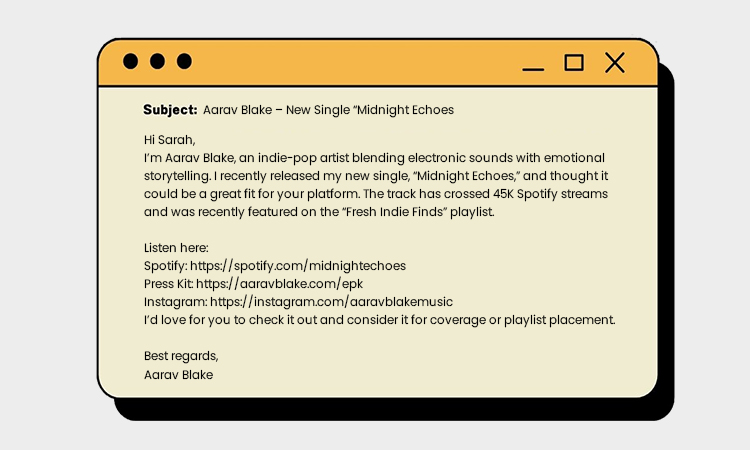
This is the most important strategy of PR for musicians. Here, your competition is high. The prominent music blog editors get more than 50-200+ emails a week.
The email should be short; five to six sentences are sufficient. State your name, why you are really pitching this blog (for some reason), and a streaming link, and end it.
What to include:
- Clear subject line
- Short artist introduction
- Genre and music style
- Latest release details
- Why your music stands out
- Streaming or press links
- Social media links
- Achievements or stats
- Personalized message
- Call to action
- Contact information
- Professional sign-off
Step 5- Follow Up Without Spamming
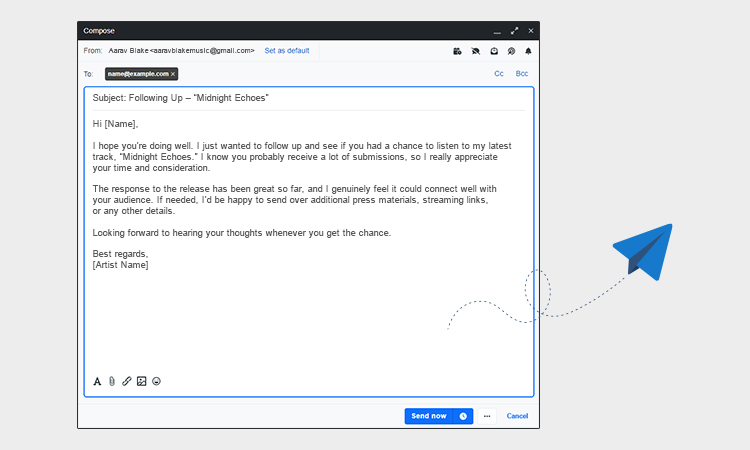
After five to seven days, follow up with them. The message should be short, within two or three sentences. You may write something like: “Hey, just checking in to see if you heard back. I’m delighted to send over anything else you need. Just write a short, professional message that is easy to read and understand.
You may notice follow-ups make a big difference. Follow-up emails can increase reply rates by up to 85% in digital PR campaigns, including entertainment-related outreach.
What to do:
- It is recommended to wait 5–7 days before your first follow-up.
- As a rule of thumb, keep follow-up emails under three sentences in length.
- The rule of never following up more than 2 times with the same person.
- Keep track of who you reached out to and when, and if they responded. You could keep the information on a very simple spreadsheet.
Best Platforms to Submit Your Music (Free & Paid)
Here’s a simple table to help you understand which platform is best for what. Don’t try everything at once. Pick based on your goal:
| Platform | Free / Paid | Best For | What It Does | When to Use |
| SubmitHub | Paid (some free credits) | Blog features + playlist pitching | Connects you with bloggers, curators, influencers | When you want quick exposure and feedback |
| Groover | Paid | Guaranteed responses from curators | You pay per submission, get feedback or coverage | When you want serious outreach with replies |
| Playlist Push | Paid | Spotify playlist growth | Focuses on playlist placements | When your goal is streams, not articles |
| Indie Shuffle | Free (selective) | Blog features + discovery | Curated music blog with strong audience | When you have high-quality, unique tracks |
| Daily Playlists | Free | Playlist submissions | Submit directly to independent curators | When starting out with no budget |
| Soundplate | Free + Paid | Spotify + blog exposure | Offers multiple submission options | When testing both blogs and playlists |
| Musosoup | Paid (campaign- based) | PR campaigns + blog features | Bloggers reach out if they like your track | When you want inbound opportunities |
| Reddit (Music Communities) | Free | Organic promotion + feedback | Share music in niche communities | When you want real listener opinions |
| Direct Blog Outreach | Free | Targeted PR | Email bloggers personally | When you want long-term relationships |
Quick Tip (Real Talk)
- Want blogs + credibility → Go for SubmitHub, Groover, Musosoup
- Want streams → Focus on Playlist Push, Daily Playlists
- No budget? → Start with Direct outreach + free platforms
How to Get Press Coverage Without a PR Agency
You don’t need costly PR firms to get in the limelight. Many artists have grown through DIY tactics instead. It takes time, but it works. In other words, PR for musicians is about getting to know people and knowing how to tell your story. If you stay consistent, it can help you develop as an artist over time.
- Build Relationships with Bloggers
You should start small. Find bloggers in your niche. Follow their work. Comment on posts. Share their content. Bloggers get loads of emails in real life. In this era of Artificial Intelligence (AI), most content is like robots, so you should write with a human touch in depth.
- Use Social Media Strategically
Social media is not only for sharing songs. This is part of your music promotion, propagation, and publicity. You should share your story, release, and all important information through a professional post. You can share things like behind-the-scenes clips, small stories about your track, and so on. You will also find out that journalists and curators check your profile before presenting you. Your music PR will be more powerful if you have a strong presence.
- Strengthen Small Wins
Do not overlook small blogs or initial features. It is very important to get featured in the most renowned ones. So, if you get covered by one blog, just mention it on your next pitch. This improves your authenticity and credibility. Your PR for Musicians campaign begins to pile up results as time goes by. Even record labels and curators notice the consistent coverage.
- Use Press Releases Smartly
You don’t need a music PR to write a press release for you. Keep it simple. Discuss your release as well as the backstory behind it and why that is important. You can distribute it to blogs, local media, or even any tour press outlets if you are touring. It gives your outreach a systematic approach and enhances professionalism.
- Think Beyond Just Blogs
To get the most out of PR strategies, you should think out of the box. This is more than just being featured on music blogs. You should explore brand partnerships, interviews, and local coverage as well. All of these can help you get wider music fans.
Common Music PR Mistakes to Avoid
Many artists attempt to play the music PR game and fall flat. Not because PR for musicians does not work, but because of small mistakes. Even good tracks often get neglected for these reasons in real life:
- Sending generic copy-paste emails
- No personalized outreach
- Weak artist branding
- Inconsistent image and story
- Poor audio quality
- Over-spamming blogs
- Focusing on quantity over quality
- Not following up politely
- Giving up after one email
- Ignoring relationship building
How Long Does It Take to Get Featured in Music Blogs?
You can expect to be featured on music blogs in 1–4 weeks. It usually depends on your pitch quality, the blog’s size, and its current workload.
In reality, not all blogs take a few weeks to respond; many smaller ones may even get back in two or three days. However, the renowned platforms take a longer time to respond. This is because they usually receive hundreds of submissions. You might also see follow-ups that speed things up a little.
Do You Need a Music PR Agency? (Music PR Agency vs DIY)
This is a common question. And honestly, the response will depend on your stage in this journey:
- When to Hire a Music PR Agency
If you are already somewhat well-known, the music PR agency can help you get more attention much more quickly. If you want to run a PR campaign because your band is getting featured on a big brand and you want to release an album, then agencies are best at reaching out to bigger media outlets.
- Cost vs Benefit
PR agencies are not cheap. Some will steal only a few hundred dollars, while others will steal a lot more. However, the professional PR executive’s guidance can save time. So that you can focus on lyrics and creating music.
- DIY vs Agency Comparison
| Factor | DIY Music PR | PR Agency |
| Cost | Low or free | Expensive |
| Control | Full control | Less control |
| Reach | Limited at start | Wider network |
| Time | Takes more effort | Saves time |
| Results | Slow but steady | Faster (sometimes) |
In short, DIY PR makes more sense if you’re just beginning. You can learn PR for musicians’ practical strategies. You have a chance to gather real connections. Later, as you get momentum, investing in an agency can give you a faster growth rate.
FAQs
Ans. You can get a press release for your music with a simple process. It includes creating a simple press kit, finding relevant blogs, and sending customized pitches. You should connect with relevant YouTube music channels, music blogs, Instagram music promotion, and so on.
Ans. You should start researching music blogs and media platforms. And then reach out to them. You can focus on major music media publications like Pitchfork, Rolling Stone, and Billboard.
Ans. The music bloggers are basically looking for how your sound is different from other musicians. Or do you have a different, clear artist story and are well-produced? The music story and visualizations are the key to getting featured.
Ans. Yes. PR creates visibility, credibility, and audience growth. Without it, even exceptional music can be unheard.
Ans. Costs vary. DIY PR can be free, while agencies may charge from a few hundred to thousands of dollars, depending on the campaign.
Conclusion
So at the end of our conversation, PR for musicians is not optional anymore. It is the main winning strategy to get featured on major music media publications like Hype Machine, Atwood Magazine, Clash Magazine, and Complex Music. Always try to be professional when sending emails and carefully choose media publications, and before sending an electronic press kit, check the submission guidelines. This is a must for all musicians. It can build or ruin your reputation with them.
However, you can start your PR campaigns of your own, but having a trusted PR consultant’s help can be a game-changer. Because they have expertise in maintaining public relations for various brands, they can create a prominent road map for your success. Stop doing it alone — hire professional PR service provider company that gets your music in front of the right people, fast.

