





Building a successful interior design brand is not only about delivering outstanding service. There are innumerable talented designers who deliver exquisite designs across all industry categories, and it is unfortunate that a small number of designers attract awards and high-paying clients. Most of the time, the gap is just a difference in exposure.
India’s interior designing industry is anticipated to expand by USD 4.39 billion from 2025 to 2029, registering a CAGR of nearly 11% and reflecting the pace at which people have been spending on home improvements. Private client portfolios and social media are a dull and limited way for designers to exhibit their work. Strategic PR for interior designers ensures that designers’ works reach the pertinent audiences.
A solid PR strategy will depict the interior designer as an expert and will attract attention to the designer’s work from the media and potential clients.
What Is PR for Interior Designers?
Public Relations for interior designers builds a positive public image using media exposure and recognition, positioning, and outreach. This process builds relations with journalists, editors, and influencers in the design community. PR for interior designers focuses on industry specific techniques and projects, remarkable ideas and stories, and on the skills that flow from design thinking and leadership.
Getting interior designers published in magazines is too often how designers think public relations works. PR involves more than magazine publishing, including case studies, interviews, articles, award submissions, public speaking, participation in design exhibitions, media commentary, and outreach.
Good PR services for interior designers transform a design portfolio. Rather than a collection, a public relations portfolio is a compilation of stories and skills including the designer’s approach and philosophy.
The Importance of PR for Interior Designers
Building credibility, visibility, and attracting the right kind of clientele are imperative for the success of interior designers, and effective PR can make this happen. Your portfolio is proof of your talent, but PR means that you will be featured through trusted channels and media, and that you will be covered in your industry and beyond.
It builds a reputation that is needed to prevail in a saturated industry. A unique interior design requires recognition. PR services will enable interior designers to achieve media exposure, credibility, and high-quality clientele.
- PR Builds Credibility
Your PR for interior designers working means your credibility improving, and a designer with a credible track record is readily sought after. Interior design is an investment of time and money, and it is important for clients to know that their designer will be able to construct the vision. The right media coverage means your work is helpful, and the coverage of your work is proof of the standards your work upholds and the contribution your work has made to the industry. There are so many ways to validate your work, like awards, interviews, and quotes, and the right PR will achieve this.
- PR Helps With Target Audience
Social media may be good for showing work, but it is so dependent on the latest trends, fads, and algorithms. PR means that your work will be put in front of the clients who need the work.
These audiences may consist of homeowners, construction project developers, architects, hospitality executives, buyers of high-end real estate, and corporate executives. When you promote yourself in the media publications your prospective clients read, you receive better inquiries.
- Public Relations Makes Your Portfolio More Discoverable
Increased interest in a portfolio is unlikely to result without increased visibility. Simply designing a portfolio beautifully is not even close to a guarantee to inspire interest. Public relations significantly boosts discoverability. The collection of online mentions, backlinks, search engine citations, and editorials about your brand all increase as a result of your targeted public relations efforts. Public relations is the perfect compliment to your marketing efforts.
- Gives You Competitive Advantage
As an interior designer, you may find it is getting more difficult to find clients because of how competitive the market is. More and more potential clients are using services from multiple designers. PR for interior designers can help address this problem because it can build the public’s awareness of your businesses unique techniques and different styles, which can include everything from your use of technical skills and your knowledge about design sustainability to your innovative techniques and creative solutions. Clients are more likely to trust and hire a designer that has a proven track record of producing high quality work that has been recognized by the industry.
How PR can Help You Promote Your Design Portfolio
An impressive design portfolio should be placed strategically beyond your website. Your website is not usually where prospective clients, members of the press, or fellow designers gather to get inspired. With the right PR for interior designers, your design portfolio can get the attention it deserves, along with the authority it builds. The right PR services can help you curate your portfolio and the projects within to highlight and include high quality images and stories that will be memorable to your audience and findable.
- Identify the Most Newsworthy Projects
PR for interior designers does not need to be done on projects that are usually done. Design that competes in the current media landscape will usually focus on projects that are unique, or that push the envelope in the area of innovative, culturally relevant or socially conscious design.
The design of your project may hit the media for perfectly fulfilling an atypical client and/or space, carrying on the legacy of historical architecture, or answering a design challenge that others have struggled to answer. Projects that may be commercial in nature may offer motivating design in the workplace or in branding or in the customer experience.
- Invest in Professional Visual Assets
The interior designing industry is one of the most visually centric industries. Even placements and stories of great design projects are hard to come by without great photography.
Photos should help capture and communicate the design of the space as a whole along with its lighting, textures, and architectural details. Wide lens photos can help capture the layout of the space, while zoomed in photos can communicate craftsmanship. Video walkthroughs, floor plans, and documentation of processes and transformations can complement your PR materials by giving editors more than one way to structure a story.
Including more images in your PR materials not only increases your chance of gaining media coverage but also elevates the overall quality of your portfolio.
- Tell the Story Behind Every Project
Editors appreciate more than just pretty photos. Images of projects should include the background, including the goals and challenges of the project, the process a designer followed, and the designer’s overall philosophy.
Interior designers should include how the design fulfills the client’s goals, how it overcomes the design challenges, and how it incorporates modern design thinking, including functionality and sustainability.
- Press-Ready Portfolio
Portfolios aimed at clients and at media professionals are very different. Portfolios aimed at media professionals need to contain only the essentials so that they understand and can write about your project.
A press-ready portfolio should contain project summaries, portraits of the project in high resolution, a bio of the designer, project specs, client consent when necessary, credits for the photographers, and any relevant info that is needed for the project. These press-ready materials will help you jump on media opportunities when they come up. You will gain press coverage for your project more often. Having press materials makes you more likely to land coverage.
- Share Your Portfolio Across Multiple PR Channels
The best PR for interior designers is not concentrated on one publication or one platform. It is most important to spread your work across all the varying relevant formats. For example, great PR for an interior designer will include design journals, architecture websites, lifestyle publications, local newspapers, business media, podcasts, industry awards. It should include featured articles, guest blogs, newsletters, and include speaking opportunities.
Different platforms cater to different audiences and help build brand presence. Something that is captured in a regional publication can attract national media attention in the future. Also, interviews in podcasts are a good way to become a thought leader, even though there is no visual content. Using different PR approaches can help your portfolio engage a variety of important audiences.
Step-by-Step PR Strategy for Interior Designers
Having a successful PR presence means way more than just sporadically contacting the media. It has many more detailed steps, such as designing your media strategy, following through with portfolio design, forming media contacts, writing and sending tailored media briefs, and assessing the media brief responses. This detailed and systematic approach to PR for interior designers allows designers to increase and maintain high levels of visibility and reputation while creating sustainable avenues for business growth.
Step 1: Define Your Brand Positioning

An important part of any PR strategy is an interior designer’s or design firm’s brand identity. Knowing how you want to become recognized within a specific design branch, such as luxury residential, minimalism or wellness design, heritage restoration, or sustainable design, has to be known before a designer approaches the media. Having a specialty or design niche will be beneficial as it will help get your design philosophy and media brief across to journalists.
Steps 2: Curate Your Strongest Portfolio Projects
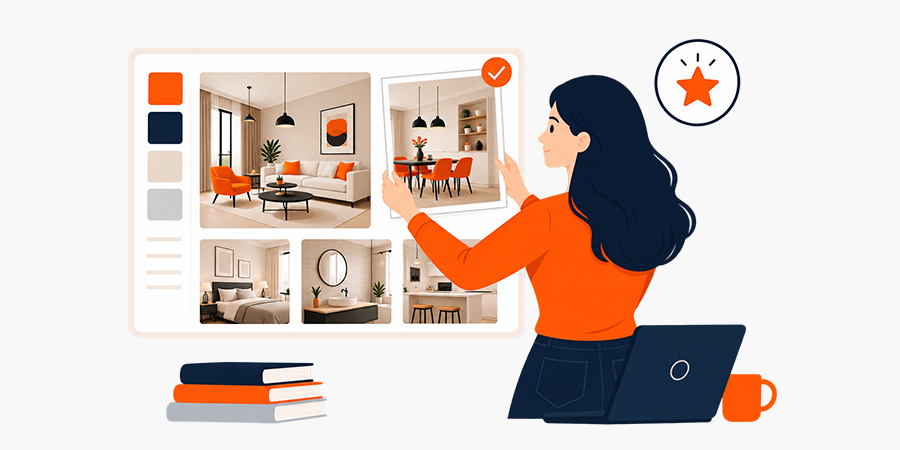
Quality PR for interior designers requires you to select your best projects. This is much better than showcasing every single design you have completed. The best design work is also that which is diverse, innovative, and exhibits craftsmanship. These traits will help inspire and lead the media to cover the PR story.
Step 3: Create a Media Kit
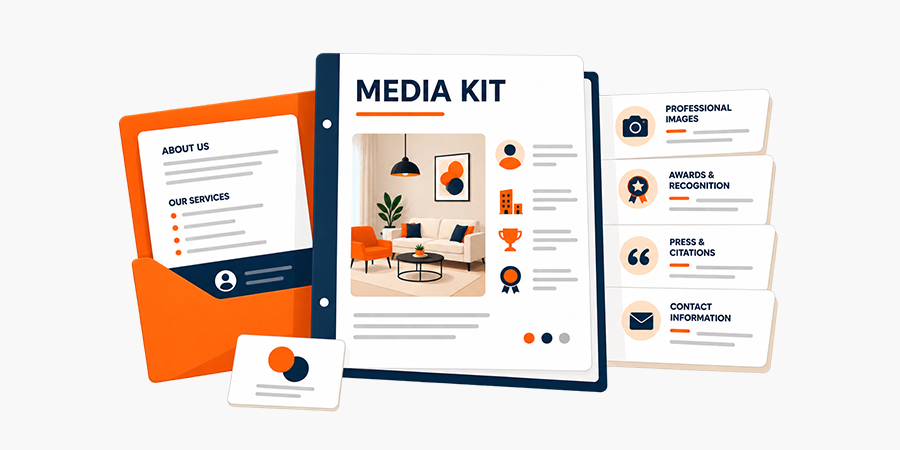
A media kit provides a formal means to present your brand to those who can support your business. It should provide an effective summary of your brand’s identity and be easy to understand and aesthetically pleasing. Key contents of a media kit may include your biography, an overview of your company, professional images of yourself and your work, speaking and presenting history, awards, recognition, and citations, your contact information and high resolution images that can be downloaded.
The existence of a media kit indicates that you are a professional and it provides a convenience to the journalist or media source to cover your brand.
Step 4: Research the Right Media Publications
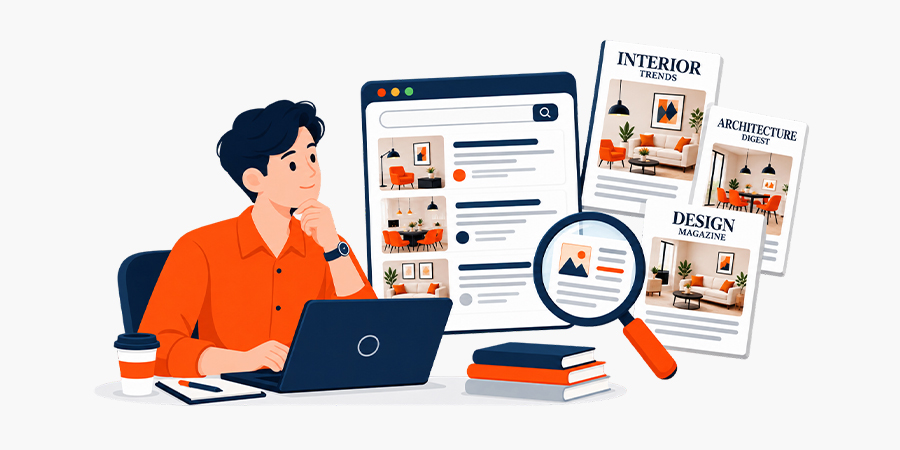
The success of your media relations practice is often a function of your ability to connect with the right publications that match your design and the type of projects you are pushing. This requires more than an identical media release for each publication. This calls for a deep understanding of the organization’s editorial mandate. You will need to know the type of projects they publish, the style of the articles they write, the readership and submission guidelines. This will help you understand where your work and projects align and will provide you with coverage beyond the average press.
Step 5: Craft Personalized Media Pitches

Ultimately, a successful PR for interior designers practice is a highly personalized one. This is the nature of your media pitch as it must address the topic of the project with consideration to the publication’s focus and the current design conversation.
You will need to go beyond the simple project announcement and provide a well-rounded understanding to the publication about the project story, design challenges, the relevant market trends, and the overall project scope. This is the best way to address the design conversation. Additionally, showcasing your understanding of the publication’s focus will elevate your professionalism.
Step 6: Building Relationships with Journalists and Editors

Public Relations thrives on relationships. Therefore, active relationship building with not only journalists and editors, but also photographers, publishers, and design influencers is essential during the time between coverage requests. Interior designers should engage with media contacts throughout the entire year, rather than solely when coverage is being requested.
Relationships with media contacts improves the chances of interior designers being contacted for expert commentary, as well as achieving ongoing editorial work.
Step 7: Amplify Every PR Feature

This step is all about utilizing your resources to the fullest extent. Once you have published media coverage, you need to use it strategically. Post all media coverage on your website and social media, and use it in your marketing collateral, such as newsletters, client presentations, email signature, and presentation documents. Published media coverage creates a new level of credibility for your business and will improve the value of your business for a long time, long after the media coverage has been published.
Step 8: Measure and Refine Your PR Efforts

Great PR for interior designers relies on evaluation and adaptation. Track the different ways PR coverage impacts your business, including website visits, client inquiries, and requests for business partnerships. Pay attention to the different types of stories that receive coverage, as well as how audiences respond.
All of these different factors will impact the way you tell your business stories, as well as how you use and present your portfolio and the media you select. The different approaches you use will foster improvement and help your PR strategy stay ahead of the latest trends.
Common PR Mistakes Interior Designers Make
Many talented interior designers do not make the most of PR opportunities. Some do not see PR for interior designers as an ongoing practice. Others send generic media pitches or do not understand the importance of storytelling and professional images. These common mistakes make potential media coverage more difficult and less valuable. Knowing about these PR pitfalls helps you create an effective PR strategy that will help you gain more exposure:
- PR as One-Time Promotion
Designers often request media coverage only upon the completion of a large project. PR, however, should be an ongoing promotion of a business. The media will recognize you more for your consistent efforts than efforts made in sporadic promotions.
- Pitch Every Project
You should not send every completed project as not all projects contain an interesting story. Sending all completed projects to the press will only reduce your credibility and dilute your brand.
Be selective of the projects that you choose to send to the media. Projects that choose to send work that adds to the conversation of design and that contains an interesting story or helps solve a design problem.
- Disregarding the Narrative
PR is not only about the images that accompany a project. Media outlets look for a story to accompany an image. Tell the story of design and the materials used for a project. Media outlets will choose to publish a more comprehensive story. Photography for the press demonstrates attention to detail and an understanding of photography standards.
- Copying and Pasting Press Releases
Sending out the same press release to all publications decreases your chances of securing coverage. This is because all publications have their own set of readership, style of editing, and focus area. The more customized your pitch and press release are to the publication, the higher are the chances that it will be considered.
- Ignoring Press Opportunities
Many designers will celebrate having a press feature published, but too many fail to understand how to make the feature valuable beyond the initial publish date. Keep your press feature updated in many areas of your business, including the website, marketing collateral, and social media. Each press feature published is an asset to your business.
- Only Going for Big Name Publications
National publications hold importance, but local news, architecture journals, magazines, business press, and niche design publications can also be very important. Smaller publications can mean greater access to your target audience, and can also help you land bigger press features by acting as a stepping stone.
Frequently Asked Questions
Ans. Long-term results should be expected when investing in PR for interior designers. Media placements can happen in a matter of months for some designers, but a year or more of consistent PR efforts is necessary for reputation building. Cumulatively, PR coverage, industry citations, and leadership activities have the most significant long-term effect on business.
Ans. There are many ways to evaluate the success of a PR campaign. Media mentions, website analytics, SEO rankings, backlinks, new business inquiries, speaking engagements, new collaborations, awards, social media activity, and recognition of the brand, are all useful metrics. Understanding the business impact of various PR for interior designers activities is possible through monitoring these metrics.
Ans. Yes. PR can help small firms enhance their credibility by presenting their expertise, unique projects, and unique design philosophy via pertinent local/niche/industry media. This can help these firms connect to new clientele and partners outside their present circle.
Ans. The answer depends on how big the interior design firm is, how much money there is to spend, and how far the firm wants to go with their vision. If the firm’s designers have tight budgets, they can easily manage (in-house) PR by communicating with select media outlets and networking with targeted individuals. Designers who have larger practices and want to be known nationally or internationally should invest in specialized PR agencies. PR agencies have all the connections.
Ans. The interior designer should continuously be engaging in PR activities since by consistently presenting new projects, professional knowledge, award entries, and professional opinions, they remain visible to the media and possible clients.
Conclusion
Good design will get you far, but will remain unseen if you don’t back it with good public relations. Good PR will help the right audience see your business, including potential clients and collaborators. With good design, interior designers can position themselves as industry experts and thought leaders instead of just service providers.
PR for interior designers is not about attaining publicity for publicity’s sake. It focuses on the value of the work done and the stories and the design which are behind and how they are built and expressed, and how they sustain and support the reputation of the business for the long-term.
Your next project needs more than just an appreciation; it needs recognition. Strategic PR services can bring your projects to the forefront of clients, publications, and industry experts.

