





PPC for manufacturing companies is an online strategy to attract high-quality leads. This strategy targets industrial clients who are looking for services. Most effective PPC campaigns execute on Google Ads, Microsoft Advertising, and LinkedIn. The important steps include keyword research and determining the right audience, selecting significant ad platforms, creating a landing page, and compelling ad copy.
It sounds like so much. Don’t worry; in this comprehensive guide, you will learn the essential PPC strategies for a manufacturing business. Moreover, you get to know how to budget for PPC ads and the top seven common PPC mistakes and solutions. And also the tracking process of PPC advertising, and many more.
Quick Overview of PPC for Manufacturing Companies:
- Pay-per-click improves manufacturing companies’ online visibility.
- PPC campaigns attract high-intent buyers.
- The most common PPC running platforms are Google Ads, Bing Ads, Microsoft Advertising, and LinkedIn.
- If you want to get high-quality leads, always focus on high-intent keywords such as custom CNC machining or industrial equipment supplier.
- You can use the negative keywords technique to avoid job seekers or low-value leads.
- The most important strategy is optimizing landing pages and ad copies.
- The remarketing campaigns help your brand to stay visible in long B2B sales cycles.
- Always track conversions like CTR, cost per lead and ROI.
What is PPC for Manufacturing Companies?
Pay-per-click (PPC) advertising is a powerful digital marketing strategy where businesses pay only when users click on their ads, not for impressions. For manufacturing companies, PPC allows you to bid on industry-specific keywords and appear at the top of search engine results, helping you connect instantly with high-intent B2B buyers such as procurement officers, engineers, and decision-makers.
PPC for manufacturing companies focuses on targeted, high-intent keywords like “custom CNC machining” or “wholesale industrial valves.” It enables manufacturers to reach relevant audiences through geographic targeting while using negative keywords to filter out irrelevant traffic, such as retail buyers. Additionally, directing ads to detailed technical landing pages helps build credibility, improve lead quality, and shorten the typically long B2B sales cycle.
Key Strategies of Manufacturing PPC Ads:
- Select the target audience
- Choose the right keywords.
- Find negative keywords to reduce the budget waste.
- Creating compelling ad copy.
- Optimized landing pages.
- Analyse PPC advertising performance.
We will discuss these strategies using structured steps later.
Why is PPC Important for Manufacturing Business Growth?
According to Cognitive Market Research, the worldwide manufacturing market is growing quickly. It is expected to rise from $1276.92 billion in 2021 to $1841.9 billion by 2033, at a rate of 3.1% per year. So you see the manufacturing business’s growth. So in this competitive era, how will you outperform your competitors? The quick answer is PPC for manufacturing companies. Pay-per-click technology will help you to show up in search engine results quickly whenever your target clients use specific search keywords. Here, I give the top four reasons why you need PPC for manufacturing companies:
- Get High-Intent Buyers Early
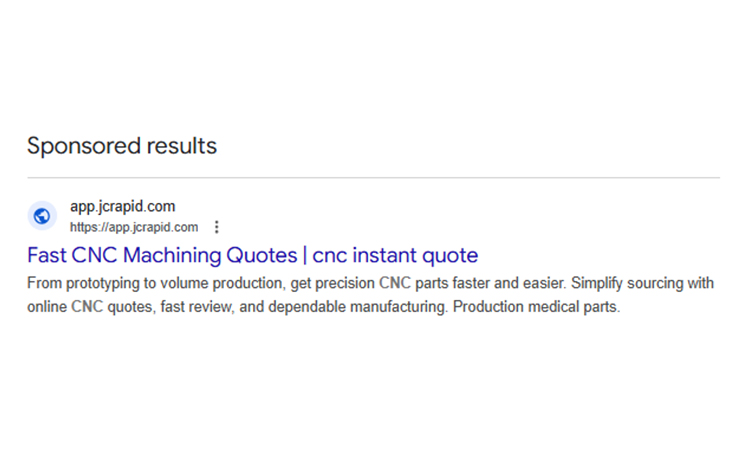
Now, B2B purchasing has shifted from offline to online. According to a 2015 report on B2B lead generation 93% of B2B procurement procedures now start with internet research. People do a lot of research to find any manufacturing-related services before buying. If you’re not at the top of Google search results, then how do clients know about your existence? If your company is shortlisted by the clients, then there is a chance of getting leads. And it can’t be possible if you’re not one of the top search results. That’s why you need PPC for Manufacturing Companies to rank your business at the top. Your business will show up at the top of search results like this:
- Immediate Visibility in a Competitive Market
However, there are so many digital marketing efforts, but PPC advertising gives you quick results. You have to clearly design your budget so that you can have most of it. Search engine optimization (SEO) gives your organic results. But it takes a long time to give you leads. The average Click-Through Rate (CTR) for industrial companies is around 2.61%. High-performing campaigns may make $2 for every $1 invested. It is a 200% Return on Investment (ROI). A successful PPC campaign gives you instant online visibility. It provides a “fast track” to the first page of Google.
- Precision Targeting of Niche Decision-Makers
The strategies of PPC for Manufacturing Companies are quite specialised. Therefore, you can ignore “hobbyists” and only focus on professionals. You can start advertising for only those who are looking for industrial solutions, certain ISO certifications, or high-volume production capabilities.
As per research, 70% of B2B searches happened on mobile devices. Mostly searched by engineers on the shop floor or managers in transit. You may use PPC to geo-fence certain trade fairs or industrial park sites to locate these particular folks.
- Shortening the Long Sales Cycle
Sales cycles in manufacturing are quite lengthy. It takes almost 6 to 12 months. PPC remarketing keeps your brand in front of people who have previously been to your site. Moreover, it reminds them of your services.
Step-by-Step PPC Strategy for Manufacturing Companies
Here, I give simple steps for planning your manufacturing PPC ads. You may consider these steps along with strategies to organise your PPC ads on your own. Let’s dig deeper into the simplest yet most useful steps for PPC for manufacturing companies:
Step 1- Set the Right Goals for Manufacturing PPC campaigns

To start your PPC for Manufacturing Companies, you need to figure out “why” and “what is your objective”. You need to be clear in your mind about the answers to these questions. It will help you to build effective PPC campaigns.
- Lead Generation vs. E-Commerce- Do you want leads or direct sales? You should focus on Request for Quote (RFQ) forms and downloading catalogues. Every form input can give you a qualified lead. So always keep a close eye on these changes.
- Generate qualified B2B leads – You can focus on attracting engineers, procurement managers, and industrial buyers.
- Drive targeted website traffic- Then you may target high-intent keywords to attract potential customers to your website.
- Improve cost per lead (CPL)- Work on your PPC ads so you don’t squander money on ads and get better enquiries.
- Use remarketing ads- Some people see your website or ads but don’t make a purchase.These ads help you to catch them.
Step 2 – Target the Right B2B Audience

According to Statista, manufacturing business growth is highly expandable in 2026. Manufacturing value added per capita will reach US$1.16k in 2026. In this report, most targeted clients can be in these segments:
- Aerospace & Defense
- Automotive & Transportation
- Medical Device Manufacturing
- Industrial Machinery & Equipment
- Energy, Oil & Gas
- Electronics & Semiconductors
- Construction & Infrastructure
- Consumer Packaged Goods (CPG)
Step 3 – Identify High-Intent Industrial Keywords
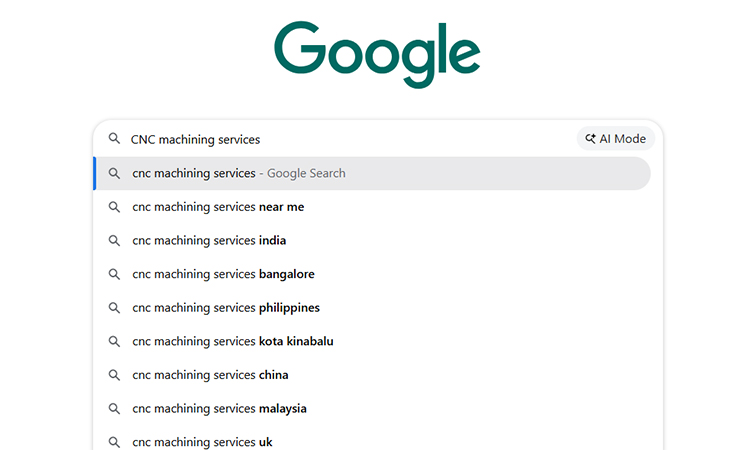
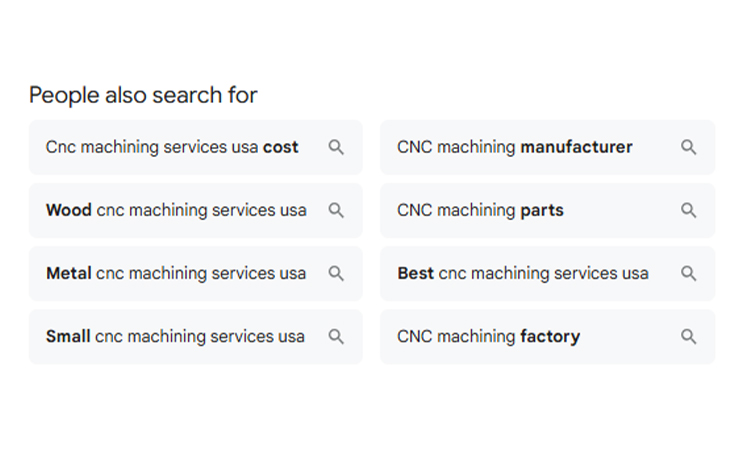
Keywords are the search terms that your users use to find your service and products. The success of PPC for Manufacturing Companies depends on the keywords you’re selecting. First, you can brainstorm keywords with a simple Google search. Put main keywords on Google Autocomplete and let Google help you with new keyword ideas, like this:
Then check the “people also ask” section.
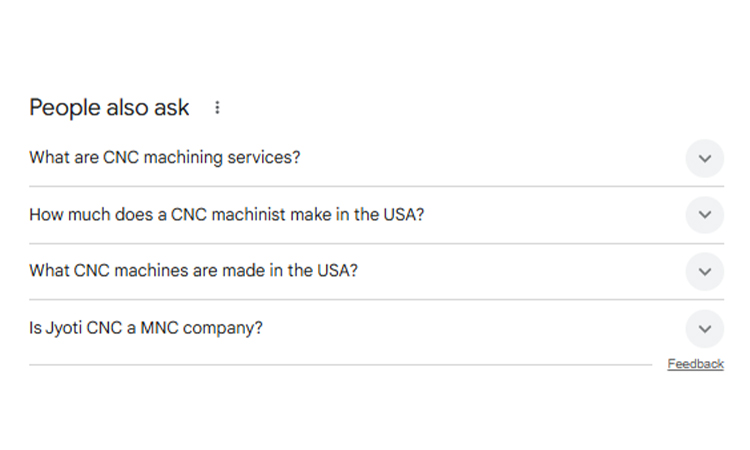
You can have an idea what people are mostly searching for with this –
There are various useful keyword research tools.
How to Research Manufacturing PPC Keywords Using Ubersuggest?
Here, I give you simple steps on how you can research PPC for manufacturers’ keywords with the help of Ubersuggest:
- Start With Core Manufacturing Keywords
To get better PPC campaign results, you can begin with broad industrial keywords. This should be related to your main business niche keywords. You may rely on the following keywords as per your business:
- CNC machining services
- industrial valve manufacturer
- metal fabrication company
- plastic injection molding supplier
Sign in to Ubersuggest and put in the main keywords in the search bar. Select the targeted country.
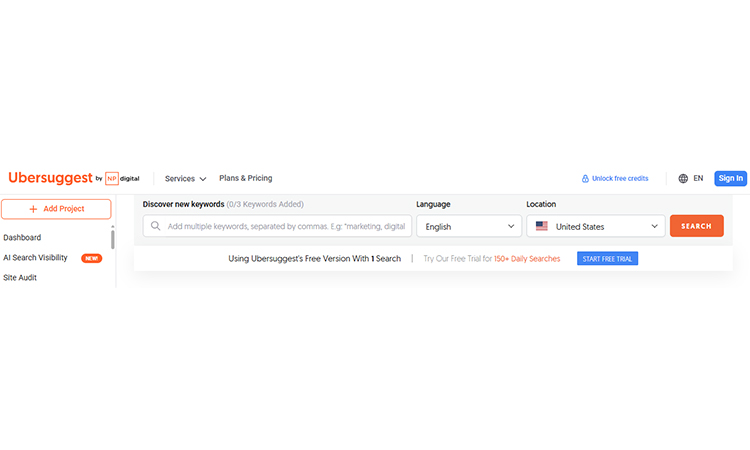
This shows search volume, SEO difficulty, paid difficulty, and CPC. These are useful for PPC planning.
- Focus on High Commercial Intent Keywords
Manufacturing PPC should target buyer-intent keywords. You can avoid non-informative searches.
The ideal keywords of PPC for Manufacturing Companies are the following:
- manufacturer
- supplier
- OEM
- custom parts
- industrial equipment
- wholesale
Example high-intent keywords:
- custom CNC machining manufacturer
- industrial pump supplier
- OEM metal parts manufacturer
- precision engineering company
These keywords help you to attract procurement managers and engineers who are ready to buy.
- Use the Keyword Ideas Section
Ubersuggest gives you thousands of related keywords. You can select them according to your business needs.
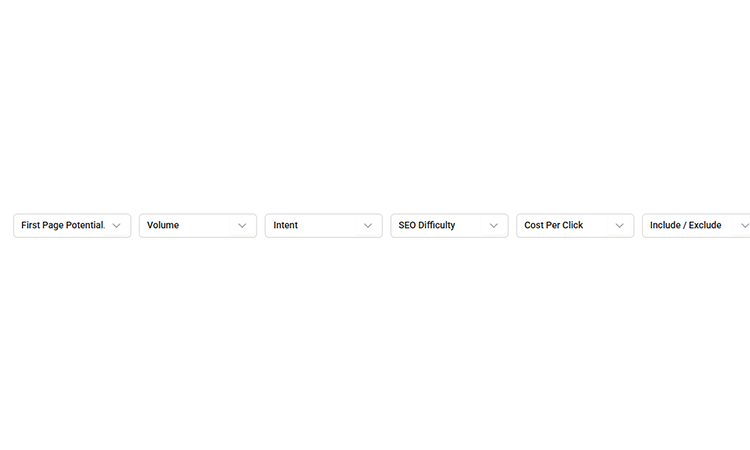
You may filter these target keywords by-
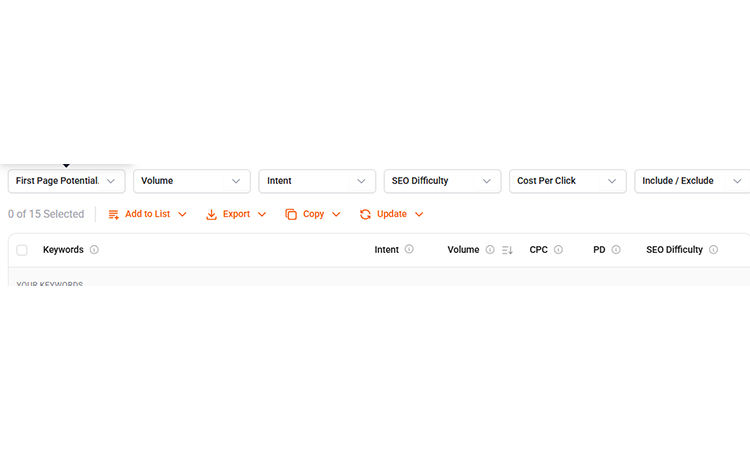
CPC (Cost Per Click) is the average amount that advertisers pay each time a user clicks on their ad for a particular keyword.
Search Volume: This shows you how much this keyword was searched on search engines per month.
KD (Keyword Difficulty) will provide an idea of how the keyword is to be ranked organically.
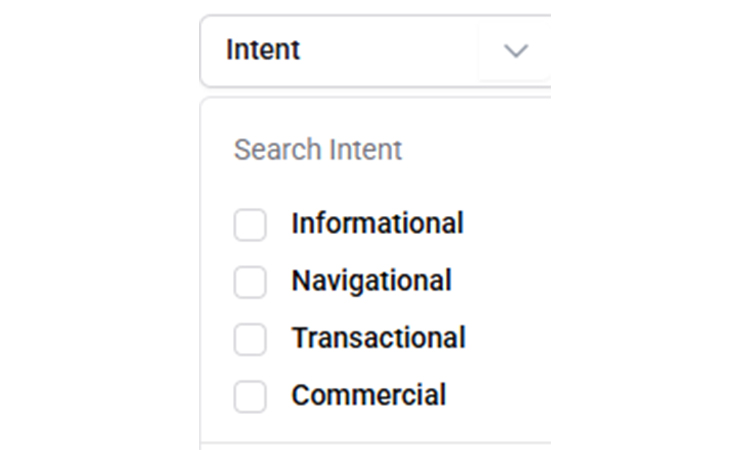
Search Intent: The objective of a user’s inquiry, which may be informational, navigational, commercial, or transactional.
PD (Paid Difficulty): It is an indication of how competitive a keyword is for paid advertising campaigns.
- Analyze Competitor PPC Keywords
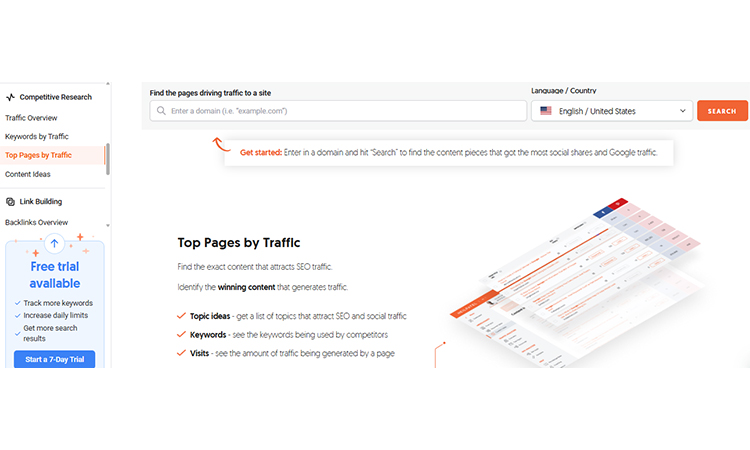
Moreover, you can take help from the Traffic Analyser → Top Pages feature in Ubersuggest. You can put in your competitor’s domain ID and find which top-ranking pages are theirs. And you check which keywords give them top results. Then you may include them in your ads or on your website to take a further step away from them.
- Identify Long-Tail Industrial Keywords
Long-tail industry-specific keywords are very important for PPC for Manufacturing Companies. The B2B buyers search very specifically, so try to add more long-tail keywords.
Examples:
- aerospace CNC machining manufacturer
- custom plastic injection molding supplier
- industrial automation equipment supplier
You should choose these keywords because they usually have:
- lower competition level
- higher conversion rates
- Check CPC and Paid Difficulty
Furthermore, you can find two important PPC metrics:
- CPC (Cost Per Click) → Estimated ad cost
- PD (Paid Difficulty) → Competition in paid ads
You may select keywords with these specifications:
- Adequate CPC rate
- Go for strong buyer intent
- Then you may choose the moderately paid competition
- Build Keyword Groups for PPC Campaigns
After all your keyword research, you have to organise those keywords into ad groups.
Example structure:
Ad Group 1 – CNC Machining
- CNC machining services
- precision CNC machining manufacturer
- custom CNC parts supplier
Ad Group 2 – Metal Fabrication
- sheet metal fabrication company
- custom metal fabrication manufacturer
This improves ad accuracy and Quality Score in platforms like Google Ads.
- Add Negative Keywords
According to Google, negative keywords are a type of keyword that stops a certain word or phrase from making your ad appear. People who are looking for that word don’t see your ads. It’s also called a negative match.
If you add “free” as a negative keyword to your campaign or ad group, Google Ads won’t show your ad for any search that includes “free.” If the site also uses your negative keywords, the Display Network will not display your ad on that site.
Why is adding negative keywords important?
- It stops you from spending money on “junk” clicks from people who aren’t interested in buying.
- Adding negative keywords will improve CTR (Click-Through Rate). Your ads will only show to people who can click on them.
- If your content is more relevant, your Quality Score will go up. This can help lower your Cost-Per-Click (CPC).
- When you filter negative keywords, be sure that you only get B2B buying managers, instead of DIY hobbyists or job seekers.
Expert Tips for Manufacturing PPC campaigns
| Tip | Strategy |
| Filter “DIY” Terms | Add negative keywords such as cheap, free, how-to, hobby, home-made, and tutorial to avoid non-commercial searches. |
| Exclude Employment Searches | Block job seekers by adding jobs, salary, careers, hiring, and internship. |
| Block Retail / B2C Traffic | Add terms like Amazon, Walmart, eBay, and retail to prevent small consumer-level buyers from clicking ads. |
| Use Match Types | Apply Negative Phrase Match (e.g., “used parts”) to block specific keyword sequences while keeping relevant searches. |
| Monitor Search Terms | Review the Search Terms Report weekly in Google Ads to identify new irrelevant queries and add them as negatives. |
Step 4- Choosing the Right PPC Platforms

You can choose a platform as per need, but smart manufacturers use all platforms together strategically:
- Google Search Ads : Capture High-Intent Buyers
- Most of the buyers who can type “custom aluminium extrusion manufacturer” are ready to talk. Google Search puts you directly in front of them.
- Bid on specific, technical keywords that your ideal buyer actually searches. Moreover, you can use an exact match and a phrase match to control irrelevant clicks.
- Always include product specs, certifications, and lead times in your ads. Add call extensions so buyers can reach you instantly. Google Search is your highest-converting platform.
Expert Tip: Bid on competitor brand names. Buyers who are comparing vendors will see your ad first.
Bidding Strategies on Competitor Brand Names in PPC Advertising
- What Is Competitor Bidding? Competitor bidding means targeting your rival’s brand name as a keyword. When someone searches “XYZ Manufacturing Company”, your ad appears first. You essentially intercept their potential customers before they arrive.
- Why Does It Work for Manufacturers? When buyers compare vendors, they always search competitor names directly. They are already in purchase mode. So they are your highly valuable traffic. Your ad gives them an immediate alternative to consider.
How to Do It Right
- Bid on 5–10 direct competitor brand name keywords
- Write ads highlighting your clear advantages over them
- Send traffic to a dedicated comparison landing page
- Mention faster lead times, better certifications, or lower MOQs
- Never use the competitor’s name inside your actual ad copy
What to Avoid: Never copy competitor names into your ad headline directly. This action directly infringes upon Google’s trademark policies. Focus on your strengths, not attacking the competitor.
Quick Example: Suppose your competitor is “ABC Precision Parts.” You bid on that keyword. Your ad says : “Faster Turnaround. ISO Certified. Request Your Free Quote Today.” Buyers click. You win.
How to Run Google Ads Search Campaigns for Manufacturing PPC Success
- Create an account on Google Ads and set billing details.
- Choose a campaign goal like leads, website traffic, or conversions.
- Select the search campaign type for manufacturing PPC advertising.
- Set campaign name, location targeting, and preferred language settings.
- Define a daily budget based on realistic manufacturing PPC spend.
- Choose a bidding strategy like Maximize Clicks or Conversions.
- Conduct keyword research using the Google Keyword Planner tool.
- Add high-intent keywords related to manufacturing products or services.
- Create compelling ad copy with strong headlines and descriptions.
- Add relevant ad extensions like sitelinks, callouts, and phone numbers.
- Set up conversion tracking using Google Analytics or Tag Manager.
- Review settings carefully and launch your Google Search Ads campaign.
- Meta Ads: Retargeting and Awareness at Low Cost
- Meta (Facebook and Instagram) isn’t just for consumer brands. Manufacturers use it powerfully for retargeting warm website visitors.
- Someone visited your CNC machining page but didn’t convert? Show them a testimonial ad on Facebook the next day.
- Meta’s CPCs are significantly lower than Google’s or LinkedIn’s. So you can use it for catalogue downloads, trade show promotions, and brand awareness campaigns. Target by job title, industry, and business size using Meta’s detailed options.
PPC for Manufacturing Companies: How to Run High-Converting Ads on Meta Ads
- Create a Meta Ads Manager account and set business details.
- Choose a campaign objective like leads, traffic, or brand awareness.
- Define the target audience by industry, job roles, and location.
- Set a daily or lifetime budget based on campaign goals.
- Select ad placements like Facebook, Instagram, or Audience Network.
- Create compelling ad copy focusing on manufacturing solutions and benefits.
- Upload high-quality images or videos showcasing products or processes.
- Add a clear call-to-action like “Contact Us” or “Get Quote.”
- Set up conversion tracking using the Meta Pixel on the website.
- Review campaign settings and ensure targeting and budget accuracy.
- Publish campaigns and monitor performance metrics regularly.
- Optimize ads by adjusting audience, creatives, and budget.
Best Tip: Moreover, to generate high-quality leads, you can upload your existing customer list. Meta finds similar high-value prospects automatically.
- LinkedIn Ads : Reach Decision-Makers Directly
- LinkedIn is the most powerful B2B targeting platform available today. Filter audiences by job title, seniority, industry, and company size precisely.
- Moreover, to get effective results, you can target procurement managers, plant engineers, and operations directors together.
- Sponsored content works well for thought leadership and case studies.
- InMail campaigns generate direct conversations with key decision-makers. LinkedIn CPCs are expensive. It focuses only on high-value, long-cycle products.
LinkedIn Ads Strategy for Manufacturing Companies: Step-by-Step Campaign Setup Guide
- Create a business account on the LinkedIn Ads platform.
- Define campaign objectives based on lead generation or website traffic.
- Select the target audience using job titles, industries, and company size.
- Set campaign budget and bidding strategy based on your goals.
- Create compelling ad copy highlighting manufacturing solutions and benefits.
- Design creatives like images or videos showcasing products or services.
- Add a clear call-to-action like “Contact Us” or “Get Quote”.
- Choose an ad format such as sponsored content or message ads.
- Launch campaign and monitor performance through analytics dashboard.
- Optimize ads regularly based on clicks, leads, and conversions.
Best Tip: Promote a free specsheet or whitepaper. It lowers resistance and captures qualified leads.
- YouTube Ads : Show Your Product in Action
- Complex manufacturing products are difficult to explain in text alone. YouTube helps you to show capabilities, tolerances, and processes visually.
- A 60-second factory floor video builds massive trust instantly. Use skippable in-stream ads targeting industrial and engineering audiences.
- Retarget Google Search visitors with product demo videos on YouTube. Video content also improves your brand during long buying cycles.
Set up YouTube Ads for a manufacturing company
- Create a professional YouTube channel and upload your manufacturing videos.
- Link your YouTube channel to your verified Google Ads account.
- Select the “Leads” or “Website Traffic” goal for your campaign.
- Choose “Video” as your campaign type to reach target audiences.
- Set a daily budget and select your specific geographic locations.
- Target In-Market audiences looking for industrial equipment or business services.
- Use “Placement Targeting” to show ads on relevant industry channels.
- Add “Negative Keywords” to exclude irrelevant consumer-level DIY search terms.
- Choose “Skippable In-Stream” format for detailed product or facility tours.
- Upload high-quality 16:9 and 9:16 videos for cross-device visibility.
- Add a clear “Call to Action” leading to your RFQ page.
- Monitor “View-Through Conversions” to measure long-term B2B impact accurately.
Best Tip: Keep the first five seconds compelling; that’s before viewers can skip your ad.
- Bing Ads/Microsoft Ads: An Underrated B2B Powerhouse
Most manufacturers completely overlook Bing Ads, which represents a lost opportunity. Microsoft Ads reach a slightly older, more senior professional audience. Many corporate procurement teams use Microsoft Edge and Bing by default. CPCs on Bing run 20–40% cheaper than equivalent Google campaigns. Import your Google campaigns directly into Microsoft Ads in minutes. LinkedIn profile targeting is also available exclusively inside Microsoft Ads.
Easy steps to set up Microsoft Ads for manufacturing companies
- Create a Microsoft Advertising account and complete your business profile.
- Install the UET tag on your website to track conversions.
- Choose “Search Ads” to capture high-intent industrial queries.
- Select “Leads” as your primary campaign goal for manufacturing inquiries.
- Define your target locations based on your shipping or service areas.
- Use “LinkedIn Profile Targeting” to reach specific industries and job titles.
- Research high-intent keywords like “industrial supplier” or “wholesale [product] manufacturer.”
- Add negative keywords like “DIY” or “retail” to filter out consumers.
- Write professional ad copy highlighting certifications, capacity, and lead times.
- Include “Callout Extensions” to showcase ISO standards or free quotes.
- Set a daily budget that allows at least ten clicks daily.
- Review all settings and click “Save” to launch your campaign.
Best Tip: Enable LinkedIn profile targeting inside Microsoft Ads for precise B2B reach.
The Smart Approach: Use All Platforms Together
- Google Search captures buyers actively searching for your products
- Meta Ads builds awareness and retargets warm audiences cheaply
- LinkedIn reaches engineers, procurement heads, and C-suite directly
- YouTube showcases complex products through demos and explainers
- Bing Ads/Microsoft delivers strong B2B results at lower costs
Step 5 – Campaign Structure Best Practices for Manufacturing PPC
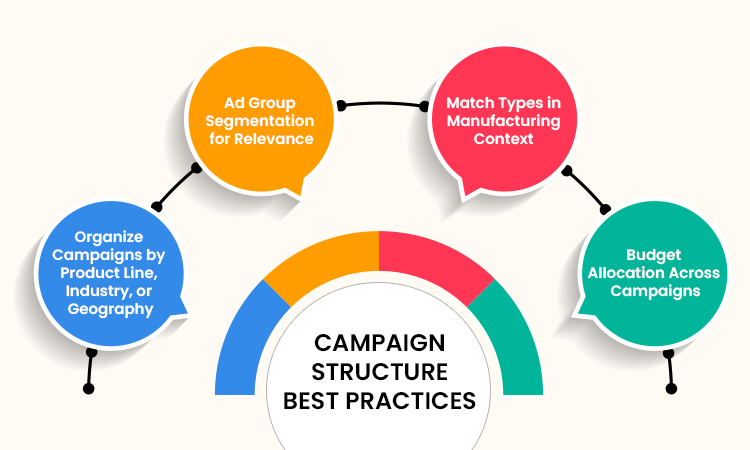
- Key Rule: One campaign per goal. One ad group per product theme. This structure expands cleanly as your business grows.
- Organize Campaigns by Product Line, Industry, or Geography
Group campaigns around how your business actually operates. A CNC machining company might separate campaigns by service: milling, turning, and fabrication. This process keeps budgets focused and data clean.
- Ad Group Segmentation for Relevance
Each ad group should target one specific product or problem. “Stainless steel tube fittings” and “brass hydraulic fittings” deserve separate ad groups. Tighter groups mean better quality scores and lower CPCs.
- Match Types in Manufacturing Context
Furthermore, you may use exact matches for high-intent buyers searching for specific part specs. Apply a phrase match to capture variation in technical queries. Be very careful when you use broad match; only use it with strong negative keyword lists. Filter out students, job seekers, and DIY searchers aggressively.
- Budget Allocation Across Campaigns
Spend more where profit margins are highest. A custom aerospace component campaign deserves more budget than standard catalogue parts. Allocate 60–70% to proven top performers. Reserve 20–30% for testing new product lines or industries. Review budget pacing weekly, not monthly.
Step 6 – Develop engaging Ad Copy That Converts for Manufacturers
Ad copy is the strategic text within an advertisement designed to persuade a user to take action. It works by matching a user’s search intent with a compelling headline, a description highlighting unique selling points (like ISO certifications), and a Call-to-Action (CTA) (e.g., “Request an RFQ”) to drive clicks.
Speak to the Right Person at the Right Moment
- Engineers search for specs and tolerances.
- Procurement managers want lead times and MOQs.
- Executives care about reliability and cost savings.
Your pay-per-click ads work only when they match the right audience. Reach potential customers at the exact moment they search.
MOQ stands for Minimum Order Quantity. It is the smallest number of units a manufacturer will produce or sell in one order.
Simple Example: A factory sets MOQ = 500 units. A buyer cannot order just 50 pieces.
Why It Matters in PPC Ad Copy:
- It filters out small or irrelevant buyers instantly.
- It attracts serious procurement managers and businesses.
- It saves your sales team from unqualified enquiries.
Example in an Ad: “Custom Steel Brackets — MOQ 100 Units — Request a Quote Today”
This one line tells the right buyer that this is for you. It tells the wrong buyer to move on.
That is why mentioning MOQ in your ads directly improves lead quality and conversion rate.
Highlight What Manufacturers Do Best
Include ISO certifications, tight tolerances, and quick turnaround times. Mention MOQs clearly. This filters unqualified clicks quickly. Strong specs in ad copy improve your conversion rate fast. A compelling ad copy makes people trust you before they even click.
Use CTAs That Drive Action
- “Request a Quote”: It works for high-intent buyers
- “Download Spec Sheet”: This will help you attract engineers early in research
- “Get a Sample”: This can reduce buying hesitation effectively
These CTAs generate quality leads, not just traffic.
Maximize Ad Extensions
- Moreover, you can use callout extensions to highlight ISO certification, 48-hour turn around, and low MOQ.
- Apply sitelinks to direct users to Products, Industries Served, and the RFQ Form.
- Implement structured snippets to list materials, certifications, or capabilities.
- Extensions improve key PPC metrics like CTR and Quality Score.
Step 7 – Landing Page Optimization for Manufacturing PPC campaign
You can optimize landing pages with these simple steps:
Step 1: Never Send Traffic to Your Homepage
Your homepage speaks to everyone. It converts no one. A visitor lands and feels lost immediately. They see too many options and leave fast. Always create a dedicated landing page per campaign.
Step 2: Build a High-Converting Manufacturing Landing Page
Follow this structure from top to bottom:
- Headline: Match the ad copy exactly. Reinforce their search intent.
- Subheadline: State your key benefit in one line clearly.
- Hero Image/Video: Show your facility, machines, or finished parts.
- Bullet Points: List tolerances, materials, certifications, and lead times.
- Social Proof: Add client logos, case studies, and reviews immediately.
- CTA Button: Place “Request a Quote” above the fold always.
Step 3: Optimize Your RFQ Form
Keep the form short and frictionless. Long forms kill conversion rates fast.
Ask only what you truly need:
- Full Name
- Company Name
- Email Address
- Phone Number
- Part Description or File Upload
- Quantity Needed
Moreover, you should avoid asking for a budget or detailed specs upfront. That adds unnecessary friction early. Add a reassuring line: “We respond within 24 hours.”
Step 4: Add Strong Trust Signals
Buyers need confidence before submitting any form.
- Display ISO 9001 and AS9100 certifications prominently near the form
- Add real client logos — recognizable brands build instant credibility
- Include a short case study — problem, solution, measurable result
- Show years in business and units delivered as social proof numbers
Step 5: Test and Improve Continuously
Run A/B tests on headlines, CTA buttons, and form length regularly. You need to track conversion rates weekly inside Google Ads. Even small changes can lift results significantly.
How to Use Re-marketing Strategies for Long Sales Cycles?
Manufacturing sales cycles run 30–90 days easily. Remarketing keeps your brand visible throughout. It helps generate leads and drive business growth consistently.
Step 1: Install Your Tracking Pixel Immediately
Place a Google ad or LinkedIn pixel on every page. This expands your remarketing audience automatically. No pixel means no remarketing. Do this before launching any campaign.
Step 2: Segment Your Audience by Behavior
Not every visitor is equal. Separate them smartly:
- Visited spec or product page — high intent buyers
- Downloaded a catalog — early stage researchers
- Visited pricing page — ready to make decisions
- Abandoned RFQ form — hottest leads to target
Step 3: Show the Right Ad at Right Time
Match your message to their journey stage:
- Early stage: “Download Our Capability Statement”
- Mid stage: “See How We Helped [Industry] Manufacturers”
- Late stage: “Request a Quote — 24hr Response Guaranteed”
Targeted traffic converts better with personalized messaging always.
Step 4: Use LinkedIn for B2B Remarketing
Retarget engineers and procurement managers by job title. Manufacturing marketing works powerfully on LinkedIn. So you can upload your CRM list for customer match targeting.
Step 5: Set Frequency Caps
Do not overwhelm prospects with too many ads. Show ads 3–5 times per week, maximum. So you can stay visible without becoming annoying.
Manufacturing PPC Budget Guide: Costs, Minimum Spend, and Realistic Performance Expectations
- Typical CPC ranges: Manufacturing and industrial keywords usually have higher costs because they target B2B buyers. Average CPC can range between $2 and $10, while highly specialised keywords like ‘aerospace’ or ‘precision machining’ may exceed $15 per click on platforms like Google Ads.
- Minimum viable budget: To collect meaningful data, manufacturers should start with at least $1,500–$3,000 per month. This improves enough clicks and conversions to evaluate which keywords and ads perform best.
- Scaling what works: Once profitable campaigns are identified, increase budgets gradually on high-performing keywords, ad groups, and industries. So you should focus on spending on campaigns that deliver the lowest cost per qualified lead.
- Agency vs. in-house management: Small campaigns can be managed internally, but complex B2B PPC campaigns often benefit from specialised agencies with experience in industrial marketing and advanced optimisation strategies.
5 Key PPC Challenges for Manufacturing Companies
Here you can learn about some of the most common challenges faced by manufacturing companies when they run PPC ads. There are solutions also, so you can overcome those challenges to improve your PPC for Manufacturing Companies:
Challenge 1: Highly Niche and Technical Keywords
Generic keywords attract the wrong audiences. Manufacturing terms are complex and specific.
Solution:
- Always use long-tail technical keywords.
- Add strong negative keyword lists.
- Target specification-based search terms only
Challenge 2: Long Sales Cycles Kill Momentum
Buyers take 30–90 days to decide. PPC results feel slow and discouraging.
Solution:
- You can run remarketing campaigns throughout the cycle
- Nurture leads with sequential ad messaging
- Track micro-conversions like catalog downloads and spec sheet views
Challenge 3: High Cost Per Click in B2B
PPC for Manufacturing Companies’ keywords is expensive and competitive. Budgets drain fast without proper structure.
Solution:
- Bid on exact match keywords only initially
- Improve Quality Score through relevant landing pages
- Allocate budget to the highest margin product campaigns first
Challenge 4: Reaching Multiple Decision Makers
Engineers, procurement managers, and executives all search differently. One ad cannot speak to everyone.
Solution:
- Create separate ad copies per buyer persona
- Use LinkedIn to target by job title precisely
- Customize landing pages for each audience segment
Challenge 5: Measuring Real ROI is Difficult
Form fills do not always mean closed deals. Attributing revenue to PPC is complex.
Solution:
- Connect Google Ads directly to your CRM
- Track leads from click to closed contract
- Perform offline conversion tracking for phone enquiries.
How to Measure PPC Success in the Manufacturing Business?
You need to track every dollar spent carefully. So follow these tips and tools for tracking key metrics:
| Metric | What It Means | Benchmark |
| Click-Through Rate (CTR) | Ads clicked vs. total impressions | 2–5% for B2B |
| Cost Per Acquisition (CPA) | Dollar spent to acquire one lead | Below your profit margin |
| Conversion Rate | Visitors who submit RFQ forms | 3–8% is strong |
| Quality Score | Google’s ad relevance rating | Aim for 7–10 |
| Return on Ad Spend (ROAS) | Revenue earned per dollar spent | 3x minimum target |
| Impression Share | How often your ads actually show | Above 60% ideal |
Best Tools for Tracking Key Metrics for PPC for Manufacturing Companies
| Tool | Best For |
| Google Ads Dashboard | Monitoring bidding strategies and CPA |
| Google Analytics 4 | Tracking landing page behavior deeply |
| HubSpot CRM | Connecting leads to closed revenue |
| Salesforce | Enterprise-level lead attribution tracking |
| CallRail | Tracking phone call conversions accurately |
| Google Tag Manager | Managing all tracking pixels easily |
Frequently Asked Questions
Ans. PPC for Manufacturing Companies generates leads by targeting high-intent industrial keywords, directing traffic to RFQ landing pages, and advertising on platforms like Google Ads and LinkedIn to reach engineers and procurement managers.
Ans. The best keywords are high-intent B2B terms such as industrial supplier, OEM manufacturer, custom CNC machining, and industrial equipment manufacturer, because they target buyers actively searching for suppliers.
Ans. PPC provides instant visibility and faster lead generation, while SEO builds long-term organic traffic and credibility. Most manufacturers achieve the best results by combining both strategies.
Ans. Most PPC campaigns start generating clicks and inquiries within a few days, but meaningful performance optimization usually requires 30–90 days of data.
Ans. High-converting landing pages include technical product details, certifications, case studies, and a clear RFQ (Request for Quote) form, which helps capture serious B2B buyers.
Ans. Manufacturing PPC campaigns typically have CPCs between $2 and $10, while highly technical keywords may exceed $15 per click, depending on industry competition and keyword demand.
Conclusion
PPC helps manufacturers attract high-intent B2B buyers searching for industrial products or services. To get better results, you may run campaigns on Google Ads, Microsoft Advertising, and LinkedIn for maximum reach. Always try to use high-intent and long-tail keywords to capture qualified leads. Then don’t forget to add negative keywords to avoid job seekers and DIY searches. However, the dedicated landing pages with RFQ forms increase conversions. Thereafter, you can use remarketing to remain visible during long B2B sales cycles. Most importantly, you can track metrics like CTR, CPA, and ROAS to optimize campaigns and improve ROI.
However, you can run your PPC campaigns on your own, but it is advisable to consult a professional PPC agency to save your time and develop successful PPC ads. When you take help from a professional digital marketing company, you can focus on your products rather than marketing. It will increase your sales cycle, and on the other hand, professional experts will take care of your online visibility and help you to generate high-value B2B clients.
Ready to Generate More B2B Manufacturing Leads?
Ready to attract qualified B2B buyers? Launch a targeted PPC campaign on platforms like Google Ads and LinkedIn to drive RFQs, increase visibility, and grow your manufacturing business today. Speak to our expert now.

