





The fashion industry is growing online more than ever. According to Statista, the worldwide revenue of the fashion market is predicted to reach up to $957.31 billion in 2026. But, gaining online visibility alone is not enough – it’s pivotal for a fashion brand to reach customers when they are all set to buy. And this is where PPC for fashion brands becomes important.
It helps brands connect with their target customers at the right platform and with the right buyers. But, doing fashion PPC and making it a successful campaign with the desired outcomes requires a proper plan and strategy.
In this post, we will discuss various robust PPC strategies for fashion brands to increase sales and ROI. Let’s explore:
What is PPC for Fashion Brands?
PPC advertising is a part of a digital marketing strategy. It’s basically a paid form of advertising, which involves paying only when potential customers click on your ads. PPC for fashion brands ensures your brand appears in front of high-intent shoppers who search actively for what you sell, be it designer wear, seasonal collections, or day-to-day essentials.
You can run PPC campaigns on multiple platforms, which are as follows:
- Google Ads
- Meta Ads (Facebook & Instagram Ads)
- Pinterest Ads
- YouTube Ads
Why PPC is Necessary for Fashion Brands?
PPC is vital for fashion brands due to rising competition in the industry, as many brands target the same buyers — organic visibility is not enough to help them pursue their core objectives. PPC gives fashion brands an edge by providing fast, measurable, and targeted outcomes. The following are some other reasons why PPC for fashion brands is necessary:
- Increase Brand Visibility
PPC is a proven method to ensure your brand appears at the top of search results across those platforms that have higher traffic. So, if users search for your targeted keywords like “fancy leather handbags”, your PPC campaign positions your brand both front and center. It works well in increasing brand recognition and traffic with consistency to your shopping store.
- Targeted Advertising
PPC for fashion brands go beyond even vast audiences and focus on the top shoppers. You can target them based on factors like location, demographics, shopping behavior, interests, device type, etc.
For instance, if you wish to reach women aged between 18 and 34, you can do it easily through PPC. It serves the right person at the right time, which indeed boosts conversion rate.
- Gain Quick Results
PPC has the capability of increasing traffic quickly. Once you make your campaign live, your ads appear to your potential buyers. This makes PPC highly important for a fashion brand, especially during flash sales, product launches, holiday campaigns, or seasonal promotions where timing is important.
- Measurable ROI
With PPC for fashion brands, you can track everything properly, be it clicks, conversions, or impressions. Fashion brands can determine exactly how much revenue an ad generates and also which products perform best and where the budget is spent. It ensures a smart decision and also a continuous campaign optimization.
- Cost Effective
PPC is indeed budget-friendly, as you pay only when someone clicks your promotion ad. It’s a good option for fashion brands of different sizes and allows you to set your adjusted bids, daily limits, and scale spending according to performance. It also prevents you from any uninterested or wasted audiences.
Types of PPC Campaigns Fashion Brands Can Run
One thing you need to take into account is that not every PPC campaign is created equally. Fashion brands get complete access to a great combination of campaign types – each of them caters to different purposes in their buying journey. The selection of the best combination reflects the overall differences between a flourishing online store and wasted ad spend.
- Shopping Ads
Shopping ads display various things like your product brand name, price, image, ratings, etc., in Google search results. It allows shoppers to get everything they require to make a fast decision.
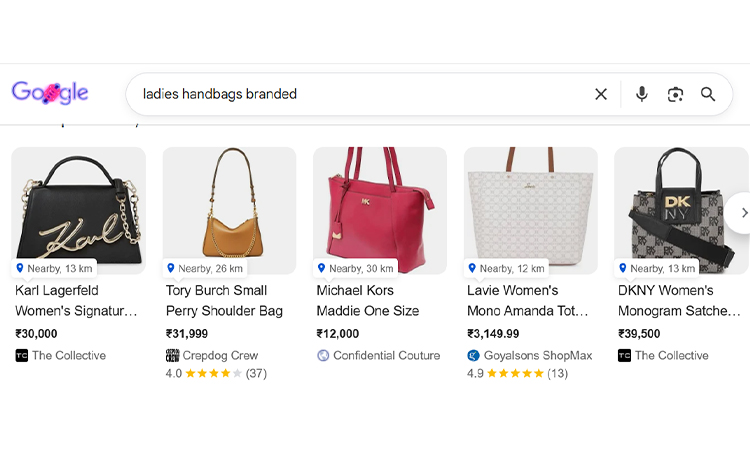
This format of PPC campaign is indeed effective for fashion brands since it lets customers see exactly what they will buy. All you need to ensure is an optimized product feed with quality images and accuracy in pricing.
- Search Ads
When it comes to paid search ads, it’s visible at the top of Google results when users search using the targeted keywords. For example, when users type the keyword “women’s summer dresses”, they will get similar search ads.
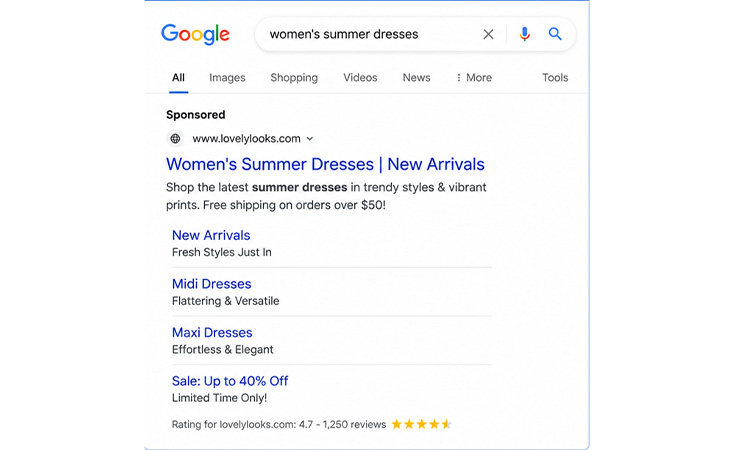
These are basically text-based ads that are good to capture shoppers who are ready to buy. You can make this ad more effective with strong calls-to-action, compelling ad copy, smart keyword targeting, etc.
- Performance Max Campaigns
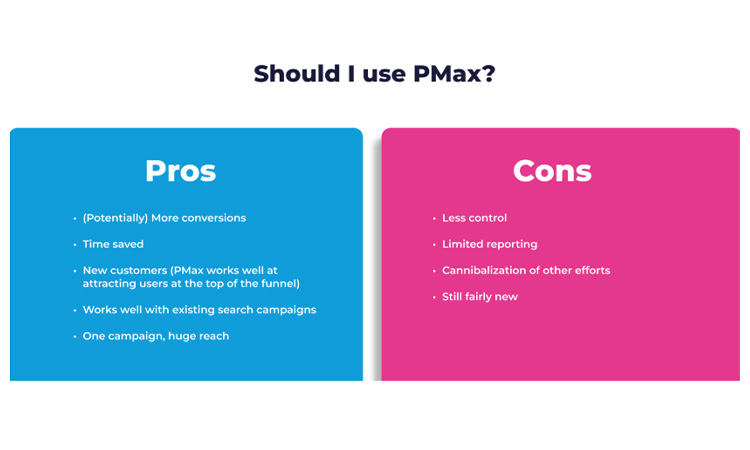
Being Google’s all-in-one campaign type, Performance Max (PMAX) runs ads across Shopping Display, Search, Gmail, YouTube, Maps, etc. PMAX can be a game-changer for fashion brands since it leverages machine learning to optimize ad delivery automatically and find higher-converting audiences. It’s good for brands seeking to increase reach even without managing different individual campaigns.
- Dynamic Remarketing Ads
Dynamic Remarketing Ads show personalized ads to users automatically. It shows ads only to those who have already visited your website. In case a shopper views a couple of pairs of sneakers but doesn’t buy them, dynamic remarketing follows them across the website with ads that feature the same sneakers.
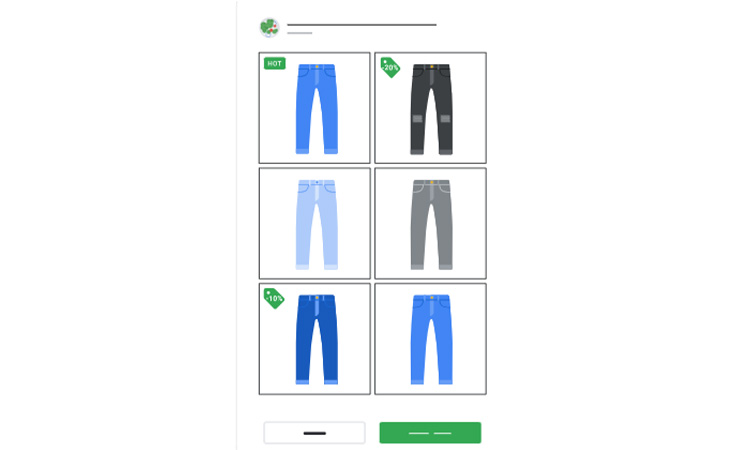
The hyper-personalized approach increases return visits and recovers abandoned carts for fashion brands with large product catalogs.
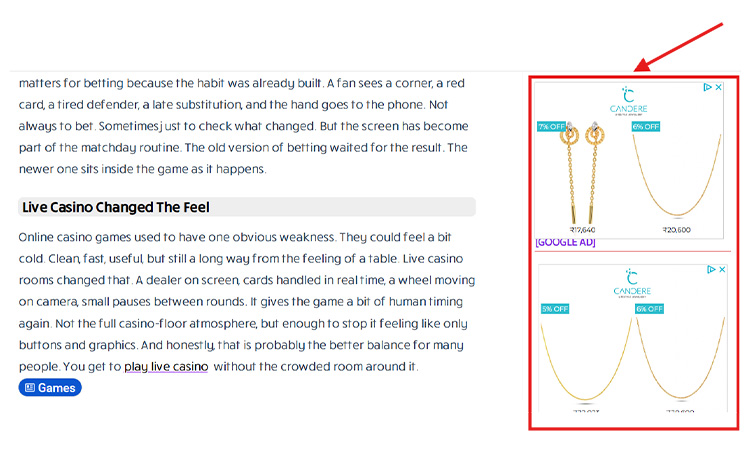
- Display Advertising
As far as display ads are concerned, they are mainly visual banner ads that appear across a large number of websites. Fashion brands can use creative visuals and outstanding lifestyle imagery to build brand awareness and keep their collections top of mind. Display campaigns work better to reach new audiences and also support various other campaign types in a full-funnel strategy.
- Video Ads
Video Ads on important platforms, including YouTube, let fashion brands gain the opportunity to tell a story. They lure audiences in ways that static images simply can’t do, be it a behind-the-scenes reel, a seasonal lookbook, or a product showcase.
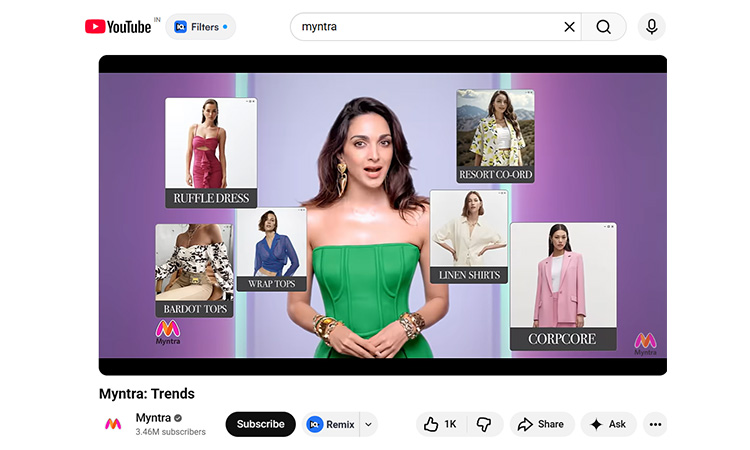
Fashion brands can use precise targeting options that can easily reach those of style-conscious viewers and boost direct conversions and increase brand awareness.
Best PPC Platforms Fashion Brands Can Target
Selection of the right platform is as important as crafting an ad copy. You need to know that different platforms lure different audiences and cater to multiple stages of the shopping journey. The following are some of the best platforms for PPC for fashion brands you should target:
- Google Ads
PPC is incomplete without Google Ads, which is indeed an undisputed king in this niche. It’s the most favored platform for fashion brands. Google lets you capture shoppers with a higher purchase intent through shopping, search, performance max campaigns, and display, with a number of searches taking place regularly. The major advantage of Google Ads, it lets your brand be exactly where buyers’ decisions are made.
- Meta Ads
Whether it’s Instagram or Facebook ads, Meta Ads are considered to be a natural fit for many fashion brands. Instagram is a visual-first platform where style-conscious users discover new trends and brands regularly.
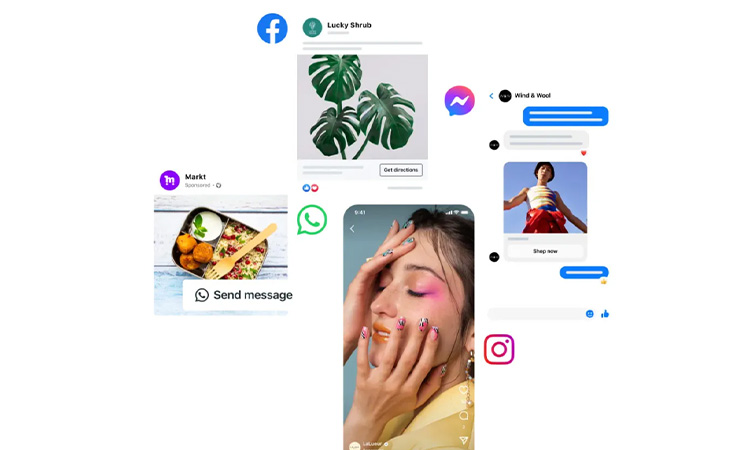
The advanced audience targeting of Meta lets fashion brands reach users according to shopping behavior, interests, lookalike audiences, life events, etc.
- Pinterest Ads
Pinterest is another important platform for fashion brands. With more than 619 million monthly active users (as per 4th quarter of 2025) looking for outfit ideas, style inspiration, and shopping recommendations, the platform users arrive with a higher purchasing intent.
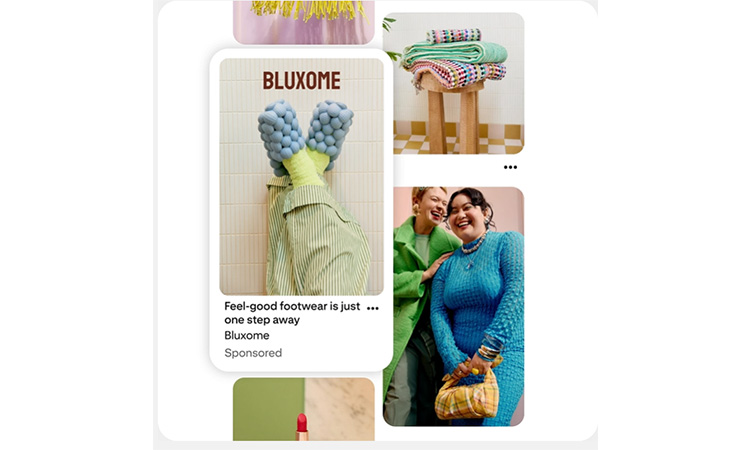
Promoted Pin combines smoothly into organic content, which makes ads completely feel native and also non-intrusive. It boosts both direct conversions and brand discovery.
6 High-Converting PPC Strategies That Deliver Guaranteed Outcomes
PPC for fashion brands can deliver the desired outcomes only when done in the right way and with proper strategies. The following are some of these strategies you need to implement to keep your campaign on the right track and result-driven:
- Know Your Campaign Goal
Though it’s important, most advertisers often avoid it and jump directly to creating campaigns. The best practice is to understand your campaign objective first. You need to answer the question: What are you creating this campaign for? Or, what do you want your campaign to do?
Not to forget, your goal determines everything, whether it’s your ad format, bidding strategy, KPIs, or your landing page. While deciding your PPC campaign goal, you can think as follows:
- Traffic goal
- Awareness goal
- Conversion goal
For instance, you create an ad for a D2C apparel brand. If you launch a new clothing collection, it’s certainly not a good choice to chase conversion on day one.
All you need to do is to initiate the process with awareness and traffic campaigns for creating your audience pool first. After this, you need to layer on conversion campaigns.
As per WordStream’s 2024 PPC benchmarks, the average conversion rate across industries on Google Ads is approximately 6.96% on the Search Network. In case your conversion rate is below this, your goal alignment is not only your ads.
- Do In-depth Keyword Research
A large number of pay-per-click advertisers select the top 10 keywords Google suggests and then call it a day. This is indeed a shortcut method to gain results.
Real keyword research is something that involves getting details of search intent. You need to take into account that every keyword falls into the following categories:
- Navigational: It should be brand-specific.
- Informational: It should be a research phase.
- Commercial: It should be evaluating options and comparing products
- Transactional: It should be ready to buy.
You need heavily weighted transactional keywords for conversion-based campaigns. Meanwhile, you should never avoid informational intent — it feeds mainly your remarketing audiences.
- Keyword Strategy for Google Ads
You can leverage Google’s Search Terms Report. If you run a broad or phrase match, you should go through this report on a weekly basis. You will also find several irrelevant terms that are unnecessary and drain your budget.
Apart from this, you should not avoid negative keywords. The reason is structured negative keyword lists can minimize wasted ad spend. That’s basically a money-back guarantee.
- Tools to Leverage for Keyword Research
You can leverage the following tools for keyword research:
- SEMrush
- Google Keyword Planner
- Ahrefs
- AnswerThePublic
Every tool is important so you can leverage any of them for your keyword research. Meanwhile, “Keyword Planner” is the best tool for running a PPC campaign with the right strategy.
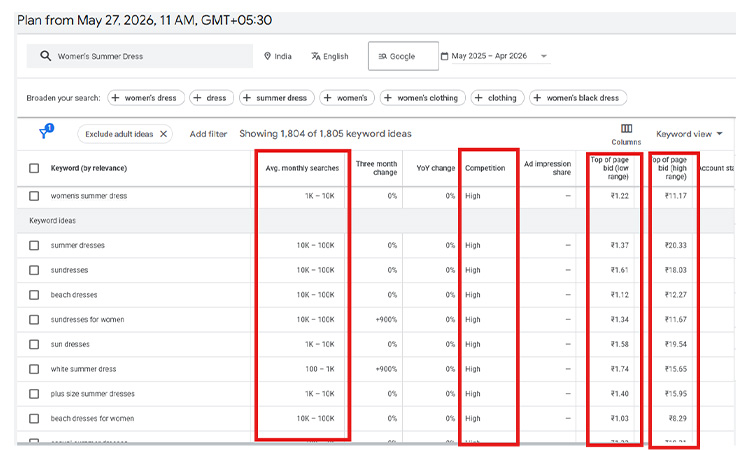
In the image above, you can see that Google Keyword Planner not only provides search volume and competition level for each keyword but also the bidding range.
- Keyword Strategy for Meta Ads
To run your ad campaign on this platform, you don’t need to rely on keywords, which you do for Google Ads. You need to focus on the following things, rather than doing so:
- Target based on interest
- Dynamic product ads to retarget users who already saw your product but couldn’t buy it.
- Custom audiences from customer lists and website visitors
- Lookalike audience based on past purchase.
- Keyword Strategy for Pinterest Ads
As far as Pinterest users are concerned, they often look for inspiration before finalizing a purchase. So, you should focus on the following important things:
- Use interest-based targeting based on men’s fashion, women’s fashion, luxury products, etc.
- Target those keywords that are related to seasonal styles, fashion trends, outfit ideas, etc.
- Retarget users who are already engaged with pins or already explored your product pages.
- Do optimization of product pins with the use of quality visuals and appropriate keywords.
- Segment Campaigns Based on Product Categories
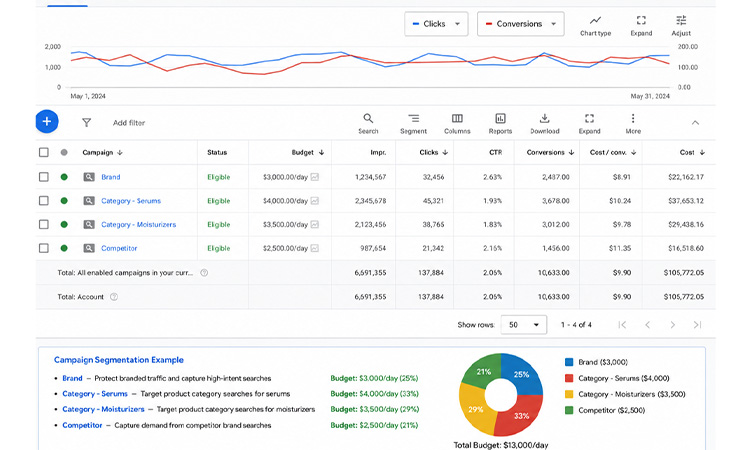
When you put everything into an individual campaign, it’s one of the common and expensive mistakes in PPC for fashion brands you commit. When you combine different product categories, you definitely lose control over bidding, budgets, performance insights, etc.
You should always think of campaign segmentation, including organizing your store shelves. The reason is that it’s certainly not possible to put both cooking utensils and shoes on the same shelf.
How to Do Segmentation
If your fashion store sells different products, you should not run a single campaign selling fashion items. You need to do a proper segmentation and run different campaigns as follows:
- Campaign 1: Handbags
- Campaign 2: Jewelry
- Campaign 3: Footwear
You need to know that every campaign has a different competition level, order value, customer intent, etc. Therefore, separating them helps you in the following ways:
- Set the right bidding strategies.
- Allocate the budget according to the ROI of every category.
- Craft laser-based ad copy that meets the product.
- Optimize Audience Targeting
Always keep in mind that traffic without appropriate targeting is nothing but noise. The most important thing about leading PPC platforms is that they provide detailed audience data. These platforms mainly include Google and Meta.
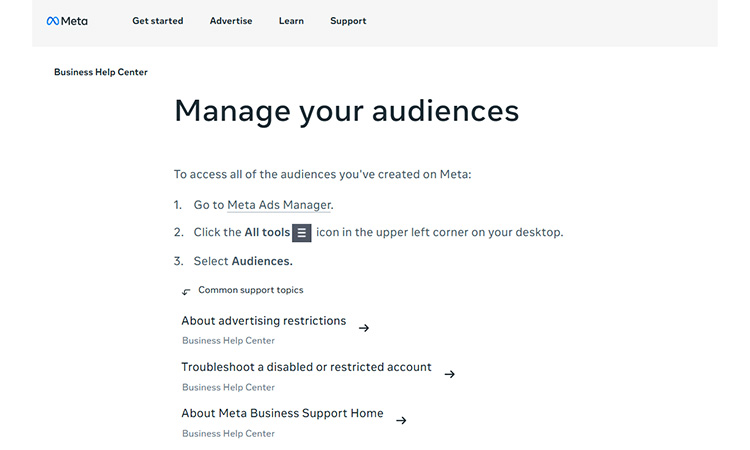
A large number of advertisers improve their campaigns by combining a variety of audience layers.
- Let’s understand how all these works specially in Google Ads:
- Base Keywords: They represent what users search for.
- Layer 1: In-market audiences
- Layer 2: Remarketing lists
- Layer 3: Customer match
- Layer 4: Demographic Targeting
- Strategies for Meta Ads Audience Targeting
On Meta, one major benefit is Advantage + audiences, which leverage AI to find people automatically likely to buy. This platform provides the following capabilities to the target audience:
- Custom audiences
- Interest-based audiences
- Engagement audiences
- Lookalike audiences
- Strategies for Pinterest Ads Audience Targeting
With the Pinterest platform, you can get the following options for audience targeting:
- Keyword targeting
- Interest targeting
- Engagement retargeting
- Visitor retargeting
- Craft Compelling Ad Copy
Let’s face an actual reality about an ad copy. If your headline looks similar to what any competitors could use, then it’s certainly a weak one. So, you might be thinking about what a compelling PPC copy consists of, right? Well, the answer is as follows:
- It should be exactly the search intent of the targeted users. For instance, if a user searches for “Top Handbags for Ladies”, then you should craft your headline exactly the same.
- It should include leads with a benefit rather than a feature. For instance, it should include “Buy Handbags with 20% Discount” instead of using just “Beautiful Ladies Handbags”.
- Don’t forget to include a clear and bold CTA (Call-To-Action). For instance, you can include CTAs like “Explore More”, “Begin Trial Today”, etc.
Apart from this, you can use the AIDA framework, which is a top-rated marketing model used mainly to craft persuasive ads and content. It stands mainly for the following things:
- Attention: You can catch this with the attention-seeking headline.
- Interest: To gain customers’ interest, you can display important benefits in the description.
- Desire: You can create this through social proof or any urgency in the description.
- Action: It can be possible through a bold CTA.
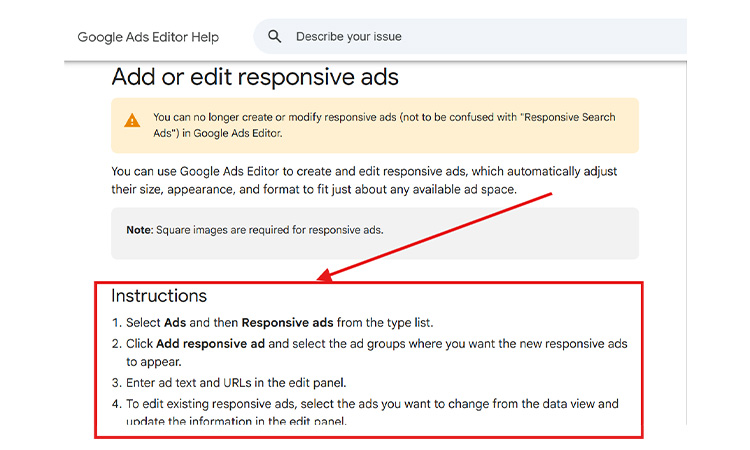
Now, let’s talk about creating an ad copy for different platforms. Take a look.
- Google Ads Copy Strategy
While creating an ad copy for Google Ads, you need to craft it based on the user’s search intent as they actively search for products. Besides, you should also focus on the following things:
- Focus on unique selling points like free shipping, discounts, exclusive collections, etc.
- Match headlines based on the user’s search query whenever possible.
- Include bold CTAs
- Include product benefits instead of features.
- Use ad extension
- Meta Ads Copy Strategy
Instead of product search, users on this platform browse content. Therefore, your ad copy should be attention-grabbing and appeal to your target audience emotionally. Besides, it should focus on the following other important factors:
- Use storytelling to draw the attention of users.
- The first sentence should include a robust hook.
- Mention social proof, trending collections, collection reviews, etc.
- Create a sentence of urgency with the limited-time offers.
- Make sure your ad copy is brief with outstanding visuals.
- Pinterest Ads Copy Strategy
Pinterest users mainly focus on discovering trends, future planning purchase, etc. So, your ad copy should focus mainly on factors like solutions, ideas, inspiration, etc. Your ad copy should focus on the following things:
- The language should be descriptive.
- Focus on how products fit into an occasion or lifestyle.
- Implement style-based and trend-focused keywords.
- Focus on outfit ideas, seasonal collections, fashion inspiration, etc.
- Include product pins and quality visuals.
- Use Quality Creative Assets
This is something that applies mainly to YouTube, Meta, Performance Max Campaigns, and Display.
The quality of your ad creatives plays a fine role in PPC performance. According to data, creative has a contribution of up to 56% of the overall campaign’s performance outcome. You need to think for a moment. Your campaign fails when your visuals are not so impressive, even with the perfect targeting.
Let’s understand what works better:
- User-generated Content: It gives a feeling of authenticity and has a higher CTR compared to polished brand videos. A customer testimonial filmed on a mobile device often beats a studio production.
- Short-form Video: It should be under 30 seconds. It performs consistently better than static images. You can post these videos on popular platforms such as YouTube, Meta, etc. It engages viewers in the first 3 seconds that can make or even break the entire moment.
- Carousel Ads: These work better for eCommerce, which allows users to swipe through different products with individual CTAs per card.
- Before or After Creatives: These are indeed apt for fitness, health, SaaS categories, and improvement.
Important Checklist for Creative Assets:
- You should always include subtitles on videos.
- Minimum 3 to 5 creative variations per ad set
- Refresh creatives every 3 to 4 weeks to prevent frequency fatigue.
- Vertical formats (9:16) vs test square (1:1)
A Real Case Study: How Zara Used PPC Strategically to Maximize Its Revenue
- About The Company
Being one of the well-known and largest fashion retailers, Zara doesn’t need any specific introduction. It’s already a popular fashion brand that utilized PPC ads with a robust strategy to increase its online sales and thus brand presence.
- The Challenge
The company faced a vast competition from various other brands in the same niche and needed to increase its online visibility and traffic to its e-commerce website. Their core objective was mainly to lure a tech-savvy and younger audience who shopped online predominantly.
- The Strategy
Zara implemented the following strategies to make their PPC campaign successful and achieve their main goals:
- Keyword Research: Zara conducted a vast keyword research to discover high-performing keywords related to their fashion trends and products. This included mainly long-tail keywords that were highly relevant and also highly competitive to their audience.
- Targeted Campaigns: They started targeted PPC campaigns across various social media platforms and Google Ads. They targeted social media platforms like Instagram and Facebook. They created these campaigns tailored to multiple segments of the audience, be it location, age, or interests.
- Compelling Ad Creatives: Zara invested in top-notch visuals and attractive ad copy that attracted target audiences widely. Their ad campaigns highlighted the seasonal promotions, lucrative discounts, and updated collections.
- Landing Page Optimization: Zara optimized their landing pages perfectly for conversions while ensuring a smooth user experience. It included the mobile-friendly design, fast load times, and clear calls-to-action.
- Remarketing: Zara also used remarketing strategies to re-engage visitors who had interacted previously with their website but hadn’t bought anything. It involved displaying the personalized ads to users across the web.
- The Results
Zara witnessed an outstanding increase in their sales and overall revenue. They also witnessed the increase in their website traffic by 50% and 30% increase in their conversion rate. So, the targeted PPC campaign helped them in gaining new customers, and the remarketing efforts helped them in increasing repeat purchases.
Conclusion
So, after going through the above discussion, you already understand the importance of PPC for fashion brands in increasing their online presence and revenue. It’s good for businesses looking to draw the attention of high-intent buyers and enjoy consistent sales.
All you need to do is have the right PPC approach that helps you in reaching customers at every stage of their buying journey. Partnering with a professional PPC agency helps you run your campaign properly and make it more result-driven.
FAQs
Ans. Google Ads is the best PPC platform for a fashion brand. It also depends on its major objectives and audience. For instance, Google Ads is the right choice for high-intent shopping searches, whereas Meta Ads is perfect for influencer-driven promotions, storytelling, and remarketing for fashion-conscious audiences.
Ans. Well, PPC for fashion brands takes a couple of days to deliver results. Meanwhile, it takes 1 to 3 months to witness increased traffic, sales, conversion, and ROI.
Ans. Fashion brands should spend 10 to 15% of their overall monthly revenue on PPC. It also depends on many other factors like growth stage, goals, competition, etc. New or fast-growing brands need to invest frequently in Meta Ads, Google Shopping, remarketing campaigns, etc.
Ans. Yes, PPC increases brand awareness for a fashion brand in several ways. These include highlighting products across search engines, shopping feeds, websites, social media, etc. It helps brands improve visibility, reach targeted audiences repeatedly, increase recognition, and customer engagement, etc.
Ans. PPC campaigns increase sales for fashion brands in several ways. These mainly include targeting high-intent shoppers, retargeting abandoned visitors, highlighting products through engaging ads, increasing traffic instantly, etc.

