





In the case of interior designers in particular, digital marketing has fueled brand growth, sales, and client acquisition in the design industry. Interior design involves more than just decorating spaces; it includes the creation of functional, aesthetically pleasing, and purposeful spaces. In the age of the internet, where many of your potential clients are looking online for design inspiration and finding solutions to their problems, digital marketing for interior designers has become an essential part to succeed in the industry.
An effective digital marketing strategy helps interior designers readily promote offerings, document and show previous design transformations, pre-qualify and build relationships with prospective clients, and most importantly, communicate and establish a presence as an expert in a specialized field of design.
The use of quality digital assets combined with social media campaigns, SEO, digital advertising focused on clients, and online marketing creates the best marketing strategies showing an interior design firm’s competitive advantage in the market and promoting long term sustainable growth for the business.
What Is Digital Marketing for Interior Designers?
In a competitive interior design market, consistently attracting clients goes beyond the ability to create well-designed spaces. Today’s clients do their due diligence and compare interior designers before making a contract decision. Homeowners spend hours researching design ideas, comparing designers, reading reviews, and perusing designs. Because digital marketing for interior designers has reshaped the methods to attract clients.
Understanding digital marketing can help designers grow their businesses. Online marketing for interior designers is the art of using internet-based methods to create brand presence, visibility, and attract potential clients. Digital marketing changes the way designers reach their audience compared to the more traditional promotional methods of advertising in newspapers or word of mouth.
Digital marketing enables designers to show their portfolios and projects to thousands of potential clients. It is a new-age trust-building and educational method. It encourages audience engagement and helps potential clients make decisions.
- Digital Marketing Platforms for Interior Designers:
- Pay per Click
Pay-Per-Click advertising is one of the fastest ways interior designers can connect with new clients through online ads. Google Ads and Meta Platforms Ads are some platforms where designers can advertise their services to users interested in home interiors, office design, modular kitchens, luxury interiors, or renovation services.
PPC helps advertisers make the most of their promotional budgets by attracting potential clients who meet specific criteria based on location, interests, search behavior, and demographics. Interior designers especially benefit from PPC, driving consultation inquiries and letting the audience view special offers and project transformations.
- SEO
Known as Search Engine Optimization, SEO allows businesses to be found via Google when users search for services associated with their industry.
Take interior design as an example, when someone is looking for an “interior designer in Gurgaon” or “modern apartment interiors”, with great SEO, Google will show them designs. Effective SEO will help businesses show up when needed and offer services to potential clients without advertising or from referrals.
- Email Marketing
Email marketing, also a crucial arm of digital marketing for interior designers, allows for a connection to be sustained over a longer period of time.
Interior design projects take homeowners time to finalize, making email outreach a great time to be memorable and visible. Email marketing can be done to offer design updates, current project construction, recent blogs, the latest trends, and telephonic consultations.
- Social Media Marketing
Social Media is probably the best way, interior design marketing has been changed the most. Most homeowners spend so much time on social media, especially Instagram, Facebook, Pinterest, LinkedIn, and so on.
Social media is an incredible platform that will show project work, project transformations, answer questions, and most importantly will build a brand. Social Media will help a business stay on top of mind, especially in a highly competitive market. Traditionally, people find and save their interior designers on social media.
- Content Marketing
Creating value and informative content for your clientele is the primary purpose of content marketing. Instead of constantly marketing their services, interior designers can use blogs, videos, guides, and tips to develop their credibility and their clientele base.
These can be in the form of “Small Apartment Design Tips,” “Interior Mistakes to Avoid,” or “Best Colors for Compact Homes.” These aid the audience and help the designer position themselves as credible. Excellent content marketing not only enhances credibility but also increases the volume of good SEO.
Why is Digital Marketing for Interior Designers Essential?
Almost everyone today expects a company to have a strong online presence. A report by Clutch shows that 96% of consumers check online reviews before purchasing a product or service for the first time, while many also read reviews when researching local businesses. Prior to reaching out to an interior designer, most customers view websites, social media accounts, reviews, and digital portfolios to assess the designer’s work and to validate their credibility. Customers need quick and easy access to photos, descriptions of services, reviews, and ways to contact the designer. Those who cannot offer these services, regardless of their actual work quality, often appear to be of less quality, untrustworthy, and inactive.
- Visibility Equals Credibility
Visibility has a profound impact on credibility. A company often appears to be more established and trustworthy when it is active online through professional websites, social media, Google, and posted content. When customers see a designer’s work repeatedly online, it builds familiarity and trust. A business that has no, or a weak, online presence is almost guaranteed to struggle to gain the confidence of its modern clients.
- Small Firms Can Compete With Larger Brands
One of the most beneficial aspects of digital marketing for interior designers is that it has leveled the playing field between small and large firms. Previously, large firms always won the market because of their large advertising budgets and strong offline presence. Today, an array of digital marketing tools such as social media, SEO, content marketing, and online branding allow firms of all sizes to show their creativity, build an audience, and gain recognition without large advertising budgets.
- Online Research Influences Buying Decisions
It’s common for prospective clients to carry out extensive research before contacting an interior designer. They look at portfolios and design styles, and communication skills and reviews. Each of these activities helps them develop an opinion before they even pick up the phone. Professional and strategic digital marketing for interior designers enhances the likelihood prospective clients will contact your company. The goal is to develop a connection and a trusting relationship while they continue their research.
Digital Marketing Problems that Interior Designers Face
Even though digital marketing has the potential to make businesses grow, many interior designers cannot use it. As the industry has evolved, so has the market, and many people are competing for many clients. Posting designs and projects online is no longer useful or sustainable.
Many designers are creative and have the skills to do marketing, but they do not have plans or a strategy, and because of this, they struggle with visibility and engagement as well as lead generation online.
- Where To Begin
With digital marketing for interior designers there are a lot of options to build your strategy such as having a website, engaging in social media, paid advertising, and SEO. Designers tend to struggle with knowing which area to focus on first, which leads to inconsistent efforts and confusion.
- Getting Engagement
Designers often think that posting pretty pictures will make them popular, and they will get engagement. The truth is, the social media world is saturated. Designers are all posting beautiful pictures, so how do you stand out? You have to use a consistency driven strategy that includes a story and engaging content.
- Lead Generation
A big issue many designers are facing is gaining likes and followers, but not getting actual leads. The goal is to increase visibility, and then direct the audience to your site/catalog by using well planned communication and content that builds trust with the audience, and a lead gen system to capture your potential clients.
- Limited Marketing Budget
The smaller design companies will not spend money on digital marketing because they feel like they cannot afford it. Websites, SEO, advertising, and content creation can be expensive and hard for smaller companies to compete against larger ones.
- High Competition
Fast industrial development has led to years of aggressive rivalry. Project after project sees thousands of designers with published portfolios leaving unique marketing incredibly difficult.
- Inconsistent Content Creation
The most prevalent issue is designers’ ability to post regularly. Scheduling, project loads, or a simple absence of good content creation causes inconsistent post patterns. With decreasing visibility and audience recognition, engagement wanes.
- No Marketing Structure
Exhibiting only images forsakes brand identity, communication, and storytelling. This neglect results in little to no lead conversion. Ideally, without a structure, digital marketing puts focus on designer works, but with little emphasis on business growth.
Successful strategies to enhance digital marketing for interior designers
When it comes to digital marketing specific to interior design, visual storytelling with effective marketing integrates design, branding and customer loyalty to maintain a reputable online presence. With effective digital marketing, designers will be able to display their work and design solutions to enhance their advertising efforts.
Good digital marketing for interior designers have the ability to maintain client relationships, establish their brand and reputation, and find viable and lucrative work on a continual basis. Through the strategic use of social media, advertisements, SEO, and videos combined with digital marketing holistic client relationships, designers will be able to secure preferred status with their clients.
- Digital Marketing Strategies for Interior Designers
- Use Branding for a Strong Digital Marketing Presence
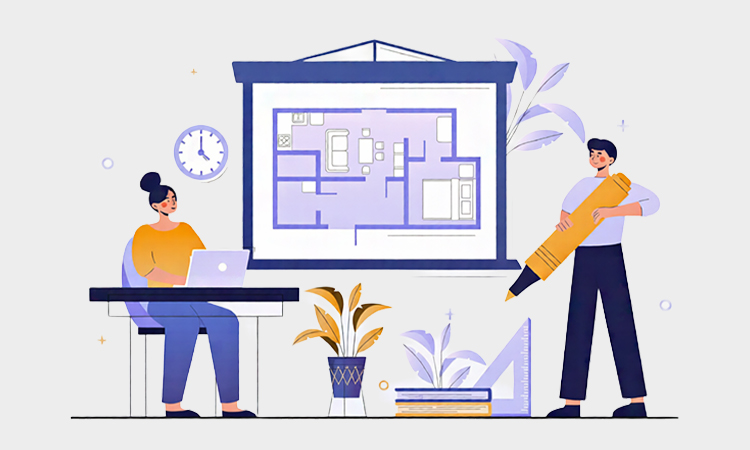
Strong visual branding is important for digital marketing for interior designers. This is because through online mediums, clients assess design capability. Every online presence (websites, Instagram, advertisements, and portfolios) should have a design that is cohesive and reflective of the professionalism and style of the interior designer.
High quality, well curated work has the ability to elevate the brand image of the designer. Consistent visual branding aids potential clients in the instant recognition of the preferred niche.
- Put Marketing Efforts into Instagram and Pinterest
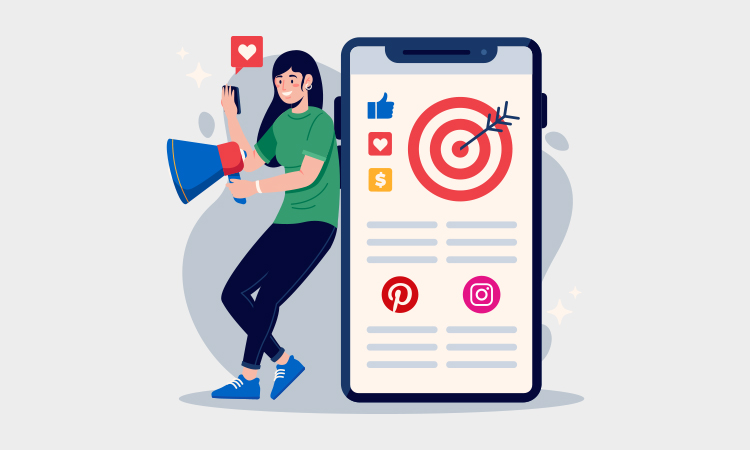
Instagram and Pinterest provide a lot of opportunities to showcase your work to potential clients. All of your potential clients use Instagram and Pinterest to explore ideas about decoration, color palettes, furniture styles, and ideas for renovations.
Carousel posts, Instagram Reels, before and after posts, and videos of site visits are all great examples of content to post. Pinterest has a slightly different model as most of the posts are meant to be long term with ideas and inspiration about home decor and design. Posting consistently on both platforms is essential, but crafting posts that use specific keywords and hashtags will boost engagement.
- Focus on SEO and Local Search
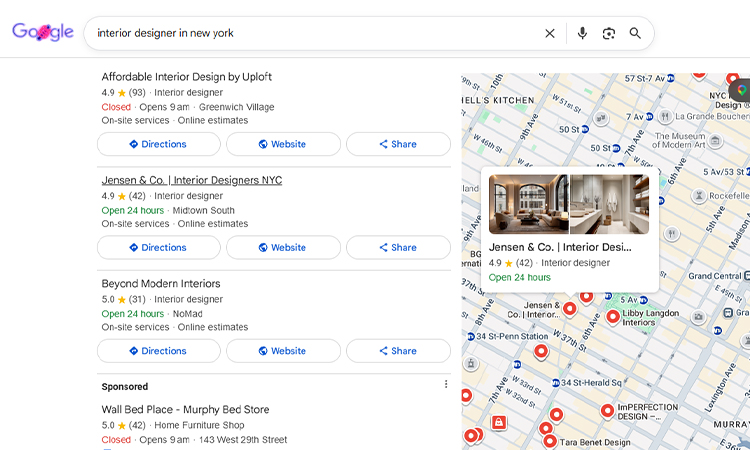
Ensuring that you can be found on Google is essential for interior designers to attract the clientele they want that are searching for interior design services. The goal is to organically build a clientele through the leads your website generates and not have to rely on ads. Using location specific keywords will improve searches to your website. Think “Interiors by Sunny Delhi” or “Gurgaon Luxury Home Interiors.”
Writing value-added articles about renos, design inspiration and decor will improve your website and search rankings. A Google Business Profile will help add legitimacy to your business and competing for reviews will help build credibility. Your contact information should be accurate and that should be reflected on your socials. All of these suggestions will help target local searches to your business and gain clients in your area.
- Strengthen Trust with Video Marketing
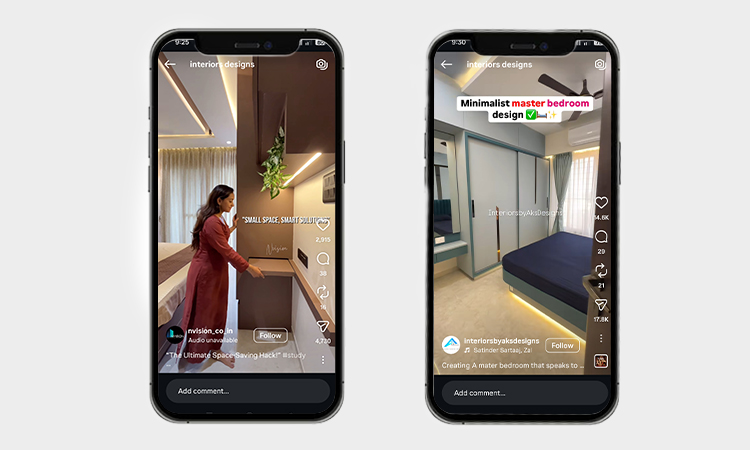
Video content has endless opportunities to elevate digital marketing for interior designers and brand engagement. Audiences can perceive spaces and relate to the designers and their spaces. Interior Designers can showcase walkthroughs, design ideas, renovations, furniture, materials, stylings, and edits.
Posts showcasing videos, especially short form, on Instagram Reels and YouTube Shorts, have shown to outperform static posts. Video content can demystify the design process and encourage trust with transparency. When the audience sees the attention to detail with the process, they will likely choose to work with the designer.
- Implement Paid Advertising
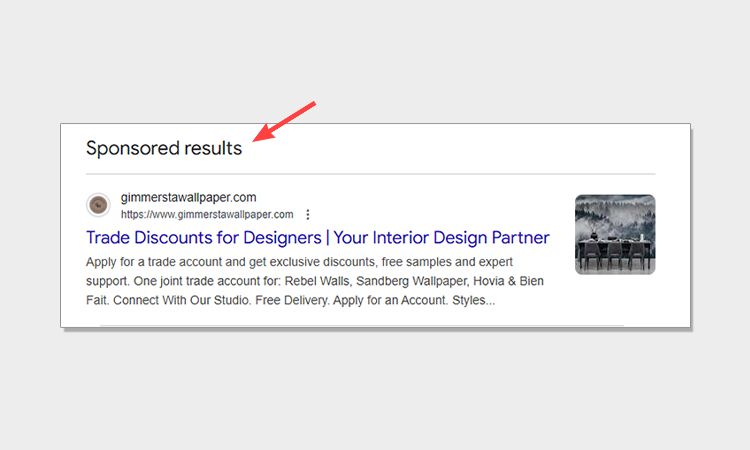
When used well, paid ads help interior designers target a precise audience and convert leads quickly. Google Ads and Facebook and Instagram Ads enable businesses to deliver ads directly to homeowners, buyers of luxury properties, owners of commercial office space, or those interested in home interiors and architecture.
Ads can be used to offer free consultations, show off a portfolio, run a special promotion, show a seasonal sale, or offer a premium service. Retargeting ads are a great option since they target people who have visited the website or engaged with the business on social media. Paid ads help designers reach their target market, increase leads, and build brand awareness.
- Design a Website with Maximum Conversion Potential
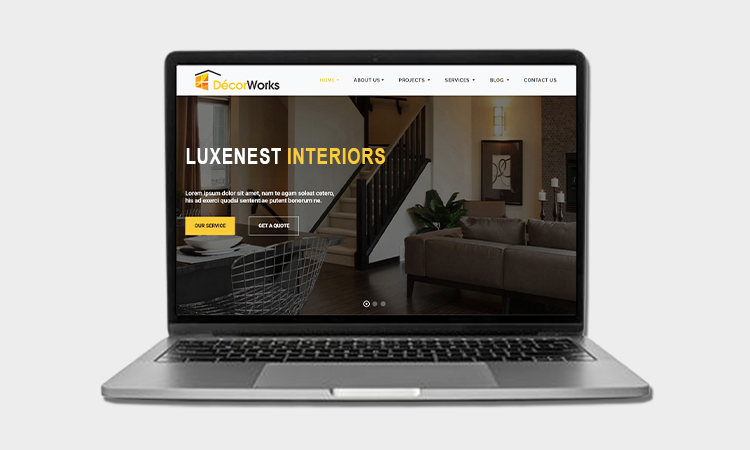
A designer’s website is their digital portfolio and their main source of leads. A website that is designed well builds the brand, shows the style and the service of the designer, their skills, and their work, and creates an easy and pleasant experience for the user.
Designers should have project galleries, service offerings, testimonials, designer bios, and blogs, and should include all forms of communication. Speed, a mobile friendly design and decrease in user friction all help the website. User friction is decreased by design calls to actions such as a “Book a Consultation” or a “Request a Quote.” A website designed well increases a designer’s credibility and generates leads.
- Stay on top of Content Marketing
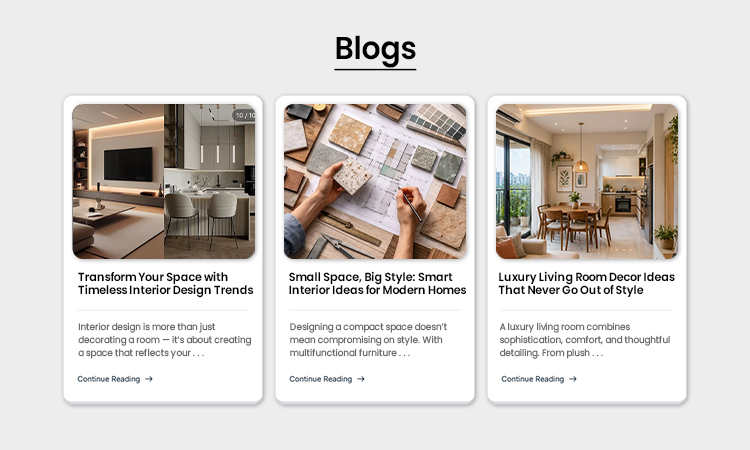
Content marketing serves to improve the audience’s long-term retention and to portray authority in the interior design field. By launching multiple blogs, guides, decor inspiration, and forecasts, designers can position themselves as experts. This informative content aids SEO ranking.
Things like styling tips and seasonal trends actively engage your audience. The most frequently posted content stays most relevant. Content serves to retain the audience, improve discoverability, and stay relevant.
A strong digital strategy combined with the right marketing support can significantly improve enquiries and conversions. Explore our digital marketing solutions for unmatched scale-up.
How to Convert Portfolio Visitors into Paying Clients
Driving a portfolio online is only step one in digital marketing for interior designers. Some interior designers think great work means instant clientele. This isn’t the case. Most visitors will not buy right away. Visitors will research, compare, and look for other options. Most will not reach out. To convert into clientele from visitors, you need to hold their hand through the process. Trust building and eliminating confusion are important at every stage.
- Improve portfolio storytelling
A portfolio should not consist of random clusters of beautiful images. They should demonstrate a process that aids the visitors in understanding the designer.
If only the final design picture is posted, visitors will see the results but wouldn’t know the value. They don’t see:
- The original design flaw
- Reasons for the decisions
- How qualitative spaces, budget, and design were challenged
- Your thought process
These gaps can only be remedied with stories. Each project should demonstrate the explanation of the process of the transformation. For example, instead of showing just bedroom, describe:
- The size of the family & lifestyle
- The problem, design was intended to solve (small and/or poorly lit design, storage deficiency)
- The designer’s consideration in the process (selection of the furniture, the design of the layout, the design of the space, etc).
- The solution that has been offered (what functional and aesthetic improvements were made).
- What the design accomplished after the completion of the designer’s work.
This tells clients that the interior designer is a solution giver and helps them to think of their residence, which prompts them to reach out and contact.
- Include Testimonials and Reviews
Clients try to convince themselves to pick your services. This is especially true in digital marketing for interior designers. Showing that your company is reputable and trustworthy is essential. Testimonials and reviews are great ways to show how others regard your services.
Potential clients might have internal doubts:
- Will my budget be respected?
- Will my thoughts be considered?
- Will this designer meet my deadline?
To be effective, a testimonial needs to be more than just “Good work done.” To achieve the desired impact and reviews, you need to mention:
- Smooth communication throughout the project
- Clear understanding of requirements
- Professional behavior on-site
- Timely project delivery
- Satisfaction with final results
- Incorporate Strong Calls to Action (CTAs)
Interior designing services are complicated. Even your strongest supporter may not know how to reach out to you. Most clients just leave when you don’t provide guidance. Your portfolio must be closed with direction. Tell your client what the next step is.
To be effective, direction needs to be simple and clear. Portfolio CTAs can look like:
- Book a consultation with our design team
- Talk to us about your home interiors
- Get a personalized design quotation
- Schedule a free design discussion
CTAs create a sense of direction. Portfolio visitors know what the next step is. This confidence makes them more likely to reach out for services. Using a clear call-to-action (CTA) makes it easy for potential clients to take that next step. This prompts more inquiries and more conversions.
- Easy Communication
Complicated communication often leads to potential clients losing interest. Make it easy for potential clients to reach out. Do not have them search for your phone number or email address, and do not have them fill out lengthy forms. When communication is simple and easy for the client, it is more likely they will initiate it.
To ease communication, you should do the following:
- Add WhatsApp chat buttons
- Include a simple form inclusive of a name, phone number, and message
- Display your number on each page
- Add quick consultation book options
Clients choose one interior designer over another based on who they can reach the quickest, even if they are equally talented.
- Be Consistently Visible
Design is not a purchase that someone makes on a whim. Often, people take time to do the research and compare all of their options. During this time, they are consistently seeing your advert, project updates, what you are working on, your drawings, and your tips.
The most important way you can stay in their mind is to be consistently visible.
Consistency can include:
- Posting regularly on Instagram
- Sharing before and after updates on projects
- Sharing design tips and education
- Blogging or making informative posts
- Posting short videos and reels about what your working on
All that really matters is a consistent presence. Viral content is not a necessity. The objective is clear, and it’s to remain memorable to a prospect client in case they haven’t yet made a decision on hiring someone.
Conclusion
Digital marketing for interior designers is an essential part of elevating any interior design business. Talent isn’t the only thing clients care about. They look for you on the web, review your portfolio, your social media presence, and how you and others perceive your work, before they reach out. Because of this, designers must cultivate presence, trust, and clear communication in addition to their design skills.
Digital marketing is a self-promoting system focused on bringing the right audience and providing an opportunity to build trust. Good SEO generates traffic, portfolios evoke interest, testimonials provide trust, and good CTAs prompt action. But the absence of consistency guarantees lack of results. It’s essential to maintain a strong online presence and create a predictable flow of clients. Only the constant and imaginative use of this balance creates a positive outcome.
Ready to grow your interior designing business online? Start your digital marketing audit today — and take the first step your competitors are already taking.
FAQs
Ans. There are a variety of indicators that could be used to measure the success of digital marketing for interior designers. These could include determining the amount of traffic on their website, calculating the number of leads that were generated, measuring the number of times consultations were booked, determining engagement levels, tracking keyword rankings, and examining the results of the advertisements that were run. These results can be reviewed in the context of the cost to acquire the lead, the rate of conversion, and the return on expenses incurred for the advertisement.
Ans. Digital marketing can be utilized to optimize content for searches that are specific to regions within a city, keywords unique to specific projects, and optimization of Google Business Profiles. This can assist a designer in moving to the top of the search results in a city, in this case Gurgaon, for a highly specific search such as “luxury home interior designer”.
Ans. Some of the strategies that can be employed to minimize potential client drop off following their first consultation include an automated drip campaign via WhatsApp to send emails with a portfolio, reminders to the client about their upcoming consultation, and retargeting ads. Digital marketing has a way of maintaining communication with the client in light of the long hesitation gap that often occurs in the decision making for interior design.
Ans. Google Search Console has the potential to help an interior designer’s digital marketing efforts by providing data on keywords that yield high impressions. This data will help the designer understand which project pages are lacking, as they are not generating any clicks, and where opportunities exist in the local search. This information provides digital marketers with the insights they need to create content that will enhance their organic search results.
Ans. Carousel styles give digital marketing the ability to combine multiple design concepts, room transformations, process stages, and design materials into one ad format, building intent to consult and engage.

