





Importers nowadays no longer wait for trade shows to find out new suppliers – they simply make their way to Google and other industry platforms before they ever call. Despite this shift, many exporters face difficulties like weak online visibility, inconsistent inquiries, etc., due to the use of traditional channels. Digital marketing for exporters is the solution.
According to the Research, approximately 90% of B2B buyers start their purchasing journey online. This clearly reflects that digital marketing is no longer a choice for exporters but has become a necessity for them. It’s the most effective and reliable method of generating consistent and qualified export inquiries.
In this guide, we will discuss more about digital marketing strategies for exporters and also how to do it successfully to gain the best outcomes. Let’s explore the complete details:
What is Digital Marketing for Exporters?
Digital marketing for exporters reflects the use of online channels for marketing your products, attracting international buyers, and building credibility, even without being physically present at exhibitions or trade shows.
When done correctly, digital marketing enables retailers to stay in touch with reliable reporters, instead of waiting for inquiries:
- Search Engine Optimization (SEO)
- Email Marketing
- LinkedIn and Social Media
- B2B Marketplaces
- Content Marketing
- Performance Marketing
In other words, digital marketing transforms your business into a 24/7 inquiry-generating machine, which works across different time zones, markets, and languages.
Why is Digital Marketing Necessary for Exporters?
Digital marketing helps exporters overcome issues like geographical boundaries, inconsistent results, additional costs, etc. Let’s understand some other reasons why exporters should perform digital marketing:
- Build Trust
When an importer finds your products, the first thing they gather is more information regarding your business by using Google. If they land on a website that has a poor design, zero online presence, no reviews, etc., they avoid taking any further action.
Digital marketing for exporters helps build a professional and credible image in several ways, such as client testimonials, strong websites, consistent social media activity, and case studies. Trust is something that matters the most for every export deal.
- Gain 24/7 Global Visibility
Trade shows take place once or even twice a year. Whether it’s your LinkedIn profile, website, or Google listings, they work every single day and also across multiple time zones.
So, when a buyer searches for your products through an individual website, they can easily discover you, browse your catalogue, send inquiries, etc. All these are possible even while you sleep. This kind of visibility is something that is certainly not possible with traditional marketing methods.
- Reach Right Buyers Organically or Through Paid Ads
One thing you need to take into account is that not every importer is your potential buyer. With Digital marketing for exporters, you can be more specific. With the use of SEO, you will be able to lure buyers who already search for your product category.
By running LinkedIn campaigns Google Ads, and Meta Ads, you will be able to target by industry, country, job title, and company. This kind of precision reflects how your marketing budget reaches decision makers.
- Get Competitive Edge
With an impeccable digital presence, you can make yourself ahead of your competitors, especially those who are yet to make a shift. It’s obvious that buyers will incline towards suppliers who are professional, active, and visible online. When you become digitally strong, it works as a differentiator rather than just an advantage.
- Improve Decision Making
Digital marketing for exporters gives you enough data related to your ad performance, website traffic, lead sources, email open rates, buyer behavior, and more. This data lets you get the details of what works well, where your buyers come from, and how to allocate your budget smartly.
11 Proven Digital Marketing Strategies for Exporters
Now it’s time to talk about tried and tested digital marketing strategies that deliver results and thus help exporters to achieve their goals. The following are some of the popular strategies you can implement to gain the best outcomes:
- Know Your Buyers Before Digital Marketing

Before you proceed with a single ad or even write a single blog post, you need to be clear on what you actually sell. This is not only about demographics but also about getting familiar with the world of your buyers. It’s advisable to ask the following important questions:
- Which countries import what you sell?
- What is the job title of your buyers? Are they a retail chain owner, procurement manager, or an import distributor?
- Where do they spend their time online?
- What pain points do they try to solve?
For instance, a rice exporter from India targeting buyers in the Middle East will definitely have a different buyer persona compared to textile exporters who chase European fashion brands.
Important Tip: You can leverage important tools such as Volza and ITC Trade Map to know countries that buy from your HS code product, and also in exact numbers of volumes. This data helps you understand the demand before you spend a single penny on promotional activities.
- Build a Conversion-Oriented Export Website
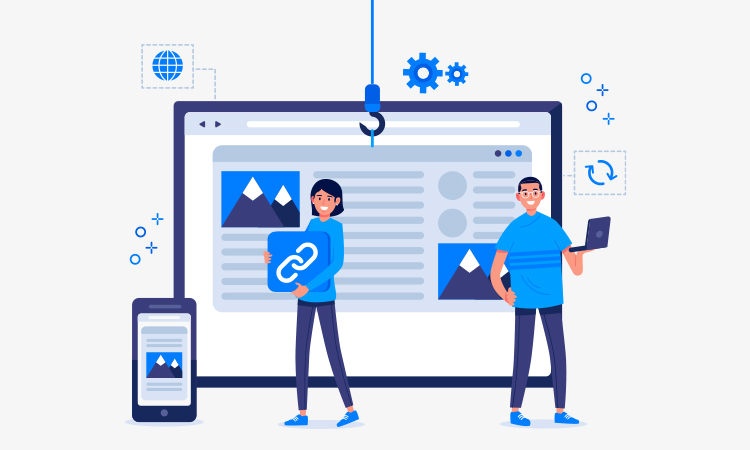
Not to mention, your individual website serves as a digital storefront. But, if it looks outdated, it will fail to attract international buyers who will bounce faster compared to the minimum order quantity.
But many exporters commit mistakes by building a brochure website that only lists products. However, a conversion-based website performs something different. It encourages visitors to take action by requesting a sample, filling out a contact form, or downloading your product catalog.
Let’s find out what your export website should include:
- A trust section: It should include testimonials, client logos, country flags, export certifications, etc., that you serve.
- Clear product pages: They should include certifications like ISO, FSSAI, and others. It should also include packaging details as well.
- Powerful CTAs: Your website is incomplete without CTAs such as “Get a Quote”, “Download Catalog,” or others.
- Multi-language support: Your website should have multi-language support, especially when you target non-English markets.
- Live chat: Your website should facilitate users for live chat for instant communication.
- Do Search Engine Optimization (SEO)
Search engine optimization is one of those strategies that are underutilized among exporters worldwide, even though it’s the most effective method of generating a long-term ROI.
We can take an example here: when buyers in any country across the world Google “turmeric powder supplier in India”, you wish your website to be visible on the first page. And this is something that can be possible only through SEO.
To do SEO most effectively, you need to perform the following activities:
- Keyword Research
As a part of SEO, keyword research is one of the most popular activities that determines the success of your SEO. You need to select the right keywords based on the products you offer. Of course, you will come across a large number of keyword research tools – Ubersuggest SEMrush and Google Keyword Planner are some of those.
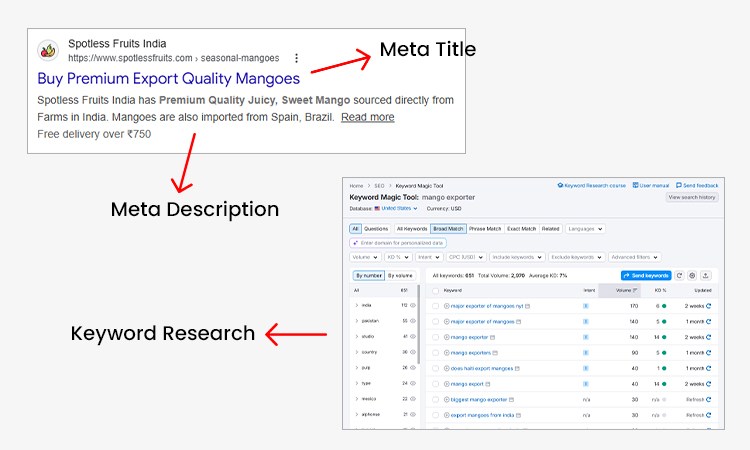
With these tools, you will be able to discover what your potential buyers search. We have used SEMrush’s Keyword Magic Tool for keyword research. We have used “mango exporter” as a seed keyword, and the result appears as follows.
In the above result, you can see a variety of keywords with different search volumes and competition levels. Here, you should target long-tail keywords like “major exporter of mangoes nyt”, “exporting mangoes from India to USA”, etc.
Targeting these keywords maximizes the possibility of your website ranking. The reason is they are intent-driven yet less competitive.
- On-page SEO
On-page SEO is another important element that serves its core purpose of making your website appropriate for search engines.The following are some of the top factors your website page should include:
- A keyword-rich title tag
- Alt text on product images
- A meta description that mentions call-to-action and quality.
- Internal linking to related products
- Add headings like H1, H2, H3….etc.
- Technical SEO
The loading speed of your website should be under 3 seconds. You need to take into account that Google’s Core Web Vitals now affect rankings directly, and international buyers on slower connections tend to abandon slow websites quickly.
Apart from this, technical SEO includes many other important activities, which are as follows:
- Website crawling and indexing
- Mobile optimization
- Site architecture
- URL Structure
- HTTPS and website security
- Structured data (Schema Markup)
- Technical error fixes
- Off-Page SEO
Off-page SEO includes various activities that are done outside the website with the core purpose of strengthening authority, trust, and search engine ranking. It plays an important role for exporters in various ways, like maximizing global visibility and luring global buyers from different markets.
Backlink building, an important part of off-page SEO, focuses mainly on earning backlinks from reliable global websites, trade portals, industry directories, niche publications, business associations, etc.
- Why Backlinks Matter for Exporters
Well, backlinks matter for exporters for various reasons. Some of them are as follows:
- Improve Google rankings for export-related keywords.
- Maximize global visibility
- Develop credibility with international buyers.
- Generate export inquiries organically.
- Increase referral traffic from directories and trade platforms.
So, you may be seeking to know how to create backlinks for your export website, right?
- Get listed on B2B trade portals, including TradeIndia, ExportersIndia, Alibaba, and others.
- Create country-related business directory links.
- Publish industry-related content, including product sourcing tips, export guides, and more.
- Guest posting on industry websites, including logistics blogs, manufacturing portals, and more.
- Use digital PR
Apart from backlink building, off-page SEO includes the following activities as well:
- Brand mentions on industry websites.
- Press release distribution
- Social media promotion
- Influencer and industry collaboration
- Participation in export forums and B2B communities
- Content marketing
- Link outreach campaigns
- Local SEO
By doing local SEO strategically, you can maximize your visibility in location-based searches, especially when global buyers look for suppliers from a specific region or country. Even if you target buyers globally, still local SEO can be useful for you. It helps you build reliability and authenticity. The following are the core activities local SEO includes:
- Create and optimize your Google Business Profile.
- Maintain NAP (Name, Address, and Phone Number) consistency.
- Collect customer ratings and reviews
- Use local business schema makeup.
- Get listed in local export-business-related directories.
- Optimize region-specific and “near me” export keywords.
- Perform Content Marketing Strategies to Attract Buyers
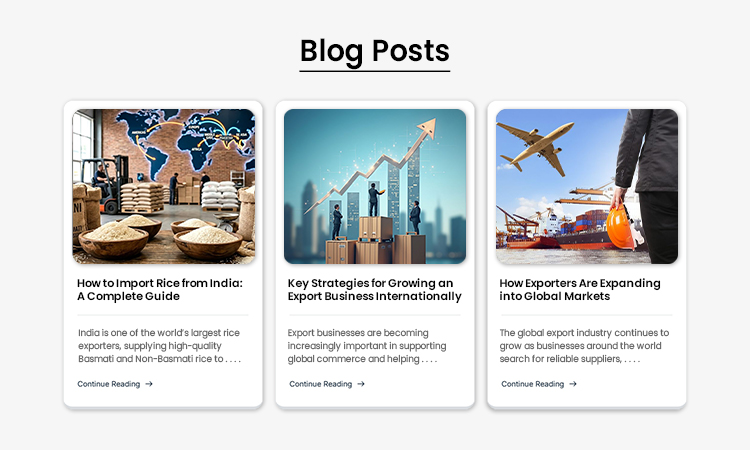
When it comes to content marketing, it’s another most tried and tested strategy that genuinely helps buyers. So, when they are all set to purchase, you will have the first name they always rely on. Exporters can try several methods for content marketing. Some of them are as follows:
- Blog Posts
Publishing blogs is one of the most reliable ways of content marketing. You can publish those blogs that really add value to readers. For instance, you can publish blogs like “ How to Import Rice from India: A Complete Guide for European Buyers”. This blog lures exactly the right audience.
- Product Guides and Whitepapers
The next important thing you can do is to create and publish a variety of content. These include food safety standards, technical spaces, packaging norms, etc. You need to publish anything that makes the job of the procurement manager easy and convenient.
- Video Content
The fact can’t be denied that video content draws the attention of users easily and engages them for a long time. You can publish a variety of video content, including packaging process walkthroughs, factory tour videos, quality check videos, etc. These work effectively to build a vast credibility.
The fact can’t be denied that YouTube is the second largest search engine across the world. Exporters who publish content regularly catch the attention of buyers easily, who may never discover them through Google.
- Case Studies
The next thing you can publish is case studies that really influence buyers and help them take fast action. For instance, you can publish case studies like “How We Assisted a New York-based Retailer Source Premium Almonds at 20% Lower Cost”. You should include real stats, stories, etc., to prompt users to take quick action.
According to the HubSpot State of Marketing report, businesses that publish blogs gain 55% more visitors compared to those that don’t publish. When you even post one solid and export-centered blog on a weekly basis tends to compound into numbers of monthly visitors over 12 months.
- LinkedIn Marketing for Exporters
LinkedIn is one of the most effective social media platforms where B2B deals actually take place. So, being an exporter, you need to focus on this platform and harness its maximum potential advantages.
Let’s find out how you can use this social media platform to promote your business:
- Personal Profile Optimization
You need to create your company’s LinkedIn page profile that should clearly reflect everything about you. It should include who you are, what you offer, markets you serve, etc.
- Company Page
You need to post new updates, whether its shipment milestones, new certifications, trade fair appearances, or product launches. When you post regularly, it not only helps you keep your LinkedIn page active but also helps you grab more sales opportunities as well.
- LinkedIn Sales Navigator
Though it’s a paid tool, it can still be valuable for exporters, especially those who are serious about business promotion. You can filter contacts based on several factors, such as company size, job title, country, etc. These help you maximize your reach easily.
- Content Strategy
Your content strategy should include meaningful and important insights related to market trends, industry, export process, etc. Your aim is to include those posts that should educate your potential buyers and thus can go viral easily.
For instance, you can include a post like a textile exporter from Ahmedabad earned a $600,000 contract with a US-based clothing brand.
- Run Google Ad Campaign
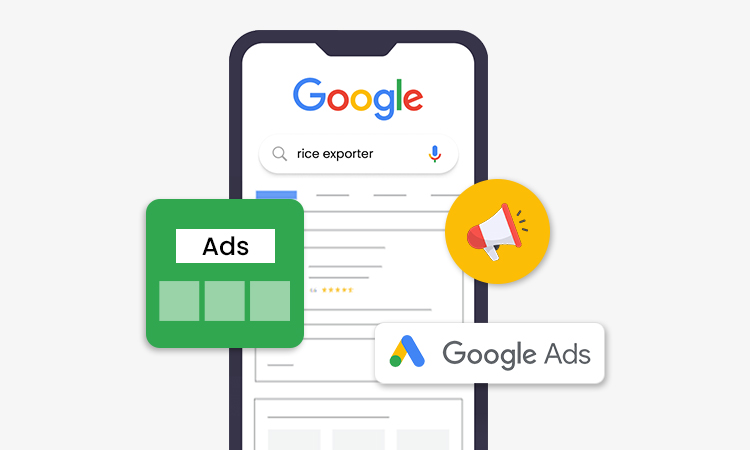
Of course, SEO generates quality leads, but it takes time. So, if you wish to generate an instant lead, you can’t rely only on this. You need to run Google Ads, which can be your fastest path to international buyers.
So, you may be thinking about how to run a Google ad for your export company, right?
- Search Campaigns
It’s one of the important types of Google ads you can run. For this, you can bid on those of high-intent keywords. These help your target customers understand what you actually sell. The following are some of these keywords you can consider to target:
- Rice exporter in India
- Bulk cashew nuts exporter
- Non-basmati rice exporter in India
- Rice exporter company in India
- Best rice exporter in India
- Geo-targeting
As the name suggests, geo-targeting involves running ads only in your targeted markets. For instance, if you wish to target buyers from the US only for your products, you can run geo-targeting ads to target specifically those customers. The major advantage of running a geo-targeting ad is that it helps you avoid wasting budget.
- Landing Pages
If you send traffic generated from Google ads to your homepage, you are indeed committing the biggest mistake. All you need to do is craft a dedicated landing page for every product you offer.
Make sure your landing page includes a clear offer and an inquiry form. A focused landing page is often more effective than a generic homepage.
- Retargeting Campaigns
Retargeting ad campaigns are necessary for those people who have already visited your website but didn’t buy your products. International buyers perform research multiple times before making a final decision.
- How Much Should You Spend on Running Ad Campaigns?
Well, to run a campaign successfully, you need to spend ranging from $400 to $600 on a monthly basis. You should run a fully focused Google Ads campaign that targets 2 to 3 countries and generates a consistent flow of qualified leads.
- Email Marketing for Lead Nurturing

No matter what, email marketing is an evergreen method of generating leads for export companies. A large number of international buyers don’t convert on the first contact – the reason is that they compare 5 to 10 suppliers first and then proceed accordingly. Email marketing lets you understand how you become top-of-mind through the entire process.
So, now the question is, how can you start your email marketing campaign for your exporting company? Well, you need to strategize it day-by-day. We will discuss this plan with the complete details:
- Day 1: On the first day, you need to send a welcome message accompanied by your company profile and product catalog PDF.
- Day 3: On the third day, you can send mail that reflects your lab reports and quality certifications.
- Day 7: Now, it’s time to send an email with a testimonial form or a case study from the same buyer in their region.
- Day 14: Send an email like “How We Work”, which should explain payment terms, MOQ, lead times, etc.
- Day 21: You should include a soft follow-up. It should include a CTA like “Any Queries About Product?”
- Tools Available for Email Marketing
The following are some of the most popular tools for email marketing. You can opt for the right one based on your preferences for your campaign:
- Mailchimp
- Mailerlite
- ActiveCampaign
- HubSpot
- Mailgun
- Mailjet
- Gmail Sequences
- Zoho Campaigns
According to the latest stats by Mailmodo, email marketing delivers approximately $42 for every $1 spent. This makes it one of the highest-returning channels for B2B businesses.
- Use Online Directories and B2B Marketplaces
Another Digital marketing for exporters strategy you should follow is to list your website on many leading B2B platforms. Otherwise, you will miss a number of inbound buyer inquiries on a daily basis.
We have provided some of the top-rated platforms that you can consider to list your website:
| Platform | Best For |
| Alibaba.com | All categories |
| IndiaMART | Indian-based export leads |
| TradeIndia | SME exporters |
| Global Sources | Fashion, Electronics |
| Europages | European buyers |
| Kompass | Industrial/B2B buyers |
- Popular Tips for Listing on B2B Directories
While listing your website on the top-notch B2B directories, you need to consider the following important tips and tricks:
- Don’t only list. Instead, you can optimize your profile by using quality product images, keywords, complete specs, etc.
- Whenever you get inquiries, you need to respond the same even within 2 hours. Always remember, buyers contact 5 to 10 suppliers randomly. So, when you respond fast, you will definitely win the race.
- Gather reviews and ratings. They indeed have a massive influence on buyers who already rely on them.
- Social Media Marketing Strategy for Export Business

As an important part of digital marketing for exporters, social media marketing is one of the reliable methods of promoting export businesses. It’s much more than just going viral and is a great option for strategic visibility in the targeted space. So, the most common question that comes to mind for every exporter is, ” Which is the best social media platform to target?
Well, we have mentioned here the following social media platforms you can consider to promote your export business:
- Facebook and Instagram
While talking about top social media platforms for promotion, Facebook and Instagram come first. These are indeed the right options for showing your factory, product, packaging, and more visually.
These platforms are indeed more suitable for a range of export businesses such as handicrafts, food products, lifestyle goods, textiles, and more. Short reels reflect your production process and get a vast organic reach.
- YouTube
YouTube is another popular social media channel you should never forget to target. You can create and post videos and shorts on these channels to promote your business reach to your target audience.
You can post videos related to quality testing, factory tours, the process of exporting, etc. These are explained videos that are useful to build a deep trust among buyers. When potential buyers watch your videos, they are most likely to order your product.
- X
It’s another platform that lets you post the latest updates related to your business activity and thus maximize your reach among your targeted buyers. This platform is quite beneficial for engaging with trade journalists, APEDA, FIEO, and others. Less direct lead-generating, but good for thought leadership.
Practical Tip: It’s advisable to post at least 3 to 4 times on a weekly basis on Instagram
with certifications, images, packaging content, etc. Apart from this, you need to use proper hashtags to maximize your reach among the right audience organically.
- Conversion Optimization
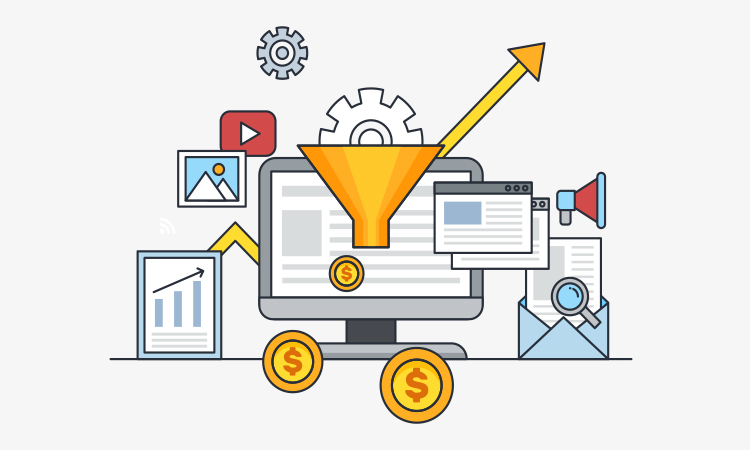
A large number of export websites convert even less of their visitors. You can solve these problems through Conversion Rate Optimization (CRO). Let’s have a look at how you can make conversion optimization more effective:
- Add a sticky header CTA.
- Always use exit-intent popups.
- Reduce the friction
- Add live chat
- Trust signals everywhere
You can leverage tools such as Hotjar and Google Optimize to analyze how visitors engage with your website, and reflect exactly where people actually drop off. You need to do A/B testing based on your landing pages and CTAs.
- Track Results Through Analytics and KPIs

Your entire effort of Digital marketing for exporters will be futile when you are not tracking analytics to check results. Needless to mention, data is everything in digital marketing. So, if you really wish to track results, you need to set up the following tools quickly:
- Google Analytics 4 (GA4): It helps you analyze where your visitors actually come from and also the pages they visit.
- Google Search Console: You need to analyze effectively those keywords you rank for and also the countries that click your pages.
- UTM Parameters: You need to tag every important link, be it social posts, emails, or directories. So, you will be able to know which source sends you leads.
Apart from this, you need to check the following important key performance indicators (KPIs) to understand which direction your digital marketing for exporters effort is going:
- Organic Traffic
- Inquiry Conversion
- Cost Per Lead (CPL)
- Email Open Rate
- Lead-to-Order Ratio
- Geographic Traffic
You need to analyze these numbers on a weekly basis. In case one channel delivers leads at almost half of another, you can double down on it.
Digital Marketing Mistakes Exporters Should Avoid
Digital marketing for exporters can deliver desired outcomes only when it’s done in the right way. Even a small mistake can deprive you of getting the desired outcomes. We have described here some of the common mistakes that are mentioned as follows:
- Relying Exclusively on Trade Portal
A large number of exporters list their businesses on popular directories such as IndiaMART, Alibaba, TradeIndia, and more. They then wait for inquiries, and then what happens? Many competitors are listed better beside you, which often compete on price alone.
- Solution: You need to leverage B2B portals as a single channel rather than your entire strategy. You need to blend them with a strong SEO, website, LinkedIn presence, etc. It helps you find buyers independently and gives you more negotiating power with higher credibility.
- Poor Website User Experience
One thing you need to take into account is that your website serves as a global storefront. If your website loads slowly and looks inferior on mobile, it makes it tough for buyers to discover your products. Buyers even leave you within seconds and never come back to you.
- Solution: All you need to do is to invest in a mobile-friendly and fast-loading website that includes clear product pages, easy inquiry forms, and various trust signals such as client logos, certifications, and export history. Always remember that first impressions in the digital world keep great importance and are permanent.
- Not Targeting Specific Buyers
Running a general campaign is the biggest mistake that many exporters commit. In this, they target everyone and thus often fail to achieve their end goal. It leads to a draining marketing budget while yielding low-quality leads rather than genuine buyers.
- Solution: You need to be specific while targeting your buyers. It’s advisable to define their company size, industry, country, designation, etc. After doing the same, you can build your LinkedIn campaigns and Google Ads. content strategy across that specific profile. You need to understand that target marketing always outperforms generic outreach.
- Ignoring SEO and Organic Visibility
One of the major setbacks with paid ads is that they stop working once your budget drains out. On the other hand, many exporters often avoid SEO and rely specifically on paid traffic, which leaves long-term organic growth untapped entirely.
- Solution: It’s a good idea to invest in SEO. You need to publish relevant content, optimize your product pages, build backlinks from industry directories, etc. Not to forget, organic ranking is time-consuming but delivers cost-free and quality traffic for years. It’s important and a long-term asset.
- Not Following Up on Leads Quickly
Buyers fill out your query form and then wait for 48 hours for a response. They have already shortlisted your competitors. You should always follow up silently, killing various export opportunities regularly.
- Solution: Make sure you set up automated email responses that address inquiries quickly. Make sure you send a personalized follow-up within 2 to 4 hours. Speeds reflect both seriousness and professionalism.
- Inconsistent Branding
If you fail to maintain consistency of logo on your LinkedIn, website, or brochure, it confuses your target audience. Even a mismatched tone across social posts and emails creates an inconsistency that makes your business look unreliable and unorganized to global buyers.
- Solution: Make sure you create simple brand guidelines that cover your color palette, logo usage, communication tone, fonts, etc. You need to apply it with consistency across every digital touchpoint, whether it’s social media, website, marketing materials, or email signatures.
Digital Marketing Roadmap for Exporters
You need to have a structured roadmap for your digital marketing for exporters to run and manage it properly. Let’s understand how to create it properly:
- Build a Strong Digital Foundation
Make sure you have a robust digital foundation before you invest a single penny in Google ads or SEO. It means building a conversion-oriented and professional website that communicates clearly what you export, who you cater to, and the reasons why buyers rely on you.
Your website should work smoothly on mobile, load quickly, and have dedicated product pages with certifications, specifications, an easy inquiry form, etc. You also need to establish SEO basics along with your website, be it its proper meta tags, keyword research, or optimized page content.
Make sure you define your brand identity easily, be it its colors, logo, messaging, tone, or voice. Every single digital activity you perform develops your foundation. Therefore, getting it right from the initial phase saves your valuable time and money.
- Generate Traffic
Once you create a solid foundation, it’s the right time to get the right buyers to your website. This stage involves various important channels that work together.
- SEO brings vast and consistent organic traffic from those buyers who search for your products worldwide.
- Google Ads bring quick visibility for high-intent search queries in the targeted markets.
- LinkedIn marketing is useful to make your reach among procurement managers, trading companies, and importers.
- Content marketing helps you create authority through product guides, blogs, industry insights, etc. These are entirely educational and educate potential buyers.
If you use only one channel, it can indeed be quite risky for you. All you need to do is have a multi-channel approach. It offers a steady inquiry flow even if one channel underperforms on a temporary basis.
- Lead Nurturing and Conversion
Getting only traffic to your website can’t help you. It’s crucial to convert visitors into your actual buyers who need a deliberate nurturing process. You need to set up automated email sequences that engage leads quickly once they inquire.
Use retargeting ads properly to ensure your visibility among buyers who have already visited your website but could not contact you. You should integrate a CRM system properly to follow-up status, track every lead, and conversation history. At this stage, the majority of export inquiries convert into actual business relationships.
- Scale Growth Internationally
Once your system generates results consistently in one or two markets, it’s the right time to scale. This clearly reflects the expansion of campaigns to many countries, ads for multiple languages, localizing your website content, implementing advanced marketing automation, etc. These have the capability of handling even higher inquiry volumes, even without increasing your workload proportionally.
During this step, your digital marketing for exporters works almost similarly to a perfect export inquiry engine, which attracts, nurtures, and converts international buyers across different geographies.
Future Digital Marketing Trends for Exporters
Since the digital marketing space is evolving faster, exporters who are familiar with these important shifts have a great advantage in luring international buyers over the coming years. Take a look at some major trends every exporter should prepare for:
- AI Marketing and Automation
Instead of being a futuristic concept, Artificial Intelligence has a major influence on how businesses produce and nurture leads. Automation makes export marketing fast and smart, right from an AI chatbot to predictive analytics. You can close deals faster by leveraging AI tools for ad optimization, email personalization, and lead scoring.
- Voice Search Optimization for Global Buyers
A large number of procurement managers of late harness the power of voice search to find suppliers, especially on mobile devices. Buyers nowadays speak most of their queries rather than typing the same.
It reflects your website content required to optimize for long-tail and conversational keywords that mirror how retail buyers speak. Exporters who avoid voice search can lose organic visibility to competitors who adapt early.
- Hyper-personalized Buyer Experience
Today, global buyers expect messages customized based on their country, industry, and purchasing requirements. You can leverage data directly from your website behavior and CRM to deliver personalized mail sequences, optimized landing pages, and targeted ad creatives.
These communicate directly to every important buyer segment. Personalization works effectively in building connection, which is important for trust faster than any brochure ever could.
- Video-focused Marketing Strategy
Whether it’s long-form or short-form videos, they become the most appreciated format for B2B buyers across the world. Whether it’s product demonstration reels, factory tour videos, or client testimonial clips, they build a great credibility that any written content can’t match. Exporters who invest in top-quality content for YouTube, LinkedIn, and their website will stand out.
- Multilingual and Localized Marketing
When you target buyers from different countries across the world in their local languages, it becomes a great trust factor. Be it region-specific ad campaigns, localized landing pages, or translated product catalogues, these reflect your having a complete understanding of their market and reflect your commitment to serving them. With the intensifying global competition, localization tends to shift from a necessity for exporters that target diverse international markets.
How Professional Digital Marketing Services Help Exporters
Managing digital marketing for exporters is quite stringent since they are already busy with their core business activities. This makes hiring a professional digital marketing service provider a good option rather than a choice. Let’s have a look at some other benefits of hiring a professional service provider:
- Assist in Creating Global Buyers Strategy
A professional agency doesn’t run only ads; they also assist you in developing an international marketing strategy. This includes identification of your profitable target markets, determining the right channels, and defining your ideal buyer persona, etc., to reach them.
Rather than predicting the industry to target or the platform to leverage, you should have a complete roadmap tailored to your export objectives and product.
- Save Your Time
A digital marketing for exporters company handles everything on your behalf, right from website updates and search engine optimization to email sequences and ad campaigns. This helps you save your time and thus helps you focus on your business growth. This time is directly proportional to the grabbed opportunities.
- Access to Specialized Skills
Digital marketing experts possess the required skills like SEO, paid ads, content writing, data analysis, and graphic design. When you hire these professionals. separately as your in-house team, it costs more.
When you hire a professional agency, they bring the entire skill set under a single roof. It gives you complete access to expertise that would take years and requires a huge investment to build internally.
- Gain Fast and Consistent Results
Digital marketing for exporters agencies that already work with exporters are already aware of what works and whatnot. They don’t waste their time in the trial-and-error phase. This reflects how your campaign is structured better, even from the first day. Besides, your website should load fast, and inquiries start coming in sooner than if you figure things out independently.
- Smart Ad Spend
With a professional digital marketing service provider, you get an assurance that every rupee is allocated with the right strategy, right geography, audience, message, etc. They prevent you from irrelevant targeting that not only drains your budget but also lures zero genuine buyers.
- Make Data-based Decisions
Professional teams offer regular performance reports that cover leads, traffic, conversion rates, and ad results. They interpret data and translate it into the next steps. Rather than operating on gut feeling, every marketing decision you make is supported by real numbers, which minimize risks and boost results over time.
Conclusion
So, after going through the entire discussion, you may have understood the importance of digital marketing for exporters. It’s an important method to generate consistent inquiries from international clients.
Whether it’s nurturing leads through automation or building credible websites to run targeted campaigns, every strategy covered in this guide works better to grow your export business properly. Partnering with a professional digital marketing agency helps you implement the above strategy better and generate qualified leads.
FAQs
Ans. Well, the best strategy for digital marketing for exporters includes the combination of Google Ads, SEO, content marketing, and LinkedIn marketing. This approach works better to boost global visibility and attract more qualified international buyers.
Ans. Yes, small exporters get benefits from digital marketing. It allows them to reach international buyers, build brand credibility, generate export inquiries, and compete with large businesses through cost-effective strategies. These include social media marketing, SEO, targeted online advertising, etc.
Ans. Exporters need to wait for 3 to 6 months to get results from digital marketing. The overall time period depends on many factors, such as competition levels, strategy, target markets, ads, quality of SEO, content efforts, etc.
Ans. Yes, digital marketing allows exporters to rapidly enter new international markets in several ways. These include targeting region-specific buyers, increasing global visibility, building trust through SEO, generating qualified export leads, and more.
Ans. Yes, digital marketing is cost-effective for export businesses. It allows exporters to maximize their reach among global buyers through social media, SEO, paid ads, etc., at the lowest costs compared to trade shows.
Ans. Yes, digital marketing for exporters can maximize exports through helping businesses to make their reach among global buyers, generate qualified export inquiries, build international brand visibility, and more. It helps you promote your products 24/7 through social media, SEO, paid ads, etc.

