





Automotive PR improves online visibility for manufacturers, dealerships, suppliers, EV companies, and mobility startups through automotive publications, digital media, and mainstream news.
When PR is combined with marketing and sales, it can directly help a business grow. According to the 2025 State of B2B PR Report, 68% of marketers could directly link their PR efforts to higher sales. 90% of B2B marketers now consider PR as the most important strategy to improve brand awareness.
In this comprehensive guide, we explain how to create an effective automotive public relations strategy, pitch journalists, and secure features in top automotive publications for sustainable business growth.
What Is Automotive PR?
As it pertains to advertising, automotive PR is the art of modifying how people think about a vehicle brand, dealership, or auto firm via expert comments, news articles, and sponsored commercials. PR specialists build relationships with journalists and suggest compelling themes to position firms as credible voices in the industry. PR is getting informed outsiders to blog, tweet, and write about your firm, rather than promoting it yourself.
- Why Is Automotive PR Important in 2026?
As per MRFR (Market Research Future), the automotive industry was valued at $4,357.69 billion in 2025 and $8,508.56 billion by 2035. North America leads this growth. The region’s $1,020 billion market is being fueled by robust EV demand, advanced safety tech, and a rapidly innovating consumer base. When the market doubles, so does competition. More brands, more EVs, more tech launches, all competing for the same buyer attention. With the market growing, hundreds of brands will launch products simultaneously. Public relations for the automotive industry helps your brand to get noticed and not get lost in the crowd.
- Builds Consumer Trust- There are various customers who don’t trust ads nowadays. They have more faith in journalists. It’s like when a trusted outlet covers your brand fairly; that credibility rubs off. It’s earned trust, not bought trust. That matters more every year.
- Increases Brand Awareness- Not everyone searches by your brand name. Automotive PR gets you in front of people who weren’t looking for you yet. A feature in a major outlet reaches thousands who would never see your ads.
- Earns High-Authority Backlinks- Good coverage means good links. When journalists link to your site, it tells Google that you are legitimate. These links are difficult to fake and nearly impossible to buy. That’s precisely why they’re so important.
- Supports SEO Performance- Backlinks, brand mentions, and press coverage are very important for your search engine rankings. PR is no longer separate from SEO. It will work together in 2026.
- Drives Qualified Leads- People who read about your brand in a reliable source are already interested when they come. They convert better because they already trust what they read.
- Helps Launch New Vehicles Successfully: A new model needs buzz before it arrives in showrooms. Early reviews, first-drive stories, and expert opinions influence the feelings of people before they see the car in person. Good PR creates hype.
How Automotive Publications Decide What to Publish
Automotive PR editors are like guardians; they review pitches and decide whether they are worth publishing based on several criteria.
- Newsworthiness: The first thing editors will ask is “why now? Editors are seeking the most accurate, fresh news. Your story should be unique and show what extra new angle you provide through your automotive services. That is the catch. So give news accordingly.
- Industry patterns: The Stories should tie into the bigger narrative – e.g. autonomous driving, supply chain shifts, chip shortages. Always research automotive trends, then go for the story you will give.
- Technology innovation: Infotainment, ADAS or industrial process innovations attract tech-savvy readers and produce high engagement.
- EV progress: The editorial plan focuses on EV progress. “Interest in EVs from consumers and investors is strong, and so the focus is primarily on the battery, charging infrastructure, and range improvements.
- Safety research: Crash test results, NHTSA/IIHS conclusions, and safety technology articles are reputable and trusted by readers and often publicized immediately.
How to Get Featured in Automotive Publications
Getting your information in automotive publications isn’t all about press releases. Journalists look for accurate information, up-to-date analysis, industry knowledge, and trustworthy narratives. The following 10 strategies can improve your chances in getting good media coverage and building brand credibility:
Step 1: Identify the Right Automotive Publications
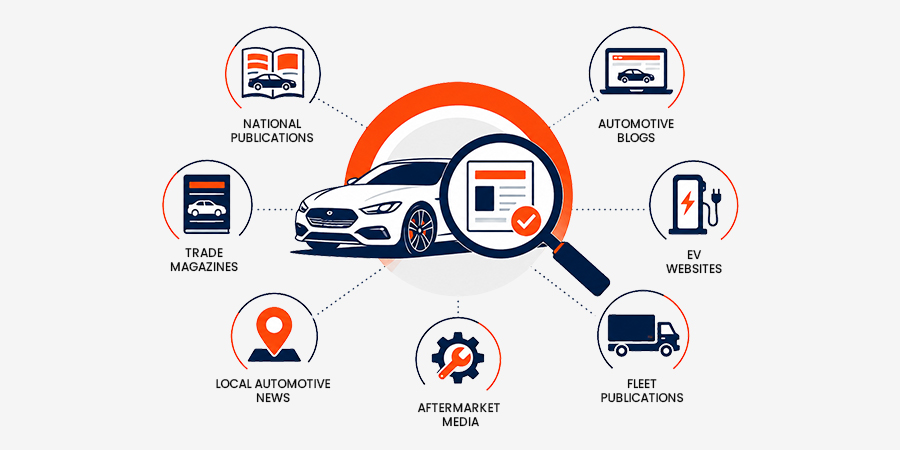
Before starting PR campaigns or strategies, you need to understand where you publish. Focus on your target audience and select the media houses. Go through their publication’s story-writing style. And then pitch your story accordingly. It can help you to get noticed.
- National Publications: If you’re launching a big product, always do in-depth industry research. Go for well-known national publication houses which have national impact.
- Trade periodicals: You can contact professionals, such as manufacturers, suppliers, and dealers. Thereafter, you may discuss your views on company development and innovative ideas through the media.
- Local Automotive News: You should share news about dealership openings, local events, partnerships, and regional achievements to gain visibility in the local market and drive customers to your auto dealership.
- Automotive Blogs: There are numerous niche blogs that are dedicated to performance cars, SUVs, luxury vehicles, or repairs. These are usually the venues for expert opinions, reviews, and fresh stories.
- Fleet Publications: For commercial fleet operators, get fleet management solutions, safety advancements, and cost-saving innovations to the media that matters.
Step 2: Know the audience of every publication
Then you should identify the right audience. When you learn whom you’re serving, you’ve won the first battle. Because search intent is the key. Each media house has its own audience, so pitch your automotive brand accordingly.
- Automotive Enthusiasts: You should focus on writing about new car announcements, performance upgrades, motorsports, and classic cars. Always add new automotive technology; it will attract various consumers.
- Consumers: Most importantly, try to educate your clients. That’s why we always add real-life matters, such as vehicle safety, fuel economy, and affordability.
- Manufacturers: You should share news regarding production advancements, supply chain changes, sustainability efforts, collaboration efforts, research, and cutting-edge manufacturing technologies.
- Investors: Then you may present business growth, financial results, expansion in the market, mergers and acquisitions, and long-term plans that reveal company value and industry potential.
- Fleet Buyers: Always try to highlight fleet management solutions, operating cost savings, vehicle reliability, telematics, vehicle safety features, and productivity enhancements for commercial fleets.
- Repair Shops: Create content about diagnostic tools, replacement parts, repair technologies, technician training, and new products for the automotive aftermarket industry.
Step 3: Build a Newsworthy Story
Most journalists don’t advertise. They make stories that inform or present something new. The core of your automotive PR campaign should be about providing real value. The development of a story is important for successful media outreach, strong strategic communication, and getting media interest for public relations agencies.
- New Vehicle Launch- If it’s a new model, it only qualifies as news if it has something new to offer. Emphasize new safety enhancements, fuel-saving options, electric powertrains, Internet connectivity, or distinctive styling. Describe how the vehicle addresses customers’ problems rather than giving specifications.
- Industry Research- Original research attracts editors because it provides fresh insights. Conduct surveys, analyze customer buying behavior, or publish market trends affecting automotive brands. Include verified data, charts, and expert commentary to make the story more credible.
- Company Milestone- Honor accomplishments that show how your business has grown. For instance, entering new markets, opening a factory, reaching a production milestone, or ending a major partnership are all examples of this.
- Sustainability Initiative- Environmental content has strong editorial attention. So you may share measurable results from reducing emissions, adopting renewable energy, recycling materials, or improving sustainable manufacturing. Always add relevant and transparent data rather than general statements.
- New Dealership Opening- A dealership launch becomes news when it benefits the local community. Discuss new jobs, improved customer service, EV charging infrastructure, advanced service centers, or community partnerships.
- Technology Innovation- Technology stories often earn significant media interest. So you should focus on showcasing innovations such as AI-powered diagnostics, autonomous driving systems, connected vehicle platforms, predictive maintenance, cybersecurity improvements, or smart manufacturing. Moreover, try to explain the real-world impact for drivers and businesses.
- Awards and Industry Recognition- Then you can present the prestigious awards. It represents trust and authenticity of your brand. A good idea is to present your recognition to create a story. That includes the judging criteria, like why your company won, and how the recognition reflects.
- Customer Success Story- After that, the most important factor that builds your automation brand’s authenticity is the real world customer’s testimonials. You can ask your clients to send feedback, and then you can showcase these on various social media platforms and your website. You can also make stories with these.
- Get your story ready for the media – You should always implement professional public relations services, not salesy language, to project strong stories. An authentic PR agency knows how to tell strong stories and share them with the media. When you manage your social media, you can extend published coverage to more people. Increase the number of people who interact with it, and increase your brand’s authority across multiple channels.
Step 4: Create a Professional Automotive Press Release
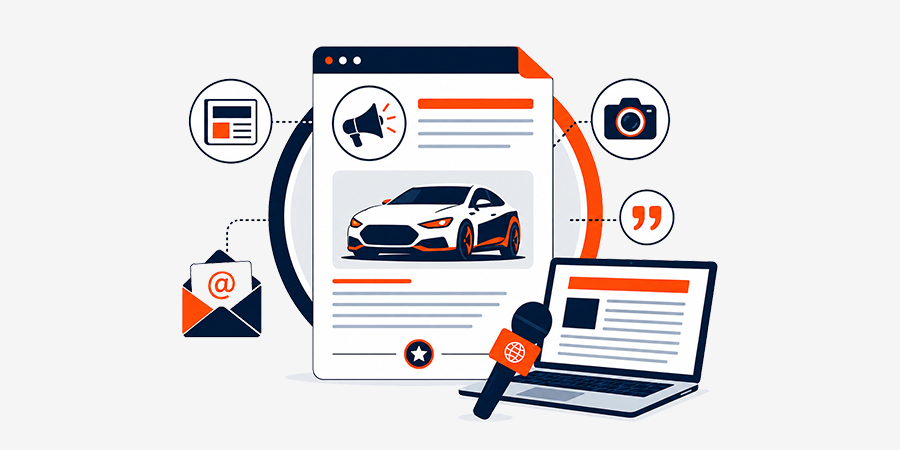
A professional press release is the base of successful automotive PR. Through your press release, you should present clear facts and avoid promotional language. Always remember that editors receive hundreds of pitches every day, so your release should have eye-catching factors that attract editors’ attention.
- Strong Headline: The headline should be very precise and clear. Your headline ought to present the main automotive news theme.
- Dateline: You need to add the date and place of publication from which the article came. This is important for context and improves credibility.
- Lead Paragraph: The opening paragraph should provide answers to the 5 W’s: Who, What, When, Where, and Why.
- Supporting Details: The supporting details you can add include background information, product features, customer benefits, or market impact. It should consist of short information blocks.
- Executive Quote: You can pick a quote from a business executive. It should be short and professional. And it needs to have an expert point of view, as opposed to marketing verbiage.
- Numbers: Always try to include verified data and research findings. It will support your announcement and make it more credible.
- Contact Information: You must have a media contact who has an email address and a phone number.
- Images and Videos: Photos and videos should be high-resolution. Always add product demonstrations or event videos. It makes your story more trustworthy.
- Media Kit – The media kit should consist of your company history, logos, executive profiles, information sheets, and previous press coverage. It is especially effective for product launches and event management initiatives.
- Boilerplate: Then you can end the press release with a brief description of your company. And explain what the business does, its key areas of expertise, major products or services, and relevant industry focus. Press releases should use factual, concise, and consistent boilerplate. Add the company’s website so journalists can quickly find more information.
Step 5: Build Relationships with Automotive Journalists
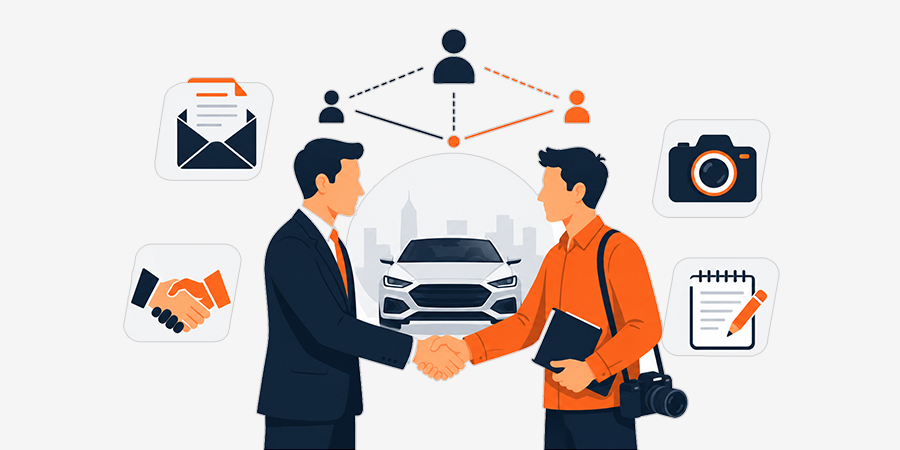
Long-term relationships with journalists are what make automotive PR work, not one-time pitches. Journalists value sources, they can trust to give them correct information, insider information, and quick answers. Regular engagement with the media improves relationships and increases the chance of future coverage.
- Personalized Outreach: Before you pitch for your automotive brand, you may read other journalists’ most recent articles. So you may mention their past work and explain how your story fits with what they’re interested in writing about. Don’t send generic emails to a lot of people.
- LinkedIn Networking: To maintain your automotive brand’s professional image, you need to create professional connections with editors and reporters. So you can share useful thoughts and information about the industry. And you can also leave comments on others’ articles and interact with them politely. But remember, do not aggressively promote your business.
- X (Twitter): Many automotive journalists use X to discuss breaking news and request expert sources. Follow their updates, join relevant conversations, and contribute valuable perspectives.
- Industry Events: To get more effective results, you can meet journalists in person by attending conferences, media briefings, product launches, and networking events. Meeting face to face often creates stronger professional relationships than email alone.
- Auto Shows: Major automotive exhibitions provide opportunities to introduce new products, arrange interviews, and demonstrate innovations directly to the media.
- Follow Journalist Beats: Find out what each reporter specializes in, such as electric vehicles, self-driving technology, manufacturing, motorsports, or the automotive industry.
- Maintain Contact: Talk to people even when you’re not trying to get coverage. Give them exclusive information, answer their questions quickly, and build trust. Over time, this will lead to more media opportunities and a stronger brand image.
Step 6: Offer Exclusive Stories
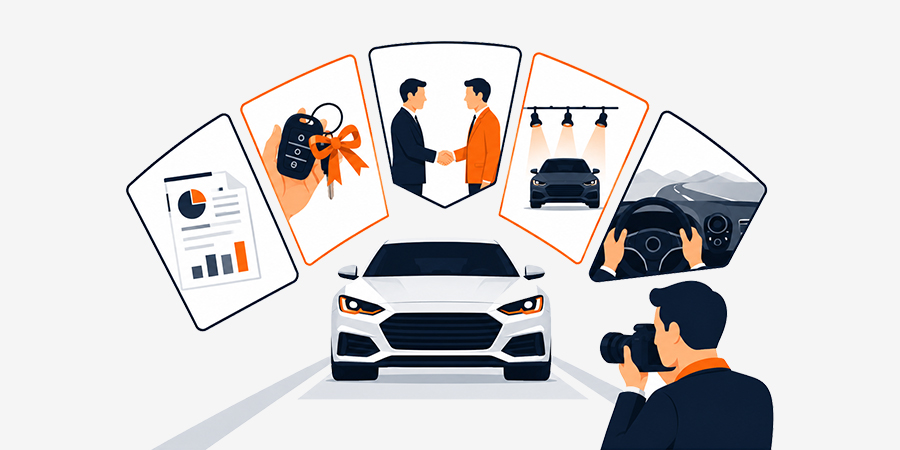
Exclusive content is particularly valuable for journalists to talk about your brand before anyone else does. Give each outlet unique access or information to help them create their own story instead of sending the same notification to all of them. This is a proactive move you can take to improve your brand’s internet presence and promote your firm as a trusted partner in the automotive PR sector.
- Early Product Access: Invite selected journalists to experience a new vehicle or product before its public launch. Early access allows them to publish exclusive reviews and in-depth analysis.
- First Interviews: Offer executives, engineers, or designers for exclusive interviews. Their insights demonstrate expertise and provide valuable perspectives on innovation, business strategy, and the latest trends.
- Research Reports: Publish original market research, customer surveys, or industry reports that address client needs. Exclusive data often attracts editors seeking credible sources.
- Test Drives: Organize hands-on driving experiences so journalists can evaluate performance, safety, comfort, and technology. Genuine first-hand experiences lead to more authentic coverage.
- Product Demonstrations: Showcase new technologies through live demonstrations, especially during major events. Visual experiences help journalists understand product benefits and produce engaging stories.
Step 7: Use Original Research and Industry Data
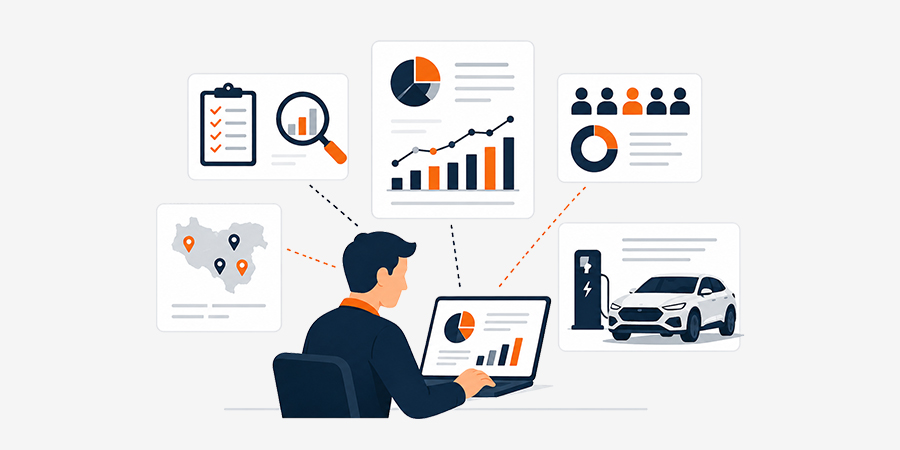
Journalists are more likely to write about stories that are backed up by original research than by claims made by companies. Having exclusive data gives your company more credibility, opens up new perspectives, and establishes it as a trustworthy source in the field. A proactive approach to research can help you get more media coverage, build the authority of your brand, and improve your chances of getting interviews and award submissions in the future.
- Surveys: Conduct surveys to understand customer preferences, vehicle-buying decisions, maintenance habits, or technology expectations. Original survey results provide unique insights that journalists cannot find elsewhere.
- Market Reports: Publish reports on industry growth, supply chain developments, pricing trends, or emerging business opportunities. Data-backed reports help reporters explain changes in the automotive market with confidence.
- Consumer Behavior: Analyze how buyers research vehicles, compare brands, choose financing options, or adopt digital purchasing experiences. These insights help journalists create informative, reader-focused stories.
- EV Adoption: Share verified statistics on electric vehicle sales, charging infrastructure, consumer adoption rates, or sustainability initiatives. As EV demand continues to grow, this data attracts strong editorial interest.
- Safety Statistics: Show research on how to stop accidents, advanced driver assistance systems (ADAS), vehicle recalls, or how well cars do in crash tests. Safety data that you can trust encourages people to report problems in a responsible way.
Step 8: Become an Industry Thought Leader

One of the best automotive PR methods is thought leadership since journalists love to quote known specialists, not firms that are focused on promoting things. You are boosting your public relations, growing your internet reputation, and establishing a brand that will last by offering valuable information on a frequent basis.
- Executive Commentary: Encourage company leaders to comment on industry trends, regulations, emerging technologies, and market challenges. Well-informed commentary demonstrates expertise and helps address evolving client needs.
- Opinion Articles: You can produce authentic, informative articles. Topics can be chosen as related to electric vehicles, sustainability, and autonomous driving. Furthermore, you can also publish opinion articles with reliable sources.
- Podcasts: Nowadays, podcasts are growing. So you can take part in automotive and business podcasts. There, you can discuss innovations, customer challenges, and future market developments.
- Guest Columns: Contribute expert articles to respected automotive publications and business magazines. High-quality content increases credibility while supporting long-term content creation and SEO.
- Conference Speaking: You can be an industry expert when you engage in trade shows, automotive conferences, and industry forums.
- Expert Quotes: Make executives available for journalist interviews and timely quotes on breaking news. Fast, insightful responses increase the likelihood of repeat media coverage.
Step 9: Respond Quickly to Media Requests
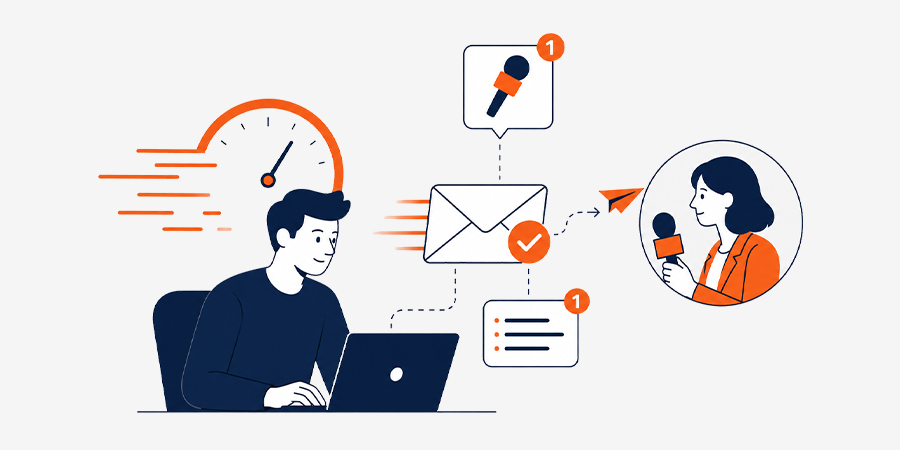
Speed is crucial in automotive PR. Journalists are often working to tight deadlines and need expert sources within hours, not days. Trust comes when you provide accurate information, and it enhances media outreach and the chances that your automotive brands will be mentioned again.
In fact, since the dawn of HARO, many journalists are now using other platforms to reach experts. Stay current with services on a daily basis to look for opportunities relevant to the automotive industry and give short, factual answers.
- Qwoted: A matchmaking platform for journalists and qualified experts. Fill up your profile, demonstrate your skills, and respond promptly, providing accurate information and relevant details.
- SourceBottle: SourceBottle allows reporters to crowdsource expert views on a variety of issues. Ask experience-relevant questions and answer them in a realistic, non-promotional way.
- Featured: Featured enables businesses and industry professionals to contribute expert quotes that journalists and publishers can use in articles. Consistently providing valuable insights increases your credibility and media visibility.
- Journalist Request Platforms: To get a wider audience’s attention, you need to analyze multiple media request platforms and social channels every day. If you respond faster, use original data, and present expert commentary,it boosts your presence.
Step 10: Measure Automotive PR Performance
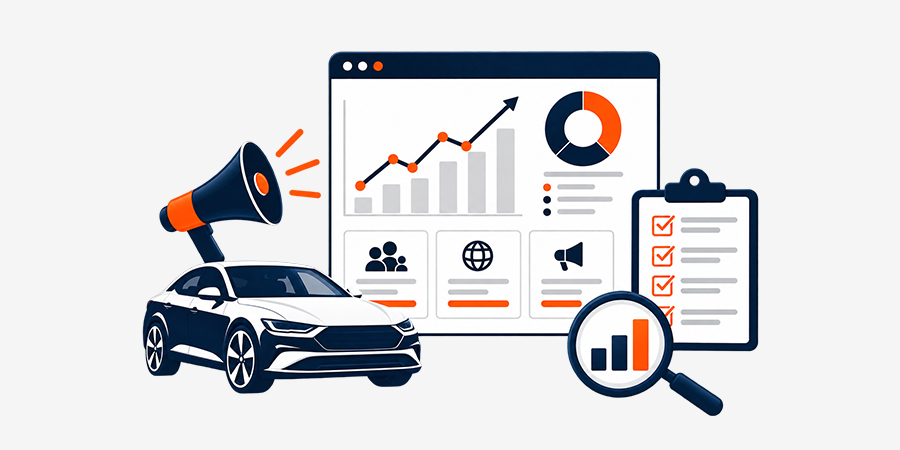
You need to measure results to know whether your automotive PR strategy is meeting your business goals. Don’t just look at how many articles have been published; also look at how media coverage increases exposure, credibility, and sales in the major automotive market. Tracking the right metrics helps improve campaigns, build brand awareness, and get results that matter.
- Media Mentions: Keep tabs on the frequency with which your business is mentioned in reputable automotive magazines, news websites, and trade blogs. Quality coverage is more valuable than quantity.
- Backlinks: Monitor backlinks earned from authoritative media websites. High-quality backlinks improve SEO performance and increase website authority.
- Domain Authority: Measure whether earned media contributes to stronger website credibility over time
- Referral Traffic: Analyze how many visitors arrive from news articles, reviews, and media coverage to understand audience engagement.
- Share of Voice: Compare your media visibility with competitors to see how your brand performs within the major automotive market.
- Brand Mentions: Track online discussions, social media buzz, and news references to gauge overall brand exposure.
- Sentiment: Assess whether media coverage and public conversations are positive, neutral, or negative. This helps maintain effective reputation management.
- Organic Traffic: Check if PR campaigns are helping SEO by increasing search engine traffic after big stories or major events.
- Leads and Conversions: Identify the effect of media exposure on inquiries, sales, and your ability to meet client goals.
What Are the Best Automotive Publications to Pitch?
To get your story published, you need to pick the right publications. A good automotive PR plan targets media outlets with readers who are interested in the same things your business does. A coordinated team should look into each publication’s editorial focus before pitching. This method gets excellent media coverage, helps marketers reach their goals, and gives clients and brands powerful results.
- Consumer Automotive Publications
These publications target everyday car buyers and automotive enthusiasts. They are ideal for vehicle launches, reviews, buying guides, and ownership tips.
- Examples:
- Car and Driver
- MotorTrend
- Edmunds
- Top Gear
- Industry Trade Publications
Trade publications focus on business developments across the automotive industry. It includes manufacturing, dealerships, supply chains, and aftermarket trends.
- Examples:
- Automotive News
- Ward’s Auto
- Automotive World
- Automotive Technology Publications
These outlets cover connected vehicles, autonomous driving, AI, software-defined vehicles, cybersecurity, and advanced manufacturing technologies.
- Examples:
- Automotive Dive
- EE Times
- Automotive Testing Technology International
- Electric Vehicle Publications
If your company works with EVs, batteries, charging infrastructure, or clean mobility, these publications provide highly targeted exposure.
- Examples:
- Electrek
- InsideEVs
- Charged EVs
- Fleet Industry Publications
Fleet-focused media reaches commercial fleet managers, logistics companies, rental businesses, and government buyers.
- Examples:
- Automotive Fleet
- FleetOwner
- Work Truck
- Local Automotive News
Regional publications help dealerships, service centers, repair shops, and local automotive businesses gain visibility within their communities. They are excellent for dealership openings, community initiatives, sponsorships, and local events.
- Examples:
- Newspapers for local businesses.
- Articles about cars in regional newspapers.
- Vehicle magazines based in cities.
AI and the Future of Automotive PR
The world of the automotive industry is changing quickly, and automotive PR is adapting to keep up. PR professionals aren’t going away because of AI; it’s just changing how we communicate, so it’s faster, sharper, and more targeted.
- AI-Assisted Media Monitoring
AI tools now track brand mentions, sentiment, and competitor coverage in real time, so people don’t have to manually look through hundreds of outlets. This means that PR professionals can spot a bad story or a moment that goes viral in minutes instead of days.
- Predictive Media Trends
AI looks at how topics have been covered in the past to guess what will be popular next, whether it’s new developments in EV batteries, debates about self-driving cars, or changes in the law. Therefore, PR firms can come up with unique concepts and pitches before a trend becomes popular. This helps brands look like early adopters instead of ones that came late.
- Personalized Journalist Outreach
There will no longer be any generic mass pitches. An artificial intelligence (AI) system looks at a journalist’s past work, tone, and interests to help them write personalized pitches that get read. As it turns out, AI is what makes personalization possible on a large scale. This makes outreach feel human, not automated.
- AI-Generated Summaries
AI summarizes long press releases and technical reports into short, digestible summaries, saving time for journalists and improving pick-up rates. If an editor is busy, they’ll probably choose a story that they can read in 30 seconds or less.
- Generative Search Visibility
PR must now optimize for AI citation, not just Google rankings, as SGE and Perplexity become primary discovery channels. If you present well-organized, factual data, AI engines will probably recognize your content.
- Human Oversight for Authenticity
However, all that automation still needs human judgment. AI is able to write, dissect, and forecast, but only humans can safeguard emotional nuance, brand voice, and ethical accuracy. Authenticity cannot be automated; it has to be preserved. Together, these tools are redefining automotive communication strategies for a smarter, faster Automotive public relations era.
Common Automotive PR Mistakes to Avoid
Even strong brands fail at automotive PR when execution goes wrong. Here are the most common mistakes that weaken effective communication and damage media relations:
- Generic press releases- It doesn’t show much effort to send the same dull press release to all of them. It’s easy for journalists to spot copy-and-paste pitches, so they don’t bother with them.
- Mass emailing journalists- One email to hundreds of reporters? That seems lazy. Real automotive public relations is about targeting the right journalist with the right story, not spraying and praying.
- Promotional language- Do not use overly sales-driven language (“best-in-class,” “revolutionary”) turns editors off. YOu need to remember that the journalists want facts and stories, not ad copy dressed as news.
- No supporting information: If you provide any statements that lack evidence, they will not be published. So the story should be well-researched; statistics or original data added to make a strong story..
- Poor follow-up- Not enough emails, but too many are worse. Being professional means following up in a polite way and at the right time.
- Ignoring deadlines- Automotive journalists work fast. Missing embargoes or deadlines can burn relationships permanently within a tight automotive pr network.
- No media assets- No high-res images, video, or specs means journalists have to do extra work — and most won’t bother. Ready-to-use assets increase pickup rates.
- No spokesperson- The spokesperson is very evident for your brand’s voice. They will make your brand’s presence more accurate and present your brand more precisely.
- No measurement- Companies can’t tell what’s working if they don’t keep track of things like coverage, backlinks, and sentiment. This weakens PR strategy across the automotive aftermarket industry and beyond.
When Should You Hire an Automotive PR Agency?
If you want to make your brand stand out in this competitive industry, you may need skilled communication, good relationships with the media, and careful planning.
- Crisis Management
A PR agency is most needed when your brand gets any negative remarks. The PR professionals consider all the situations and provide you with the right advice. How you can communicate to that audience about that crisis and how to make press releases and things like that necessary.
- International Expansion
For those who wish to grow their car business, the key is to concentrate on local interaction. Local communication can be achieved with the assistance of regional media. In this scenario, the professional PR agency can help you in building local partnerships..
- Dealer Network Growth
The PR agency can help you to develop a relationship with dealers. Good dealership networking can be created. It enhances your community involvement. This will help your brand to be recognised across multiple locations.
- Limited Internal Resources
There are many manufacturers and startups in the automotive sector that have agile marketing teams. An automotive PR agency can provide experienced public relations professionals, media contacts, and content creators. They also provide communication strategists without requiring a full-time staff.
- Large Marketing Campaigns
In other cases, you may need top-notch marketing strategies to reach the right brand and spread to the masses. Thus, you are able to be relevant and trusted among people with the help of prominent PR agencies. If you are trying to launch several products, host events, and engage influencers, PR professionals will help you achieve your goals.
Frequently Asked Questions
Ans. Most PR campaigns begin generating media coverage within a few weeks. However, building strong brand awareness, industry authority, and lasting media relationships usually takes 3–6 months of consistent PR efforts and strategic communication.
Ans. Both have their own functions. Advertising provides visibility through purchased placement, whereas automotive PR offers media placements of a trusted nature. Advertising and PR combined bring better awareness to the brand, enhance customer trust, and produce better long-term results for the brand.
Ans. Its costs depend on the scale of the campaign, its aims, and the experience level of the agency. A few thousand dollars a month is common for small companies, while larger manufacturers and the largest automobile brands will pay much more for full PR and media outreach.
Ans. You can find journalists who cover EVs, automotive technology, dealerships, manufacturing, or aftermarket products. Then you should examine their recent articles, professional platforms, and typical topics. And you may customize your pitch to their audience and beat.
Ans. There’s no set number of press releases automakers should send. A product launch, major partnership, research finding, company milestone, recall-related development, or industry announcement should be released.
Conclusion
A compelling automotive PR strategy helps brands earn trust, increase visibility, and stay competitive in a fast-changing industry. It goes beyond press releases. It builds lasting relationships with customers, media, dealers, investors, and industry partners. The right PR strategy can help a business with everything from launching a new product or handling a crisis to promoting an executive or going global. Regular communication also builds trust in a brand and helps it grow over time.
As the automotive market continues to evolve with electric vehicles, connected technology, and changing consumer expectations, strategic PR becomes even more important. Investing in professional automotive public relations helps your brand connect with the right audience, safeguard its reputation, and distinguish itself in a competitive marketplace. The right message, delivered at the right time, can turn industry attention into lasting business success.

