





Table of Contents
Generating consistent dealership inquiries is something that is quite tough for automotive dealers, as buyers spend most of their time researching online before they make a decision. With a number of dealerships targeting the same buyers, acquiring high-intent customers remains quite challenging. Automotive PPC becomes a powerful solution to overcome this challenge.
As per data by Consumer Affairs, approximately 95% of vehicle buyers leverage digital sources to collect information before they make a purchase. It makes paid search necessary to capture those of ready-to-buy prospects.
When executed properly, paid automotive campaigns work effectively for dealerships in increasing visibility, generating quality leads, and increasing advertising revenue. In this blog, we will take a look at powerful PPC strategies to run your campaign effectively.
What is Automotive PPC?
Automotive PPC is basically a type of paid digital advertising where an automotive dealership pays a fee every time a potential buyer clicks on their advertisement. Rather than waiting for any organic traffic, PPC ensures your dealership is among those of high-intent buyers at exactly the same moment when they search for vehicles online.
PPC ads appear across a large number of platforms, which are as follows:
- Google Ads
- Microsoft Ads
- YouTube Ads
- Meta Ads
Why is PPC Important for the Automotive Industry?
- Improve Brand Reliability
PPC ads have the potential to put your ads at the top of the search outcomes with consistency — it reinforces both trust and credibility with potential buyers. When buyers visualize your brand on the course of searching vehicles, they become familiar with it. When they see your brand in search results repeatedly, it also boosts their confidence and thus makes your brand reliable.
- Boost Local Visibility
A large number of car buyers often prefer to purchase cars from dealerships close to home. PPC lets you geo-target your ads to particular cities, radius areas, zip codes, etc. It ensures your brand appears when nearby users search with terms like “car dealership near me”.
- Enhance Customer Engagement
Modern PPC ads are much more than just simple text. It includes important features such as image ads, call extensions, vehicle inventory ads, etc. These help dealerships to highlight a specific model, promotions, offers, etc., to attract potential buyers and thus encourage them to take the next step.
- Reach Among Buyers with a Higher Intent
As mentioned, PPC has the ability to target buyers who actively search for those products that you sell. If someone searches for “top hatchbacks under 10 lakhs”, it reflects they are close to making a final purchase. It makes every click more important and valuable.
- Increase ROI
The most important thing about a PPC campaign is that whatever you spend is trackable. You can go through your campaign performance in real time, whether it’s clicks or conversions. It helps you check underperforming ads and optimize accordingly. Based on this, you can allocate your budget to boost both inquiries and sales.
How does Automotive PPC work?
Automotive PPC brings a possibility for car dealerships to make their appearance at the top of search outcomes at the right time, especially when buyers search for the same.
Advertisers bid on targeted keywords, and ads are displayed to users with strong purchase intent. The advertiser only pays when someone clicks the ad. The example below shows that when buyers search “buy used cars in the USA”, it shows the following result.
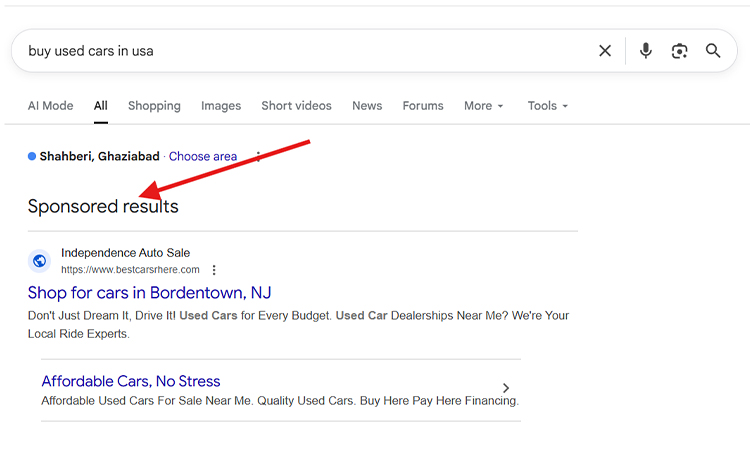
When it comes to how automotive PPC works, it takes place in several steps that are as follows:
- Advertisers first bid on the targeted keywords like “buy hatchback near me” to reach the potential buyers.
- Google then ranks ads based on Quality Score and bid amount.
- The ad formats can be either Vehicle Listing Ads (VLAs), text ads, or display banners across the web.
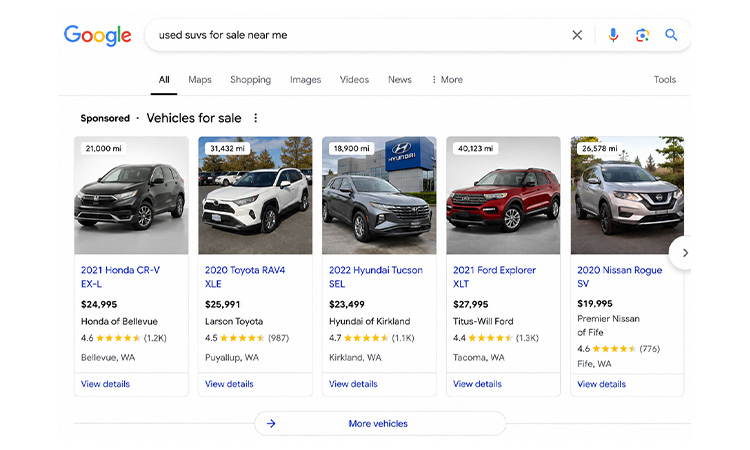
- Geo-Targeting: It reflects ads only within your dealership’s service radius.
- Retargeting: It involves re-engaging visitors who browsed your inventory even without converting.
Types of Automotive PPC Campaigns
PPC campaigns are available in different types. So, you need to target the right type of campaign based on your business goal and requirements. Following are some of them:
- Branded Campaigns
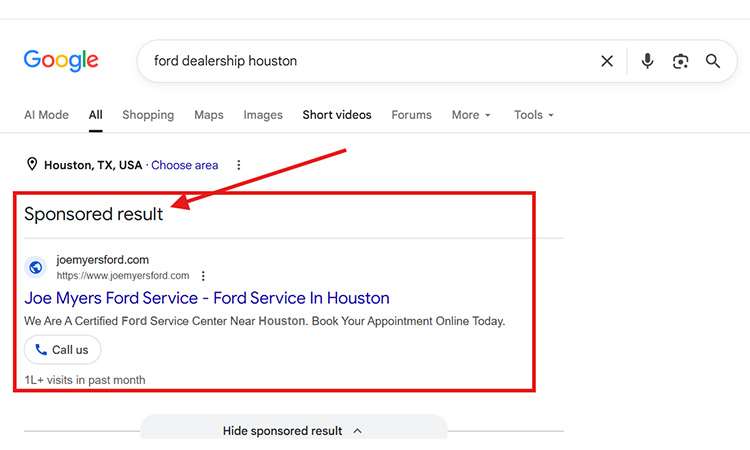
Branded campaigns focus mainly on keywords that include any specific brand names you sell. They gain traffic from users who know your brand well or even users seeking dealerships that sell a specific brand of vehicle.
Below is the right example of a branded campaign that comes up when you type “Ford dealership Houston”.
- Competitor Campaigns
In competitor campaigns, you bid only on those keywords that your competitors use. It allows you to lure those customers seeking other brands or dealerships and provide them with an alternative option. A successful competitor ad requires focus on customer benefits. It catches the attention of the competitor brand that they were searching for in the first place.
- Conquest Campaigns
Conquest PPC campaigns are an important method for car dealers to maximize their reach among users who are keen on a particular car brand. The main idea is to let these customers consider other car brands instead. For instance, if you sell a range of used car brands, you can use this type of campaign to highlight your ads to people who have been seeking Toyota cars.
Meanwhile, there are challenges to this approach as well, including maintaining high-quality scores, higher cost-per-click rates, and more. The major reason is that your targeted keywords may not align perfectly with the content of your website.
- Dynamic Campaigns
Dynamic search ads tailor their content for each viewer. Based on the user’s interest, they change everything, be it text, images, or offers. These campaigns gather information from your official website to craft relevant promotions according to what users search for.
For instance, if you have a variety of trucks, the system will automatically display specific promotions for these trucks when users search for “new trucks for sale.”
- Local Campaigns
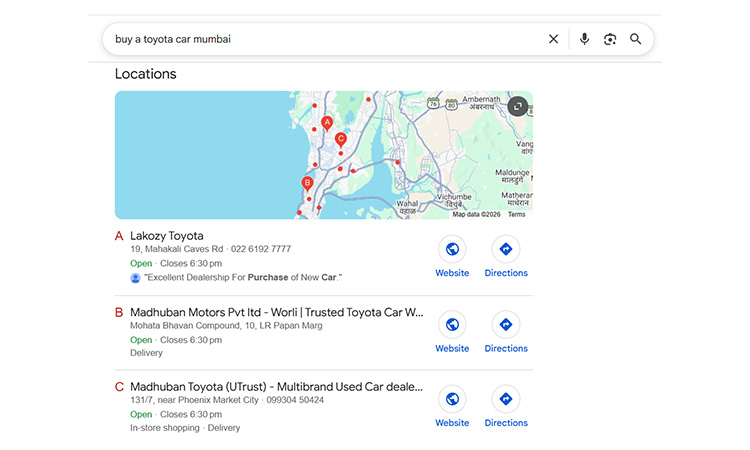
Local ads are basically targeted campaigns designed mainly to reach the audience in a specific geographical location. These campaigns mainly focus on the use of relevant keywords to capture a local market.
They mainly include those keywords that combine car buying with local keywords, such as “car dealerships in New York”. Local campaigns are best for physical dealerships seeking to lure nearby customers.
Google always suggests local businesses based on the user’s queries. Go through the examples below.
7 Proven Automotive PPC Strategies That Deliver Results
Now, after getting much information about automotive PPC in terms of importance, benefits, types, etc., it’s the right time to talk about some powerful strategies to implement it well. We will discuss each strategy in detail to help you understand everything better:
- Determine your Goal First
Before you build your PPC campaign, you should always set your core objective that defines what you wish to achieve with your ad campaign. The following are some of the top examples of common paid ads goals for auto dealerships and also many other automotive businesses:
- Increasing Website Traffic: This is indeed the major objective of a PPC campaign. It could mean to tantalize potential customers to visualize new models, information content, promotions, etc.
- Generating Leads: It’s not only limited to cajoling visitors but also to converting them into leads as well. It encourages visitors to sign up for requesting more or even subscribing to newsletters as well.
- Increasing Sales: The major objective is to maximize sales. This is something that tends to involve tracking how many PPC visitors book a service appointment, make a purchase, place a deposit on a vehicle, etc.
- Brand Awareness: Your PPC campaign aims to improve brand awareness and reputation, aside from acquiring direct leads to sales. This is indeed quite important, especially for new brands or those seeking to reposition in the market.
Irrespective of your automotive PPC campaign objectives, it should align better with your vast business goals.
- Optimize Your Landing Pages
A large number of PPC campaigns are often linked to a dedicated landing page on the official website of your company. Therefore, you should not forget to optimize your landing pages properly. You can optimize your landing page for:
- Build Trust: Trust is something that is important in the automotive industry. Make sure your landing page builds credibility rapidly by highlighting awards, certifications, contact details, customer reviews, etc.
- Match the Specific Needs of Automotive Buyers: Your ad campaign should link directly to the landing page that matches your potential customers’ requirements. It should offer clear information about their features, car models, financing options, prices, etc.
- Convert Visitors: Your landing page should have the capability of converting visitors into customers or leads with a clear call to action (CTA). It should include requesting a quote or test drive. Make sure these actions are user-friendly and straightforward.
- Easy Contact Options: You need to offer several ways for visitors to connect with your dealership or automotive service. These are something that could include various details like an online chat feature, phone number, contact form, etc.
- Improve Brand Exposure: To do this effectively, you need to use colors, logos, messaging, etc., with consistency. You need to use these on your landing page to reflect the brand identity of your automotive company. When you have a perfectly branded page, it makes your organization easily unforgettable.
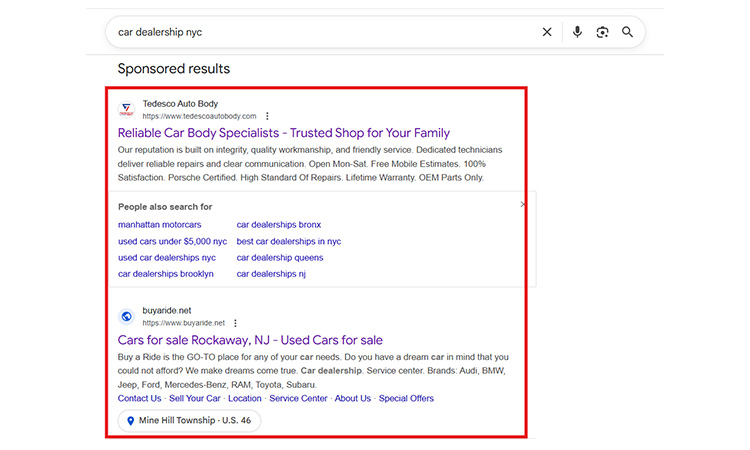
Here’s an example of the best landing page. When you search for “car dealership nyc”, the result appears as follows:
Let’s click on the website that appears as the above result-
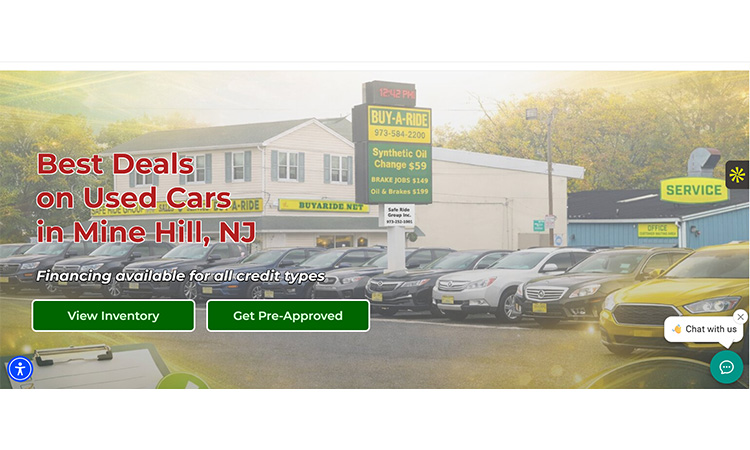
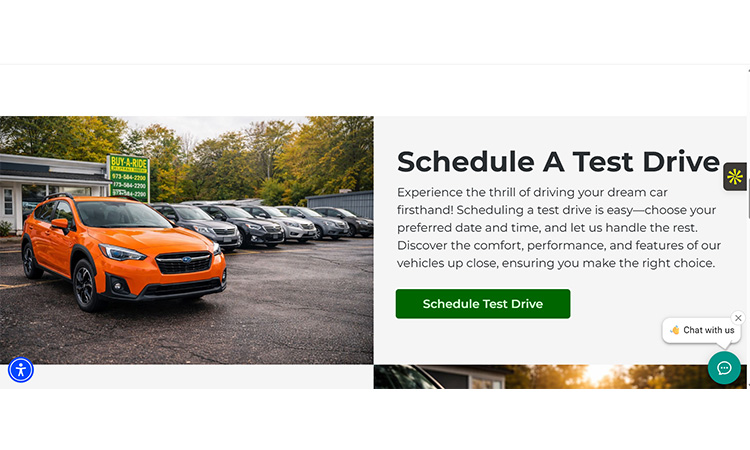
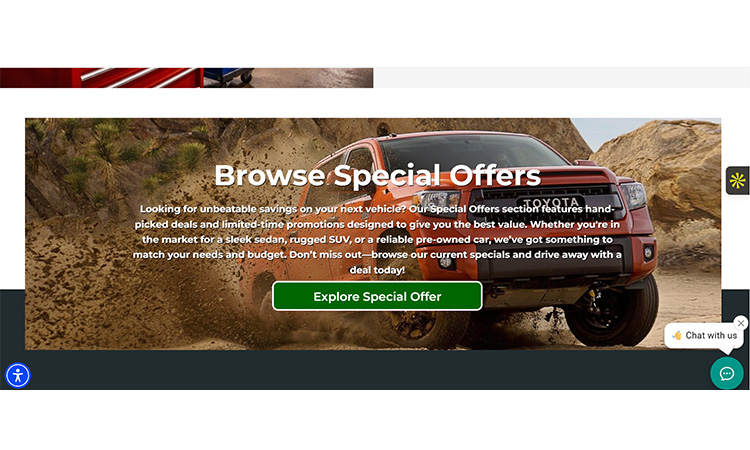
Do you know why the above landing page works? Well, the following are some of the reasons:
- Easy to make contact
- Clear CTA
- Strong branding
- Nice design
- Special proof builds trust.
- Choose the Right Keywords
The next automotive PPC strategy is keyword research. You need to conduct a thorough keyword research to discover exactly those phrases buyers search for. To do it efficiently, you need to leverage tools like Ahrefs, Google Keyword Planner, or SEMrush.
To make your PPC more successful and result-driven, you need to leverage Google Keyword Planner to shortlist the right keywords with search volumes, bidding range, etc.
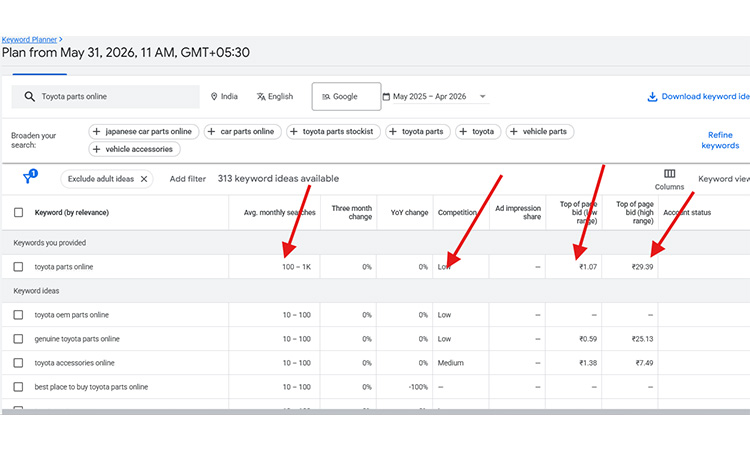
In the above image, you can see the result that appears with search volume, competition, and page bid (low range and high range). These details help you select the right keyword strategy for your automotive PPC strategy. It maximizes your chance of making your effort successful.
While performing keyword research, you need to match the following criteria:
- Make sure you select keywords that are relevant to what you actually do
- Are affordable
- It should reflect a strong buyer intent
- Get a lot of searches.
- Are not very competitive
You should avoid selecting those keywords that are highly competitive, as they tend to be highly expensive since they are more competitive.
Use Negative Keywords
When you manage your automotive PPC campaigns, it’s crucial to identify and use negative keywords. These keywords are basically crucial search terms that can prevent your ad campaign from being displayed and thus help you to avoid irrelevant traffic.
For instance, when you sell Toyota car parts, you may seek to exclude those searches that are not related to your services:
- Toyota careers
- Toyota dealership jobs
- Free Toyota parts
- Toyota car rental
- Toyota owner’s manual PDF
- Use Ad Extensions and Add a “Call Us” Feature
A ‘call extension’ is an important feature in Google Ads and allows advertisers to put their contact numbers in their ads. When people visualize your ad, they can click on the contact number to call the business fast.
The ad extension is important when it comes to the automotive industry. According to research, approximately 61% of new and used vehicle buyers contact the dealership after a search.
So, if you wish to set up a call extension in Google Ads, you need to consider the following important steps:
- Access Google ads website and log into your account.
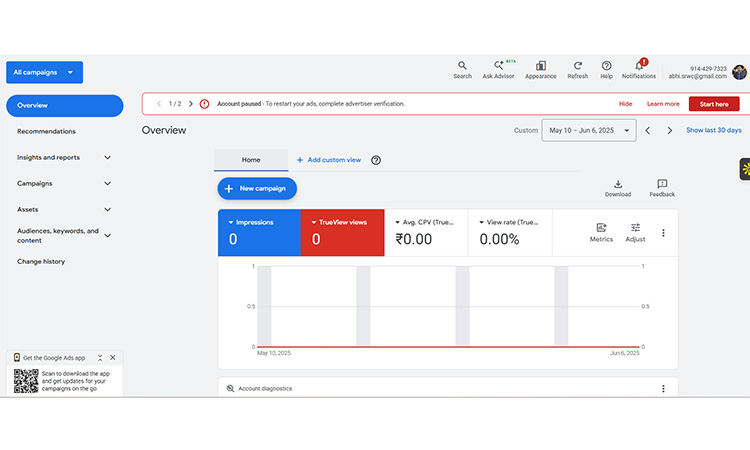
- Next, select the campaign you wish to add the call extension.
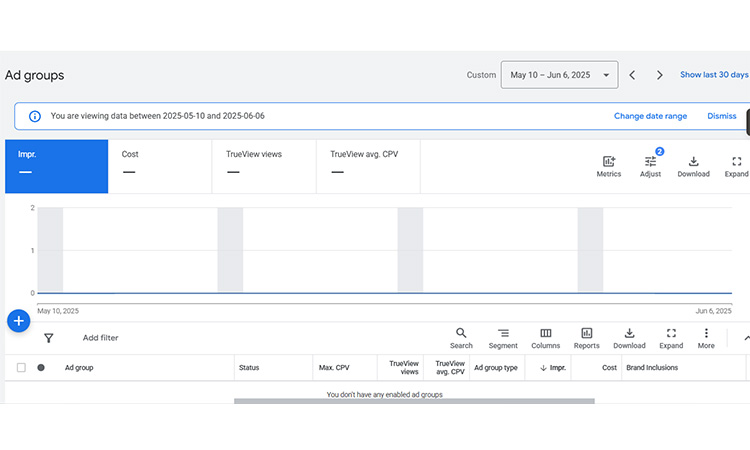
- Apart from this, you can go through the following steps:
- You need to discover the “Ads and Extensions” tab from the left page menu.
- You should now click on the “Extensions” tab at the top.
- Now, select the “Call Extension” from the dropdown menu by clicking on the plus button.
- You should input the contact details you wish to leverage for the call extension.
- Once you put all the necessary details, you should now “Save” to implement the ‘call extension’ to your chosen ad group or campaign.
- Write Attractive Ad Copy
No matter how effective your automotive PPC strategy is, it will fail unless you use compelling ad copy. Your ads should grab potential customers’ attention and thus compel them to visit your website. Let’s explore how you can craft a conversion-oriented ad copy:
- Be Familiar with Your Audience: It’s important to know the actual needs of your target market and also the level of automotive knowledge. You should use language that resonates better with them.
- Keep It Brief and Concise: Make sure your ad copy includes a meaningful headline and description. You need to display what makes your products or services unique, including top-notch service or special deals.
- Avoid Jargon: You should reduce technical terms to make your ad fully accessible to a vast audience.
- Bold Call to Action (CTA): Make sure you leverage action-oriented phrases such as “Get a Free Quote”, “Book a Test Drive”, etc.
- Highlight Benefits: You need to focus on how your products or services resolve issues or improve the lives of your customers. Don’t forget to include warranties, special offers, exclusive features, etc.
- Track Your Campaigns
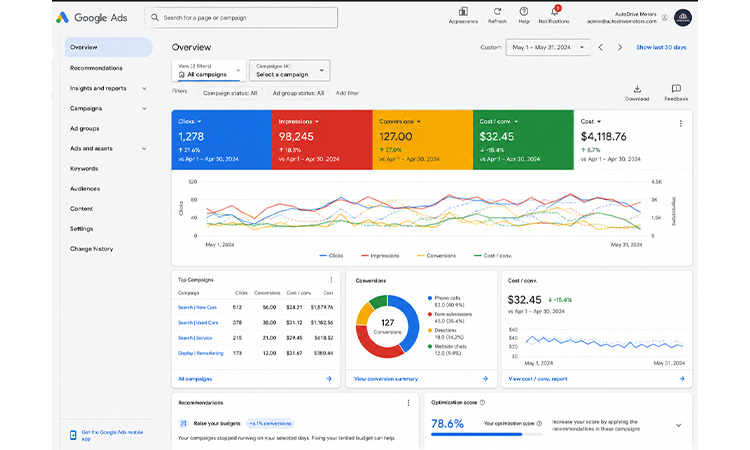
The major advantage of PPC campaigns is that you gain an opportunity to monitor your campaign and thus track its overall performance, which is highly important to understand its effectiveness. The following are some of the important metrics you can track:
- Click-through Rate (CTR): It determines how often users click your ad campaign after it’s reflected.
- Cost Per Click (CPC): It reflects the average cost you pay for every single click on your ad campaign.
- Conversion Rate: You can analyze the number of clicks on your ad outcomes in a desired outcome, including a sign-up or purchase.
- Impressions: Impressions are all about the number of times your ads are reflected. It actually shares the actual percentage of times your advertisement is reflected in the overall impression for your target audience.
- Retargeting
As far as retargeting is concerned, it’s an important strategy for automotive businesses with the use of Google Ads. It’s about reconnection of users who have already visited your website but could not make a purchase. Let’s have a look at how retargeting works, actually:
- A potential customer first accesses and explores your website. But they leave without contacting or buying your product.
- A small tracking code (cookie) is just placed in their overall browser while they are already on your website. It tracks their actual web browsing anonymously.
- When users surf the web, your ads appear on other websites within the Google Display Network. These are something that can be banner ads that remind them of your services.
- Bring Them Back: The major goal is to grab their attention again and also bring them back to your website with an aim to contact or buy your cars.
Mistakes to Avoid in Automotive PPC Campaigns
No matter how good your automotive PPC campaign performs, it can even underperform when common issues are overlooked. We have outlined below some of these mistakes in detail:
- Avoiding Long-Tail Keywords
The majority of dealerships focus exclusively on high-volume and broad keywords such as “buy a vehicle” or something like that. These keywords are not only expensive but also highly competitive. Meanwhile, avoiding long-tail keywords results in missing out on buyers who are quite close to making a decision.
Solution: You need to target specific phrases like “top family SUV under 20 lakhs”. Besides, these keywords have less competition, cost-per-click, and lure buyers with a clear purchase intent.
- Not Using Geo-Targeting
When you run ads without any filter, it reflects that your budget is wasted on those audiences who may have never visited your showroom. This is, of course, the most common and costly oversight in automotive PPC.
Solution: It’s advisable to set up geo-targeting to focus your ads on particular localities, cities, or a defined radius across your dealership. You should always combine the same with location-specific ad copy to make your messaging feel relevant.
- Avoiding Negative Keywords
Negative keywords prevent your ads from showing up for irrelevant searches. It thus prevents you from draining your budget even on those clicks that can’t convert.
Solution: All you need to do is compile a list of negative keywords. It’s advisable to exclude terms such as “toy cars”, “free”, etc. It’s necessary to keep your campaigns clean and also cost-effectively.
- Lack of Ad Optimization
When you run the same ads for months without updating, it causes several repercussions, such as declined performance, lower quality scores, higher costs, etc.
Solutions: You should perform A/B testing with continuity of your ad headlines, CTAs, descriptions, etc. It’s also a good option to rotate refresh and creative offers seasonally and analyze quality scores to ensure your ads are relevant and competitive.
- Avoiding Mobile Users
A larger percentage of automotive searches takes place on mobile devices. So, if you don’t optimize your ads for mobile devices, you will fail to generate quality leads.
Solution: Optimize your automotive PPC ads for mobile with fast-loading landing pages, click-to-call extensions, mobile-friendly ad formats, etc.
Conclusion
The fact can’t be denied that automotive PPC is one of the most effective ways for dealers to lure qualified buyers, generate consistent inquiries, and increase local visibility. All you need to do is implement the right PPC strategies and target high-intent audiences to get the most out of your investment and stay ahead of the competition. Partner with a reliable PPC agency to generate more automotive dealership leads and gain opportunities to maximize vehicle sales and business growth in the long term.
FAQs
Ans. Well, the most effective PPC platforms for the automotive industry are Google Ads, Meta Ads (Facebook and Instagram Ads), Microsoft Ads, YouTube Ads, etc. These platforms help both automotive and dealership businesses draw the attention of high-intent buyers, boost local visibility, etc.
Ans. To create a highly effective account structure for any car dealer PPC, you need to organize your campaigns based on brands, vehicle categories, dealership goals, etc. You should create tightly themed ad groups across specific models, use location-specific targets, etc. These enhance quality score, relevance, and campaign performance.
Ans. Well, important metrics for automotive PPC success mainly include conversion rate, click-through rate (CTR), cost per click (CPC), lead quality, impression share, return on ad spend (ROAS), and more. You can analyze these metrics for various purposes like optimizing campaigns, minimizing advertising costs, generating qualified inquiries, etc.
Ans. Car dealers can automate PPC campaigns with the use of automation ad rules, smart bidding strategies, audience targeting, dynamic inventory ads, and more. Whether it’s integration of CRM data, tracking conversions, or optimizing keywords, they contribute effectively in increasing qualified leads while maintaining cost efficiency and also campaign performance across different locations.
Ans. You can boost PPC performance without maximizing your budget through optimizing your ads well. You should always focus on adding negative keywords, high-converting keywords, etc., to remove irrelevant clicks, improve landing pages, and ad copy.
Ans. Well, you can see the results even within a couple of days, once you launch your campaign successfully. But you can get meaningful results only after 30 days or a maximum of 60 days.

